



Lancashire Spindle Back Chairs
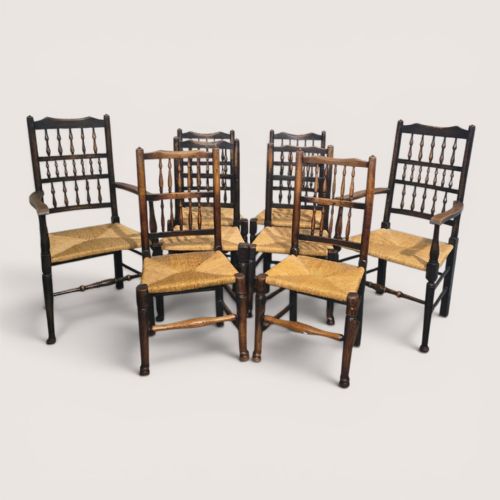
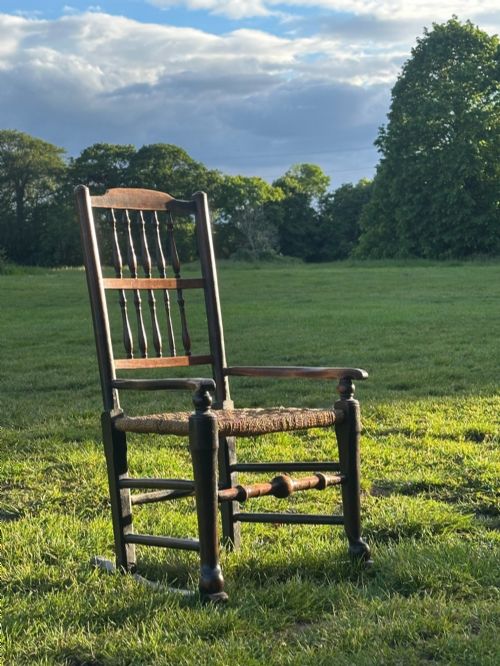
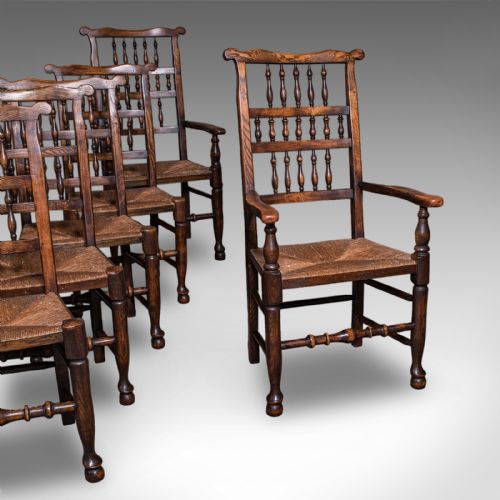
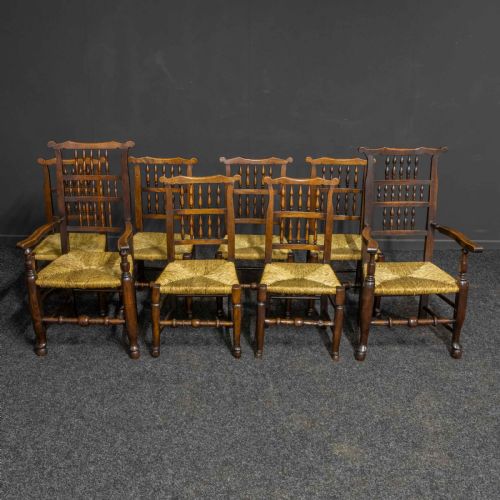
These lancashire spindle back chairs bring vernacular warmth to a dining table, pairing sturdy regional timber frames with upright wooden spindles.
Form and Period
When you search for lancashire spindle back chairs, you encounter robust country seating designed for everyday use in farmhouse kitchens and dining rooms. The pieces span from the middle of the eighteenth century through the Edwardian era, showing enduring regional traditions.
You are most likely to meet elm, ash, and beech dining chairs shaped with high ladder or spindle backs and fitted rush seats. Sets often appear as harlequin groupings gathered together over time rather than single-maker commissions.
Materials and Construction
Maker workshops built these frames using native hardwoods such as ash for turned uprights and elm for sculpted seats, combining strength with a practical weight. Beech also appears frequently in later regional examples.
Seats are tightly woven from rush to provide a resilient platform that softens with age. Turned spindles fit neatly into pierced crest rails and seat rails to distribute weight evenly.
Retail Price Guide 2026
Typical UK retail prices for lancashire spindle back chairs, calculated from the Sellingantiques database of over a million retail prices indexed since 2003. This retail price guide relies exclusively on Sellingantiques data; no external sources or auction records are used, so the figures do not describe the wider market.
The archive records span eighteenth-century Georgian origins through Edwardian revivals, predominantly utilising ash, elm, beech, and oak.
Proportion and Finish
Refined examples display slender, well-turned spindles and deeply scooped elm seats that demonstrate superior bodger craftsmanship. Lesser pieces rely on thicker, heavier turnings and flat, unshaped timber seats.
The integrity of the original rush seating and the tightness of the frame joints distinguish fine survivals from chairs that have suffered loose joinery or total replacement webbing.
The Lancashire Spindle Back Chairs Glossary
- Carver
- An armchair featuring supportive elbow rests designed for the head of the table. These often accompany larger dining sets.
- Harlequin
- A matched group of chairs assembled from different sources sharing a common style and period. These sets grew together gradually.
- Rush
- Marsh grass twisted into cord and woven tightly across the chair frame to form the seat. It provides a durable natural surface.
- Spindle back
- A chair back constructed from vertical turned wooden dowels set between horizontal rails. This design offers light support.
- Vernacular
- Objects built by local craftspeople using regional materials without academic architectural pretension. These pieces serve domestic utility.
Frequently Asked Questions
How do I care for rush seats?
Keep rush seats clean using a dry brush to remove dust from the woven strands. Avoid excessive moisture, which can cause the natural plant fibres to become brittle.
Position chairs away from direct heat sources and direct sunlight to prevent the timber and rush from drying out and cracking over time.
What is a harlequin set?
A harlequin set is a collection of dining chairs that match in general style, timber, and period but originated from different workshops. Gathered over decades, they offer a characterful alternative to uniform factory production.
These groupings work well around large dining tables because they share key design traits like turned spindles and rush seats while retaining individual variations.
Are these chairs comfortable for daily dining?
The upright backs and woven rush pads provide firm, supportive seating suited for long meals. The contoured wooden seats accommodate natural posture without requiring cushions.
Armchair carvers offer additional comfort at the ends of the table, matching the height and style of the side chairs in the set.
How do I distinguish eighteenth-century pieces?
Eighteenth-century examples typically display hand-turned ash spindles with slight variations resulting from lathe work, alongside deeply dished elm seats shaped by adze and plane. The timber develops a deep, mellow patina through generations of use.
Later Edwardian versions often feature more uniform machine turnings and cleaner, lighter wood surfaces that lack the darker coloration of older timbers.