
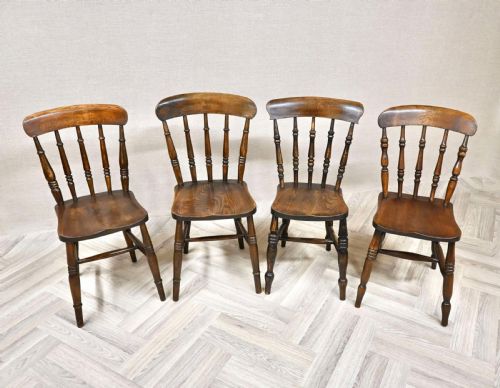
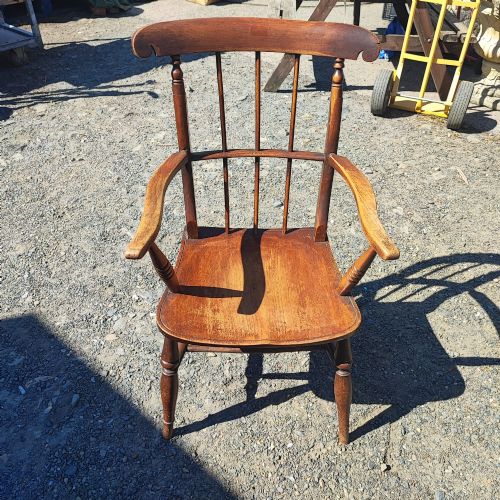
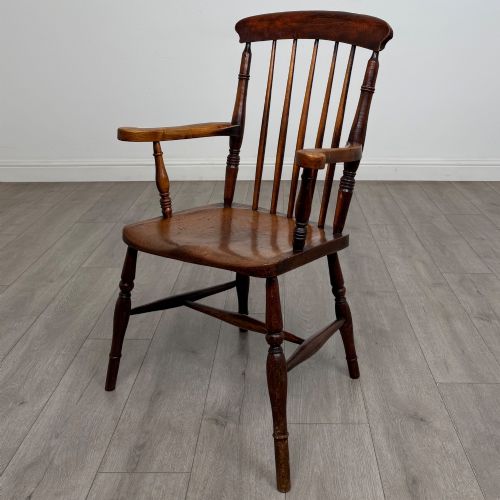

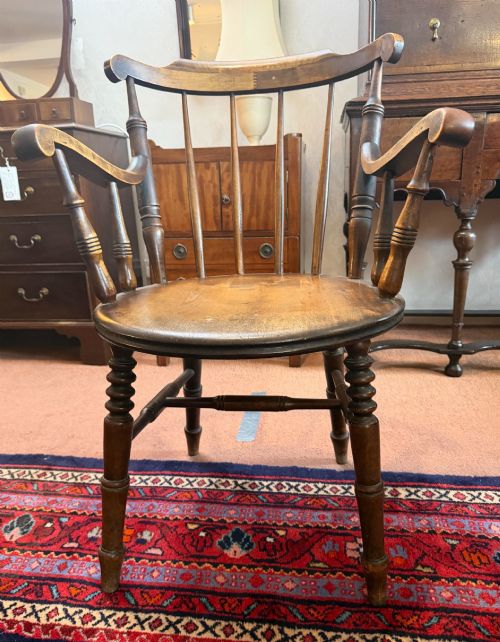
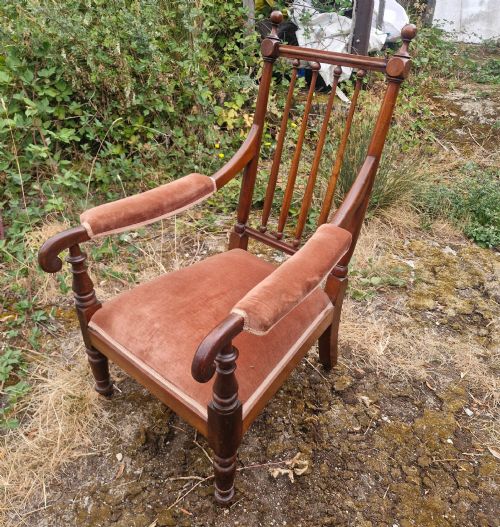
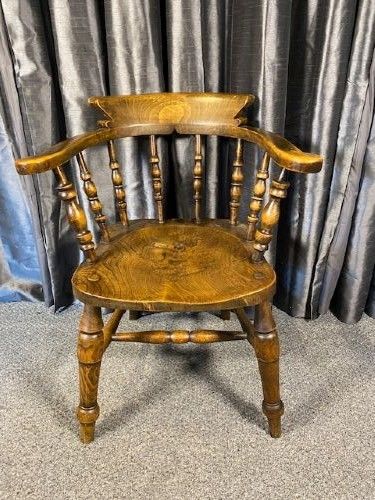
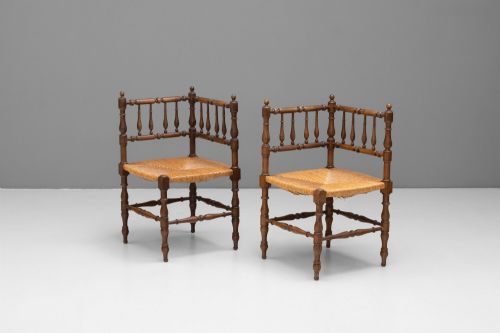
Turned Spindle Back Chairs
Turned spindle back chairs are honest vernacular seating that brings tactile wooden warmth and sturdy vernacular tradition straight into a home.
What Turned Spindle Back Chairs Are
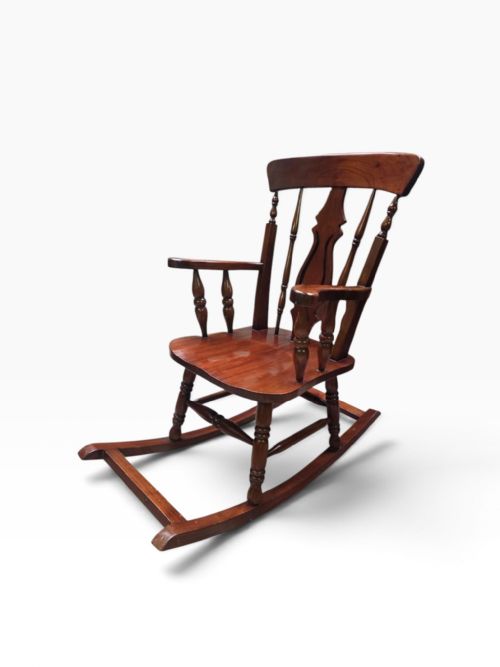
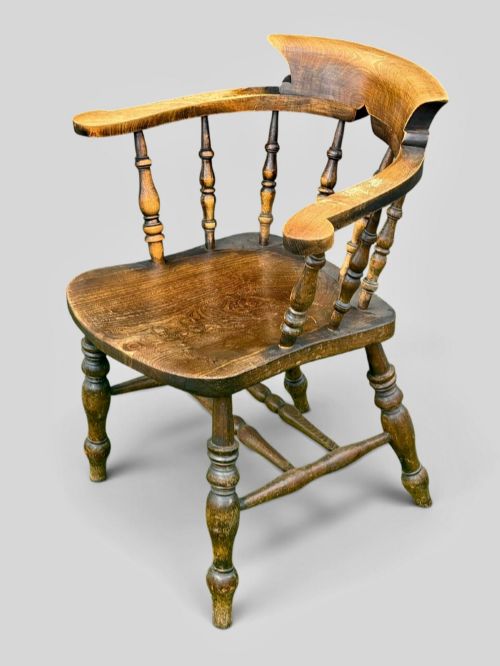
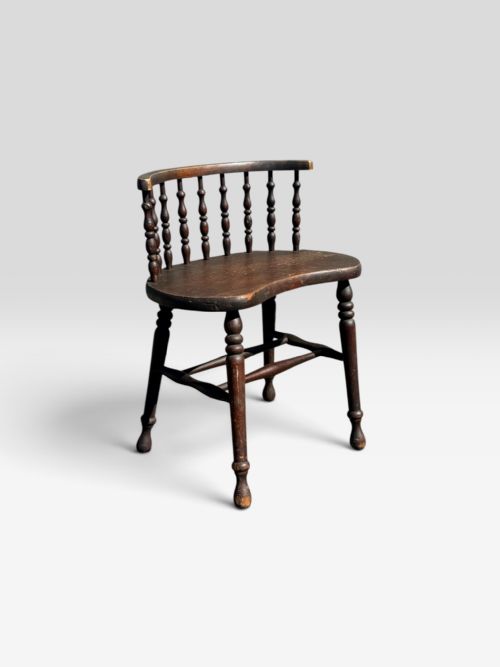
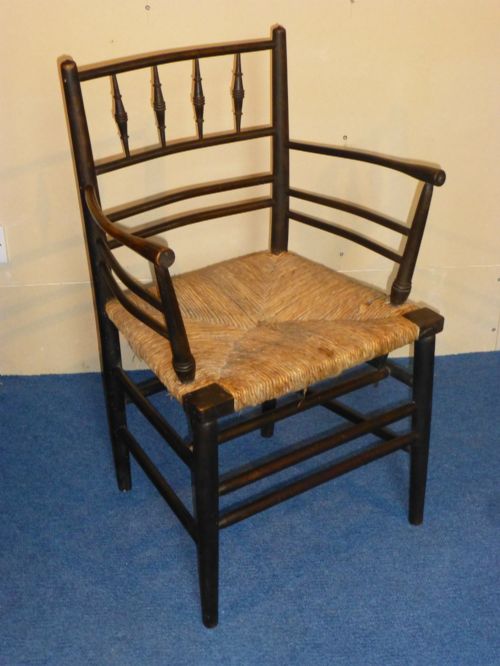
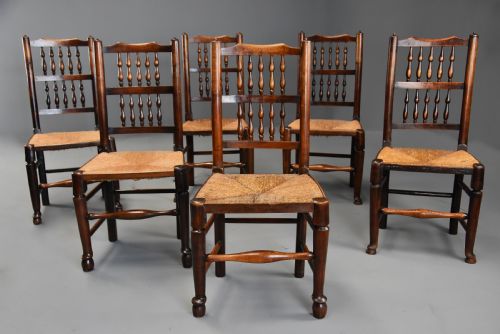
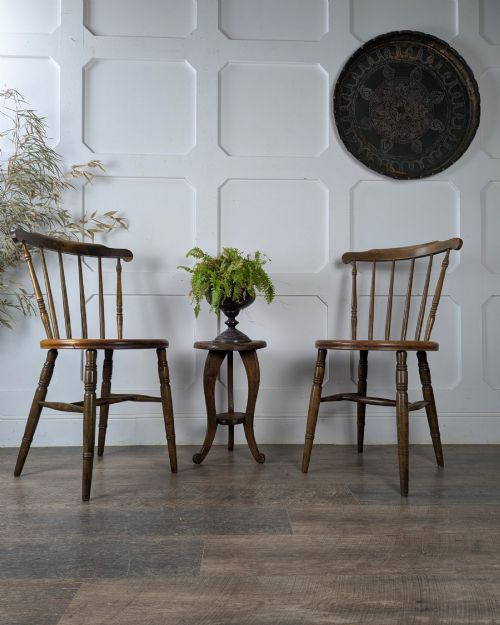
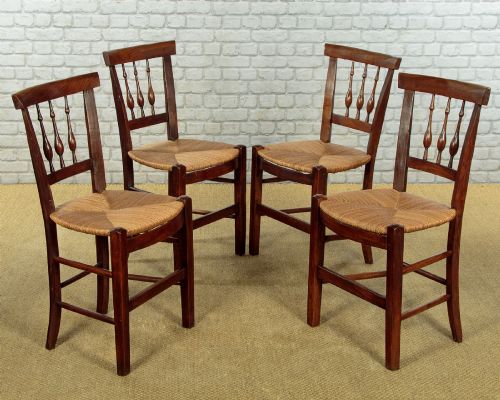
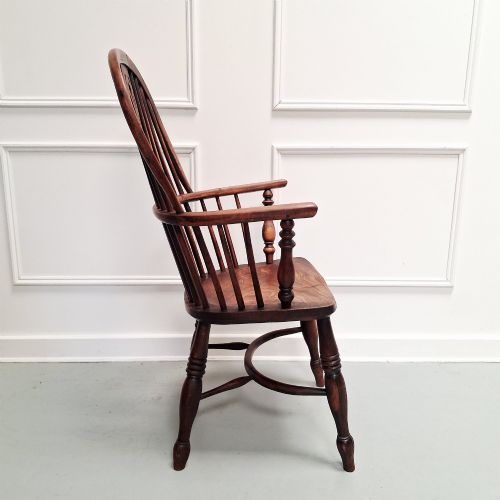
Turned spindle back chairs encompass sturdy vernacular seating forms defined by slender, lathe-turned spindles fitted into horizontal rails. The listings on this page span the nineteenth century through the early twentieth century, taking in both dining and side chair formats.
Buyers are most likely to encounter nineteenth-century elm and rush seat dining chairs alongside painted bamboo side chairs and bentwood bistro models. Regional traditions appear through Lancashire style pieces and worksop allsop kitchen chairs.
The evidence shows these utilitarian seats surviving as pairs, matched sets, and larger dining sets of up to eight pieces. They move easily from country kitchens to modern dining spaces without losing their functional character.
How They Were Made
Craftsmen built these chairs using native hardwoods such as elm, ash, and beech shaped on the lathe to create the slender vertical spindles. Seats were constructed from solid timber or woven with rush and cane for flexible support.
Some examples feature painted finishes or bamboo construction, particularly in nineteenth-century decorative pieces. Traditional joinery secured the turned components tightly into drilled frame rails to handle daily domestic use.
Retail Price Guide 2026
Typical UK retail prices for turned spindle back chairs, calculated from the Sellingantiques database of over a million retail prices indexed since 2003. This retail price guide relies exclusively on Sellingantiques data; no external sources or auction records are used, so the figures do not describe the wider market.
What Varies in Quality
Quality rests upon the selection of timber and the precision of the lathe work that forms the structural spindles. Tighter grain in the elm and ash components provides superior strength and longevity.
The integrity of woven rush or cane seating and the tightness of the frame construction dictate the overall excellence of the piece. Sets that remain matched in finish and form command greater cohesion than assembled groups.
Worksop Allsop
The Turned Spindle Back Chairs Glossary
- Spindleback
- A chair back constructed with a series of slender turned wooden uprights between the top rail and the seat. This method distributes weight evenly while keeping the furniture light.
- Rush seat
- A seating surface woven from dried marsh rushes twisted into cords and threaded across the frame. It yields slightly to the sitter for comfort.
- Bentwood
- Wood softened through steaming and bent under pressure into curved structural shapes. This technique defines bistro style seating.
- Side chair
- A light, armless chair intended for dining tables or occasional placement around a room. It functions without the bulk of armchair framing.
Frequently Asked Questions
How do I use these chairs daily?
These pieces function reliably as dining seating or occasional side chairs around the home. Their robust timber frames handle regular everyday use with ease.
Keep them away from direct heat sources to protect the wooden joints and woven rush or cane seats from drying out.
Are matched sets hard to find?
Larger groups often arrive as matched sets or near sets assembled over time. Single pairs and smaller groups appear frequently in nineteenth-century styles.
Examine the spindle turning and timber grain to understand how closely individual chairs match within a larger set.
What woods were used?
Traditional makers relied on native hardwoods including elm, ash, and beech for strength and durability. Bamboo and painted finishes also appear on nineteenth-century decorative examples.
Each material brings a distinct weight and surface texture to the finished seating.
How do I date these chairs?
Dating relies on stylistic clues, construction methods, and materials recorded across nineteenth and early twentieth-century examples. Regional variations like Lancashire styles provide further context.
Compare the turning profiles and seat construction against documented periods to place an individual piece accurately.