

Vintage Farmhouse Dining Chairs
These vintage farmhouse dining chairs bring robust character to a kitchen, offering solid timber construction and practical vernacular design built for daily use.
Vintage Farmhouse Dining Chairs
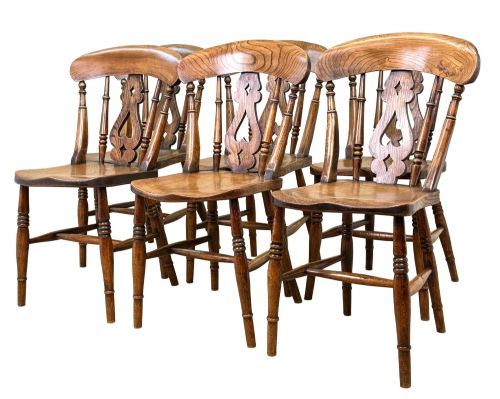
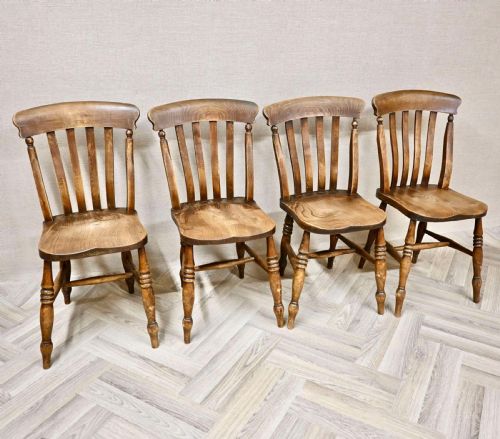
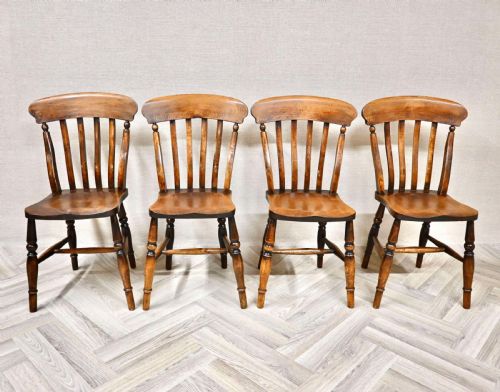
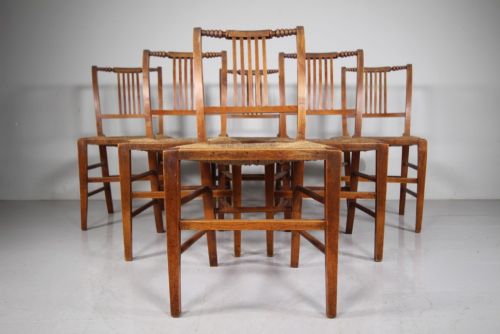
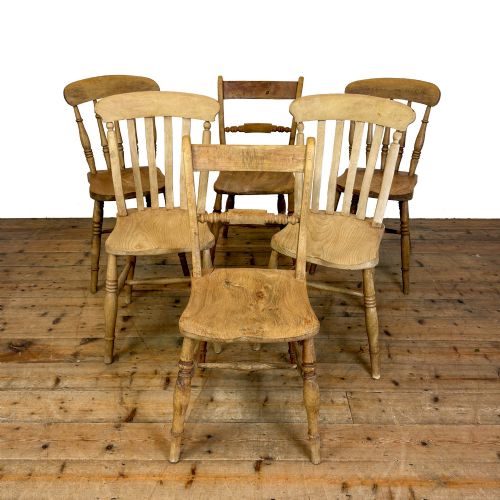
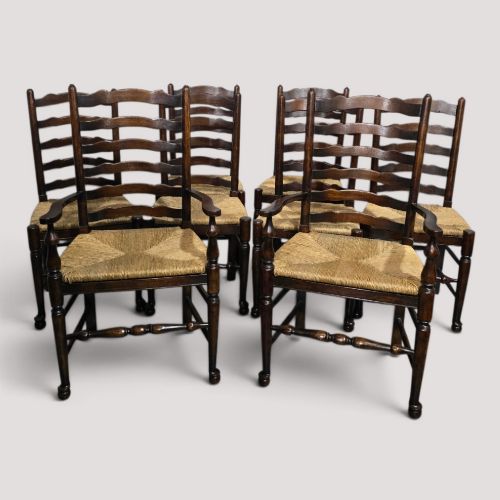
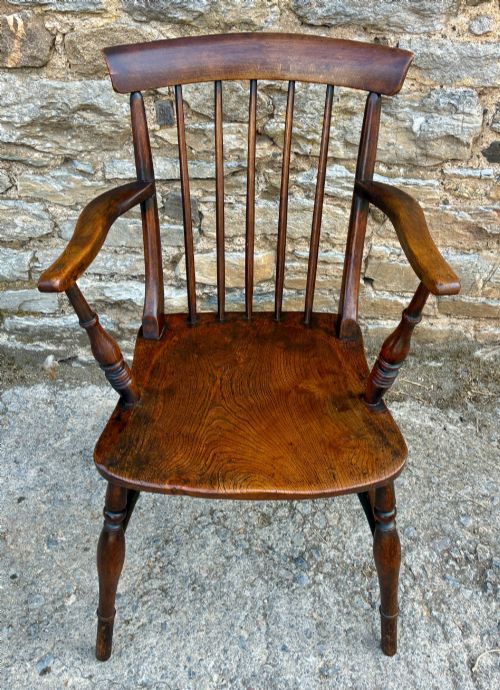
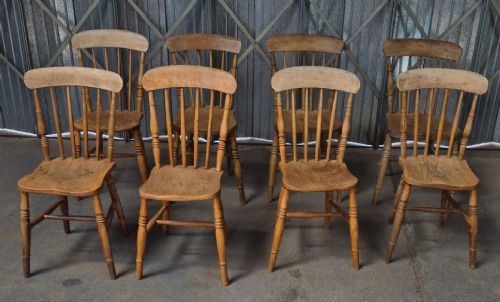
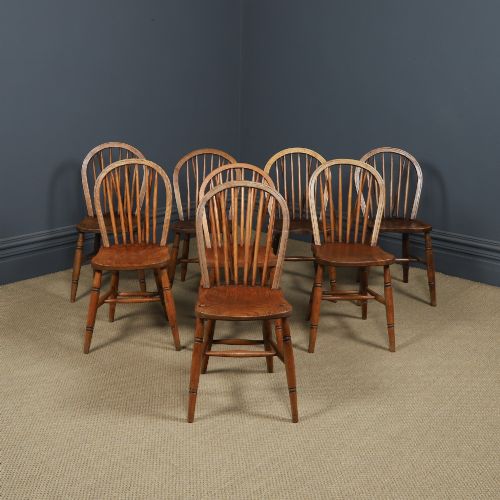
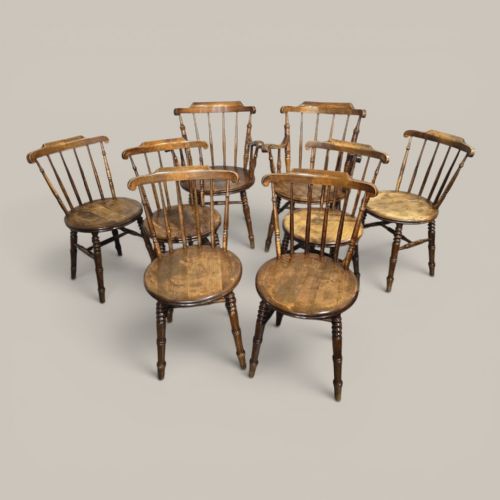
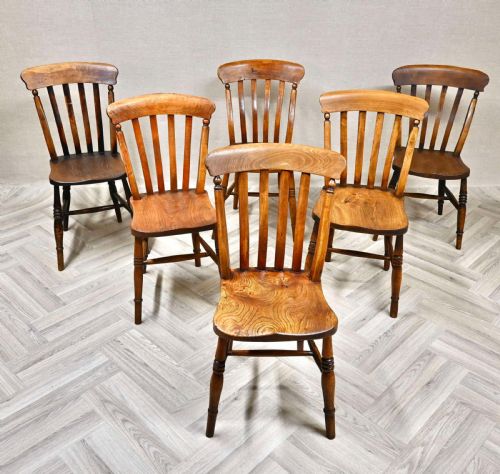
When searching for vintage farmhouse dining chairs, buyers encounter sturdy country seating originating across the nineteenth and early twentieth centuries. These pieces encompass regional forms designed for practical households, including Windsor chairs, ladder backs, and spindle backs.
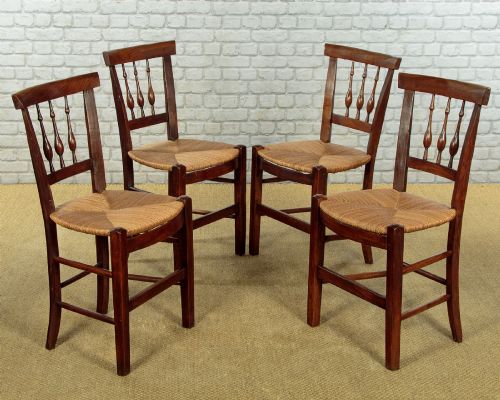
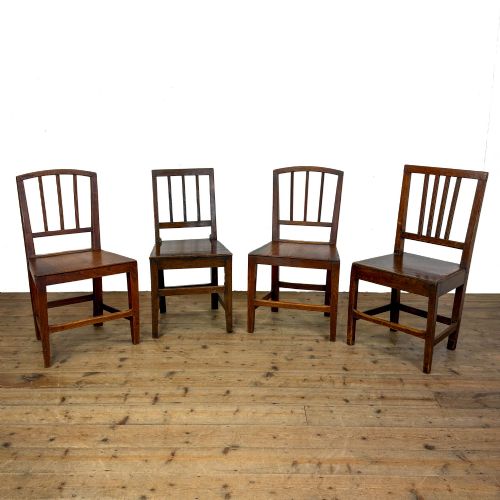
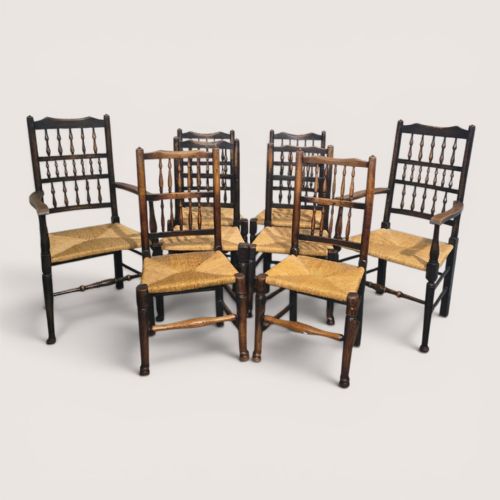
The selections here frequently appear as sets of four, six, or eight, alongside occasional pairs and individual armchairs. Elm, oak, beech, ash, and pine dominate the offerings, often paired with rush seating or solid timber seats.
Makers drew on local vernacular traditions, producing robust kitchen seating that prioritised utility. Styles range from Victorian English country variants to American country and rustic farmhouse interpretations.
How they were made
Cabinet makers and bodgers utilised native hardwoods such as elm for solid seats, beech and ash for turned spindles, and oak for structural frames. Fruitwood also appears in specific regional pieces.
Construction methods relied on traditional joinery, including wedged tenons, steam-bent hoops, and double stretchers to reinforce the legs under heavy daily use.
Vintage Farmhouse Dining Chairs Retail Price Guide 2026
Typical asking prices for vintage farmhouse dining chairs among the pieces listed under this phrase on Sellingantiques today, from the lower quarter to the upper quarter. They describe what is for sale here now, not the wider market.
What varies in quality
The distinction between ordinary utility seating and superior examples rests in the selection of timber and the harmony of the set. Matched timbers, generous proportions, and crisp turning on spindles distinguish better groups.
Original surface patination and structural integrity separate untouched vernacular seating from heavily altered pieces. Retaining matching stretchers and genuine rush seats elevates the standing of a set.
Worksop Allsop
The Vintage Farmhouse Dining Chairs Glossary
- Windsor
- A chair built with a solid wooden seat into which the legs and back sticks are independently inserted. This design provides robust stability through socket joints.
- Ladder back
- A chair featuring horizontal slats between the rear upright posts. These slats offer supportive backrests found frequently in traditional kitchen seating.
- Rush seat
- A woven seating surface created from dried marsh rushes. This traditional method yields a resilient and comfortable seat texture.
- Stretcher
- A horizontal wooden rod connecting the legs of a chair to increase structural rigidity. Double stretchers provide additional strength against lateral movement.
- Harlequin set
- A collection of chairs that share a common style or period but differ slightly in individual details. Such groups assembled over time present a cohesive yet varied appearance.
Vintage Farmhouse Dining Chairs: Frequently Asked Questions
How do I care for antique wooden kitchen chairs?
Maintain timber chairs by applying traditional beeswax periodically to nourish the grain and protect the surface from drying out.
Keep them away from direct heat sources and sudden temperature shifts to prevent wood shrinkage and joint loosening.
Can I mix different styles around my table?
Harlequin sets and near pairs offer a traditional way to gather slightly varied seating around a dining table.
Matching timber tones or shared architectural elements such as stick backs helps unify the arrangement.
Are rush seats durable for daily use?
Rush seating withstands regular daily dining use when kept dry and clean from sharp objects.
Avoid placing them in damp environments to preserve the natural plant fibres.
How do I identify nineteenth-century vernacular chairs?
Examine the timber species, tool marks, and construction joints underneath the seat for signs of hand-working.
Nineteenth-century examples frequently employ native woods like elm and beech with turned components shaped on pole lathes.