


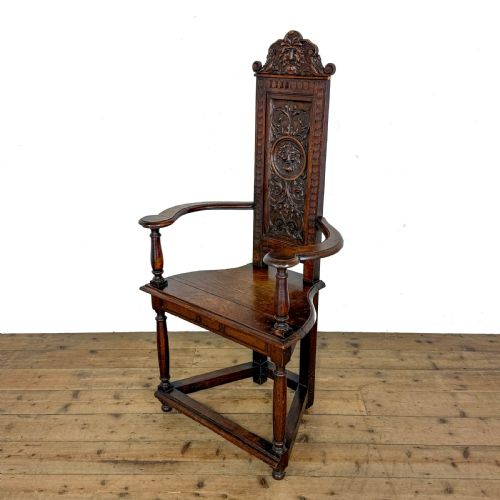


Renaissance Revival Chairs
Renaissance revival chairs bring nineteenth-century theatrical weight and historicist carving straight into a modern interior.
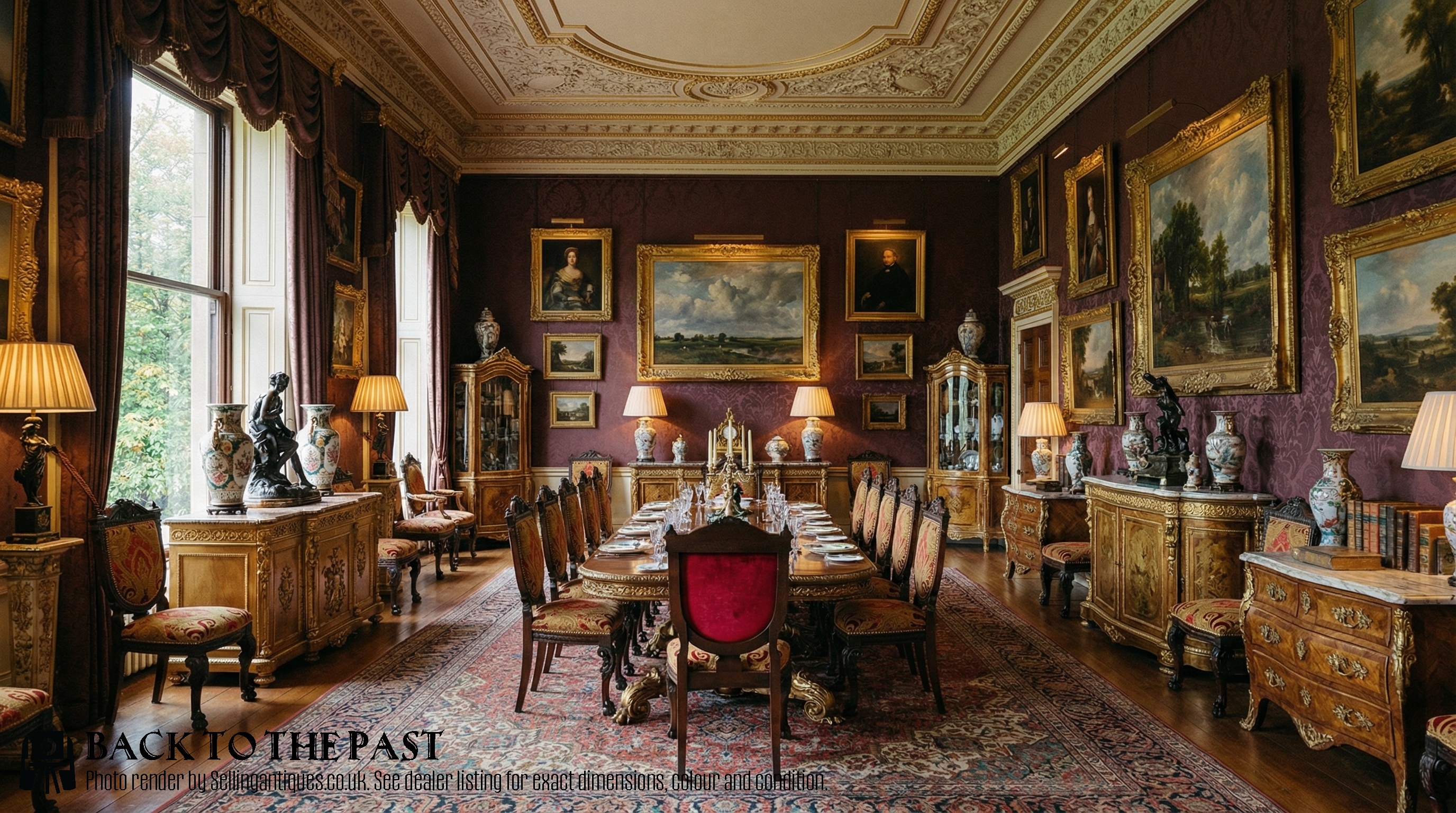
Defining Renaissance Revival Chairs
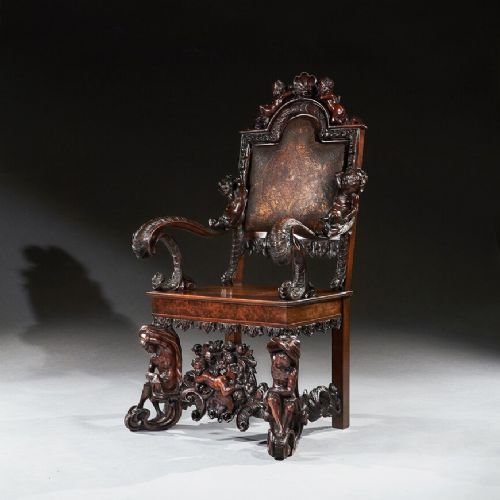
When you search for renaissance revival chairs, you are looking at nineteenth-century furniture that borrows heavily from sixteenth-century Italian and northern European forms. These pieces span dining chairs, armchairs, hall chairs, and side chairs produced across the Victorian era up to the early twentieth century.
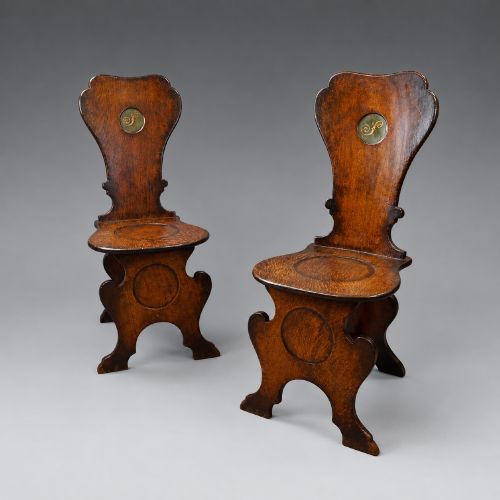
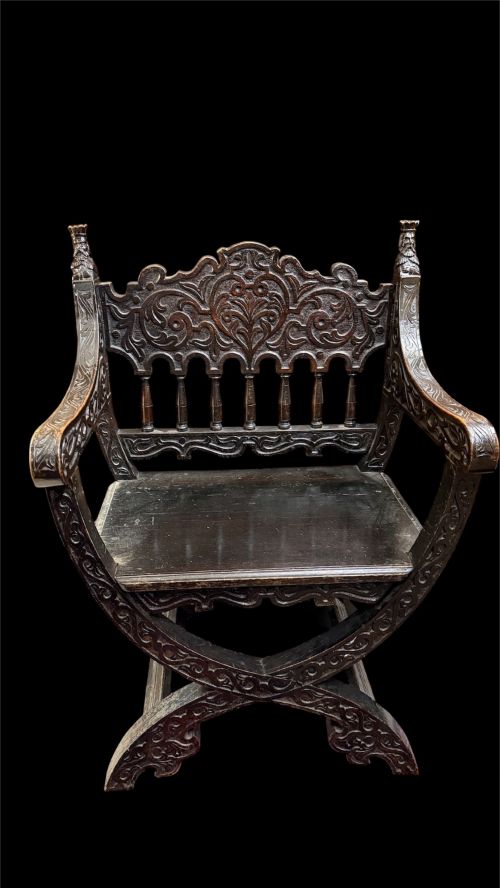
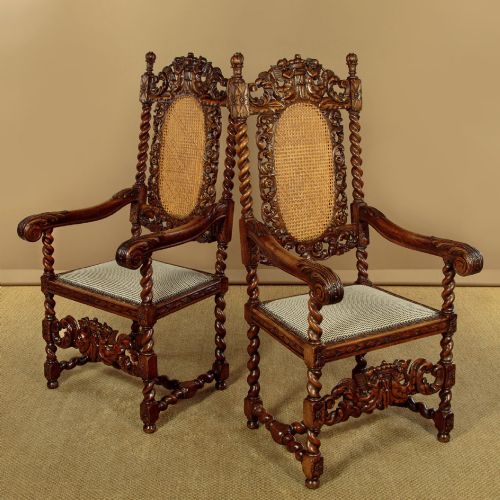
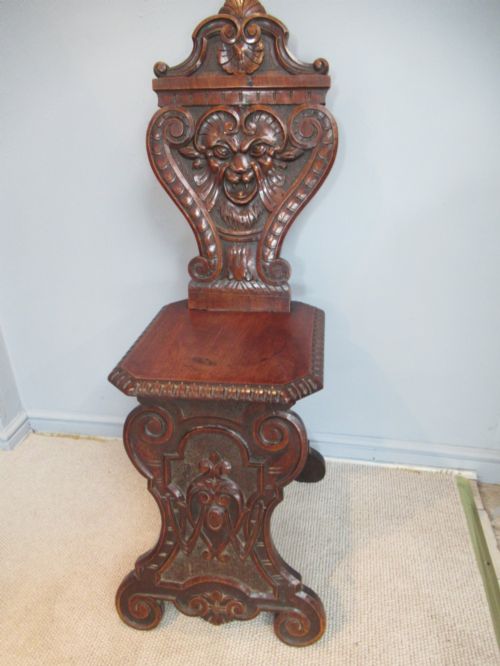
The most common versions met on this page are carved walnut hall chairs and large armchairs, alongside substantial dining sets in mahogany and oak. Many of these chairs adopt specific historical configurations like the sgabello or the X-framed Savonarola structure.
Makers and workshops of the period adapted these historicist silhouettes for contemporary domestic use, blending grand decorative ambition with the seating comfort demanded by Victorian and Edwardian households.
Materials and Construction
Cabinetmakers constructed these frames using dense hardwoods including walnut, mahogany, and oak, often finished with detailed hand carving. Secondary materials such as cane panels and painted accents appear alongside primary structural timbers.
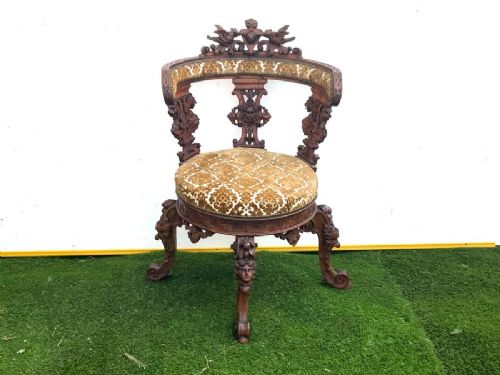
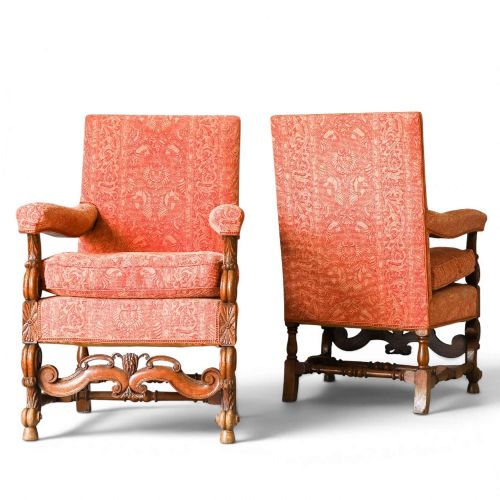
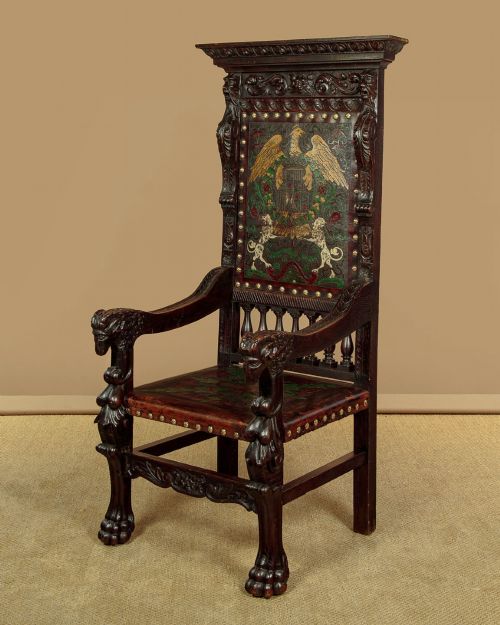
Upholstered examples rely on traditional stuffing and covering materials like leather and velvet, secured directly to the wooden frames. Structural integrity relies on heavy joinery designed to support both elaborate crest rails and solid panel seats.
Retail Price Guide 2026
Typical UK retail prices for renaissance revival chairs, calculated from the Sellingantiques database of over a million retail prices indexed since 2003. This retail price guide relies exclusively on Sellingantiques data; no external sources or auction records are used, so the figures do not describe the wider market.
Listings span the nineteenth century, the Victorian period, and the early twentieth century up to nineteen-twenty.
Assessing Quality and Execution
The distinction between ordinary and exceptional examples rests in the depth and sharpness of the hand carving rather than the mere presence of ornament. Crisp relief work on walnut and mahogany demonstrates a sculptor's hand, whereas lower-tier pieces often feature shallow, mechanical stamping.
Coherence of form also dictates worth, particularly in large sets of dining chairs where uniform timber selection and matching secondary woods reveal workshop discipline. Superior proportion and uncompromised structural density elevate pieces beyond standard historicist reproduction.
White, Allom & Co.
The Renaissance Revival Chairs Glossary
- Sgabello
- A light wooden hall chair featuring a low back and solid trestle supports instead of standard legs. This sixteenth-century Italian form was revived with vigorous nineteenth-century carving.
- Savonarola
- An X-framed folding armchair constructed from multiple intersecting wooden slats. It typically includes a wooden backrest and arm supports.
- Historicist
- A design approach that self-consciously mimics the styles of past centuries. Renaissance revival furniture relies entirely on this nineteenth-century revivalist impulse.
- Crest rail
- The top horizontal member of a chair back. On these revival pieces, it frequently carries cartouches, scrolls, or heraldic carving.
Frequently Asked Questions
What are renaissance revival chairs?
These are nineteenth-century seats that imitate sixteenth-century Italian and European designs, using heavy timber and deep carving.
They range from single hall chairs to large dining sets.
How were they used historically?
Many sat in entrance halls or formal dining rooms to project status and historical awareness.
Armchairs and side chairs also furnished libraries and drawing rooms.
How do I date these chairs?
Look to the timber, upholstery methods, and overall construction to distinguish nineteenth-century production from later copies.
Periods seen here include the Victorian era and the early twentieth century.
How do I live with them?
Their heavy dark woods and carved details anchor a room, pairing well with plain walls and minimalist modern furniture.
Ensure leather and velvet upholstery receives appropriate conditioning.