

Antique Throne Chairs
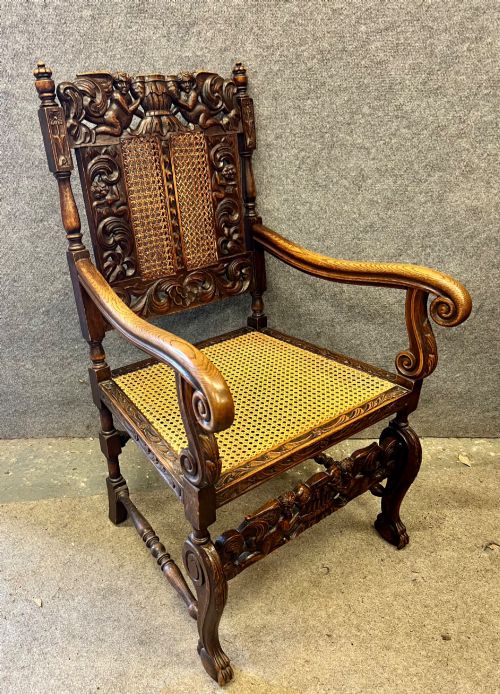
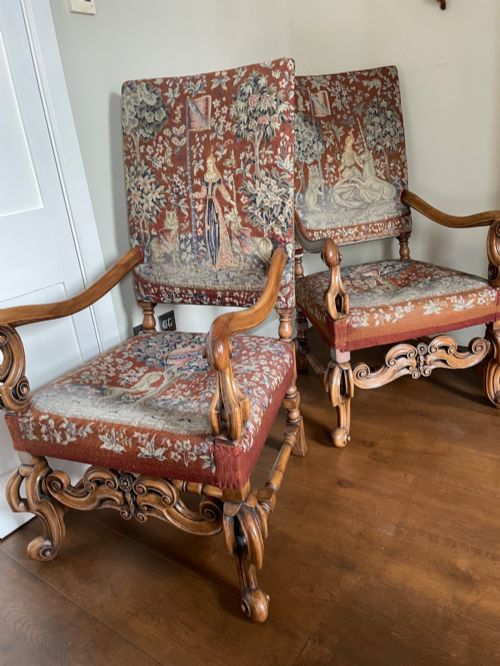
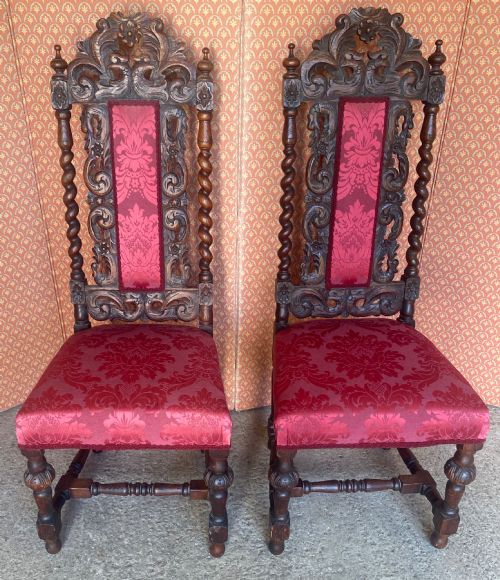
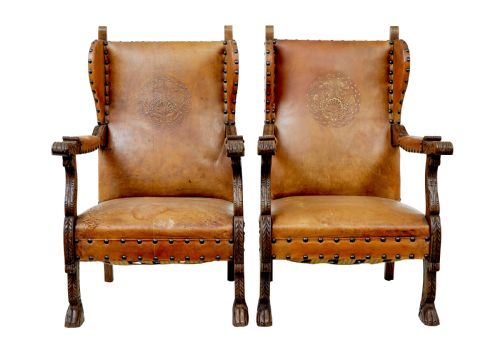
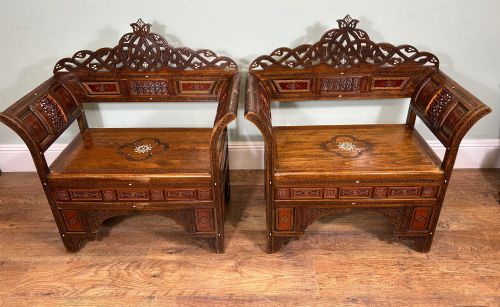
These antique throne chairs command attention with towering backs and heavy timber frames, offering commanding seating for a grand hall or library.
Antique Throne Chairs
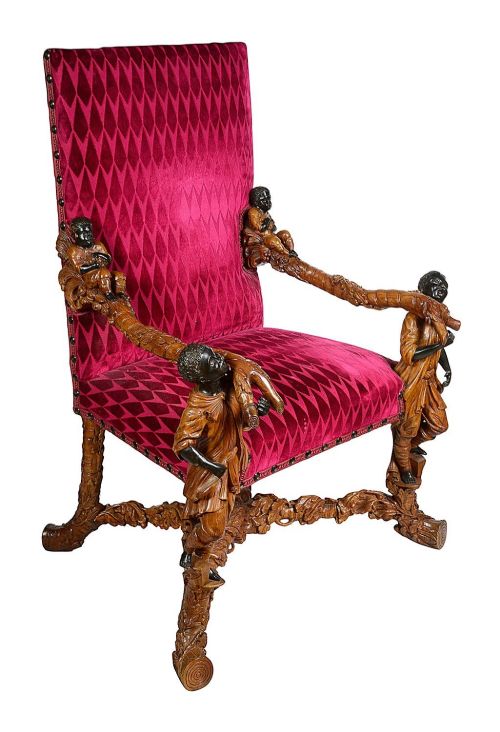
Antique throne chairs are substantial armchairs designed with high backs and prominent proportions, drawing upon historic architectural and royal influences. When searching for antique throne chairs, buyers encounter pieces primarily originating from the eighteenth, nineteenth, and early twentieth centuries.
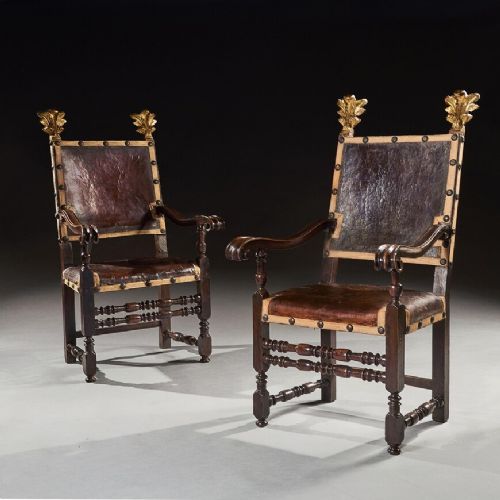
The selections span several revival styles, including Baroque, Renaissance, Italian Rococo, Gothic, and Arts and Crafts manners. Most examples appear as pairs, utilising armorial presence and deep seating to establish authority in a domestic interior.
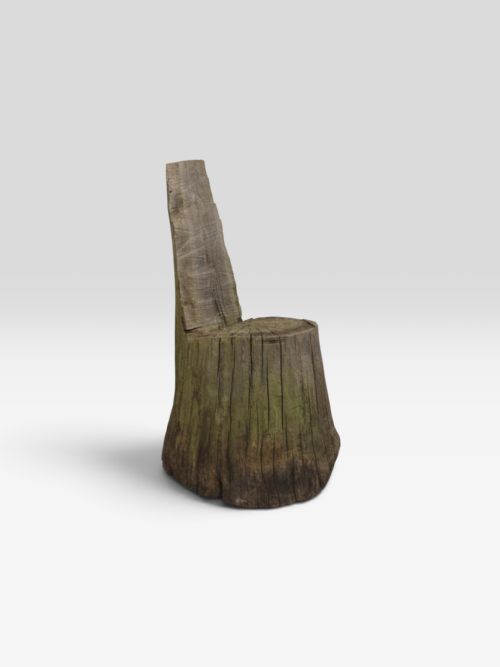
Makers and craftsmen utilised robust timbers and rich upholstery to build these large-scale seats. Common forms include high-backed hall chairs, heavy library armchairs, and grand fireside seating with substantial elbow rests.
How They Were Made
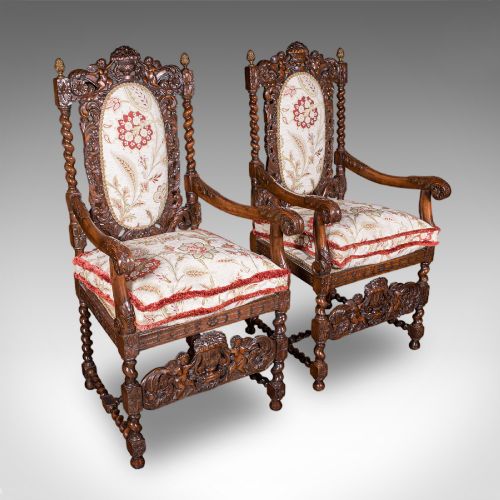
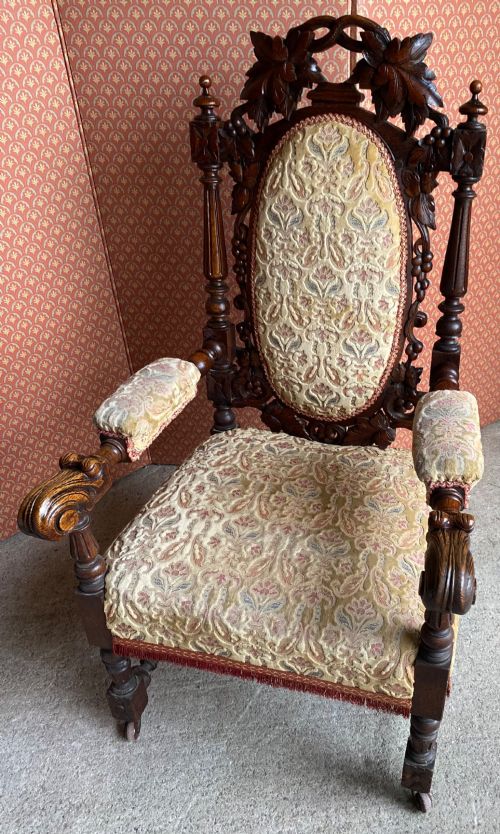
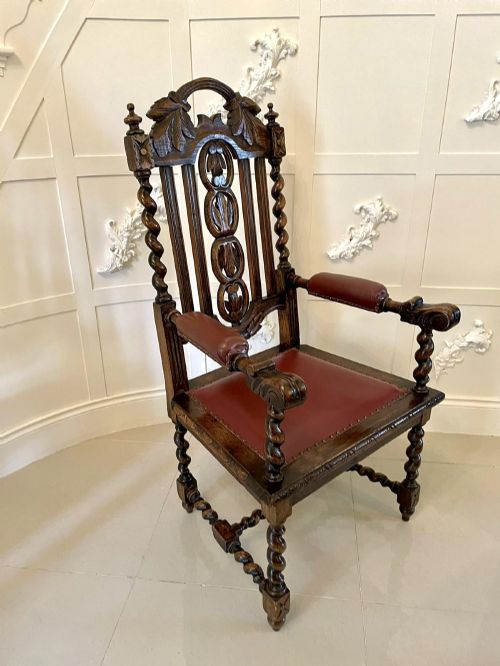
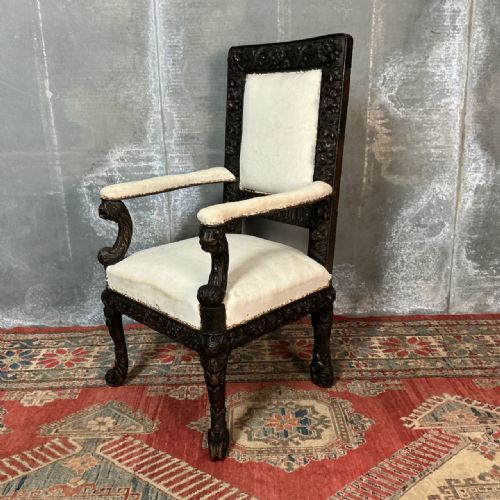
Cabinetmakers constructed these frames using heavy hardwoods such as walnut, oak, pitch pine, and golden oak, often joined with traditional mortise and tenon techniques. Skilled carvers then worked directly into the solid timber to create deep relief ornamentation, lion figures, and barley twist members.
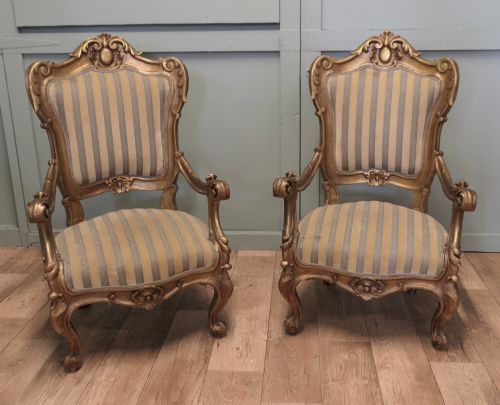
Surface treatments involved application of giltwood, silver gilt, or traditional gilding over carved wooden elements to catch the light. Upholstered variants received damask fabric, linen, crimson leather, or woven cane secured with brass or iron tacks.
Antique Throne Chairs Retail Price Guide 2026
Typical asking prices for throne chairs among the pieces listed under this phrase on Sellingantiques today, from the lower quarter to the upper quarter. They describe what is for sale here now, not the wider market.
Recorded materials span walnut, oak, pitch pine, giltwood, damask, cane, and leather across nineteenth and early twentieth century items.
What Varies in Quality
The distinction between standard production and exceptional quality rests in the depth and hand-carving precision of the woodwork. Superior examples exhibit fully articulated figural carvings, crisp mouldings, and substantial timber scantlings rather than shallow machine tooling.
Proportion and scale dictate the visual command of the piece, with larger, well-balanced frames holding greater presence than compressed or awkward designs. The integrity of the original joints and the quality of secondary woods further separate everyday seating from master-carved commissions.
The Antique Throne Chairs Glossary
- Giltwood
- Wood that has been coated with gold leaf or thin gold paint. This technique added brilliant reflective highlights to ceremonial and revival furniture.
- Baroque Revival
- A nineteenth-century design movement imitating the ornate, dramatic curves and heavy ornamentation of the seventeenth century. It frequently employs scrolled supports and rich carvings.
- Gothic Revival
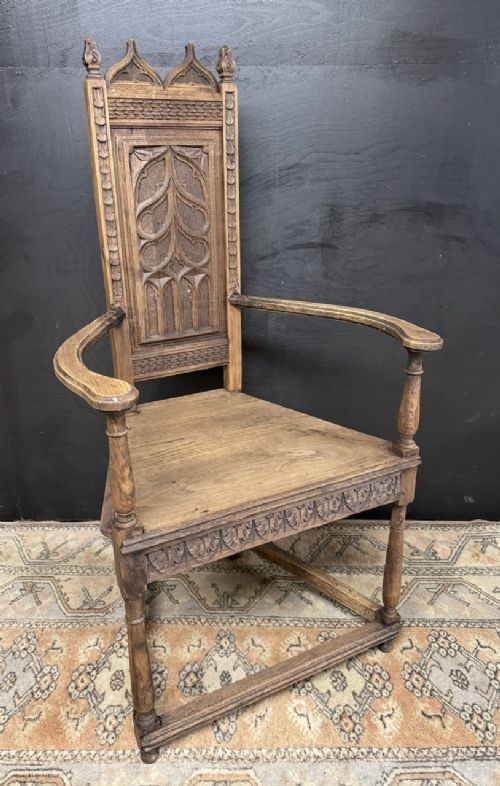
- A style drawing inspiration from medieval architecture and ecclesiastical motifs. These pieces often feature pointed arches, tracery, and tall vertical proportions.
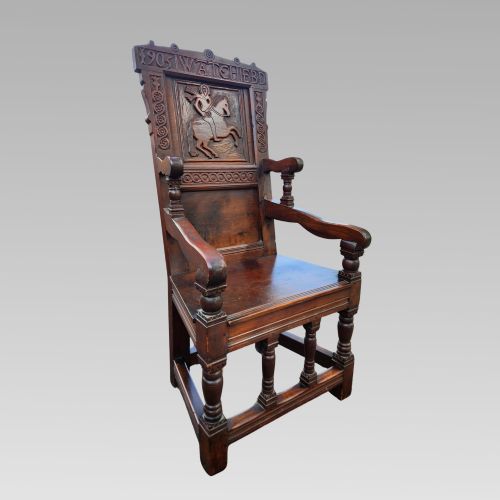
- Wainscot
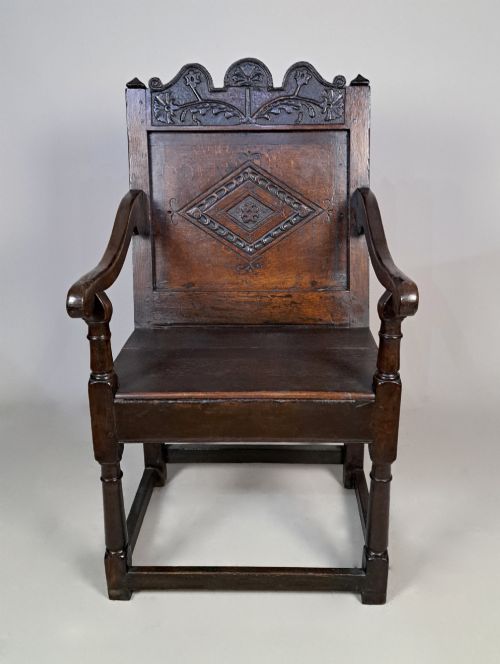
- A traditional term for heavy wooden armchairs featuring panelled backs and solid wooden seats. They originated in sixteenth and seventeenth-century domestic interiors before being reinterpreted in later revival periods.
- Barley Twist
- A turning technique where timber is shaped into a spiral resembling a twisted barley stalk. It appears frequently on the uprights and stretchers of nineteenth-century seating.
Antique Throne Chairs: Frequently Asked Questions
Where should I place a throne chair?
These imposing seats suit large reception rooms, high-ceilinged libraries, and wide hallways where their scale does not overwhelm the surrounding architecture. They anchor a corner or flank a large fireplace effectively.
Because of their height and deep footprints, they require breathing room rather than cramped placement between smaller items of furniture.
Are these chairs comfortable for daily use?
Many examples prioritize upright posture and architectural presence over deep lounging comfort. High backs and rigid wooden arms reflect their ceremonial origins rather than modern ergonomics.
Upholstered leather or fabric variants offer softer seating, though the generous proportions still demand a tall occupant to sit comfortably.
How do I identify a Gothic revival piece?
Gothic revival items display distinct medieval architectural references such as pointed arches, quatrefoils, and heavy panelled construction. Pitch pine and dark oak woods are typical choices for this ascetic.
The vertical emphasis and solemn ornamentation separate them immediately from the curved exuberance of Rococo or Baroque styles.
What is the difference between oak and walnut frames?
Oak frames provide a heavier, more rustic or ecclesiastical appearance associated with Gothic and Arts and Crafts interpretations. Walnut offers a finer grain capable of taking sharper, more intricate carved detail.
Both woods provide the structural strength necessary to support the massive frames characteristic of this seating category.