
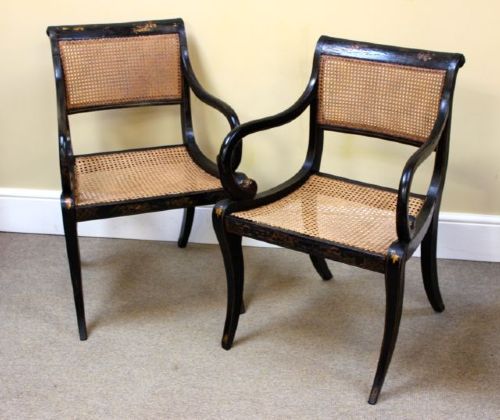
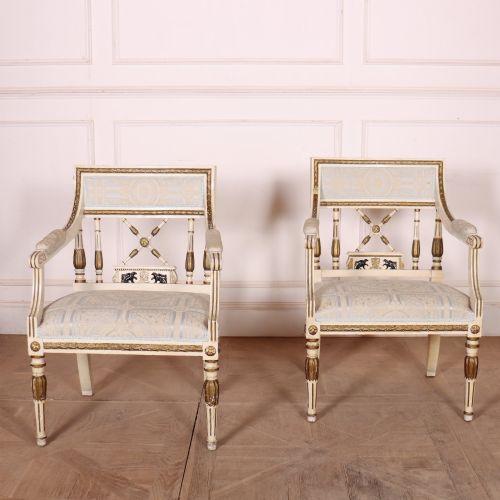
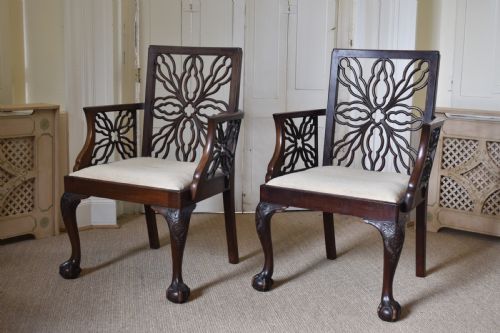
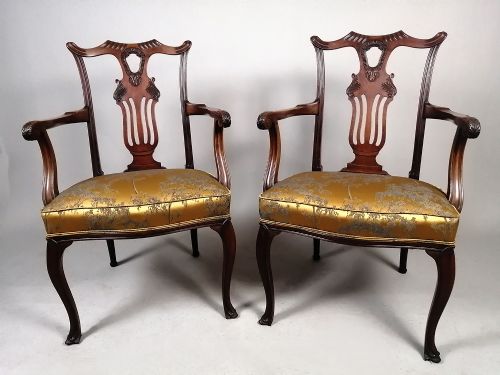
Pair of Carvers
A pair of carvers offers matched seating with distinctive arms, historically placed at the head and foot of a dining table.
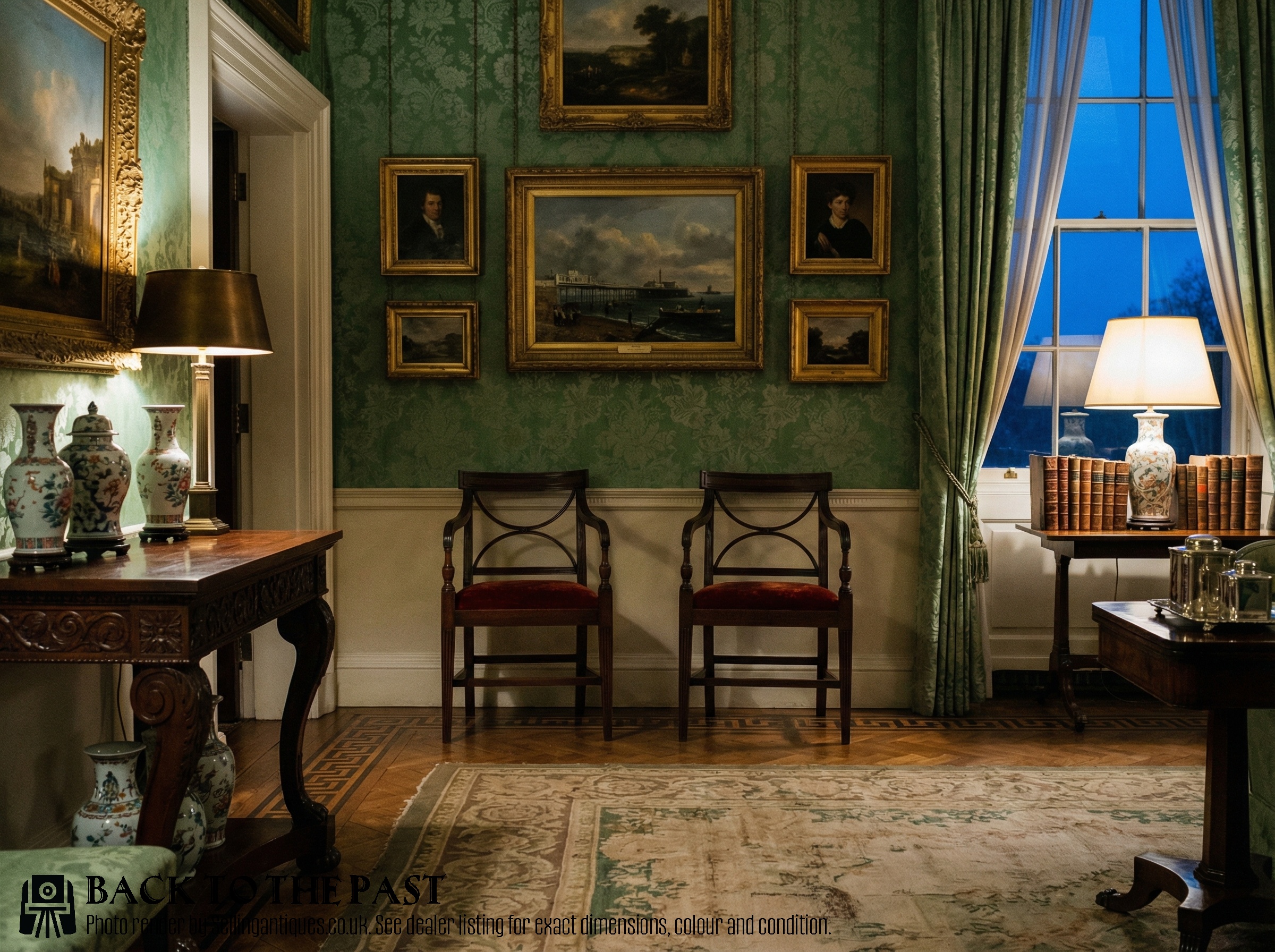
Pair of Carvers
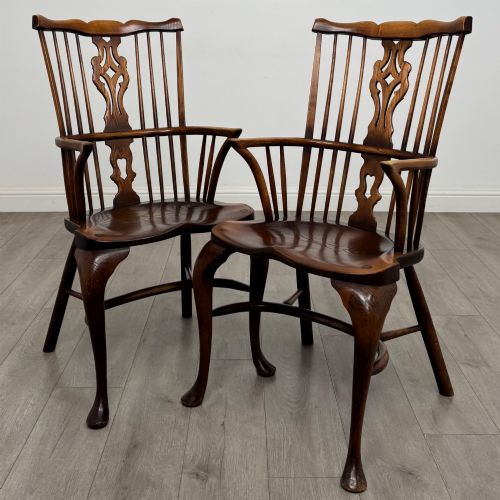
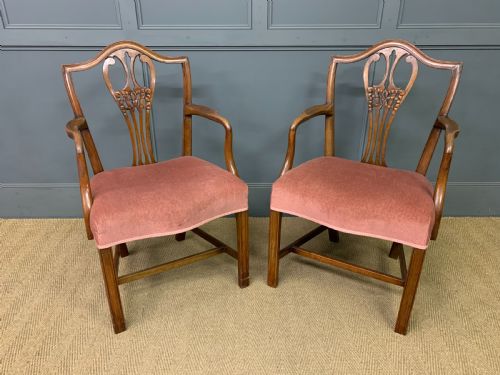
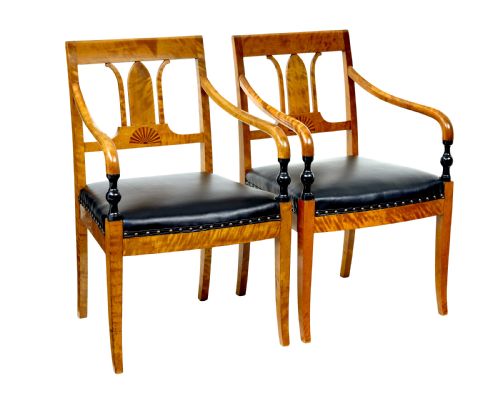
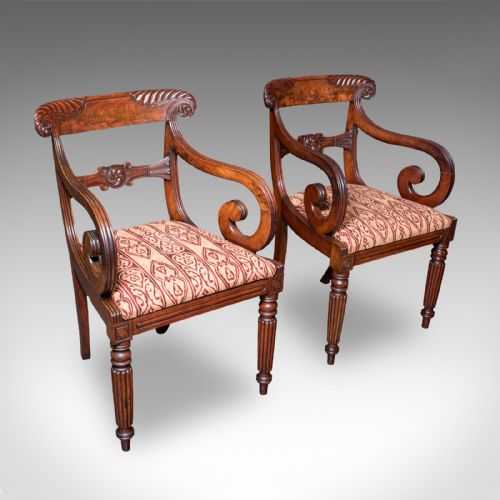
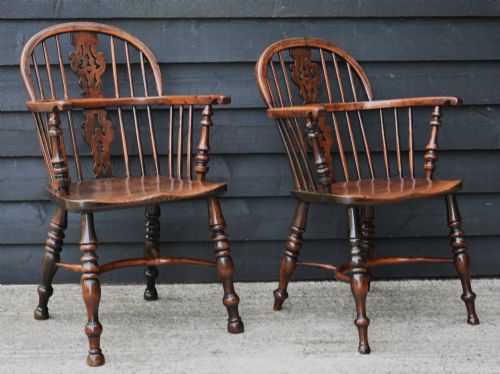
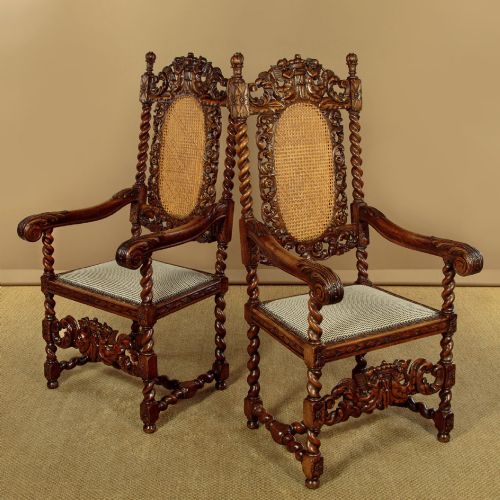
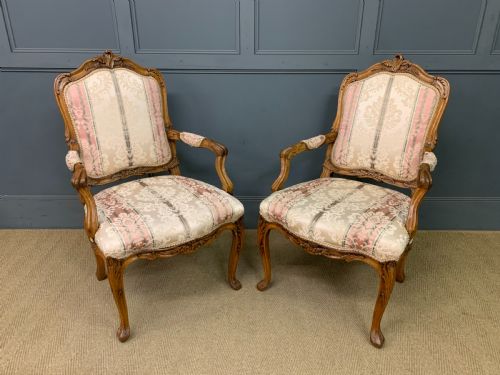
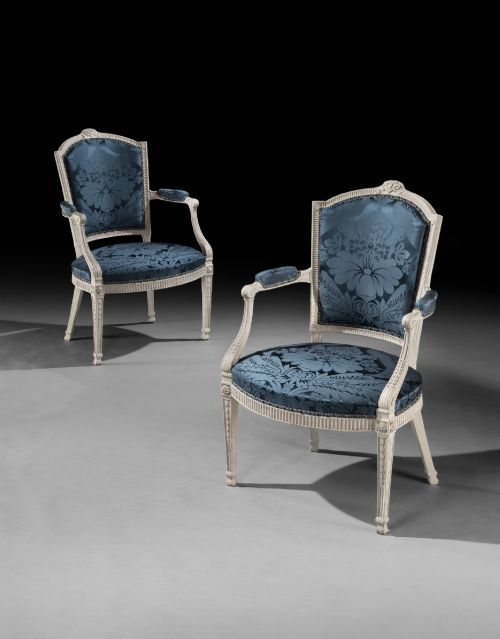
A pair of carvers consists of two matching armchairs designed to sit alongside a larger set of dining chairs. When buyers search for a pair of carvers, they encounter formal mahogany dining seats from the Georgian and Regency periods alongside rustic elm Windsor models and later revival pieces.
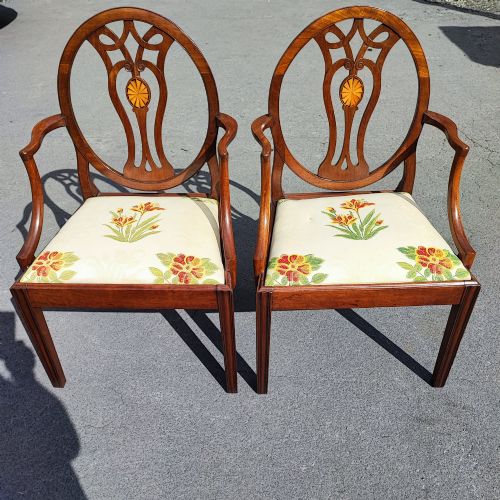
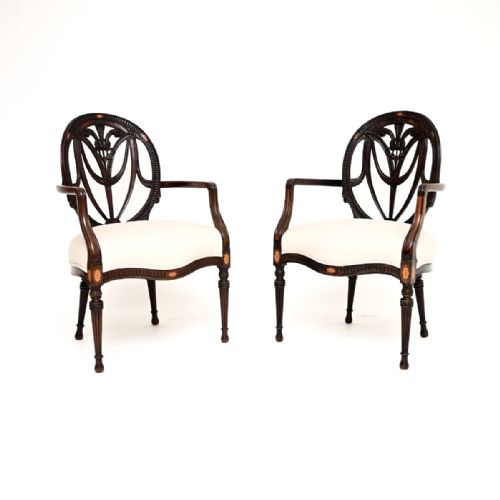
The form encompasses various historical interpretations, including Chippendale style, Hepplewhite revival, and English country designs. Most examples found on this page date from the nineteenth century or the early twentieth century, reflecting the durability of hardwood construction.

Materials and construction methods
Cabinetmakers utilised dense timbers such as mahogany, walnut, oak, and elm to provide the structural strength required for chairs with arms. Secondary materials like cane, rush, fabric, and velvet appear across seats and back panels for comfort and texture.
Joinery techniques ranged from traditional mortise and tenon joints in country Windsor chairs to intricate hand-carving on formal mahogany and walnut frames. Brass accents and inlaid details occasionally finish the woodwork on revival and neoclassical pieces.
Pair of Carvers Retail Price Guide 2026
Typical asking prices for pair of carvers among the pieces listed under this phrase on Sellingantiques today, from the lower quarter to the upper quarter. They describe what is for sale here now, not the wider market.
Listings feature timbers including mahogany, walnut, elm, oak, and birch across periods spanning from the eighteenth century to the 1930s.
Distinguishing quality in matched armchairs
The sophistication of the timber grain and the crispness of the hand-carving separate standard production from superior craftsmanship. Finer examples display balanced proportions, symmetrical wood figures, and integrated structural joints that endure decades of daily use.
Original surfaces and period upholstery materials carry more authority than later alterations or heavy refinishing. The integrity of the frame construction dictates the longevity of each chair.
Edward Barnsley·Thonet
The Pair of Carvers Glossary
- Windsor
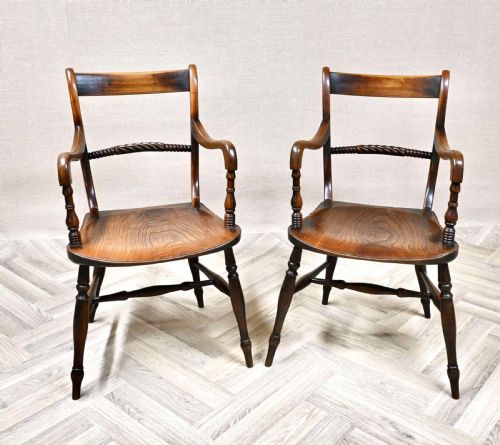
- A wooden chair constructed with upright spindles inserted into a solid sculpted seat. Regional variations include bar-back and wheelback designs.
- Bar-back
- A chair back featuring a horizontal wooden slat resembling a rail or bar. This form frequently appears on Regency dining seats.
- Chippendale style
- A decorative design characterised by interlaced splats and carved cabriole legs. It draws inspiration from mid-eighteenth-century cabinetmaker pattern books.
Pair of Carvers: Frequently Asked Questions
What is the difference between a carver and a dining chair?
Carvers include supportive armrests designed for the host at either end of a dining table, whereas standard dining chairs lack arms to allow tighter placement along the sides.
Historical dining sets typically paired ten or twelve armless chairs with two matching carvers to balance formality and seating capacity.
Were carvers only used for dining?
While primarily associated with dining rooms, armchairs of this scale served as reception seats, desk chairs, and morning room furniture.
Their robust wooden frames allowed them to function in studies and drawing rooms as occasional seating.
How do I identify a Regency period carver?
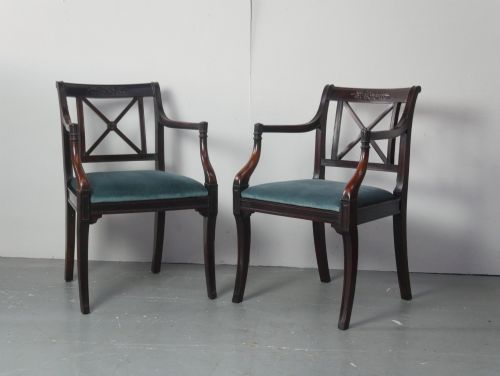
Regency carvers often display classical influences with sabre legs, brass inlay, and horizontal bar-backs derived from ancient Greek and Roman forms.
Dark mahogany timbers and restrained carved details distinguish these early nineteenth-century pieces from heavier Victorian designs.
What wood was most commonly used for country carvers?
Elm, oak, and yew were standard choices for English country carvers due to their local availability and tough grain structures.
Elm provided exceptional flexibility for bent components, making it the preferred material for spindle-back Windsor frames.