
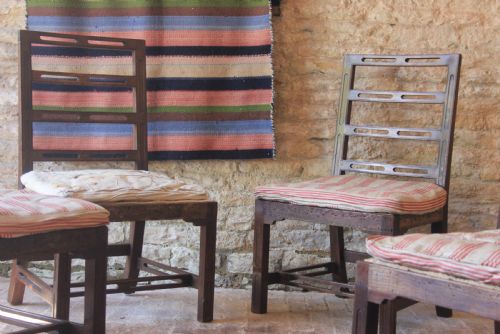
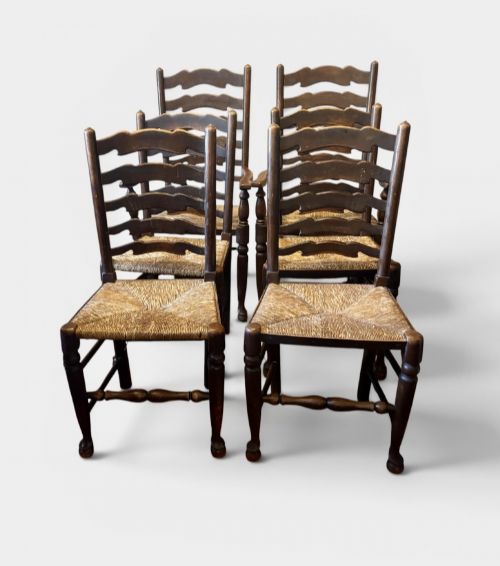


Ladder Back Dining Chairs
Ladder back dining chairs combine horizontal slats with traditional seating, offering robust construction for daily dining.

What ladder back dining chairs are
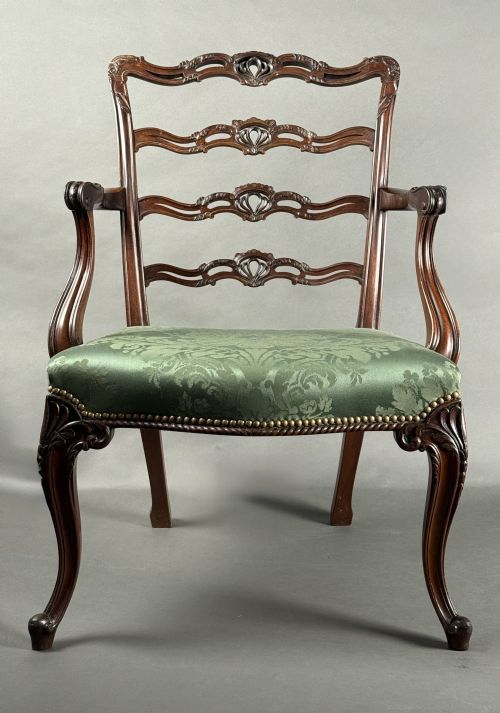
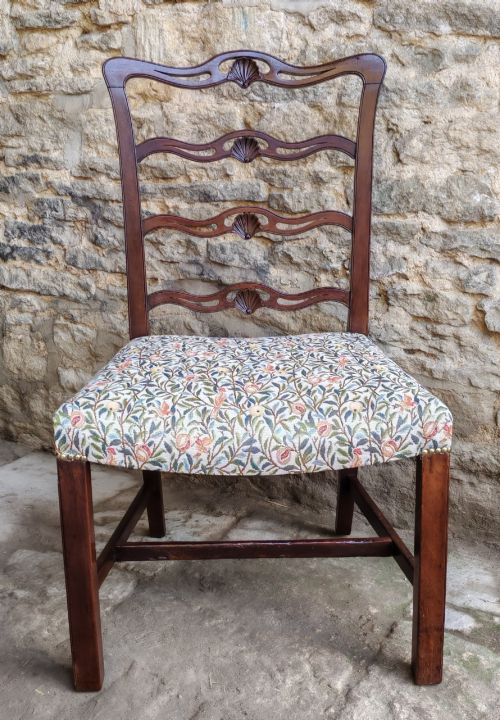
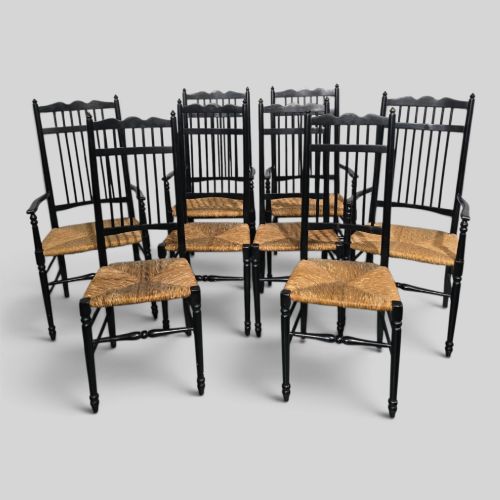
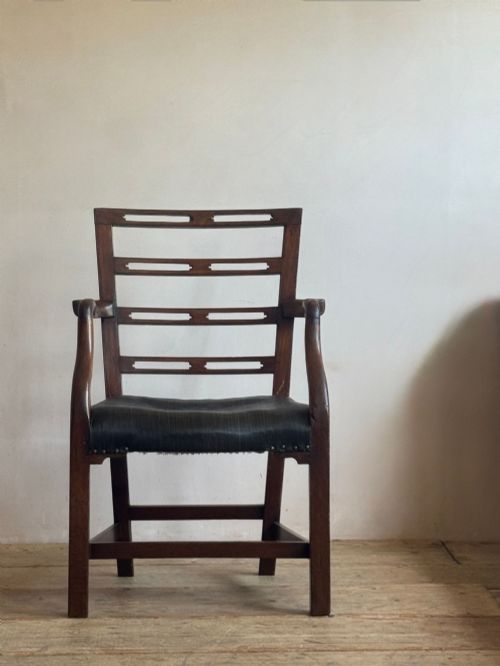
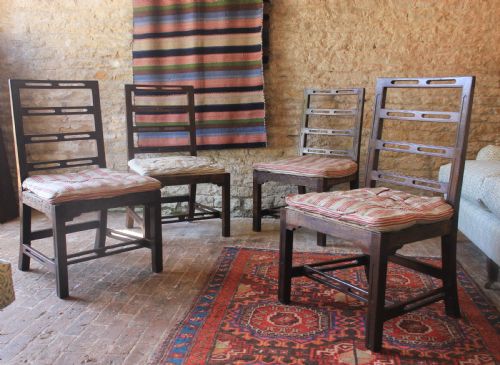
Ladder back dining chairs are seating forms defined by horizontal cross-rails between the upright posts. The phrase covers both straightforward kitchen seating and formal revival models.
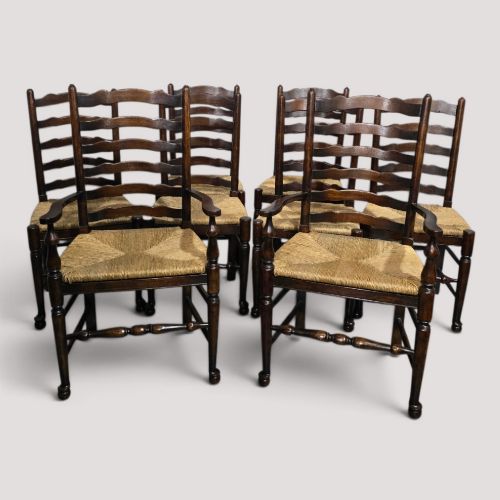
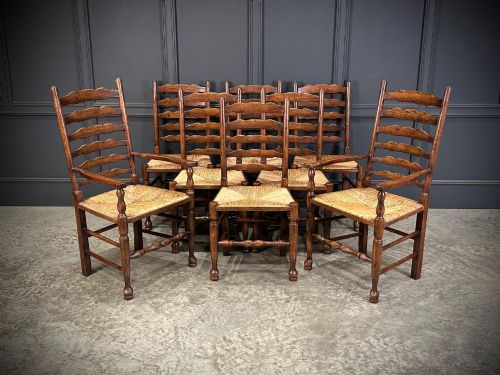
The version most commonly met on this page is the solid oak construction, often incorporating rush seating or wood panels, alongside mahogany styles rooted in earlier English designs.
Origins stretch across English country workshops, French provincial houses, and American makers, spanning periods from the eighteenth century through the Victorian era and into twentieth-century revivals.
How they were made
Construction relies on native hardwoods such as oak, elm, ash, and mahogany, shaped into upright posts and curved slats. Joinery involves traditional pegging and mortise and tenon joints to secure the frame.
Seats utilise woven rush, solid wood, leather, or upholstered fabric dropped into or laced onto the wooden rails. Turned elements often appear on the legs and stretchers of country and revival pieces alike.
Retail Price Guide 2026
Typical UK retail prices for ladder back dining chairs, calculated from the Sellingantiques database of over a million retail prices indexed since 2003. This retail price guide relies exclusively on Sellingantiques data; no external sources or auction records are used, so the figures do not describe the wider market.
What varies in quality
Quality rests on the selection of timber and the precision of the frame joinery. Tighter grain in woods like oak and mahogany produces greater stability across the structure.
The integrity of the woven rush or the upholstery finish dictates the standard of the seat. Hand-turned spindles and evenly curved ladder rails show greater consideration by the maker.
Lawrence Neal·Titchmarsh & Goodwin·Gordon Russell·S&H Jewell
The Ladder Back Dining Chairs Glossary
- Ladder back
- A chair design featuring multiple horizontal slats rising up the backrest between two upright posts. This framework provides structural support while keeping the chair relatively light.
- Rush seat
- A seating surface woven from natural marsh grass twisted around a wooden frame. It yields a textured, resilient surface often found on country and provincial chairs.
- Chippendale style
- A decorative manner originating in the eighteenth century, adapted later in revival pieces using mahogany with carved details. It brings classical proportions to ladder back forms.
- Carver
- An armchair featuring structural side arms, designed for the head of the dining table. Pairs of these often accompanied sets of single chairs.
- Stretcher
- A horizontal support connecting the legs of a chair to add rigidity. Turned stretchers frequently reinforce country dining chairs.
Frequently Asked Questions
How do I care for rush seats?
Keep rush seating dry and clean it gently with a soft brush to remove dust. Avoid excess moisture, which can weaken the natural fibres over time.
Applying occasional light conditioning helps maintain the flexibility of the woven material without damaging the historic surface.
Are these chairs suitable for daily use?
Solid hardwood frames and traditional joinery make these chairs robust enough for regular dining. Checking the stability of the joints ensures they withstand daily movement.
Using them responsibly preserves the historic timber and the integrity of the seat construction for years ahead.
How do I spot a revival piece?
Revival chairs often replicate eighteenth-century Chippendale patterns or Arts and Crafts ideals while utilising nineteenth or twentieth-century timber preparation. Machine-sawn marks or uniform internal construction give clues to the later date.
Stylistic cues match specific periods of renewed interest in country crafts, distinguishing them from their earlier prototypes.
What is the difference between single chairs and carvers?
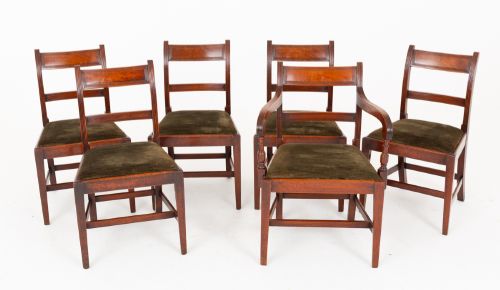
Single chairs lack arms and are built for standard placement around the sides of a dining table. Carvers include armrests, providing an expanded frame for the host.
Matching sets often combined a larger number of single chairs with a pair of carvers for the ends of the table.