


Victorian Oak Side Chairs
Victorian oak side chairs bring solid nineteenth-century presence to a room, offering sturdy seating through carved dining forms and upright hall designs.
Victorian Oak Side Chairs
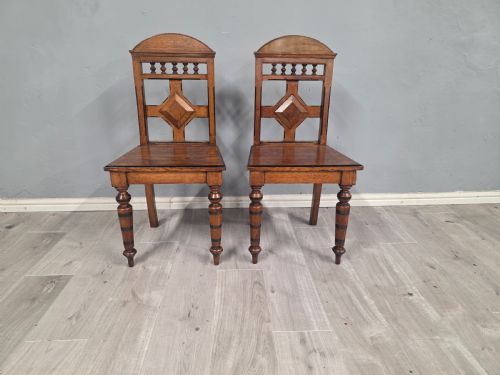
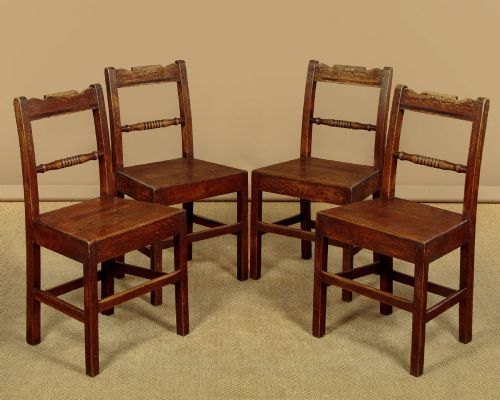
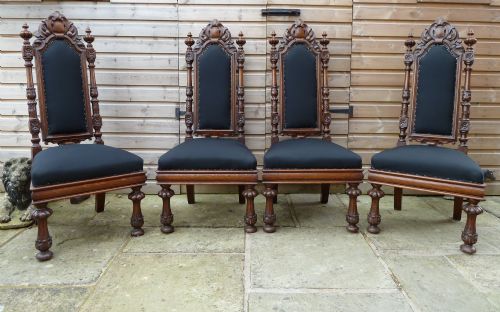
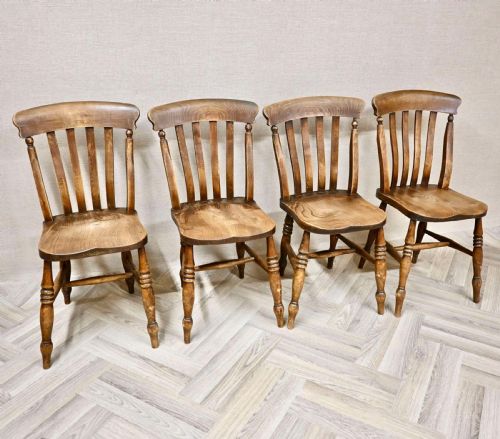
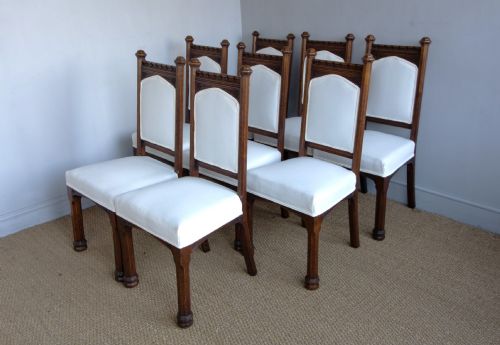
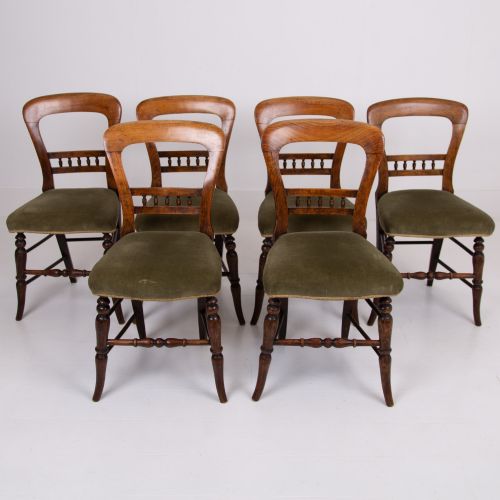
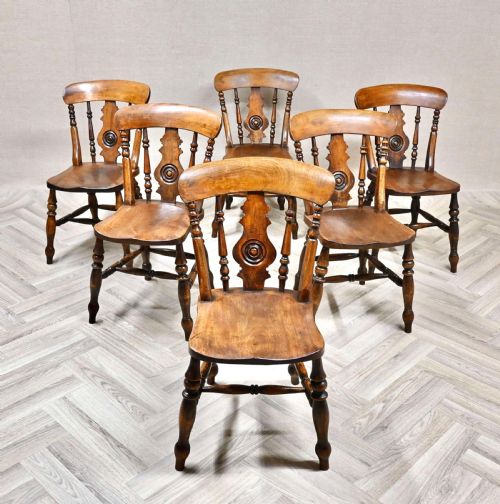
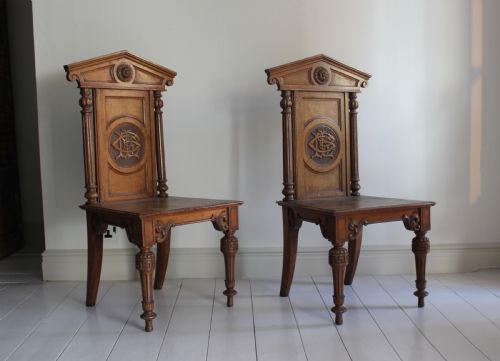
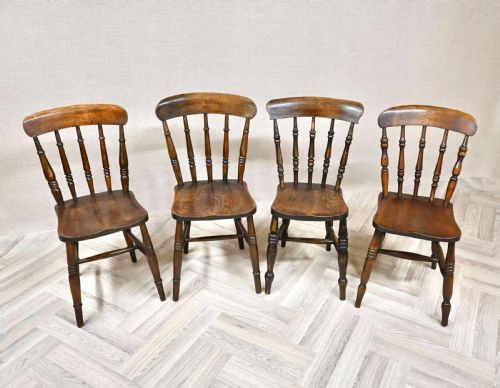
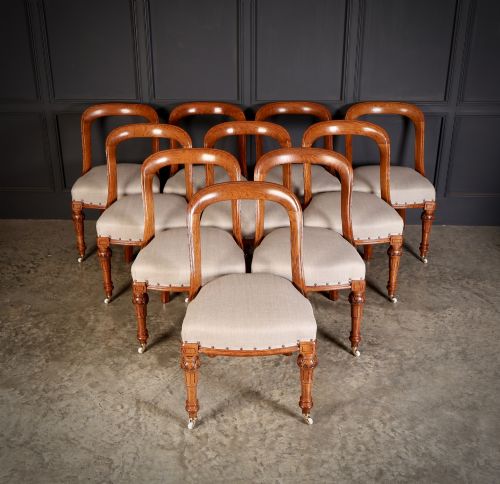
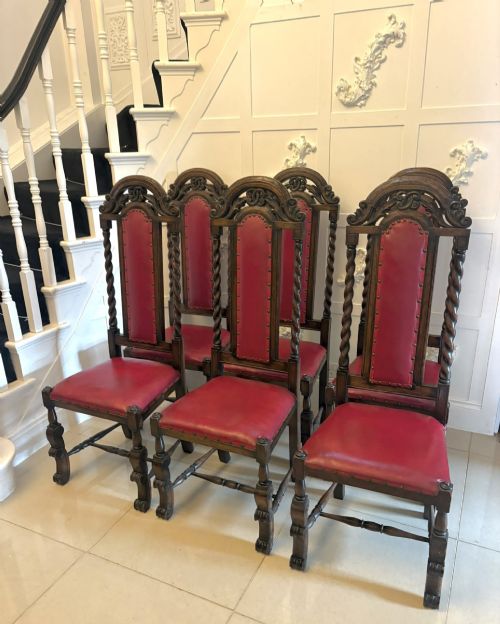
When searching for victorian oak side chairs, buyers encounter practical seating spanning dining sets, formal hall chairs, and sturdy country kitchen variants. The selection ranges from architectural Gothic Revival pieces with heraldic shields to simpler turned-leg designs shaped for everyday use.
Most pieces date from the nineteenth century, reflecting periods such as the 1870s and 1890s alongside later Edwardian interpretations. These chairs serve primarily around dining tables, in entrance halls, or as occasional seats in libraries and bedrooms.
How they were made
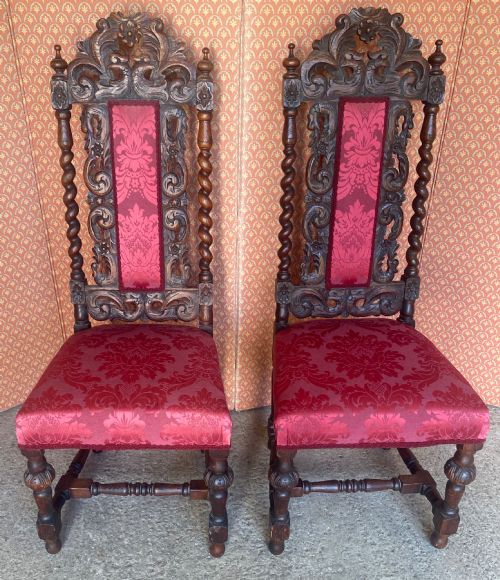
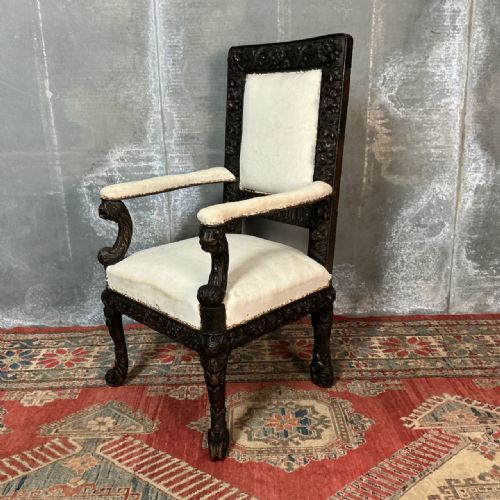
Makers utilised solid oak alongside supporting timbers like elm, beech, and ash for frames, often incorporating brass hardware or leather and fabric upholstery. Carving, barley twist turnings, and bobbin framing defined the decorative approach during this era.
Joints relied on traditional timber construction methods designed to withstand heavy daily use. Surfaces received wax or polish finishes that highlighted the natural grain and figuring of the oak.
Victorian Oak Side Chairs Retail Price Guide 2026
Typical asking prices for victorian oak side chairs among the pieces listed under this phrase on Sellingantiques today, from the lower quarter to the upper quarter. They describe what is for sale here now, not the wider market.
Listings feature nineteenth-century oak alongside elm, brass, leather, and fabric across dining, hall, and Windsor chair forms.
What varies in quality
Quality rests in the depth and crispness of the hand-carving, particularly on heraldic shield backs and Gothic tracery. Substantial timber thickness and well-proportioned turned legs elevate certain examples above standard utilitarian production.
Original matching sets command higher regard than assembled groups, while branded stamps from notable cabinetmakers or institutional provenances add documented distinction.
Strahan·Hindley and Sons
The Victorian Oak Side Chairs Glossary
- Side chair
- A chair without arms, designed originally for dining or placement against a wall in a hallway. These forms make up the vast majority of traditional seating sets.
- Hall chair
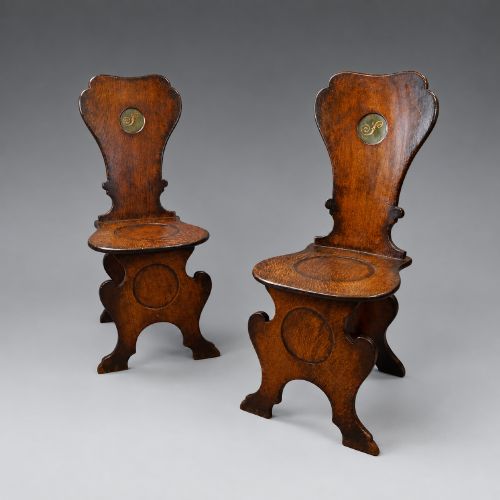
- An upright wooden seat intended for an entrance hall, often featuring a solid panel back carved with family crests or heraldic shields.
- Gothic Revival
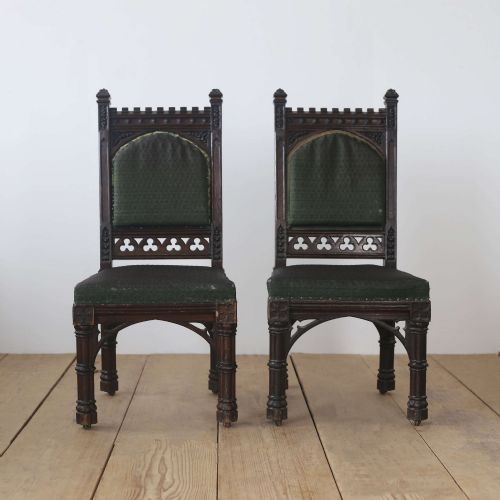
- A nineteenth-century architectural and decorative style drawing inspiration from medieval design. It frequently appears on chairs through pointed arches, trefoils, and heavy carved tracery.
- Barley twist
- A woodworking technique where a lathe shapes timber into a spiral resembling twisted barley sugar. This decorative turning is common on nineteenth-century chair legs and stretchers.
- Bobbin turning
- A method of turning wood on a lathe to create a series of rounded, spool-like shapes linked together. It creates a distinctive textured frame popular in Victorian seating.
Victorian Oak Side Chairs: Frequently Asked Questions
Where were victorian oak side chairs used?
These chairs served primarily around dining tables or stood rigidly against hallway walls for brief waiting periods. Many also found places in libraries, reception rooms, and bedrooms as occasional seating.
Their sturdy construction allowed them to withstand heavy daily traffic in busy nineteenth-century households.
How do I identify a hall chair?
Hall chairs feature rigid, upright wooden backs without upholstery, specifically designed for placement in entrance spaces rather than around a dining table. They frequently incorporate carved heraldic shields, crests, or solid wooden seats.
Their architectural silhouettes often reflect Gothic Revival or Jacobean Revival influences from the nineteenth century.
What is the difference between dining and side chairs?
Dining chairs form part of a matched set intended specifically for use around a dining table during meals. Side chairs represent a broader category of armless seating used across multiple rooms, including halls and bedrooms.
Many nineteenth-century dining chairs double functionally as side chairs when placed against room perimeters.
How can I date an oak chair?
Dating relies on stylistic markers such as Gothic Revival tracery, barley twist turnings, or bobbin framing popular during specific decades like the 1870s and 1890s. Tool marks, timber selection, and construction methods also provide clues to the manufacturing period.
Maker stamps or institutional markings occasionally offer precise historical documentation.