

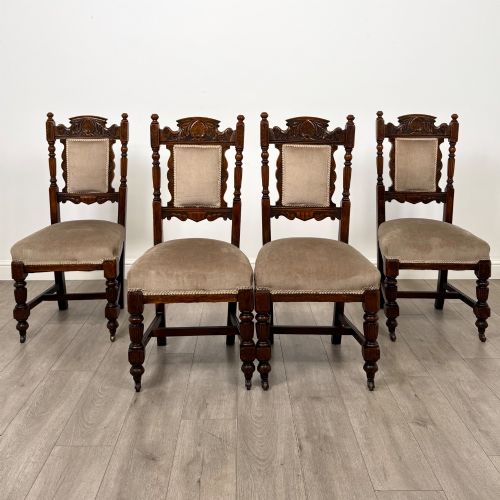
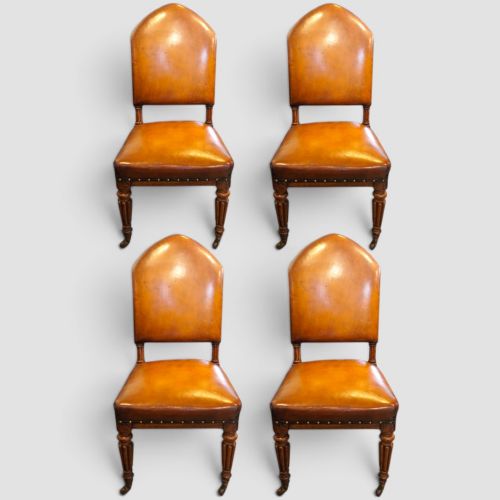
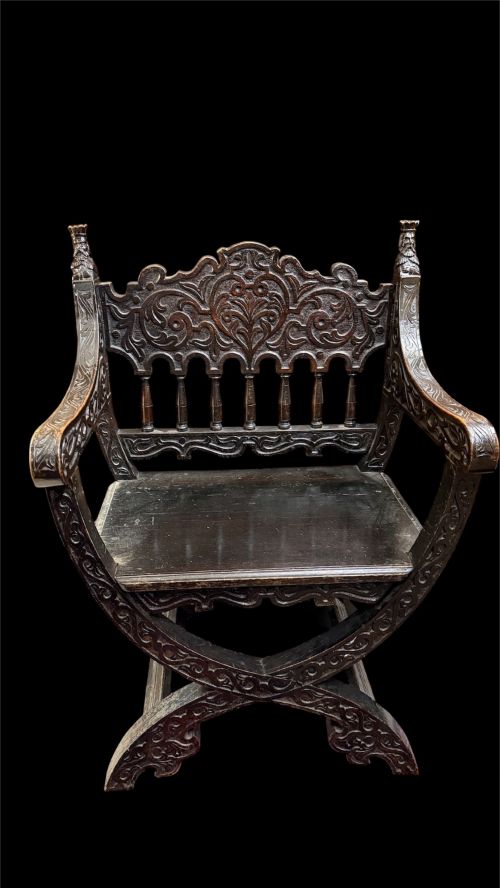
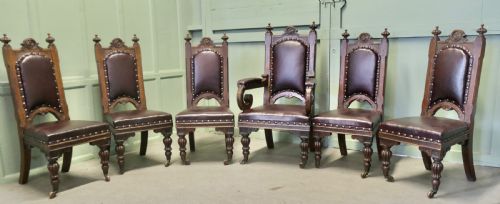
Gothic Revival Oak Chair
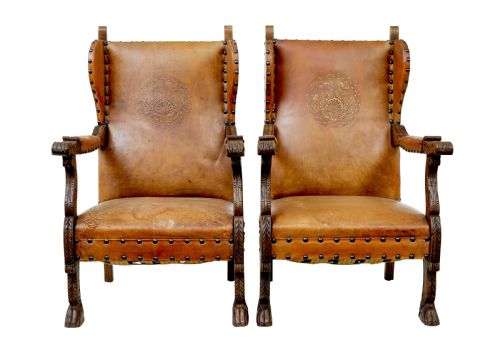
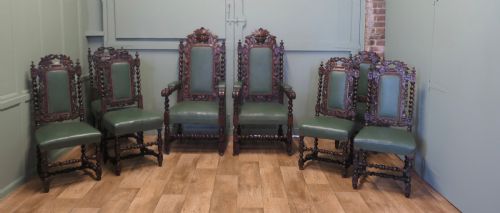
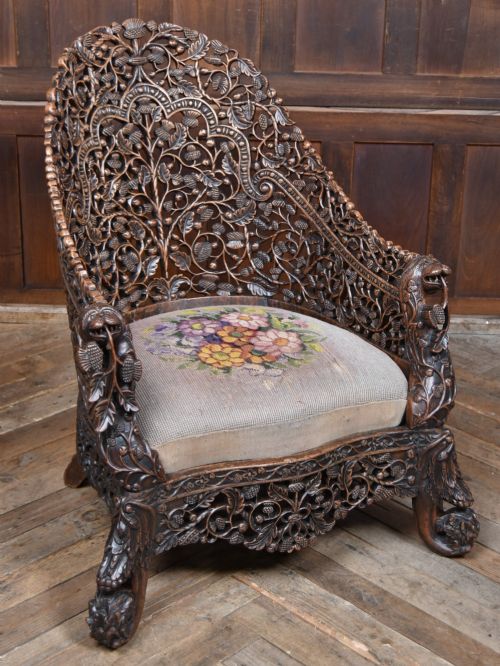
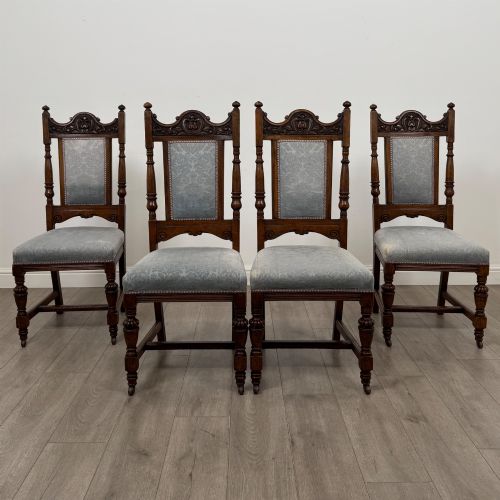
These gothic revival oak chair examples bring heavy timber, pointed arches and structural ambition into domestic rooms.
What a gothic revival oak chair is
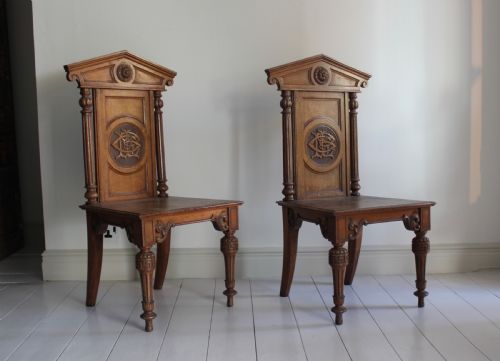
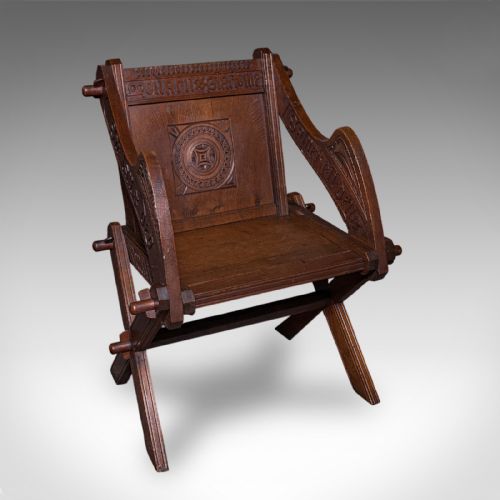
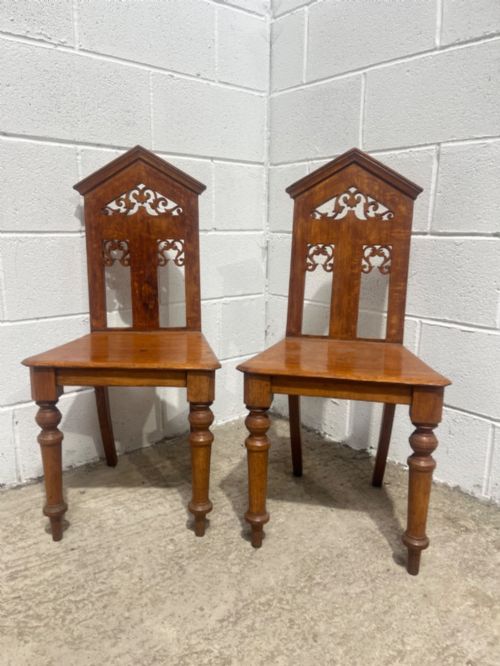
A gothic revival oak chair draws on medieval architecture and ecclesiastical design, translating stone tracery and pointed arches into solid timber furniture. The search phrase covers seating designed to evoke centuries past through geometric carving, panelled backs and imposing vertical lines.
Most pieces seen here belong to the nineteenth century and the Victorian era, spanning forms from small hall chairs to heavy throne chairs, armchairs and side chairs. Makers drew inspiration from earlier Jacobean, Carolean and seventeenth century styles alongside direct medieval sources.
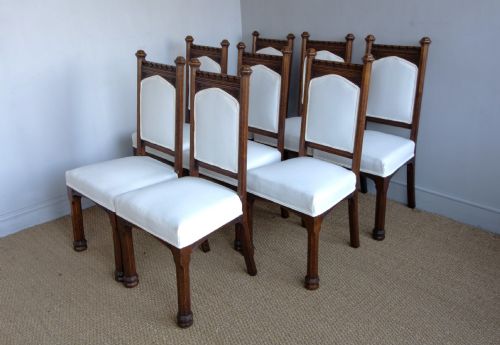
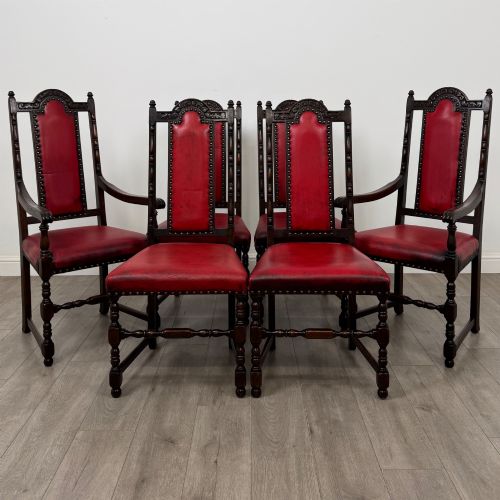
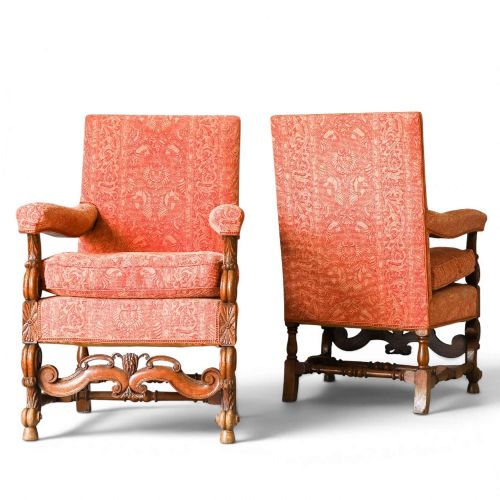
Armchairs, hall chairs and side chairs dominate the selection, often incorporating elements like leather upholstery, brass details and ebonised highlights. These seats served formal entrance halls, libraries, dining rooms and studies where owners wanted to project historical weight and scholarly seriousness.
Materials and construction
Solid oak provides the primary structural timber for these pieces, chosen for its strength, grain and historical association with medieval building. Workshops occasionally combined this with secondary materials like brass for hardware or red leather for padded seats and desk inserts.
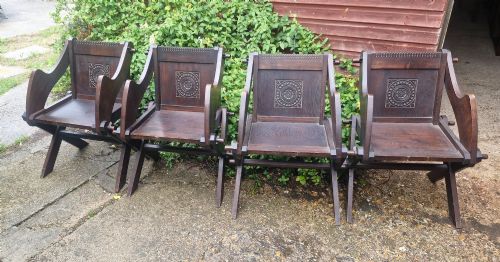
Carving forms the central technique, ranging from shallow geometric panels to deep relief work depicting architectural motifs, foliage and heraldic shapes. Joinery relied on traditional pegged mortise and tenon construction to support the substantial weight of the timber frames.
Retail Price Guide 2026
Typical UK retail prices for gothic revival oak chair, calculated from the Sellingantiques database of over a million retail prices indexed since 2003. This retail price guide relies exclusively on Sellingantiques data; no external sources or auction records are used, so the figures do not describe the wider market.
The archive records twelve-piece dining sets alongside single hall chairs and swivel desk chairs.
Distinctions in quality
Quality rests on the ambition of the design and the crispness of the carved detail. Pieces created after specific architectural plans by known architects or high-end cabinet makers show a sharper command of proportion and historical ornament than generic commercial versions.
The choice of timber figure and the integration of structural joints also divide standard workshop output from exceptional examples. A heavier, well-figured oak frame with deep, undercut carving holds its presence better than flat, mechanically stamped decoration.
J. W. Cook & Sons·Alfred Waterhouse·Shapland & Petter·T. Wright
The Gothic Revival Oak Chair Glossary
- Wainscot chair
- An early form of heavy wooden armchair constructed with panelled backs and solid wooden seats. They often feature carved ornamentation along the top rail and arms.
- Tracery
- Openwork stonework ornamentation in the upper part of gothic windows, translated here into carved wooden patterns on chair backs.
- Turners chair
- A type of chair constructed entirely from turned wooden spindles and members, creating a geometric cage-like structure.
- Ebonised
- Wood treated with a chemical stain or finish to imitate ebony, providing dark contrast against natural oak.
- Steeple back
- A chair back featuring tall, pointed vertical elements that mimic gothic church spires and architectural pinnacles.
Frequently Asked Questions
Where did people put these chairs?
These chairs sat in entrance halls, libraries, dining rooms and studies. Owners placed them where their architectural lines and serious timber presence would impress visitors.
Smaller hall chairs lined corridors, while heavy armchairs and throne chairs stood near fireplaces or at the heads of dining tables.
How do I spot nineteenth century work?
Nineteenth century pieces show machine-sawn timber elements combined with hand-finished carving, distinct from true medieval or seventeenth century originals. Look at the colour and patination of the oak alongside construction marks inside the seat frames.
Revival pieces often exaggerate medieval proportions and use nineteenth century upholstery methods beneath modern or period leather covers.
Are these chairs comfortable for daily use?
Many of these pieces were built for visual impact and upright posture rather than relaxed lounging. Wooden seats and rigid panelled backs encourage a straight spine.
Upholstered versions with leather pads offer more ease, though the heavy wooden arms and frames remain fixed and substantial.
What styles influenced these designs?
Cabinet makers drew upon medieval ecclesiastical architecture, fourteenth and fifteenth century church woodwork, and later seventeenth century Jacobean and Carolean domestic furniture. Designers like A. W. N. Pugin championed the return to true gothic principles.
Arts and Crafts makers later adapted these heavy gothic forms to emphasise honest construction and hand-worked materials.