

Oak Open Armchair
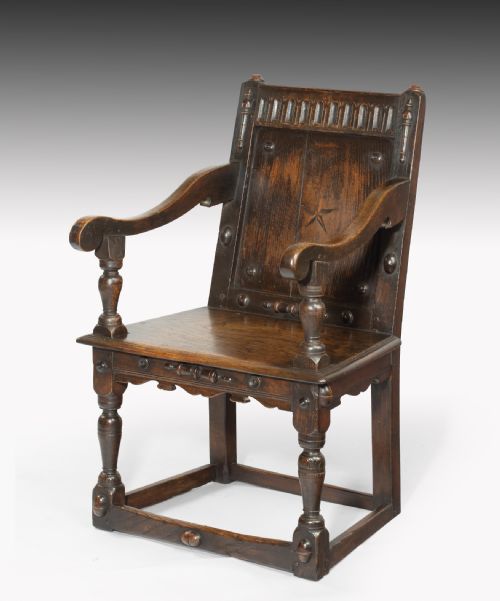
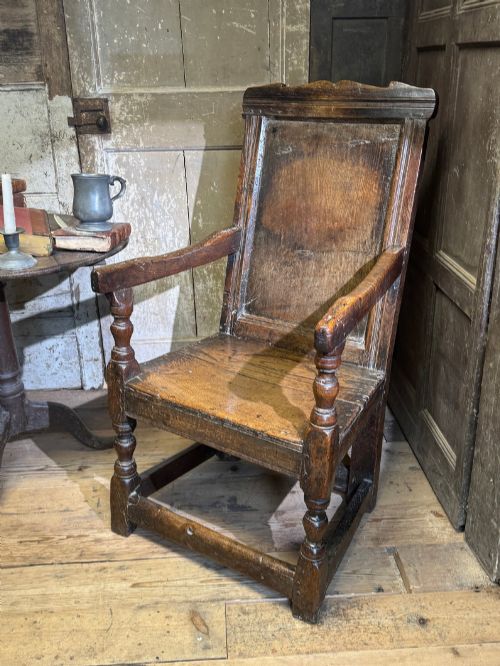
An oak open armchair brings solid character and tactile grain directly into a room, offering robust daily seating steeped in historical craft.

Defining the Oak Open Armchair
The search for an oak open armchair leads directly to sturdy seating forms spanning several centuries, from early wainscot chairs to later Arts and Crafts interpretations. Buyers encounter diverse regional expressions, including Welsh country models, Irish variants, and refined George III designs.
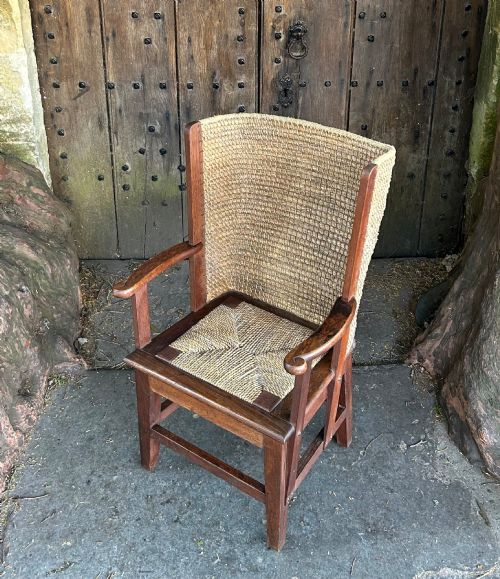
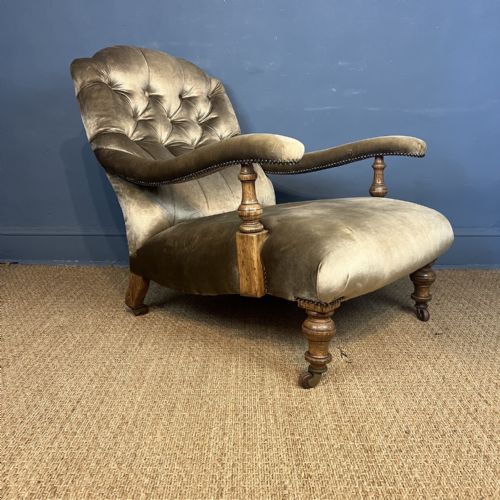
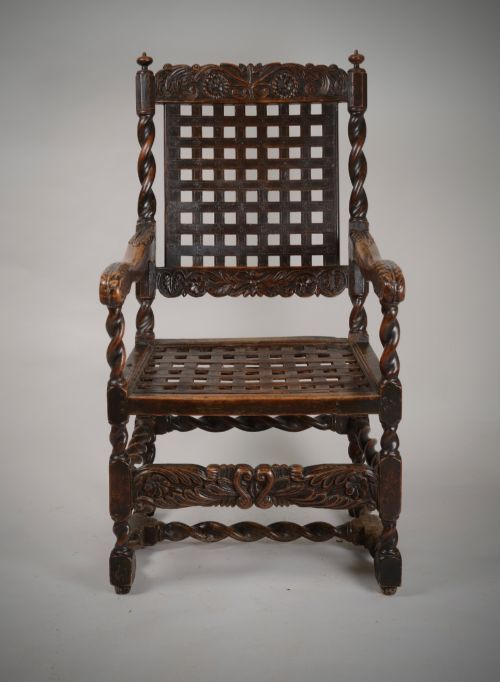
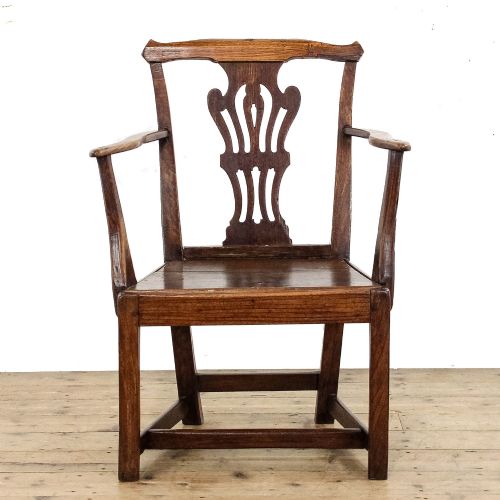
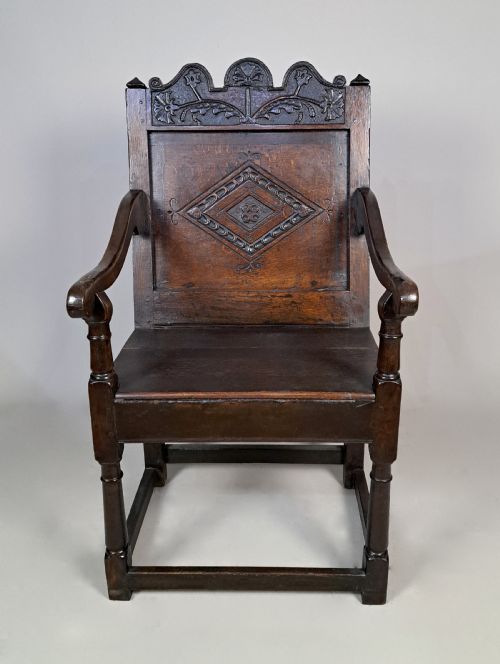
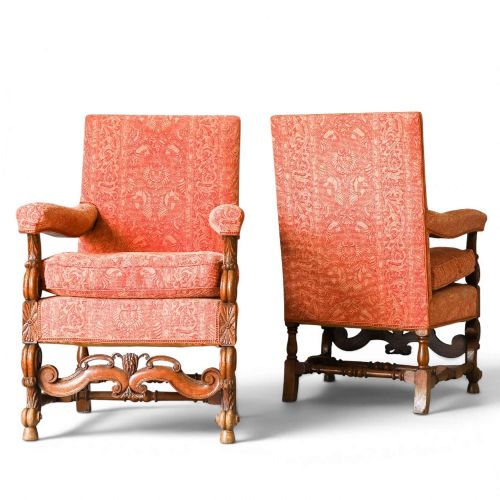
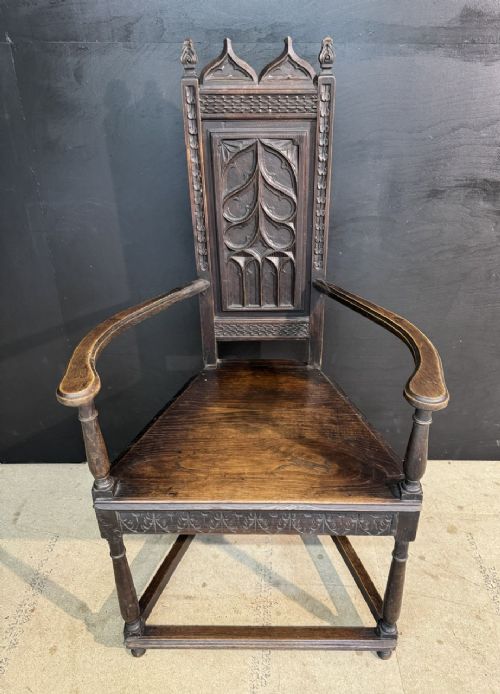
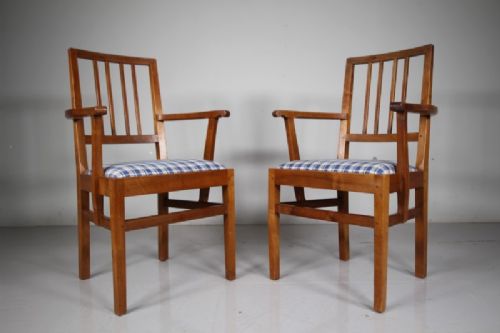
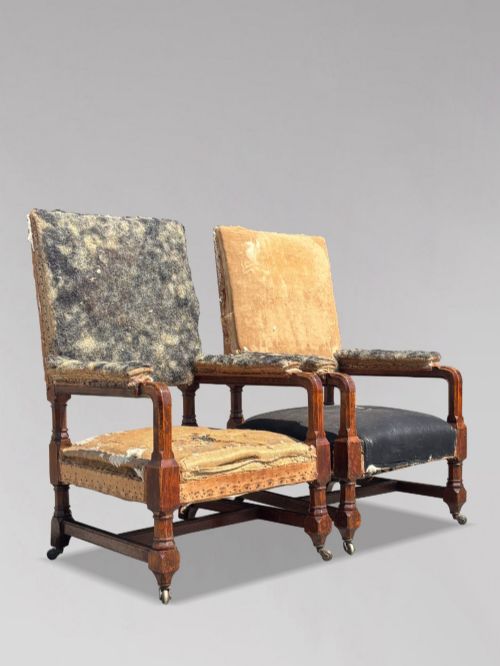
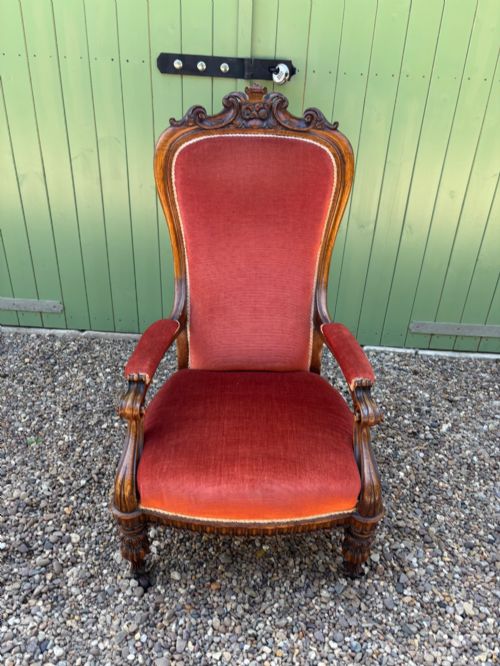
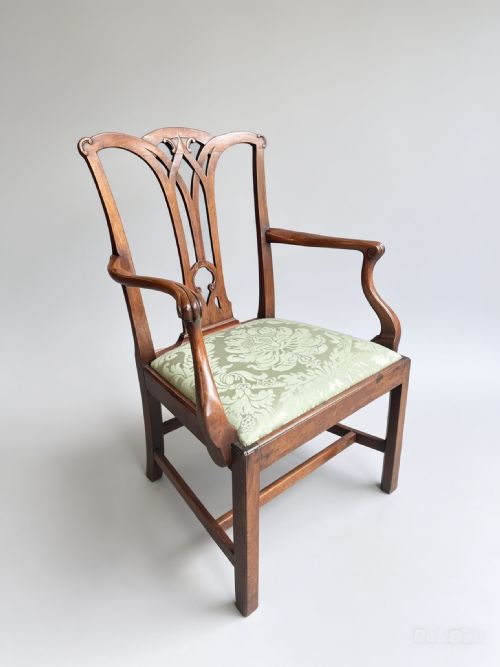
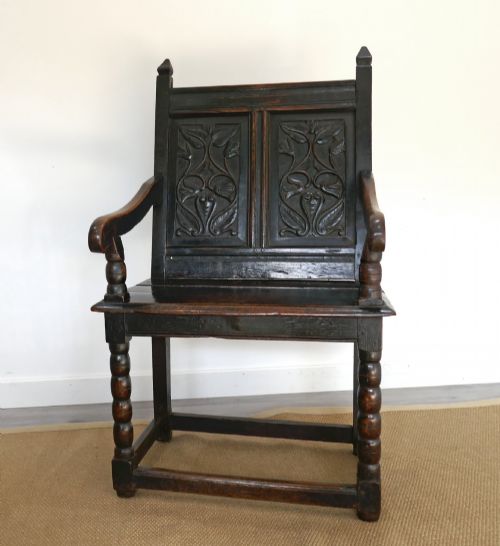
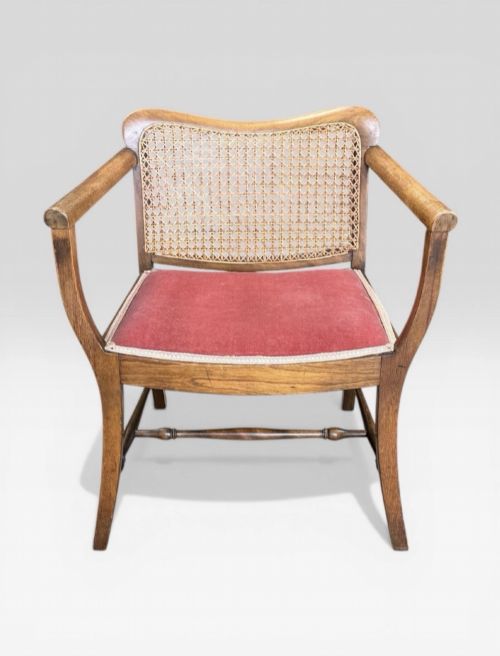
The pieces on this page range from seventeenth-century carved examples to nineteenth-century revival styles and twentieth-century Arts and Crafts items. Forms vary from high-backed library thrones and panel-backed carvers to low leather-studded seats and spindle-backed desk chairs.
Country pieces sit alongside classically inspired revivals, demonstrating how makers adapted the form for domestic halls, firesides, and studies. The surviving examples reflect a continuous tradition of timber-framed seating designed for heavy household use.
Materials and Construction
The primary material across these listings is solid oak, frequently supplemented with secondary woods such as elm and beech. Workshops utilised traditional joinery techniques, employing pegged mortise and tenon joints to build rigid frames that withstand centuries of use.
Upholstery materials appear in tandem with the woodwork, incorporating leather, woolwork, rush, and cane. Metal elements such as brass studs and copper accents occasionally fasten seats and trim, while hand-carving defines the crests, panels, and splats of formal and regional pieces alike.
Retail Price Guide 2026
Typical UK retail prices for oak open armchair, calculated from the Sellingantiques database of over a million retail prices indexed since 2003. This retail price guide relies exclusively on Sellingantiques data; no external sources or auction records are used, so the figures do not describe the wider market.
One remarkably enthusiastic description records a massive Welsh armchair as a genuine throne fit for an Eisteddfod.
Assessing Quality and Character
Quality in these armchairs rests upon the depth of the hand-carving and the integrity of the structural timber. Superior pieces exhibit crisp detail in relief work, balanced proportions, and well-chosen grain that integrates naturally with the overall form.
The distinction between standard country production and finer workshop output lies in the refinement of the turning, the comfort of the sweeping arms, and the preservation of original surfaces. Maker attribution, when present, elevates the piece alongside robust, uncompromised joinery.
Heals·William Birch of High Wycombe
The Oak Open Armchair Glossary
- Wainscot chair
- A heavy wooden armchair of seventeenth-century origin, featuring panelled backs and solid wooden seats. These early forms often display elaborate carving on the crest rail.
- Carver
- A traditional term for an armchair that matches a set of smaller dining chairs. They typically feature open arms to accommodate wider clothing.
- Splats and spindles
- Vertical wooden elements forming the backrest of a chair. Splats are flat and often shaped, whereas spindles are turned on a lathe.
- Bergere
- A type of upholstered armchair with enclosed cane or wicker work sides and back panels. Oak examples often combine woven cane with exposed timber frames.
- Box stretcher
- A system of horizontal rails connecting the lower legs of a chair on all four sides. This framework adds significant rigidity to the entire structure.
Frequently Asked Questions
How do I date an oak armchair?
Dating relies on observing construction methods, joinery types, and stylistic indicators such as carved crests or turned stretchers. Seventeenth-century pieces display heavy panel construction, while Georgian and Victorian examples show lighter framing and different revival motifs.
Secondary materials and wear patterns further assist in placing a chair within a specific period. Comparing the turning of legs and arms against documented examples helps narrow down the decade of manufacture.
Were these chairs used at dining tables?
Many oak armchairs function as carvers, historically placed at the head of a dining table alongside matching side chairs. Their open arms provided comfortable seating for hosts while allowing room for voluminous historical garments.
Other variants served specific domestic roles in libraries, halls, and firesides rather than dining spaces. Heavy wainscot and throne-like armchairs were typically positioned in principal rooms for important household members.
How should I care for antique oak furniture?
Maintain oak armchairs by keeping them away from direct heat sources and sudden humidity changes to prevent the timber from splitting. Regular dusting with a dry, soft cloth preserves the polished surface without building up chemical residues.
Leather and rush elements require specific maintenance suited to their natural fibres. Conditioning leather periodically prevents cracking, while rush seating benefits from avoiding excessive moisture.
What is the difference between Arts and Crafts and Georgian styles?
Georgian oak armchairs often reflect classical proportions, sometimes borrowing Chippendale or country vernacular influences with shaped splats and cabriole or tapered legs. They emphasise formal elegance adapted for domestic comfort.
Arts and Crafts pieces, emerging strongly around nineteen-ten, favour visible construction, honest materials, and simpler functional lines. These later chairs highlight the hand of the maker and structural integrity over classical ornamentation.