

17th Century Chair
When you search for a 17th century chair, you encounter sturdy joined timber and carved walnut designed for status and daily use.
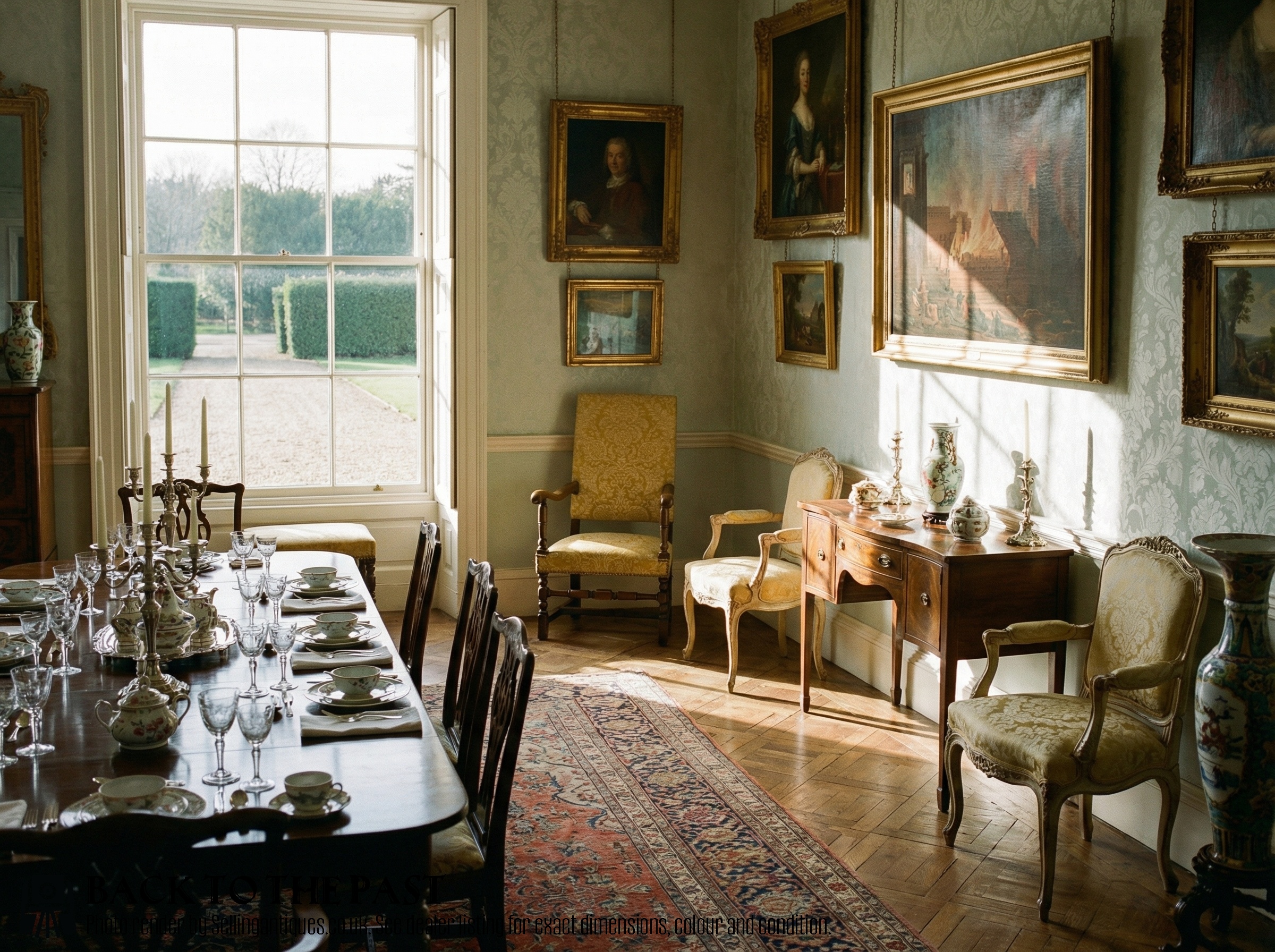
17th Century Chair
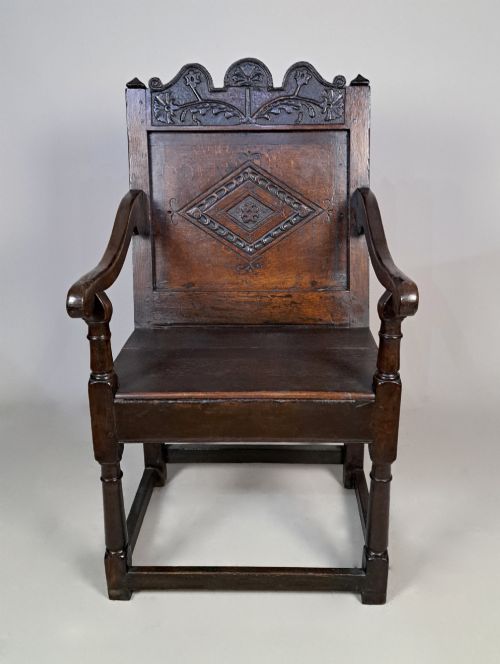
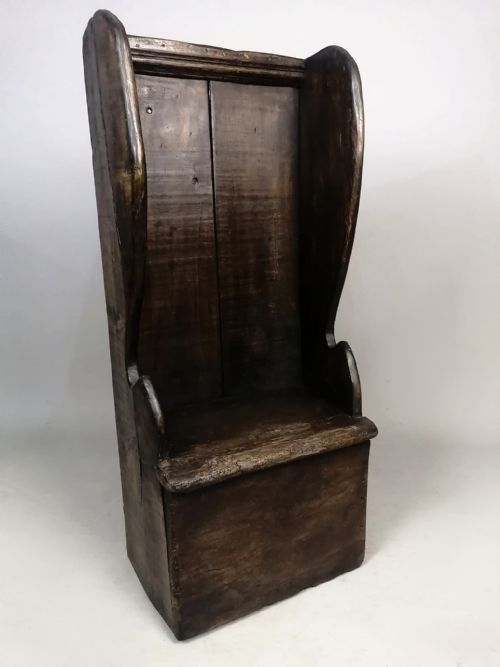
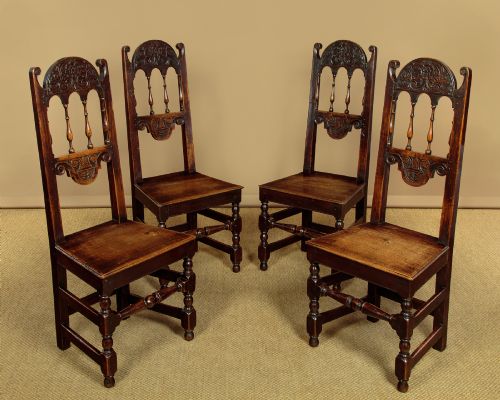
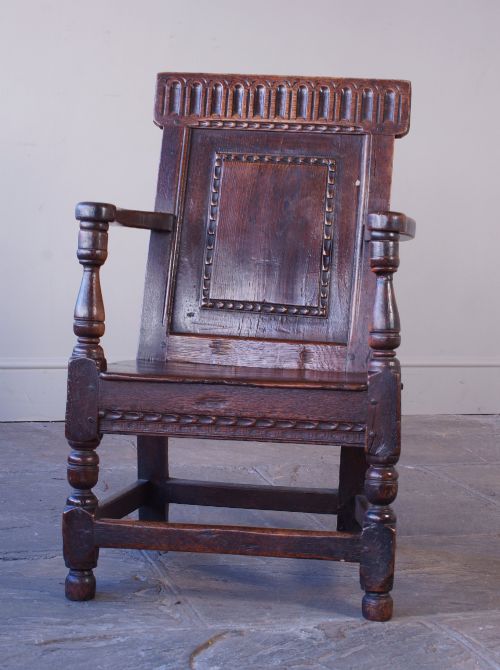
A 17th century chair encompasses solid oak wainscot forms, high-backed walnut dining seats, and low fruitwood lambing chairs from regional English workshops and continental makers.
The material record spans surviving period examples alongside later 19th-century revival pieces built in the same regional tastes.
Armchairs, side chairs, and back stools dominate the selection, reflecting domestic interiors where seating denoted hierarchy.
Materials and Technique
Joiners built structural frameworks predominantly in native oak and walnut, utilising mortise and tenon joints pinned with wooden dowels.
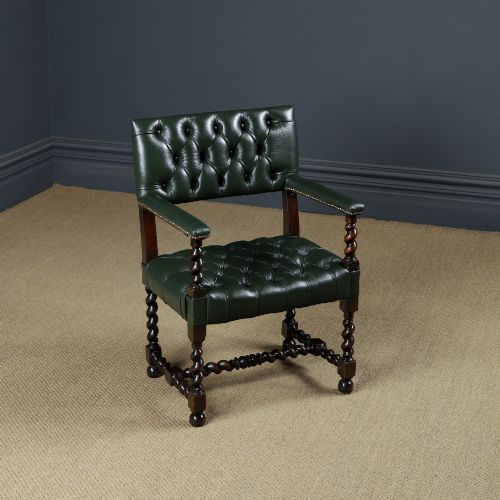
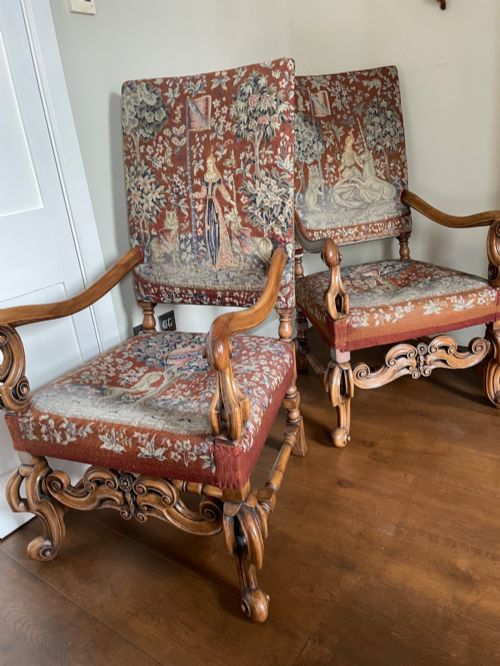
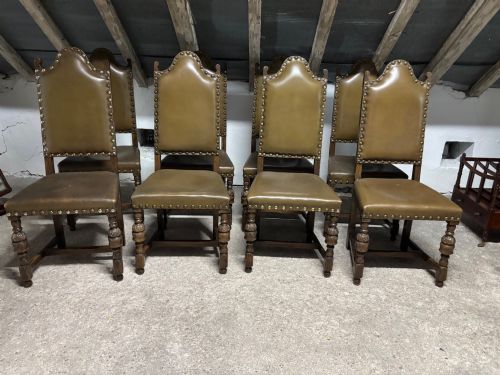
Surface ornamentation relied on hand carving, panel moulding, and turning on a lathe, supplemented by cane work, leather, and textile upholstery fixed with brass nails.
17th Century Chair Retail Price Guide 2026
Typical asking prices for 17th century chair among the pieces listed under this phrase on Sellingantiques today, from the lower quarter to the upper quarter. They describe what is for sale here now, not the wider market.
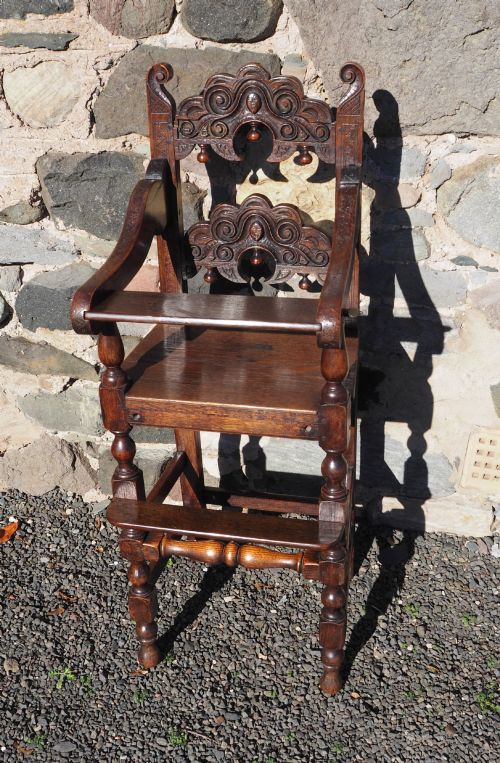
A low child's lambing chair in fruitwood offers a miniature version of a Windsor form meant to shelter toddlers from floor drafts.
Quality and Construction
The standard of a surviving piece rests on the crispness of the hand-carved detail and the integrity of the original timber frame.
Desirable examples retain their primary surface patination and structural fasteners, whilst lesser items show heavy timber replacement or unsympathetic restoration.
Daniel Marot
The 17th Century Chair Glossary
- Wainscot chair
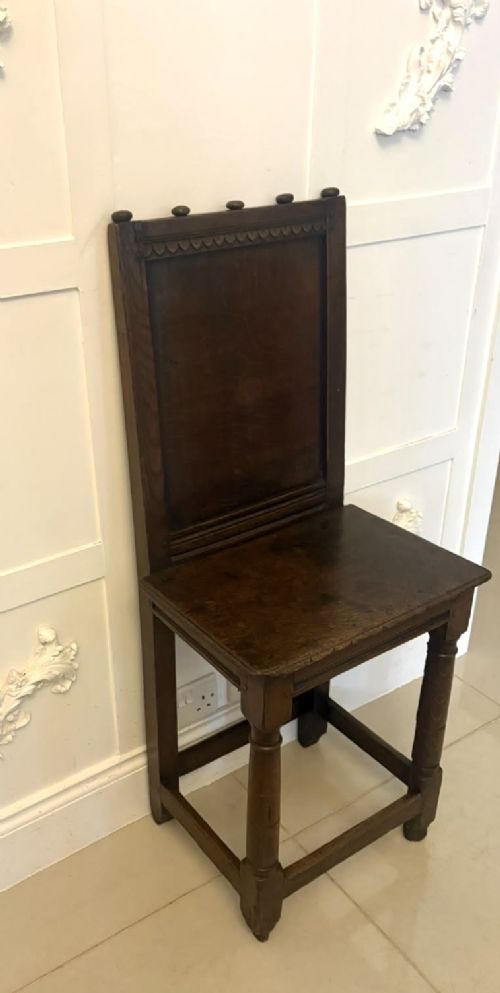
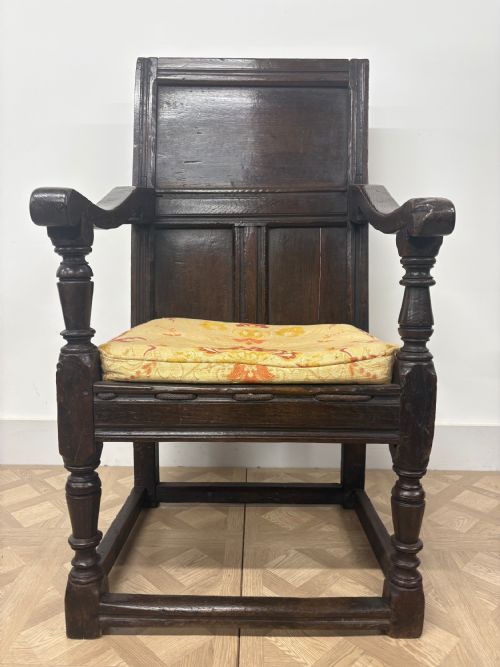
- A heavy wooden armchair constructed with panelled backboards and solid timber seats. This form evolved from board construction and requires sturdy joinery.
- Back stool
- An early term for an upholstered or panelled side chair lacking arms. These were companion pieces to larger armchairs in domestic settings.
- Carolean
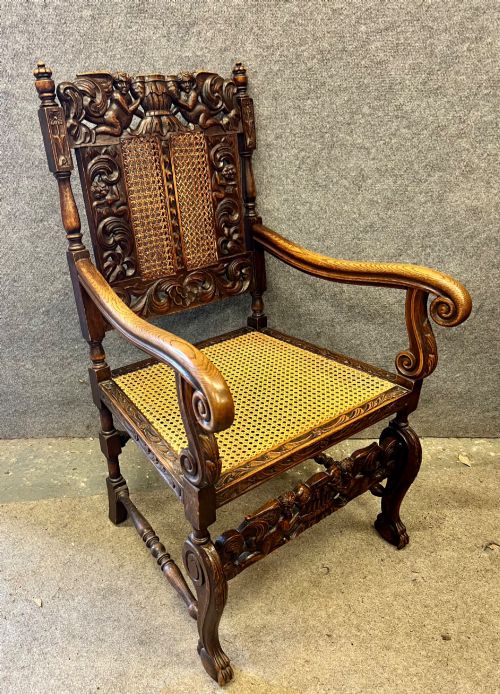
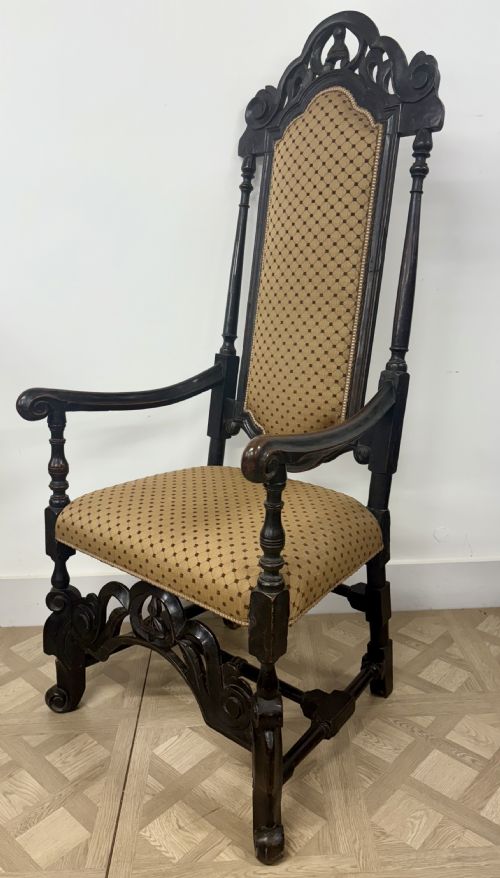
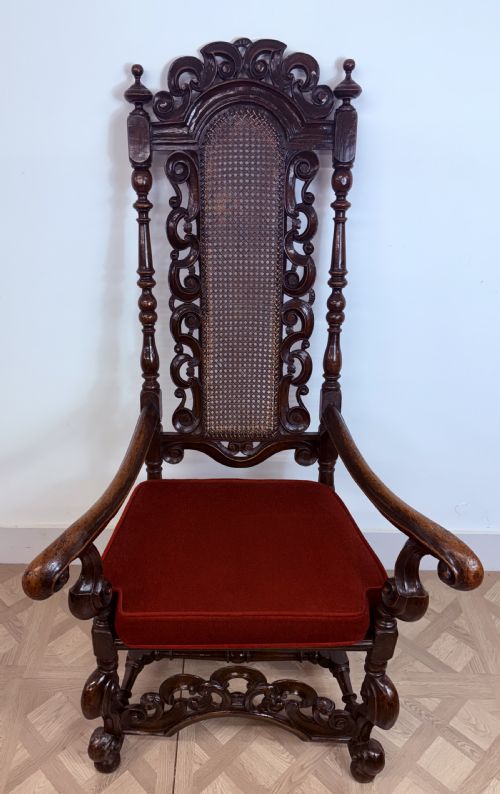
- The artistic style associated with the reign of Charles II, marked by rich carving, scrolling foliage, and cane panels. Walnut frequently superseded oak during this period.
- Derbyshire chair
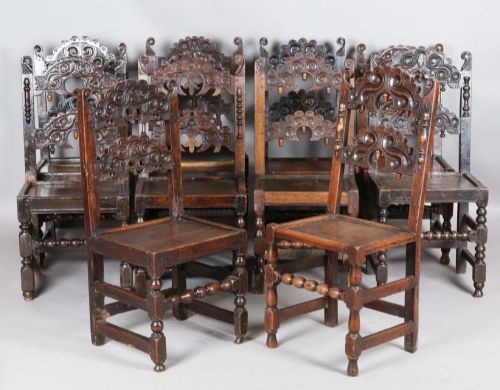
- A regional type of turned oak side chair featuring open arcaded back rails. Originating in the North of England, these items display distinctive geometric turning.
- Parcel-gilt
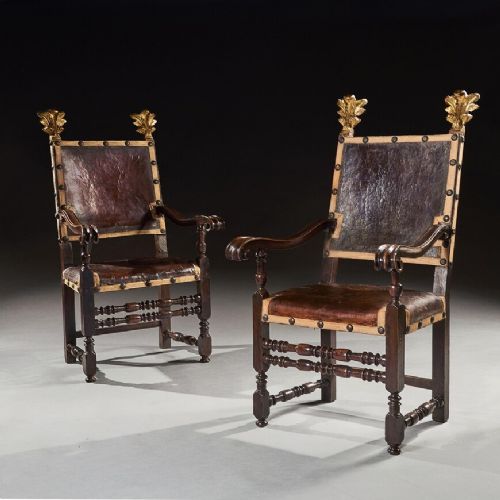
- Woodwork decorated with selective gilding applied to carved highlights. This technique enhances architectural mouldings and relief work.
17th Century Chair: Frequently Asked Questions
What is a wainscot chair?
A wainscot chair is a heavy wooden armchair constructed with panelled backboards and solid timber seats, originating when seating was scarce.
These heavy oak items were positioned by walls to avoid drafts and served as the principal seat in a household.
How do I identify a revival chair?
Nineteenth-century revival pieces imitate earlier joinery methods and decorative motifs using machine-sawn timber or uniform surface patination.
Examining the underside and peg construction reveals the age of the materials and the tools used.
Were these chairs used at dining tables?
Dining chairs appeared in sets during the later decades of the period alongside long refectory tables.
Earlier households used benches or single chairs for family heads while others stood.
Why use cane on these chairs?
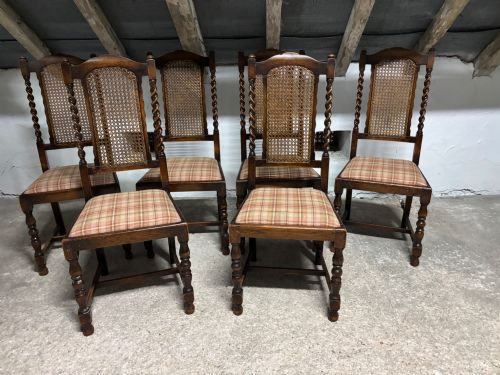
Cane seating arrived with continental influence during the reign of Charles II, offering a lighter alternative to solid wood.
Craftsmen wove split rattan through drilled frames to create resilient seats and backs.