

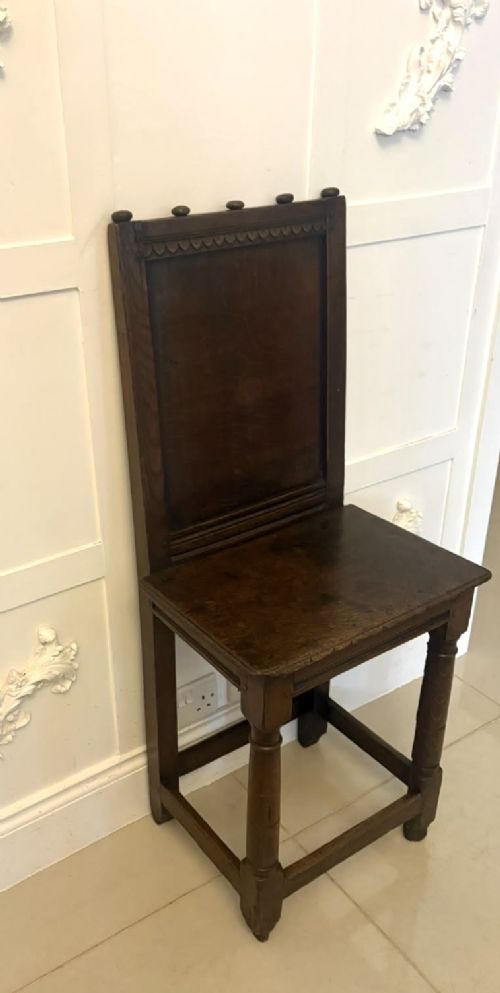


Wainscot Side Chair
A wainscot side chair brings solid seventeenth century presence to a room, offering robust timber construction and historic character.
Wainscot Side Chair
A wainscot side chair represents sturdy seventeenth century seating, constructed primarily from solid oak with panelled backs and substantial wooden frames. Buyers searching for a wainscot side chair seek authentic early vernacular furniture that has survived centuries of domestic use.
The versions most commonly met on this page span the seventeenth century, alongside occasional later Jacobean Revival pieces. Regional variations emerge clearly across the inventory, including examples originating from Yorkshire, Lancashire, and North Wales.
These forms function as practical hall chairs or decorative side chairs, often featuring carved wooden elements rather than upholstery. Collectors value the straightforward joinery and the rich patination developed over hundreds of years.
How they were made
Makers constructed these chairs using heavy oak timbers, shaped with hand tools and assembled with traditional peg and mortise joinery. The heavy wooden framework relied on structural rigidity rather than complex cushioning for stability.
Surface decoration frequently involved chip carving or relief carving applied directly to the solid oak panels and backrests. Textile elements appear occasionally, reflecting the simple functional materials of the period.
Wainscot Side Chair Retail Price Guide 2026
Typical asking prices for wainscot side chair among the pieces listed under this phrase on Sellingantiques today, from the lower quarter to the upper quarter. They describe what is for sale here now, not the wider market.
Current listings feature seventeenth century oak and textile materials, encompassing vernacular styles and regional chairs from Yorkshire, Lancashire, and North Wales.
What varies in quality
Quality rests in the originality of the timber and the crispness of the period carving found on the panels and crest rails. Pieces retaining their original surface patination and unreplaced structural framing sit at the higher end of the range.
Proportion and regional distinctiveness also dictate desirability, with well-balanced vernacular seating commanding greater attention than plain or heavily restored examples.
The Wainscot Side Chair Glossary
- Wainscot chair
- A heavy wooden chair with a panelled back, traditionally constructed from oak during the seventeenth century. This form derives its name from fine imported oak panels used in wall panelling.
- Backstool
- An early term for a chair without arms, essentially an upholstered or panelled seat designed for domestic use. These pieces often feature high backs and sturdy upright posts.
- Jacobean
- A style dating from the reign of James the First, characterised by robust proportions and geometric or strapwork carving. This aesthetic defines much of the seventeenth century furniture seen in trade.
- Vernacular
- Furniture made by local craftsmen using regional traditions and readily available native timbers rather than mengikuti metropolitan fashions. This approach yields distinct local characteristics in construction and decoration.
- Patina
- The deep, lustrous surface sheen developed on old wood through decades of handling, wax application, and environmental exposure. This visual depth serves as a key indicator of genuine age.
Wainscot Side Chair: Frequently Asked Questions
What is a wainscot side chair?
A wainscot side chair is a solid wood seating piece featuring a panelled back and heavy timber construction. Most examples date from the seventeenth century and were made without arms for use at tables or in halls.
These chairs rely entirely on wooden framing and joinery for support. They represent some of the earliest domestic seating forms still available to collectors today.
Where were these chairs made?
English regional workshops produced these chairs, with specific regional variations appearing across Yorkshire, Lancashire, and Wales. Local craftsmen utilised native oak and traditional joinery techniques native to their specific area.
This regionalism means construction details often point directly to the geographic origin of the maker. Each area developed slight variations in panel configuration and carved ornament.
How should I care for old oak?
Old oak requires a stable environment away from direct heat sources and extreme humidity fluctuations to prevent timber movement. Simple dusting and occasional application of traditional beeswax help maintain the surface patination.
Avoid modern liquid polishes that can penetrate the grain and alter the historic finish. Keeping the timber nourished preserves the rich colour developed over centuries.
Are these chairs comfortable to use?
These chairs offer firm, upright seating designed for historic domestic habits rather than modern lounging. Their solid wooden seats and high panelled backs encourage a straight posture.
Many owners add a simple loose squab cushion for extra comfort during daily use. Their primary appeal, however, lies in their sculptural presence and historic integrity.