

Carved Back Hall Chair
A carved back hall chair stands ready to anchor an entryway with sculptural timber and straightforward historical design.

Carved Back Hall Chair
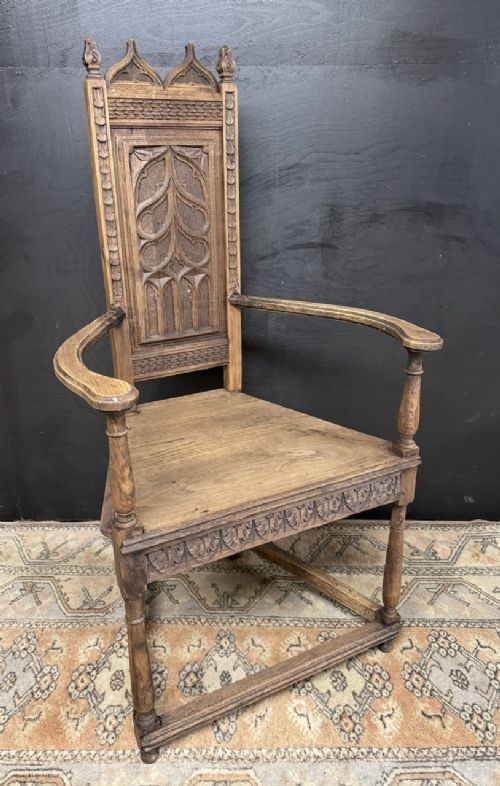
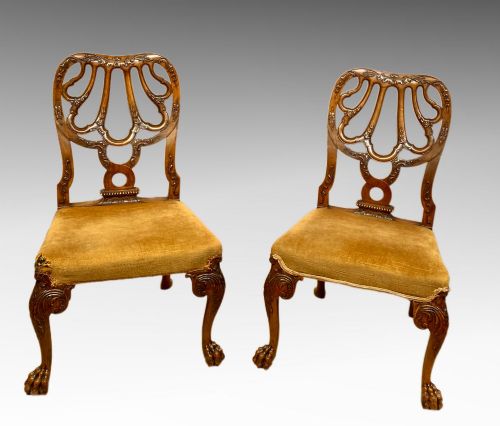
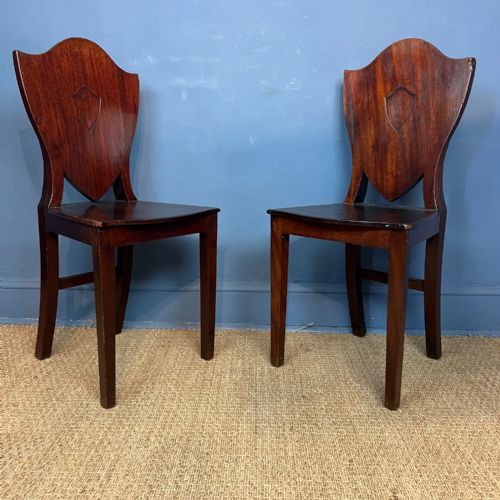
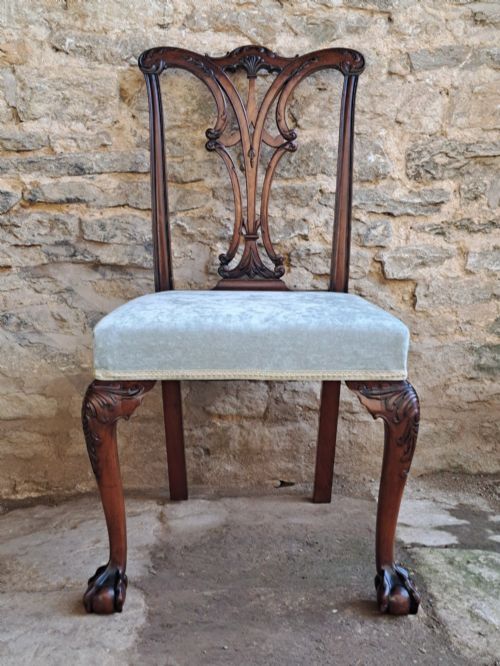
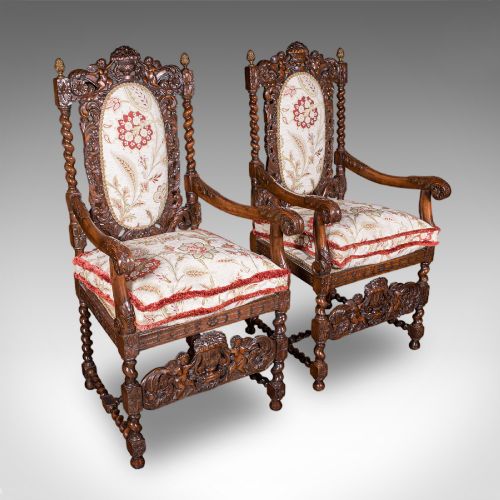
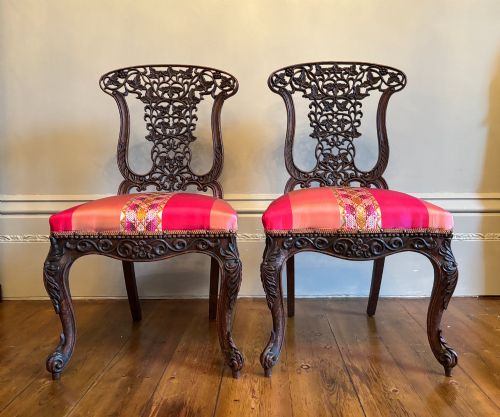
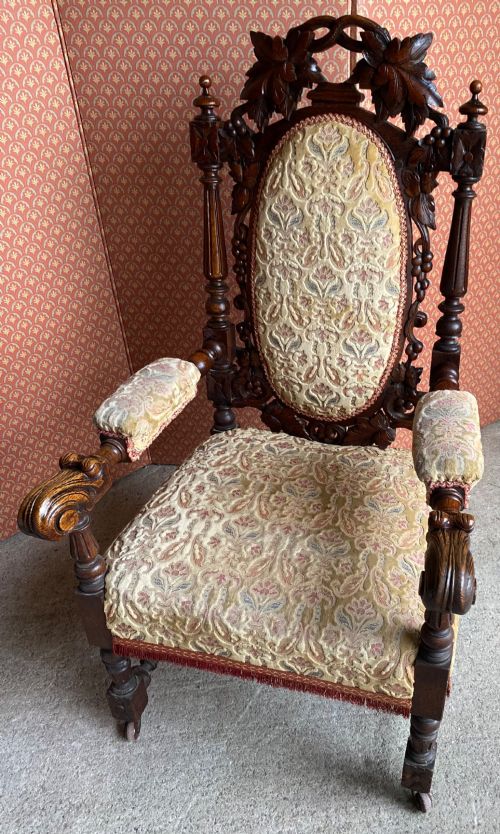
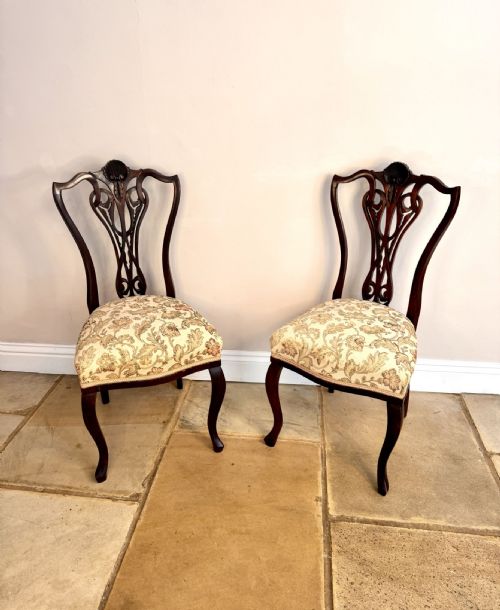
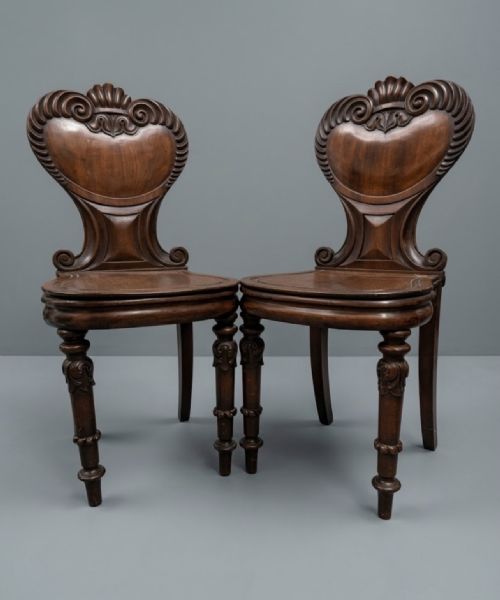
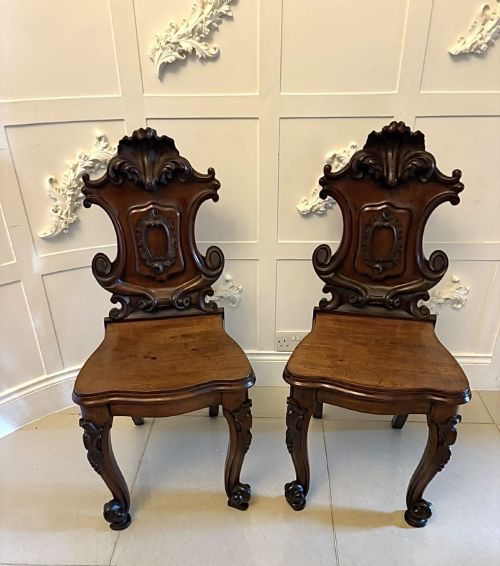
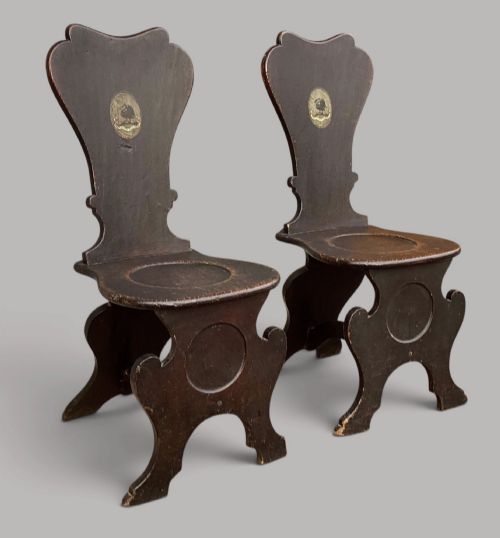
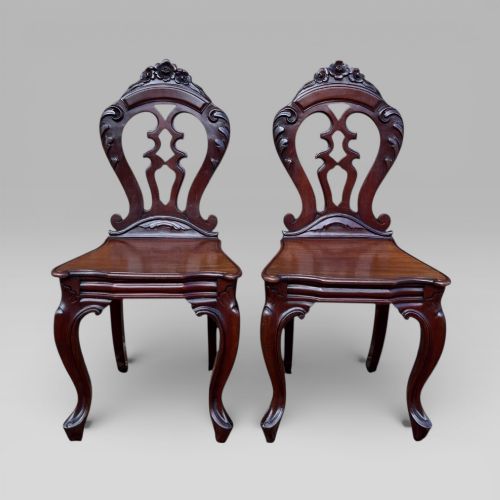
A carved back hall chair is an upright seating form designed for entrance halls and reception spaces, originating across the seventeenth, eighteenth, and nineteenth centuries. These pieces typically present solid wooden seats and heavily worked timber backrests, often incorporating heraldic crests, shields, or pierced foliage.
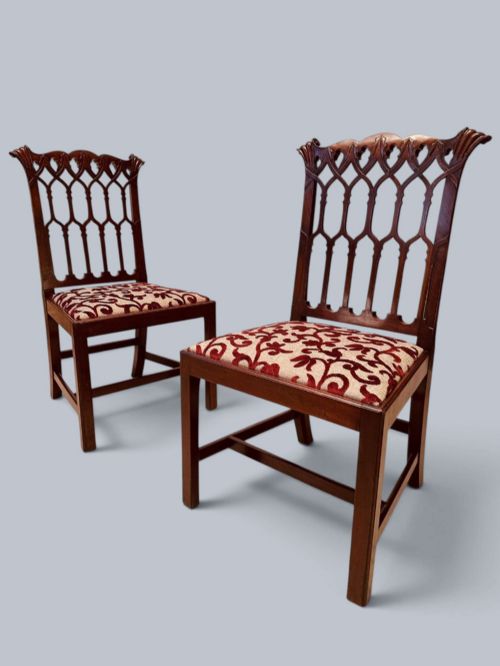
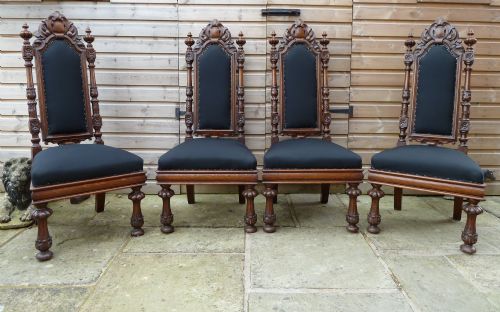
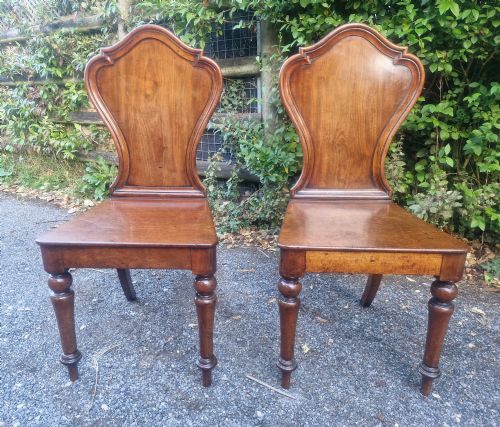
The versions most frequently met on this page date from the Victorian era and the broader nineteenth century, constructed primarily in oak and mahogany. Alongside single examples, matching pairs and sets appear regularly, reflecting their original placement flanking hallway walls or grand doorways.
How they were made
Cabinetmakers and joiners utilised dense hardwoods like oak, mahogany, and walnut, selecting timber capable of holding sharp chisel work along the backrest. Construction relies on traditional joinery techniques, securing solid seats to turned or tapered legs with tenons and pegs.
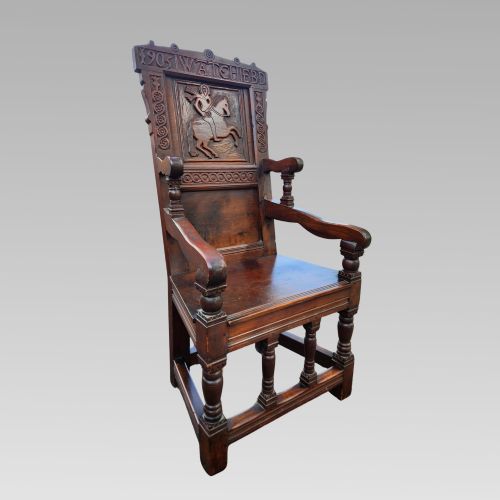
Carving is executed directly into the solid timber of the back, ranging from shallow fan motifs and shell carvings to deep relief work in Gothic Revival and Jacobean styles. Selected pieces incorporate parcel-gilding or leather elements, adding texture and contrast to the structural wood.
Carved Back Hall Chair Retail Price Guide 2026
Typical asking prices for carved back hall chair among the pieces listed under this phrase on Sellingantiques today, from the lower quarter to the upper quarter. They describe what is for sale here now, not the wider market.
Listings feature woods including oak, mahogany, walnut, and rosewood across periods spanning the seventeenth to the twentieth century.
What varies in quality
The standard of a carved back hall chair depends on the crispness of the timber carving and the architectural balance of the silhouette. Stronger examples display deep, deliberate chisel marks rather than soft, rounded edges, showing clear intent in the execution of heraldic shields or foliage.
Proportion and material selection further divide the range, with well-figured mahogany or quarter-sawn oak providing superior natural grain and structural stability. Original surfaces and untouched timber patination elevate individual pieces above later surface treatments.
Charles Tozer
The Carved Back Hall Chair Glossary
- Wainscot chair
- An early wooden armchair constructed with panelled backboards and solid armrests. These pieces date predominantly to the seventeenth century and showcase heavy joinery.
- Bobbin turned
- A style of furniture leg or stretcher shaped on a lathe to resemble a string of rounded beads or bobbins. This decorative turning appears frequently on seventeenth and eighteenth-century oak furniture.
- Parcel-gilt
- Partially gilded with gold leaf applied to specific carved details or raised ornaments. This technique highlights particular decorative areas against a dark wood ground.
- Gothic Revival
- A nineteenth-century design movement drawing inspiration from medieval architecture. Pieces in this style often incorporate pointed arches, tracery, and pierced carving.
Carved Back Hall Chair: Frequently Asked Questions
Where were hall chairs placed originally?
These chairs stood along the walls of grand entrance halls, corridors, and reception rooms in large houses and civic buildings. They served primarily as occasional seating for visitors waiting to be announced rather than for long periods of dining or relaxation.
Because entrance spaces demanded formal presentation, the furniture chosen emphasised upright posture and striking visual motifs like carved crests and family heraldry.
How do I date a carved wooden hall chair?
Dating relies on observing the combination of timber species, construction methods, and stylistic carving details. Seventeenth-century examples typically feature heavy oak with pegged joinery and panelled backs, while Regency and Victorian pieces often utilise mahogany or walnut with turned legs and applied crests.
Secondary woods, tool marks on the underside, and the depth of the hand-carved relief work provide further physical evidence for placing a piece within its correct historical period.
Are these chairs comfortable for daily use?
Historic hall chairs were built with solid wooden seats and rigid upright backs intended for brief periods of waiting, so they lack the deep padding found in modern lounge seating. Their upright geometry encourages straight posture rather than slouching.
Placing them in hallways, entryways, or as decorative accent seats allows them to function as intended without requiring the ergonomic comfort expected from a primary armchair.
Why do hall chairs often come in pairs?
Interior design conventions of the eighteenth and nineteenth centuries favoured symmetry, leading to the production of matching pairs or larger sets to flank doorways and hallway walls. Surviving pairs remain together because they were commissioned as balanced decorative elements for formal architectural spaces.
Matching sets also accommodated households receiving multiple guests simultaneously who required uniform seating while waiting in reception areas.