


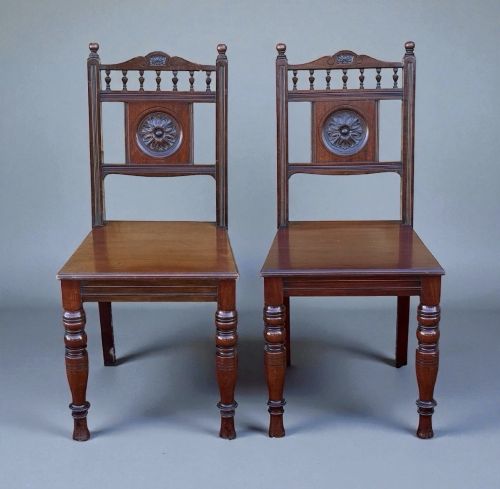

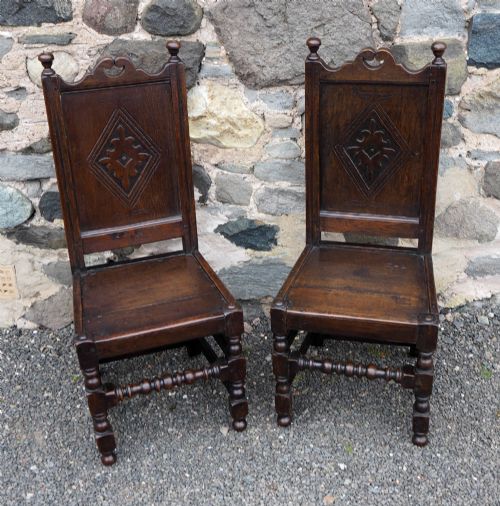
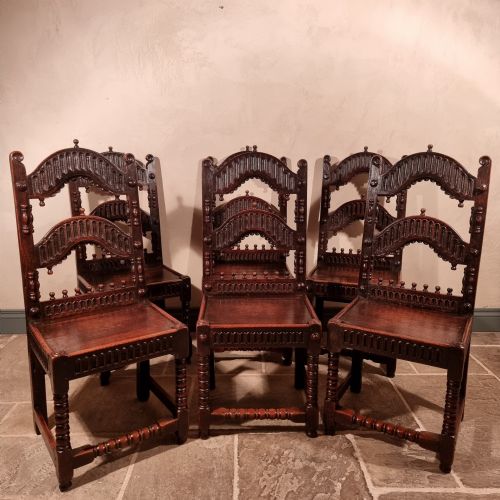


Turned Leg Hall Chairs
Turned leg hall chairs are robust and decorative oak and mahogany seats designed for an entrance, offering both practical utility and period character.
What Turned Leg Hall Chairs Are
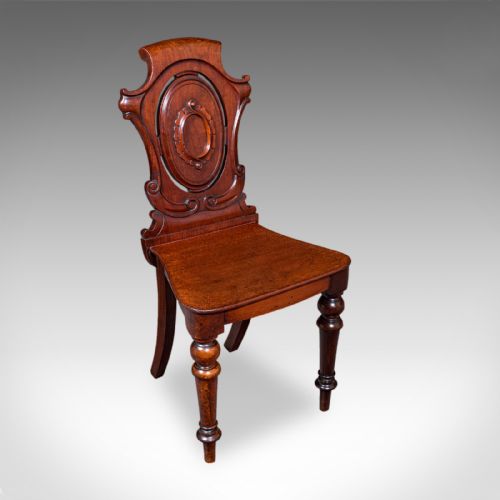
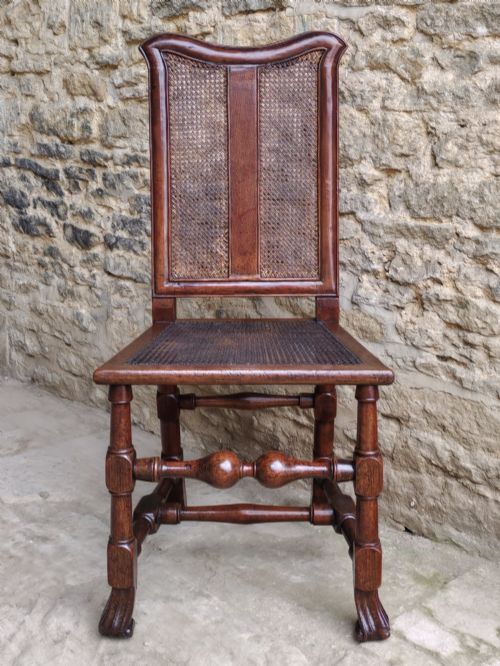
Turned leg hall chairs are sturdy seats intended for grand entrances, foyers and corridors. These items appear in materials such as oak and mahogany, reflecting distinct historical periods from the Regency and William IV eras through to the Victorian period.
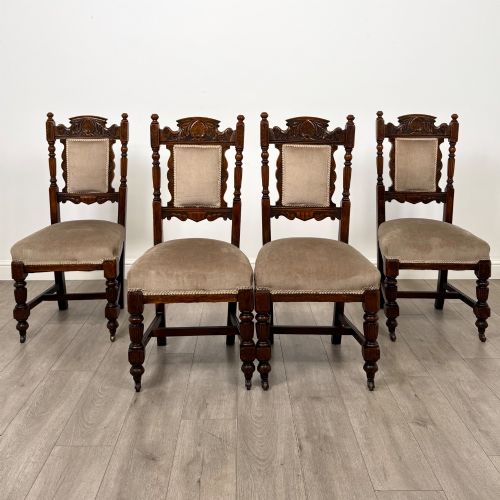
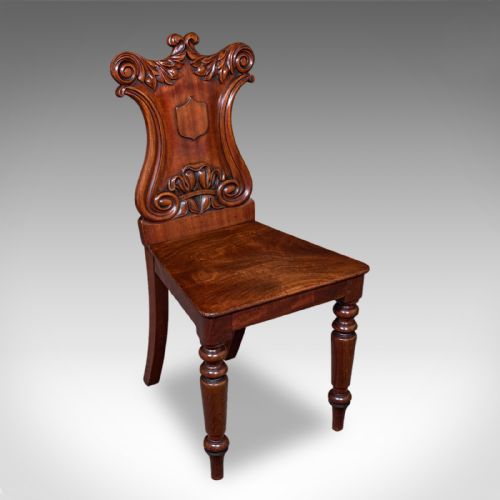
Most examples found on this page are offered in pairs rather than single items. The designs range from plain timber frames to pieces featuring carved, turned and pierced backs alongside characteristic shell back motifs.
How They Were Made
Cabinetmakers constructed these hall chairs primarily from solid mahogany and oak timbers. Joinery methods relied on sturdy framing to withstand the heavy wear expected in a bustling entrance hall.
Decorative elements involve woodturning on the legs and intricate carving on the wooden backs. Some variations incorporate pierced work into the wooden backrest alongside carved shell motifs.
Retail Price Guide 2026
Typical UK retail prices for turned leg hall chairs, calculated from the Sellingantiques database of over a million retail prices indexed since 2003. This retail price guide relies exclusively on Sellingantiques data; no external sources or auction records are used, so the figures do not describe the wider market.
Listings span the nineteenth century, encompassing the Regency, William IV and Victorian periods in mahogany and oak.
What Varies in Quality
Quality in turned leg hall chairs rests upon the selection of timber and the crispness of the woodwork. Superior examples exhibit finer carving on the shell backs and more complex turning on the legs.
The distinction between standard production and top-tier pieces lies in the depth of relief carving and the integration of stylistic details. Attributable works by known makers command attention through refined proportion and exceptional material quality.
The Turned Leg Hall Chairs Glossary
- Mahogany
- A dense, durable tropical hardwood favoured for its rich reddish-brown tone and fine grain. Cabinetmakers utilised it extensively for high-end furniture throughout the Regency and Victorian eras.
- Oak
- A hard, heavy domestic timber prized for its prominent grain pattern and structural strength. It forms the primary material for several robust seating pieces on this page.
- Shell back
- A carved decorative motif shaped like a scallop shell integrated directly into the wooden backrest. This classic ornamentation appears on select early nineteenth-century seating.
- Regency
- An English design period spanning the early nineteenth century, characterised by classical restraint and neoclassical influences. Furniture from this era often shows clean lines paired with elegant turned supports.
Frequently Asked Questions
What are turned leg hall chairs?
Turned leg hall chairs are rigid wooden seats created for entrance spaces and hallways. They are typically fashioned from mahogany or oak without upholstered cushions.
These pieces feature distinctive turned wooden legs supporting a solid wooden seat and an ornamental backrest. Most examples on this page date from the nineteenth century.
Where were they placed?
These chairs stood primarily in grand entrance halls, corridors and foyers of period homes. They served as temporary seating for visitors waiting to be received.
Because they occupied prominent entry spaces, makers concentrated ornamentation on the backrests and legs to impress guests immediately upon arrival.
How do I date them?
Dating relies on identifying the prevailing style, timber choice and turning techniques used in the construction. Regency and William IV examples often display classical proportions and rich mahogany.
Victorian pieces frequently incorporate heavier proportions alongside carved and pierced back details. Comparing the specific turning profiles helps narrow down the manufacturing decade.
Are they comfortable?
Hall chairs are functional, upright seats designed for brief waiting rather than long periods of relaxation. The wooden seats and rigid backs encourage correct posture.
Their primary purpose was architectural and decorative display within an entrance rather than lounging comfort.