


Antique Entryway Chairs
These antique entryway chairs offer a solid welcome, bringing period presence and practical seating to a hallway.
Antique Entryway Chairs
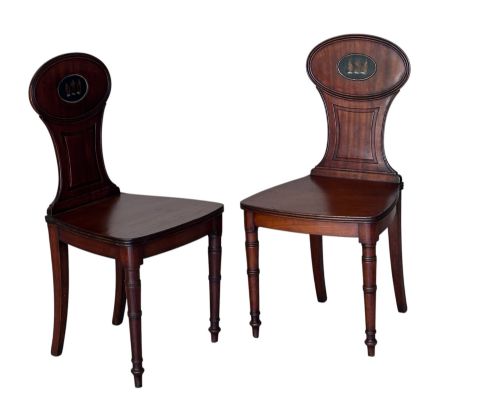
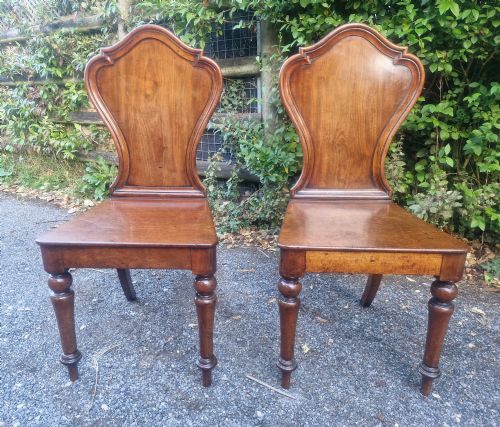
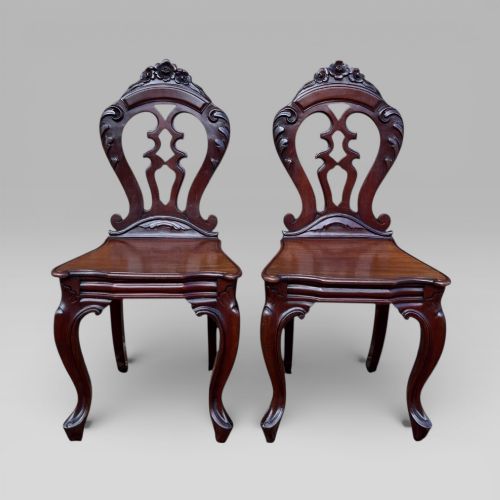
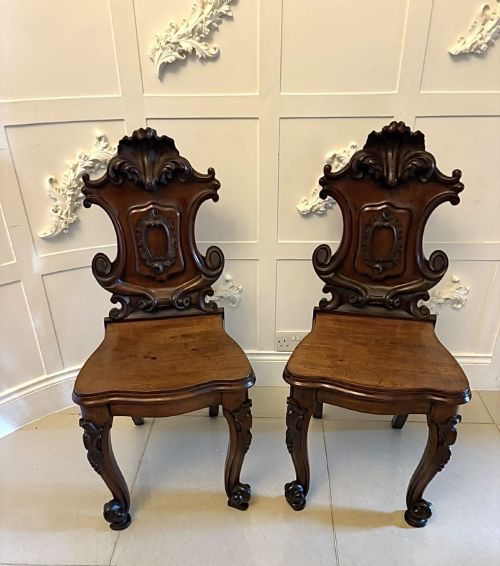
When you search for antique entryway chairs, you encounter firm timber seating designed for hallways, receptions and vestibules. The pieces span the eighteenth, nineteenth and early twentieth centuries, encompassing Georgian, Regency and Victorian periods.
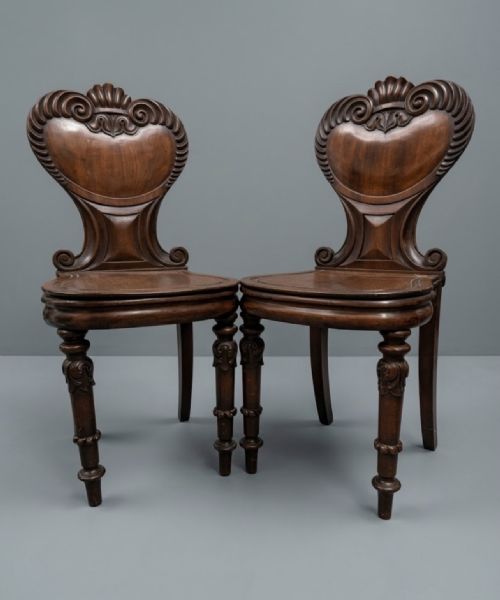
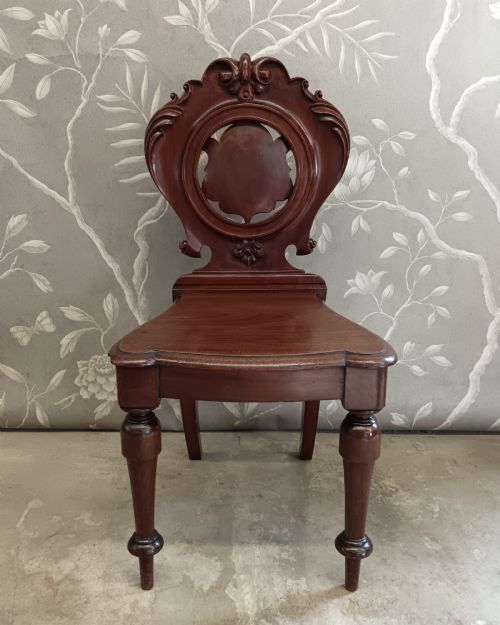
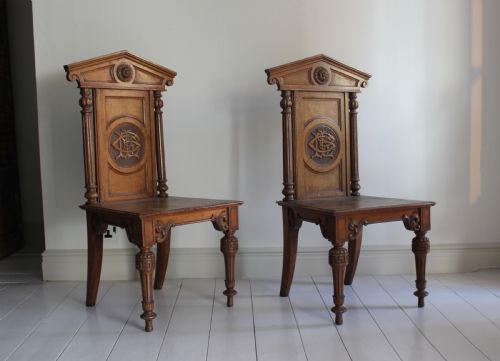
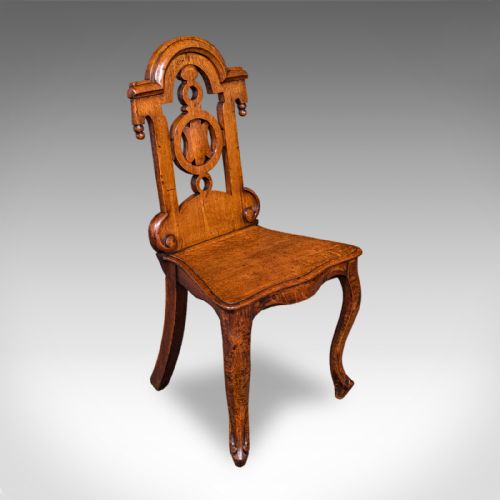
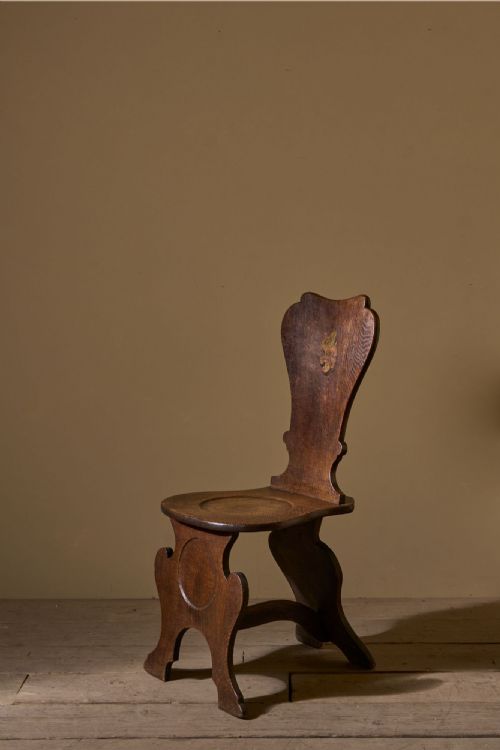
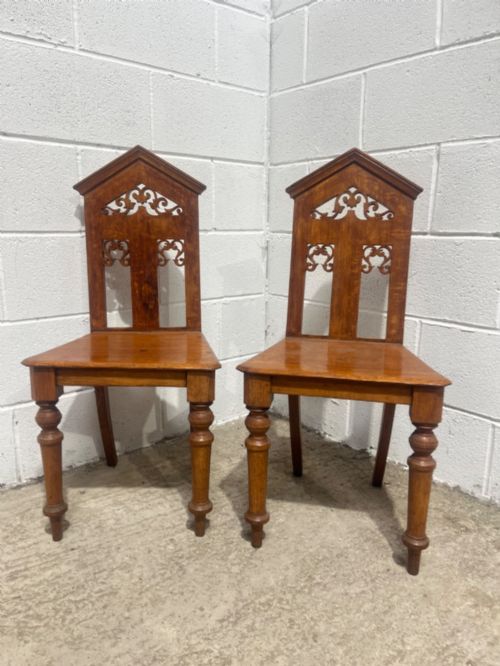
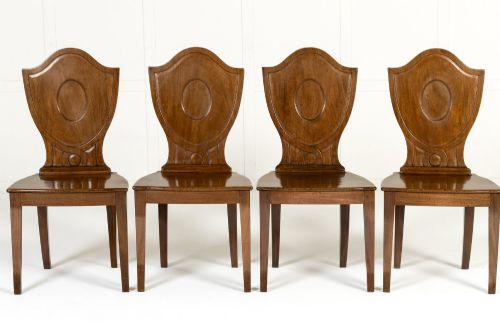
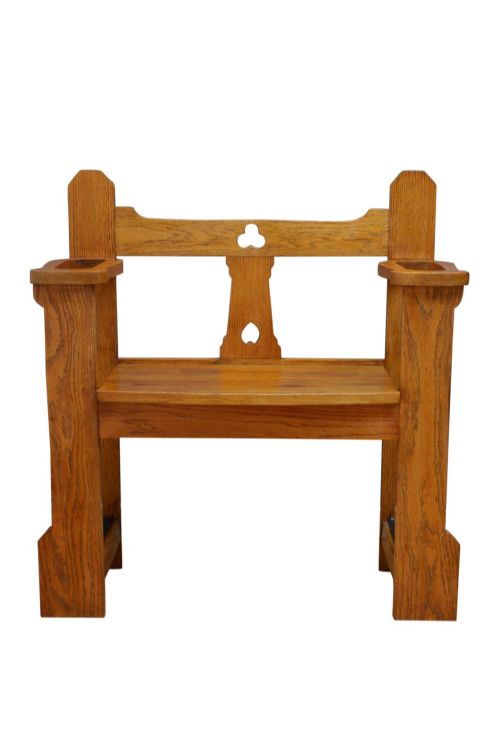
You meet a variety of forms including rigid hall chairs with shield or pelta backs, along with wider benches, settles and monks benches. Oak and mahogany dominate the selection, often shaped with heraldic carved details or simple turned supports.
Most examples originate from English and Scottish workshops, utilising dense timbers built to withstand heavy daily use near the front door. These seats establish a formal yet functional character in a home entrance.
What varies in quality
The distinction between standard examples and superior pieces lies in the crispness of the carved details and the selection of the timber. Deep relief carving on shield backs and well-figured mahogany or quarter-sawn oak indicate high-grade workshop production.
Proportion and structural integrity also separate the ordinary from the exceptional. Well-balanced forms with tight joinery and matching pairs demonstrate superior craftsmanship that survives centuries of use.
Antique Entryway Chairs Retail Price Guide 2026
Typical asking prices for entryway chairs among the pieces listed under this phrase on Sellingantiques today, from the lower quarter to the upper quarter. They describe what is for sale here now, not the wider market.
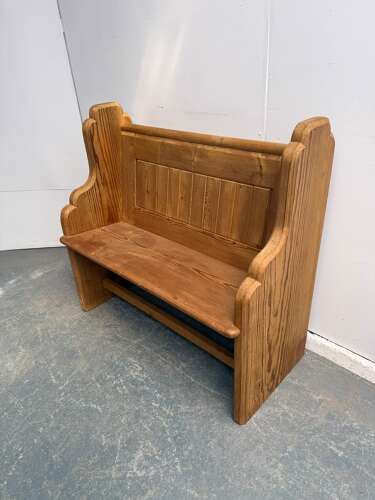
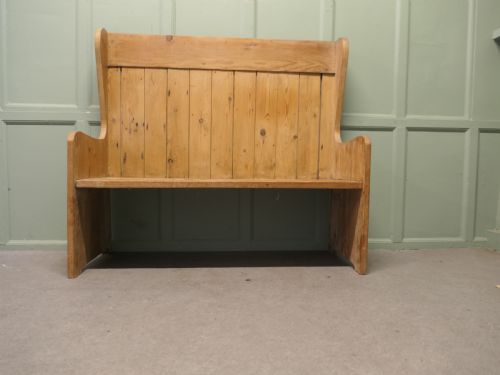
Several oak settles show distinct church pew origins, retaining the rustic charm of rural fireside benches.
James Shoolbred & Co.·Bruce Talbert·Gillows
The Antique Entryway Chairs Glossary
- Shield back
- A chair back shaped like a heraldic shield, frequently found on Georgian and Victorian hall chairs.
- Sgabello
- An early Renaissance-style chair form featuring solid trestle supports, often seen in nineteenth-century interpretations.
- Pelta back
- A chair back designed in the curved, shield-like shape of an ancient Greek shield.
- Monks bench
- A multi-functional piece of furniture that converts from a bench with a solid back into a table.
- Settle
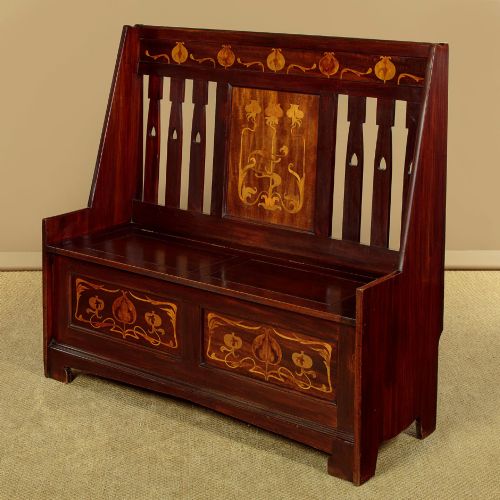
- A wooden bench with high back and arms, often incorporating storage beneath the seat.
Antique Entryway Chairs: Frequently Asked Questions
Where were entryway chairs placed?
These chairs stood in grand halls, corridors and receptions to provide brief seating for guests waiting to be announced.
Their upright designs discouraged lingering, keeping the entrance clear and orderly.
How do I identify a Regency hall chair?
Regency examples often feature neoclassical motifs such as brass inlay, sabre legs and carved pelta or shield backs.
Mahogany is the predominant timber from this era, finished with a dark, polished sheen.
Are these chairs comfortable for daily sitting?
Most antique hall chairs were built with solid wood seats and rigid, upright backs intended for brief periods of use.
They function best as accent pieces in an entryway rather than lounging seats for a living room.
What is the difference between a hall chair and a settle?
Hall chairs are single-seater upright seats with decorative wooden backs designed for narrow corridors.
Settles are wider bench-like forms, sometimes featuring high panelled backs and enclosed storage under the seat.