
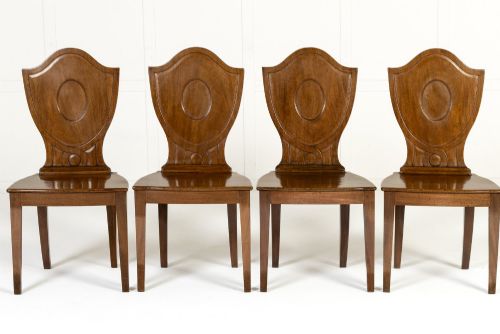
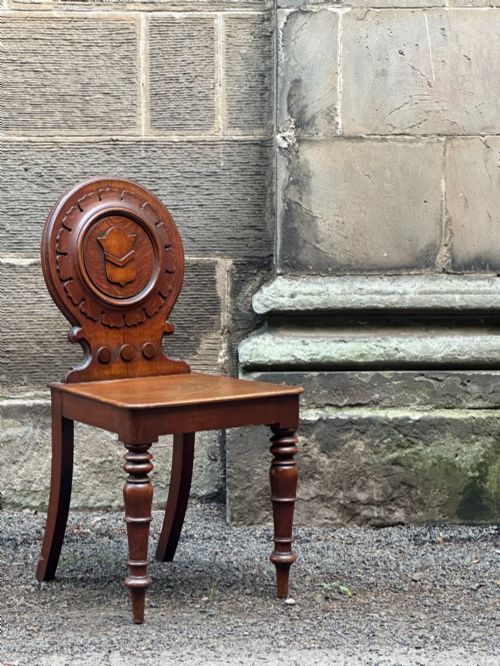
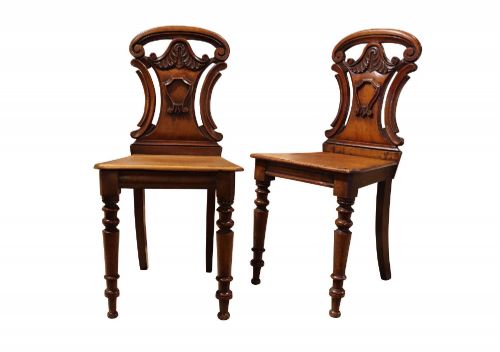
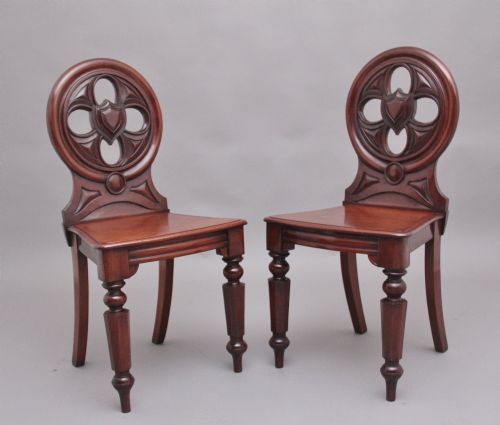




Shield Back Hall Chair
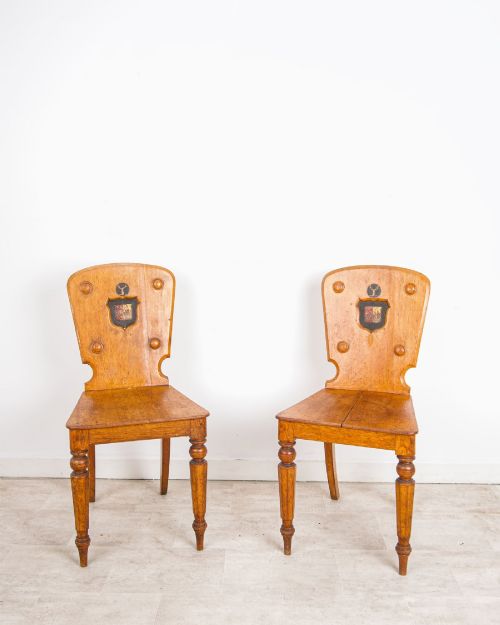
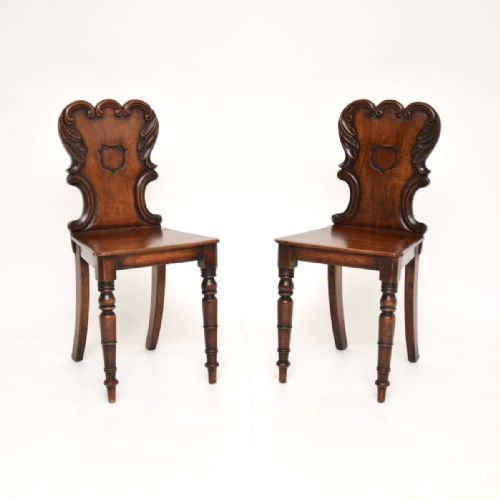
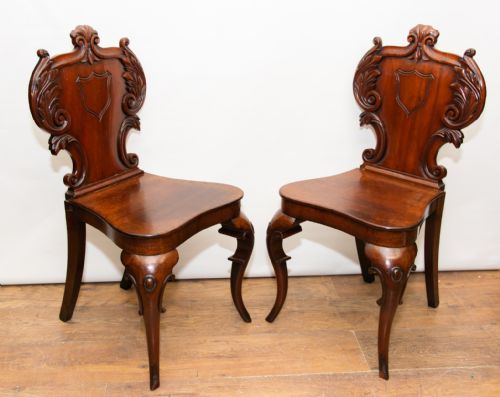
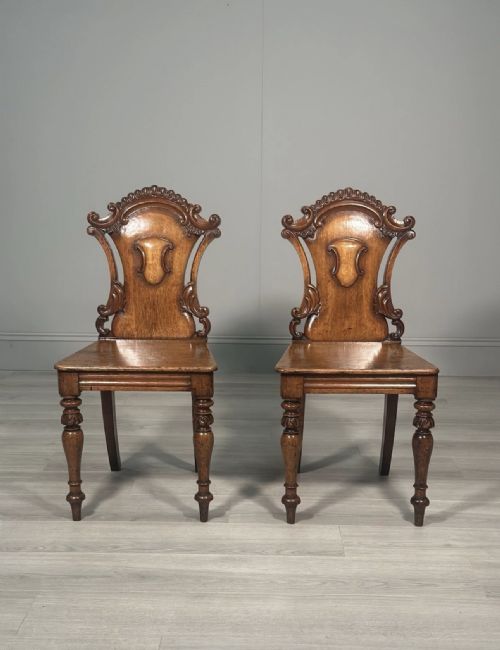
These shield back hall chair examples are solid timber seating designed for grand entrances, combining classical geometry with everyday utility.
Shield Back Hall Chair Types
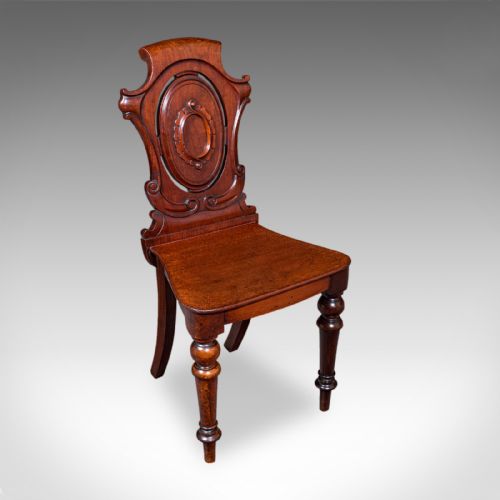
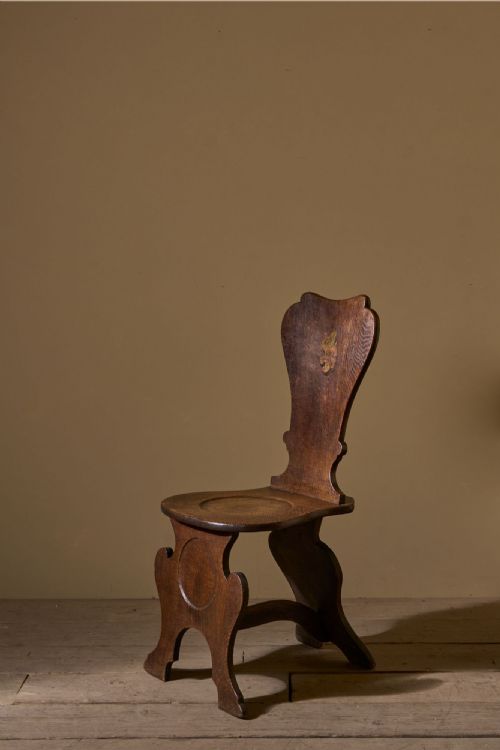
A shield back hall chair presents a distinctive upright posture and a carved or solid wooden seat, intended primarily for hallways rather than long sitting. You will encounter these pieces spanning the Georgian, Victorian, and Edwardian eras, reflecting changing domestic fashions across centuries.
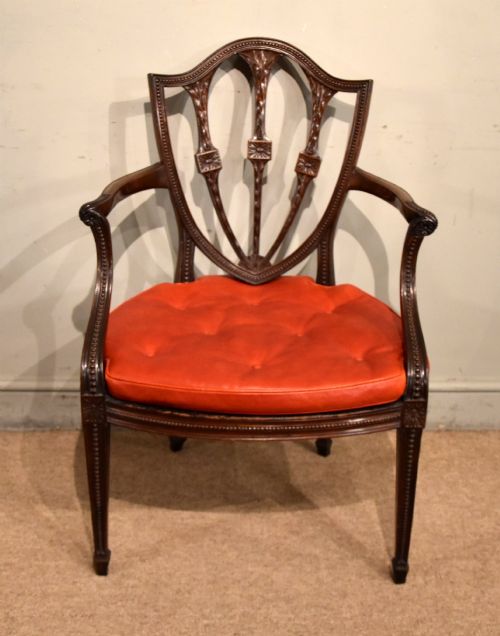
The form relies on a characteristic shaped backrest resembling a heraldic shield, frequently embellished with carved motifs such as feathers or foliage. Mahogany and oak dominate the surviving examples, shaped in regional British workshops during the eighteenth and nineteenth centuries.
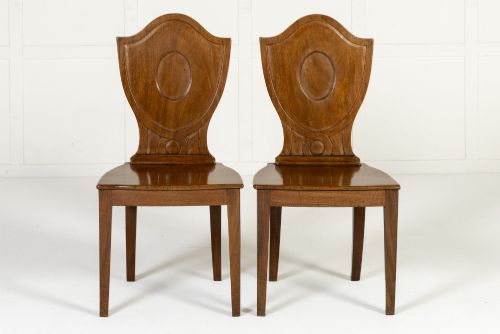
Makers produced these chairs in singles and pairs, often placing them along entrance walls for waiting guests. The design shifts from the restrained elegance of the Georgian period toward heavier Victorian and Gothic Revival interpretations.
Materials and Construction
Cabinetmakers constructed these chairs using dense hardwoods like mahogany and oak, chosen for their ability to withstand heavy daily use. Timber selection governed the structural integrity, ensuring the narrow frames and upright backs remained rigid without upholstery.
Carving and joinery define the manufacture, with backrests often shaped from single solid boards or joined using traditional mortise and tenon techniques. Surfaces were typically polished or waxed to highlight the natural grain of the timber rather than painted.
Retail Price Guide 2026
Typical UK retail prices for shield back hall chair, calculated from the Sellingantiques database of over a million retail prices indexed since 2003. This retail price guide relies exclusively on Sellingantiques data; no external sources or auction records are used, so the figures do not describe the wider market.
Some nineteenth-century examples double as sturdy bedside furniture when guests outnumber the household's conventional beds.
Defining Quality
The depth and crispness of the carving separate standard examples from finer works, particularly where heraldic motifs or feathered details meet the shield frame. Superior pieces display thoughtful timber selection with well-matched grain patterns across the backrest and seat.
Proportion and structural balance dictate the upper tier of the range, ensuring the upright stance remains graceful and steady. Heavier Victorian interpretations contrast with lighter Georgian forms, where refined joinery maintains strength without excess bulk.
The Shield Back Hall Chair Glossary
- Shield back
- A chair back shaped like a heraldic shield, popularised in late eighteenth-century furniture design. This silhouette forms the defining visual characteristic of these entrance seats.
- Hall chair
- An upright wooden seat designed for an entrance passage rather than comfort. These pieces usually lack upholstery and feature rigid timber seats.
- Mortise and tenon
- A traditional joint where a projecting peg fits securely into a corresponding cavity. This method binds the frame of the chair without relying on modern metal fasteners.
- Gothic Revival
- An architectural and decorative style drawing on medieval forms, featuring pointed arches and heavy carving. This aesthetic appears on nineteenth-century examples within the listings.
- Quarter sawn
- A method of cutting logs that produces a distinct linear grain pattern and greater dimensional stability. Oak treated this way resists warping in heavy hallway furniture.
Frequently Asked Questions
Were hall chairs meant for sitting?
These seats were designed for brief waits in entrance halls rather than prolonged relaxation. Their upright wooden construction encouraged proper posture for guests and callers.
Most examples omit cushioning entirely, relying on carved wooden panels to provide both support and decorative impact in the hallway.
How do I tell Georgian from Victorian?
Georgian examples tend to show lighter proportions and refined carving, often utilising Cuban mahogany with a rich patina. Victorian pieces frequently appear heavier, incorporating deeper mouldings and occasionally Gothic Revival influences.
Examining the underside and the sharpness of the timber detailing helps distinguish eighteenth-century craftsmanship from later nineteenth-century revivals.
Why are they usually found in pairs?
Makers originally produced these seats to flank entrance tables or line hallway walls symmetrically. Surviving pairs remain desirable for maintaining balance in interior decoration.
Single pieces also occur frequently, representing items that became separated over centuries of household redistribution.
Where should I place a hall chair today?
These pieces excel in narrow spaces like corridors, landings, or entranceways where deep seating would obstruct movement. Their striking silhouette functions well as a sculptural accent against a plain wall.
Pairing a single chair with a small console table re-creates the traditional function of a grand hallway.