

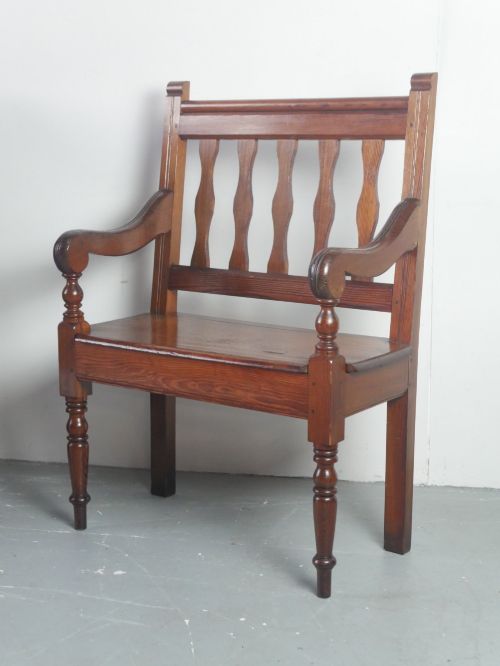
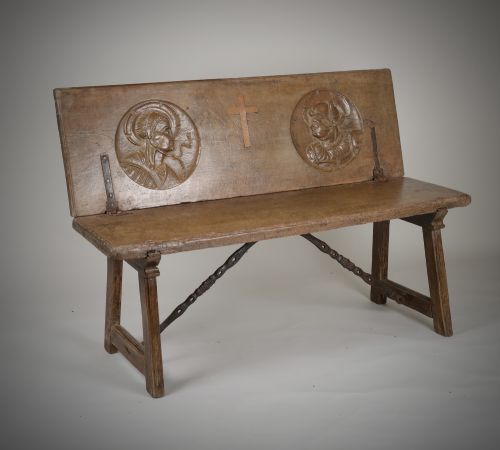
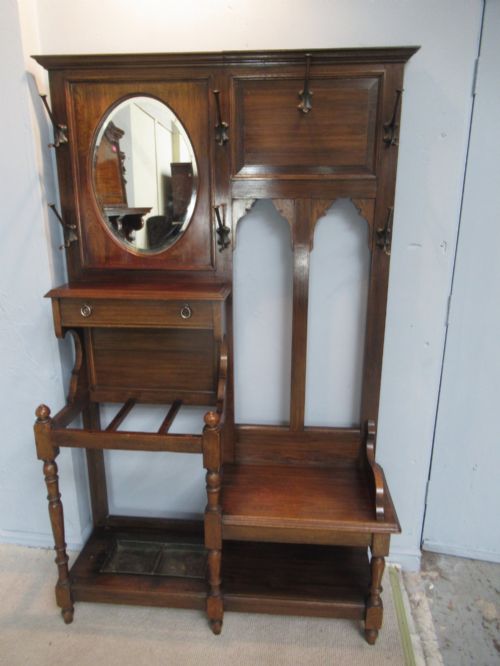
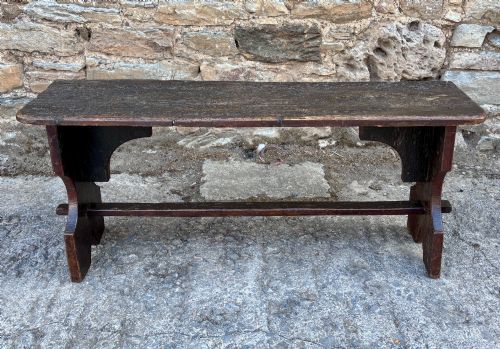
Antique Wooden Hall Bench
An antique wooden hall bench offers immediate presence in an entranceway, providing practical seating alongside historic character.
What an antique wooden hall bench is
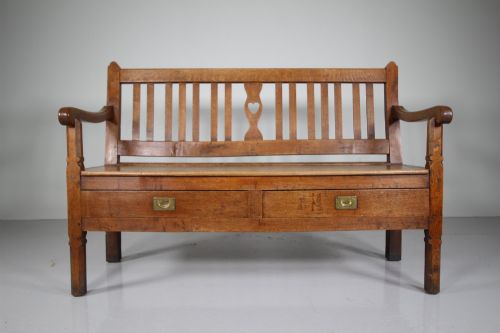
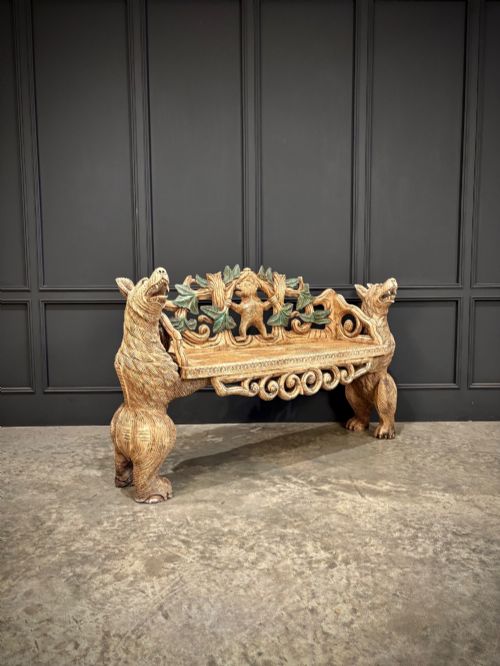
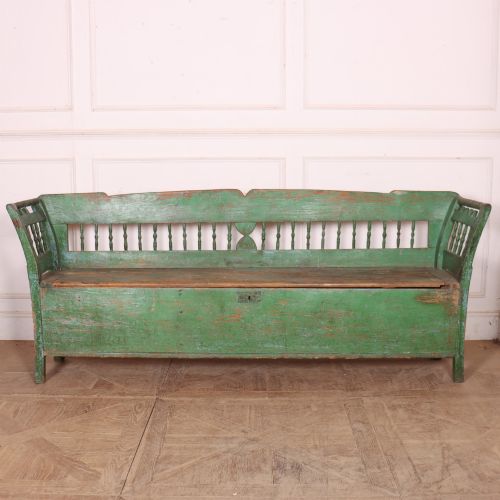
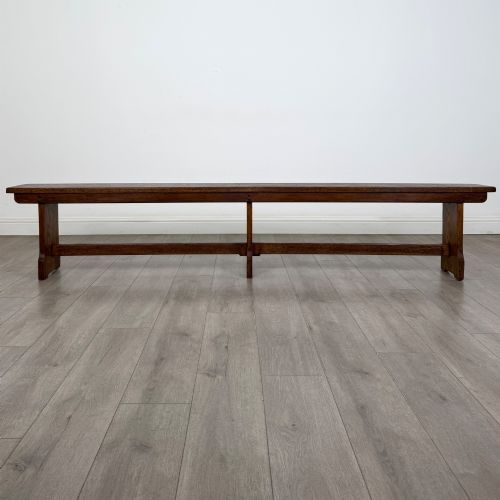
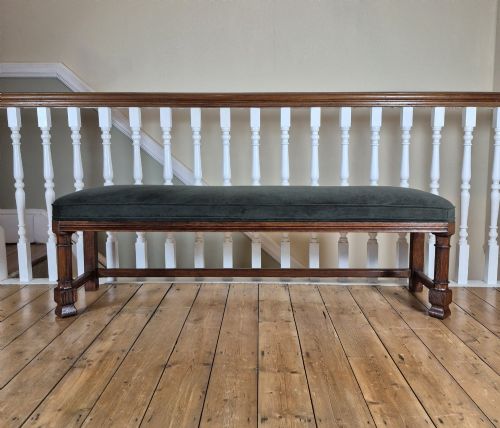
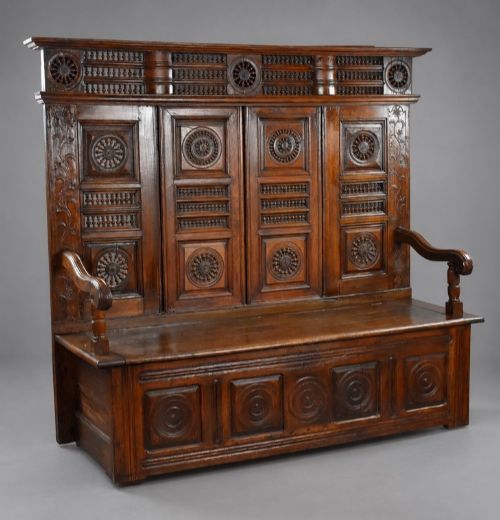
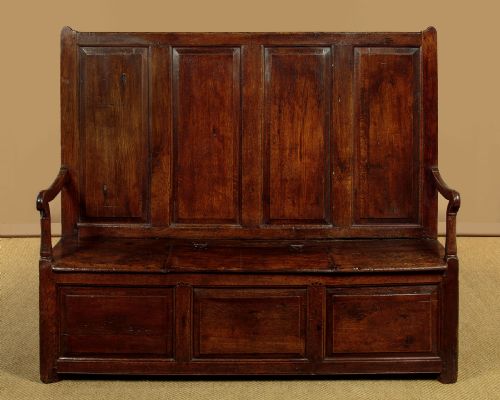
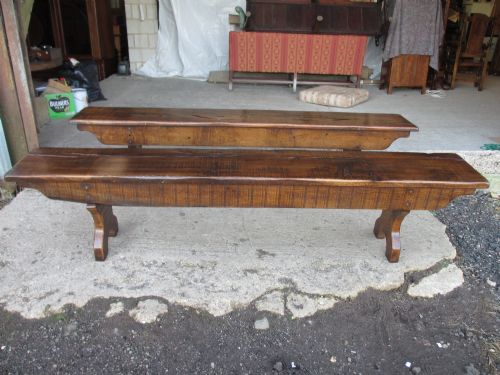
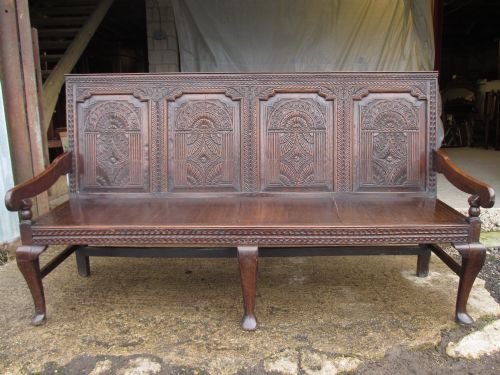
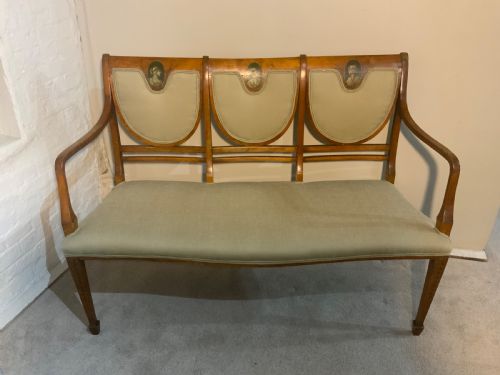
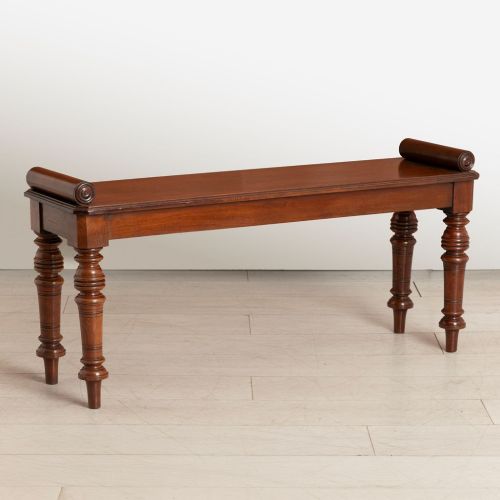
An antique wooden hall bench serves as a functional and decorative focal point for entranceways and corridors. The selection ranges from robust settles and monks benches to carved hardwood designs and Victorian Gothic seating. These pieces originate across various periods, including the seventeenth, eighteenth, and nineteenth centuries.
The most common examples you will encounter on this page are oak settles and carved wooden hall benches from the Victorian era. You will also find regional variations such as Spanish Colonial pieces, walnut window seats, and mahogany hall chairs. Each form reflects the domestic requirements and architectural styles of its specific period.
Buyers look for these items to anchor a hallway with authentic period materials and historic craftsmanship. The combination of structural timber and historical ornamentation gives each bench a distinct personality. Selecting the right piece depends on the available space in your hallway and the period style that complements your interior.
How they were made
Construction relies upon traditional solid timbers such as oak, mahogany, walnut, pine, and mixed hardwoods. Joinery techniques from earlier centuries utilised pegged mortise and tenon joints to ensure rigidity without metal fasteners. Iron hardware and hinges appear on functional elements like lift-up seats or folding backs.
Surface treatments vary from polished wood showing natural grain to historic painted finishes. Carving is executed directly into the solid timber, featuring motifs typical of Jacobean, Victorian Gothic Revival, and Spanish Colonial styles. Timber selection and carving depth correlate directly with the origin and intended status of the seating.
Retail Price Guide 2026
Typical UK retail prices for wooden hall bench, calculated from the Sellingantiques database of over a million retail prices indexed since 2003. This retail price guide relies exclusively on Sellingantiques data; no external sources or auction records are used, so the figures do not describe the wider market.
Monks benches double as tables, proving that clever space-saving furniture design existed long before modern apartments.
What varies in quality
The distinction between ordinary and exceptional pieces lies in the integrity of the timber and the depth of the carving. Superior examples display dense, well-figured oak or walnut with crisp, hand-chisel relief work that retains its original definition. Lesser pieces may exhibit simplified construction or later alterations to the woodwork.
Proportion and structural harmony also dictate the standing of a piece. Benches that maintain their original height, unaltered bases, and integrated back panels command greater appreciation from collectors. The relationship between the utilitarian function of the bench and its decorative ambition reveals the skill of the original maker.
The Antique Wooden Hall Bench Glossary
- Settle
- A wooden bench with a high back, solid wooden arms, and often a storage compartment beneath the seat. This form was designed to block draughts in medieval and early modern interiors.
- Monks bench
- A convertible piece of furniture featuring a hinged top that folds down to transform the backrest into a table surface. It is a versatile historic form found in later Victorian interpretations.
- Mortise and tenon
- A traditional woodworking joint where a projecting tongue fits snugly into a matching cavity to lock two pieces of timber together at a right angle.
- Gothic Revival
- An architectural and decorative style popular during the nineteenth century that revived medieval pointed arches, heavy tracery, and elaborate linenfold or geometric carvings.
Frequently Asked Questions
Where were hall benches placed?
Historic hall benches were positioned in the main entranceways of large houses and country residences. They provided a place for guests and residents to sit while removing outer garments.
In modern homes, they serve a similar purpose in hallways, boot rooms, and large landings. Their substantial backs help protect against draughts from exterior doors.
How do I care for wooden benches?
Maintain antique timber by keeping it away from direct heat sources and sudden temperature fluctuations. This prevents the wood from drying out and splitting.
Apply a microcrystalline wax periodically to nourish the surface and preserve the natural sheen of the grain. Avoid modern liquid polishes that can build up residue over time.
Are settle benches comfortable?
Historic settle benches were built primarily for utility and durability rather than plush lounging. Their upright wooden backs and solid seats reflect the functional demands of earlier domestic life.
Many owners add loose squab cushions or upholstered pads to soften the seat for everyday use. This makes them practical for sitting while putting on shoes.
How do I date an oak settle?
Dating relies upon examining the construction methods, tool marks, and stylistic motifs present on the timber. Earlier pieces from the seventeenth century often show hand-split boards and simpler pegged joinery.
Nineteenth-century revival pieces incorporate machine-sawn elements and crisper, more symmetrical machine-assisted carving. Comparing the hardware and timber shrinkage helps confirm the period.