

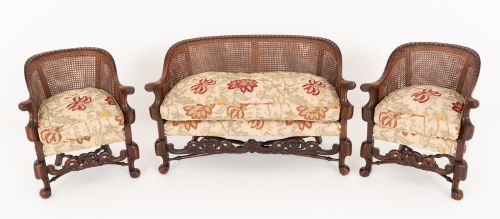
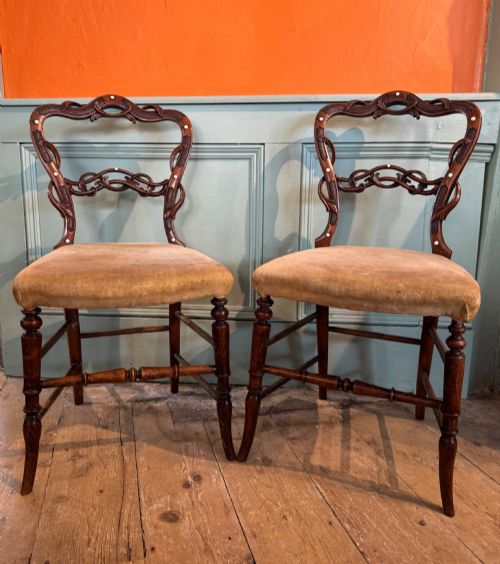
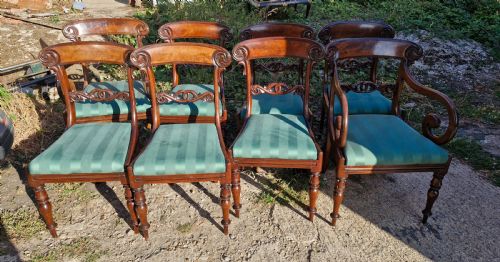
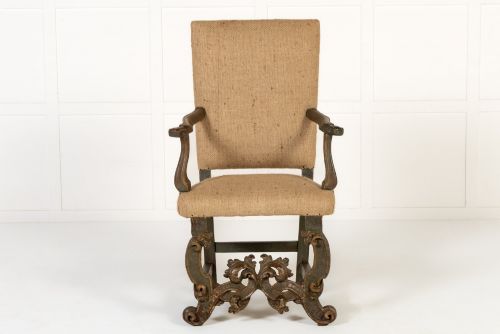
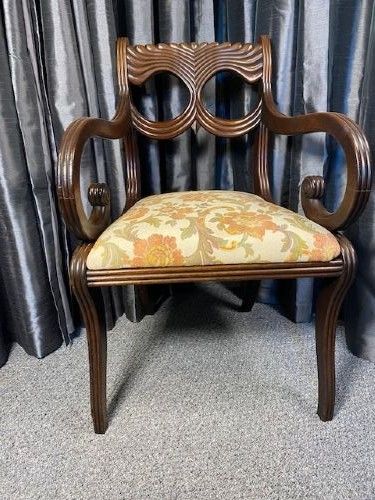
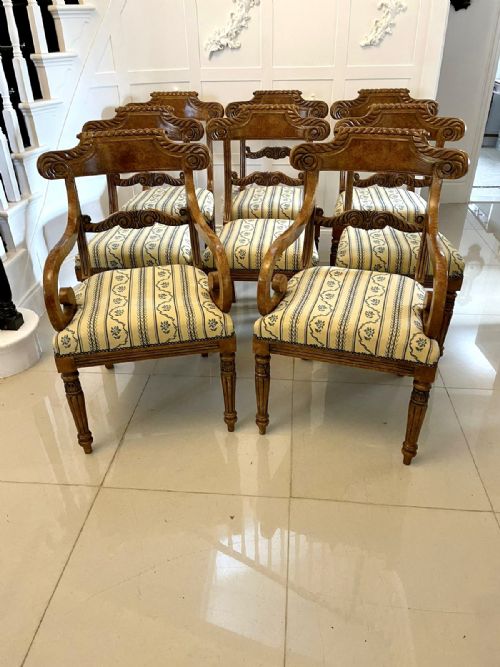
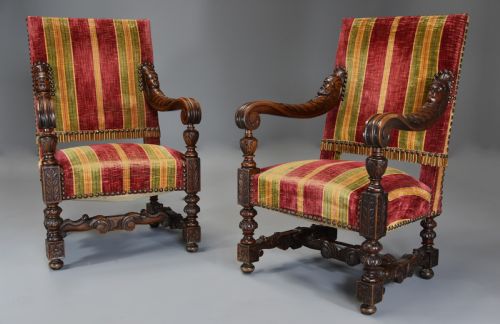


Carved Scroll Back Chairs
Carved scroll back chairs are sturdy seating forms shaped by nineteenth-century joiners, offering distinct lumbar curves and classic woodwork that suit traditional dining rooms.

What carved scroll back chairs are
Makers produced these forms across several eras, including the Regency, William IV, and Victorian periods. Influences from these eras appear in pieces dated around eighteen sixty and nineteen hundred, as well as nineteenth-century Irish designs.
Buyers mostly encounter mahogany and oak frameworks fitted with drop-in seats or overstuffed upholstery. These configurations serve both formal dining spaces and grand entrance halls.
How they were made
Carpenters utilised dense hardwoods such as mahogany, rosewood, and golden oak to construct the structural frames. These timbers provided the strength necessary for intricate carving along the crest rails and scroll backs.
Upholstered versions incorporated traditional textiles, fabric, velvet, and needlepoint textile. Metal elements such as brass components appeared alongside castors on specific seating variants.
Retail Price Guide 2026
Typical UK retail prices for carved scroll back chairs, calculated from the Sellingantiques database of over a million retail prices indexed since 2003. This retail price guide relies exclusively on Sellingantiques data; no external sources or auction records are used, so the figures do not describe the wider market.
Materials recorded in this inventory include mahogany, rosewood, oak, brass, and various textile upholstery types across the Regency and Victorian periods.
What varies in quality
The sophistication of the woodwork distinguishes standard examples from superior items. Crisp execution in the carved scroll details and balanced proportions across larger sets indicate higher workshop standards.
The selection of primary timber impacts the overall character of the piece. Well-figured mahogany and rosewood display deeper grain patterns than plain utility woods.
The Carved Scroll Back Chairs Glossary
- Regency
- A stylistic period spanning the early nineteenth century defined by classical restraint and neoclassical motifs. Furniture from this phase often incorporates dark timbers and clean architectural lines.
- William IV
- A transitional design phase bridging late Regency and early Victorian eras during the eighteen thirties. Pieces from this time typically display heavier proportions and bolder carved ornaments.
- Drop in seat
- A removable upholstered frame that drops directly into a recess within the chair rails. This construction method allows easy reupholstery without dismantling the main structure.
- Showwood
- Exposed polished timber framing surrounding upholstered elements on an armchair or parlor seat. It showcases the quality of the wood grain alongside the fabric.
- Cabriole leg
- A furniture leg that curves outward at the knee and tapers inward toward the foot. This classical form appears frequently on nineteenth-century seating supports.
Frequently Asked Questions
Where were carved scroll back chairs used?
These chairs served primarily in formal dining rooms and entrance hallways. Dining variations accommodated guests around large tables, while hall chairs stood against walls as architectural statements.
Craftsmen tailored the proportions and upholstery of each piece to suit the specific social function of the room it inhabited.
How do I identify a Regency scroll back chair?
Regency pieces often exhibit classical restraint, clean lines, and dark mahogany or rosewood surfaces. The scroll work tends to reflect architectural inspirations from the early nineteenth century.
Comparing the timber grain and the sharpness of the carved details against known period examples helps confirm the era of manufacture.
What woods were used for these chairs?
Joiners relied predominantly on dense hardwoods such as mahogany and rosewood. Golden oak also appears in specific Victorian iterations.
These durable timbers allowed artisans to carve detailed scroll motifs into the crest rails and frames without compromising structural integrity.
Can I find large sets of dining chairs?
Listings occasionally include larger dining sets numbering up to eight or ten matching chairs. These groupings are less common than individual pairs or small sets of four.
Assembling or finding a matched set requires careful attention to timber colour, carving style, and overall seat dimensions.