





Drop in Seat Chairs
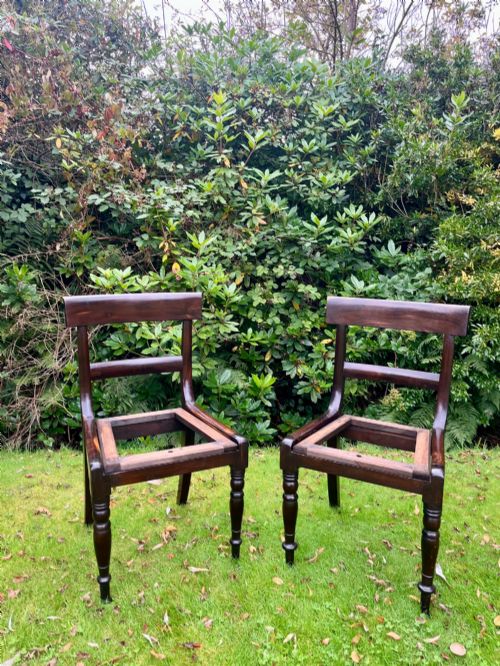
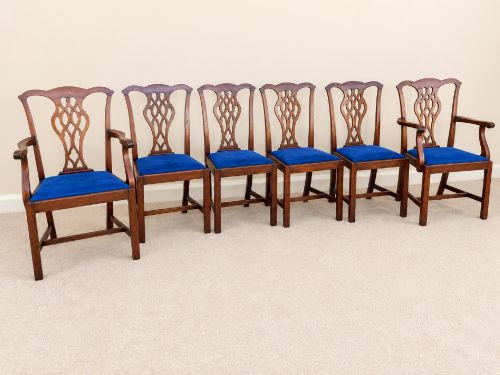
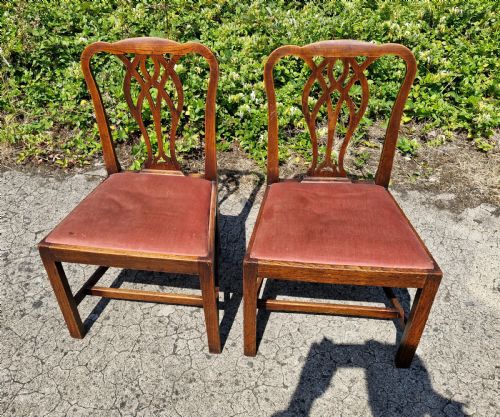
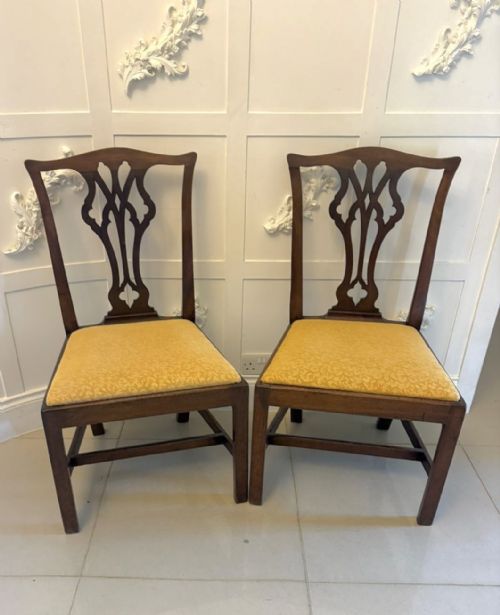
These drop in seat chairs offer timber frames and removable upholstered pads designed for easy recovering.
Drop in Seat Chairs
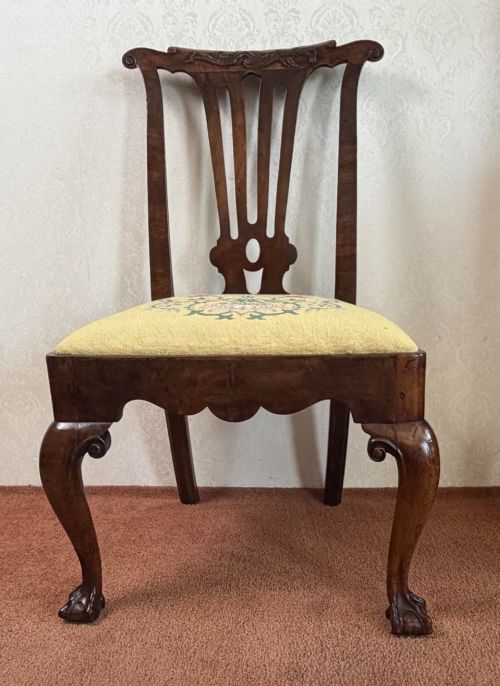
When you search for drop in seat chairs, you encounter seating built with a recessed wooden frame that holds a separate, drop-in upholstered pad. These pieces date across multiple centuries, stretching from the early eighteenth century through the Georgian and Regency eras into Victorian and Edwardian revivals.
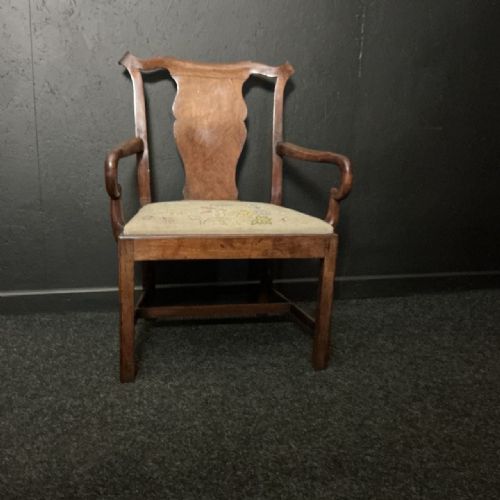
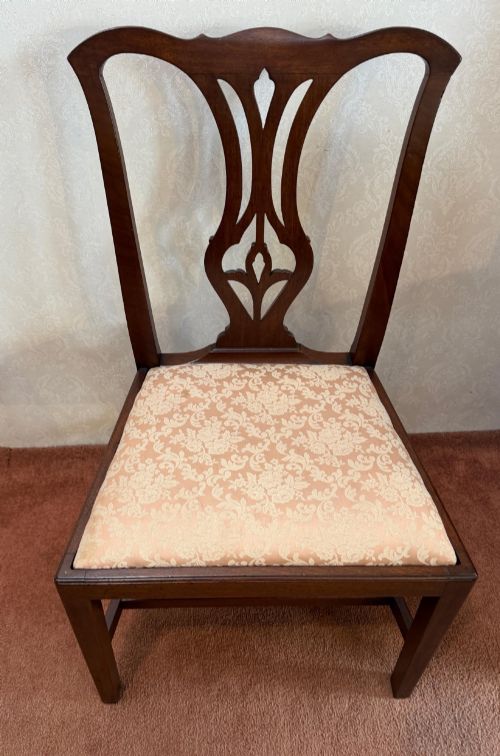
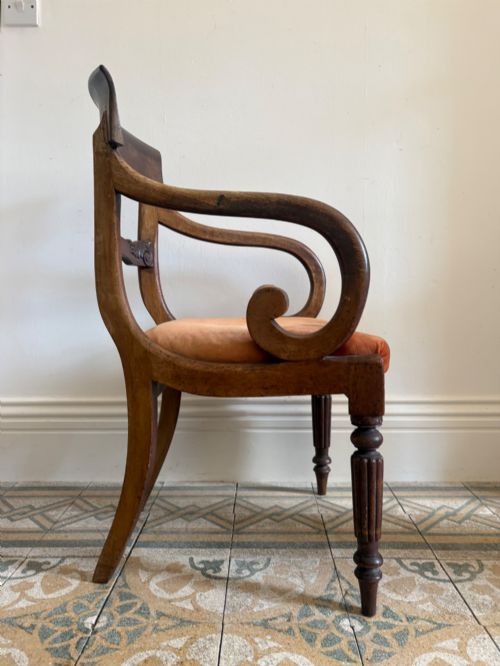
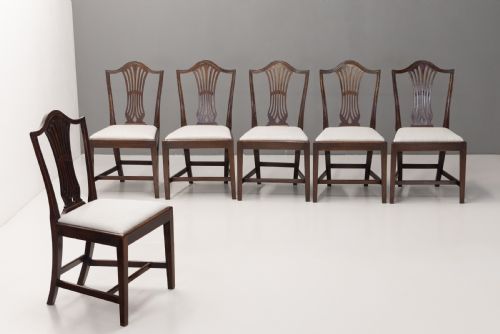
The form appears most frequently as dining chairs and side chairs, alongside open armchairs, carvers, and corner armchairs. Walnut and mahogany dominate the selection, shaped into dining sets of four, six, eight, or twelve pieces, as well as smaller pairs and single examples.
Materials and construction
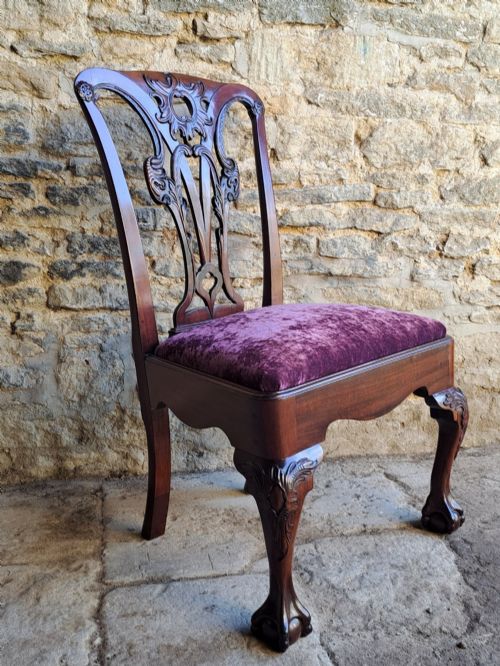
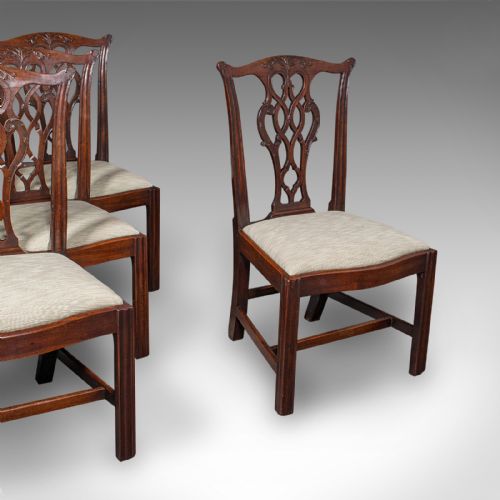
Cabinet makers constructed the chair frames predominantly from solid hardwoods such as mahogany, walnut, oak, and elm, utilising pegged joints and carved elements like cabriole legs and vase splats. Some later or revival pieces employ stained beech or incorporate brass inlay and faux rosewood finishes.
The drop-in frame is built as a separate internal slip-seat, traditionally webbed and stuffed before receiving a textile covering. Surviving examples utilise a range of upholstery materials, including leather, velvet, needlework, tapestry, and standard fabric.
Drop in Seat Chairs Retail Price Guide 2026
Typical asking prices for drop in seat chairs among the pieces listed under this phrase on Sellingantiques today, from the lower quarter to the upper quarter. They describe what is for sale here now, not the wider market.
Upholstery materials on these chairs span leather, velvet, tapestry, needlework, and standard textile.
Assessing quality
Quality rests in the crispness of the timber carving, the choice of dense, well-figured mahogany or walnut, and the structural integrity of the frame joints. Earlier pieces display hand-carved ribbon backs, scroll backs, or ladder backs executed with deep relief and refined proportions.
Larger sets demonstrate superior standardisation across all matching chairs, whilst individual armchairs show greater artistic ambition in the arm terminals and leg supports. Original slip-seats that fit snugly into the rebated frame without excessive movement indicate careful historical construction.
William Walker & Sons·Gillows
The Drop in Seat Chairs Glossary
- Drop in seat
- A removable upholstered frame that drops into a rebated wooden ledge within the chair seat rails. This design allowed owners to unscrew or lift out the pad for recovering without disturbing the main frame.
- Cabriole leg
- A furniture leg that curves out at the knee and tapers inward to an ankle, mimicking an animal limb. It frequently terminates in pad, claw and ball, or hoof feet on eighteenth-century seating.
- Vase splat
- A vertical wooden board down the centre of a chair back shaped like the silhouette of a classical vase. It provides central back support in dining chairs from the Georgian period onward.
- Ribbon back
- An ornate chair back carved to resemble intertwined ribbons or bows. This decorative style appeared on high-status mid-eighteenth-century seating.
Drop in Seat Chairs: Frequently Asked Questions
How do I clean drop in seat fabric?
Vacuum the textile surface gently using a soft brush attachment to remove dust from the crevices. Avoid excessive moisture, particularly on antique needlework or velvet.
Test any cleaning solution on a hidden underside area of the fabric first. Professional textile restoration is recommended for delicate historic coverings.
Can I reupholster the drop in seats?
Yes, the drop-in frame lifts directly out of the wooden seat rails, making the recovering process straightforward. You can remove old tacks and webbing to apply new upholstery.
Retaining the original slip-seat frame preserves the structural integrity of the chair. Modern fabric can be stapled directly onto the traditional wooden drop-in base.
How do I date a mahogany chair?
Examine the timber colour, grain density, and the construction methods used beneath the seat frame. Hand-cut joinery and dense, heavy mahogany generally point towards eighteenth-century craftsmanship.
Revival pieces from the Victorian and Edwardian eras often use machine tooling or different secondary woods. Compare the carved motifs, such as vase splats or cabriole legs, with established period styles.
Are these chairs suitable for daily dining?
Many solid hardwood chairs remain sturdy enough for regular daily use around a dining table. Checking the frame joints and stretcher stability ensures safe seating.
Lighter eighteenth-century examples may require careful handling compared to robust Victorian or Edwardian sets. Rotating chairs in a large set distributes wear evenly across the group.