
Tapestry Upholstered Chairs
Tapestry upholstered chairs combine historic textile panels with timber frames to bring texture and period character into a room.
What tapestry upholstered chairs are
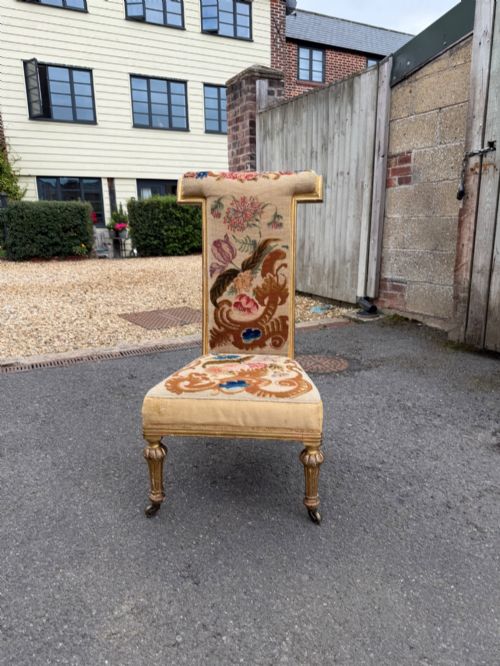
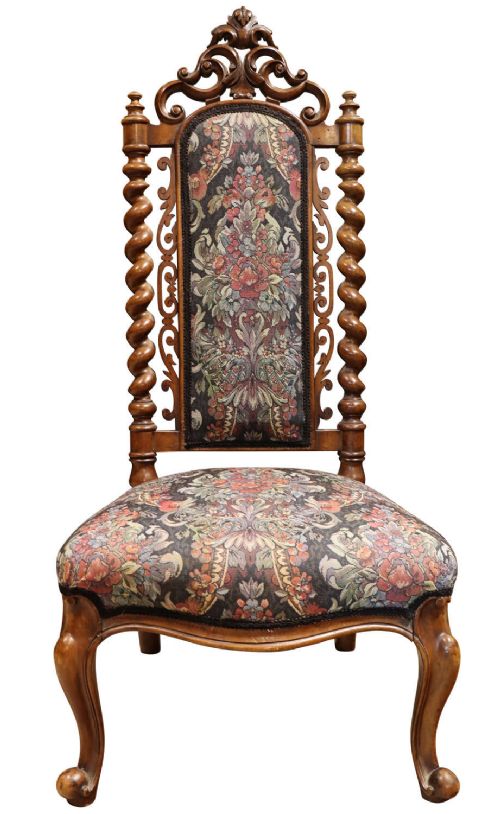
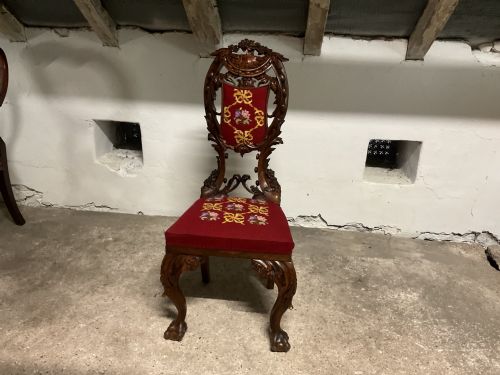
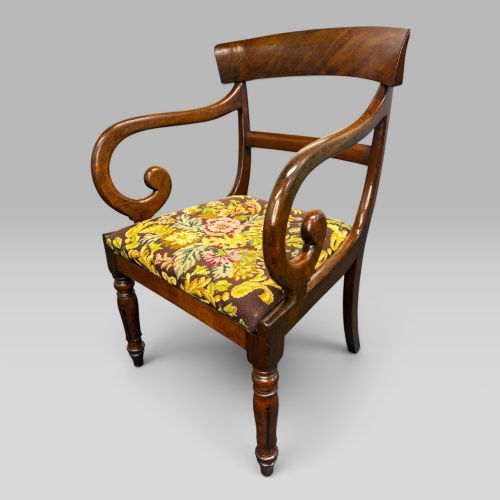
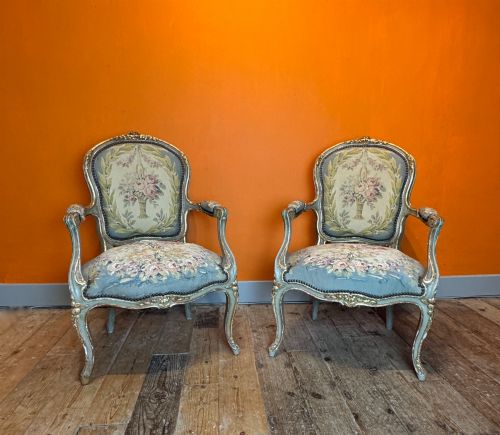
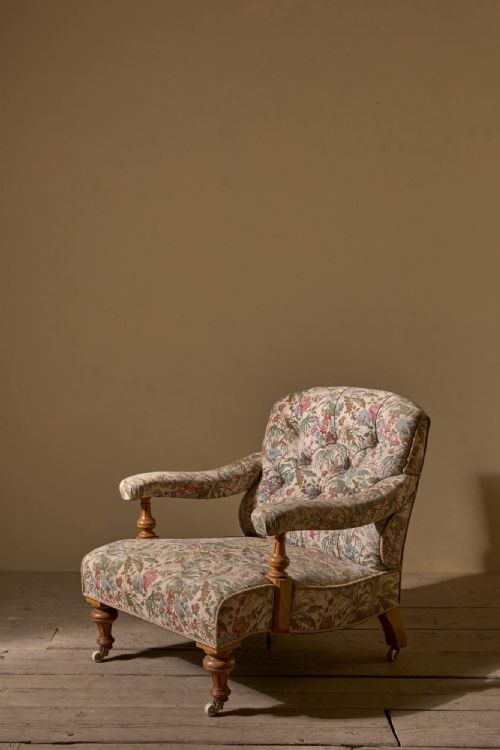
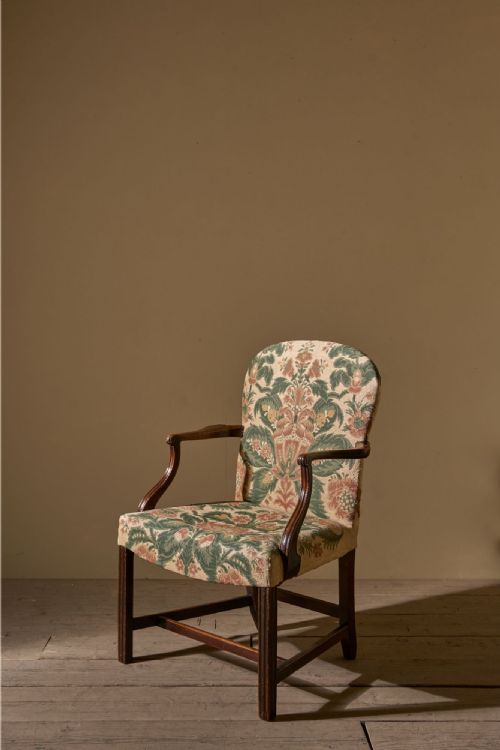
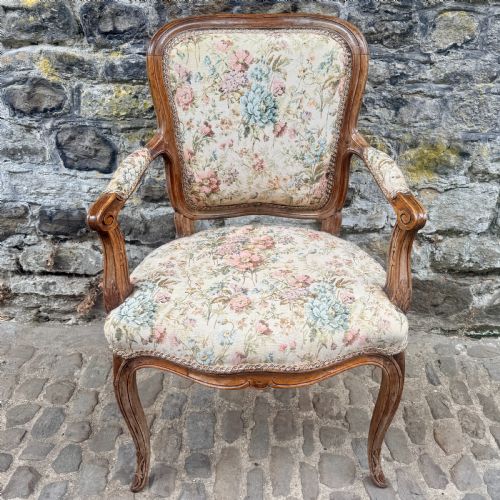
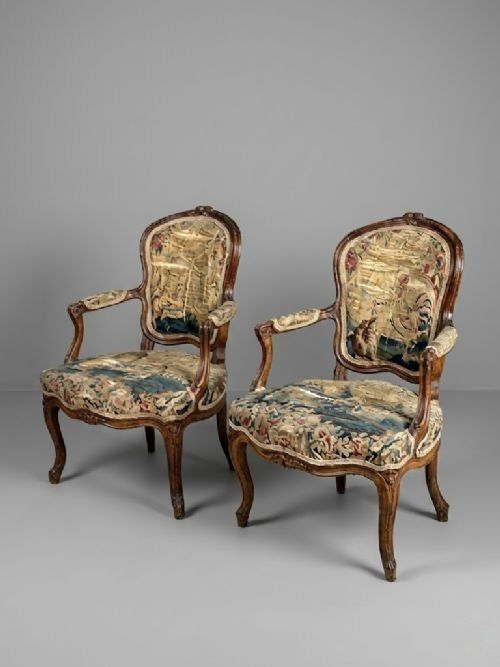
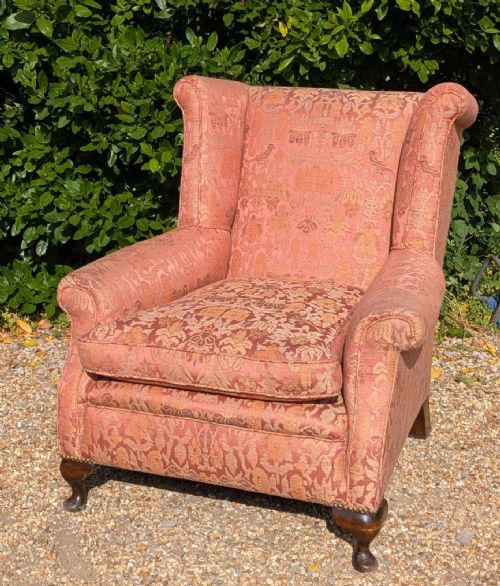
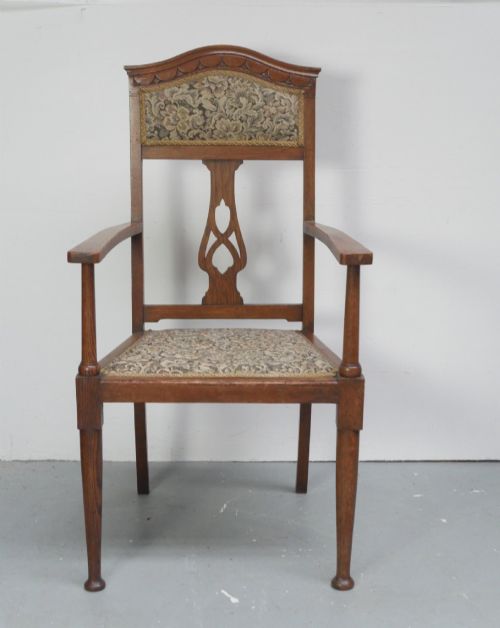
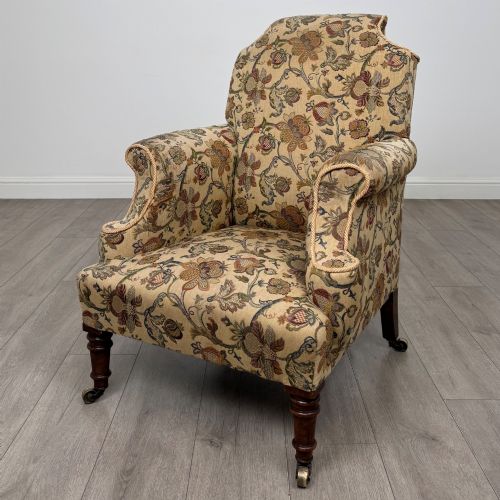
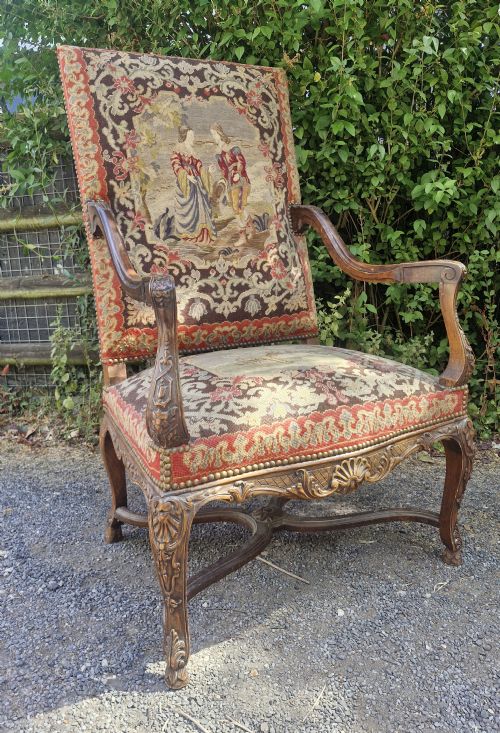
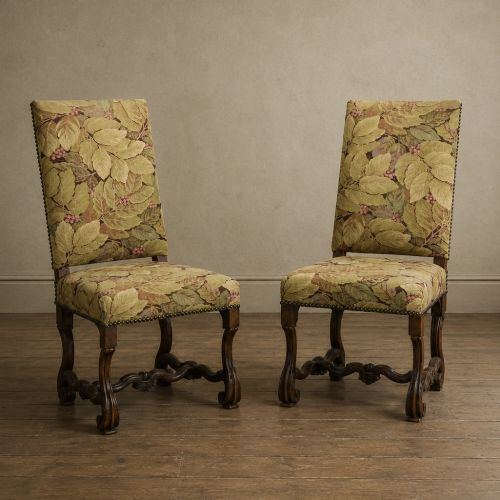
When you search for tapestry upholstered chairs, you encounter seating built across the nineteenth and early twentieth centuries, featuring needlework or woven textile covers. The selection spans dining sets, side chairs, and grand armchairs.
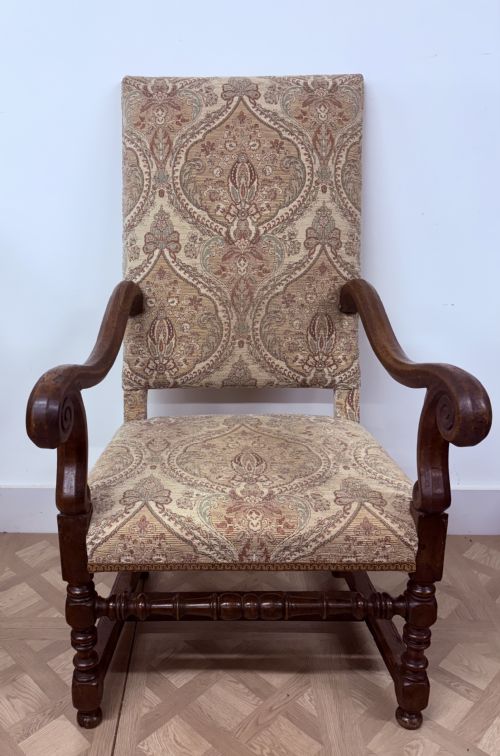
Most examples date from the nineteenth century, drawing heavily on French Louis Revival, Renaissance Revival, and Victorian aesthetics. Walnut, mahogany, beechwood, and rosewood form the structural foundations for these textile-covered seats.
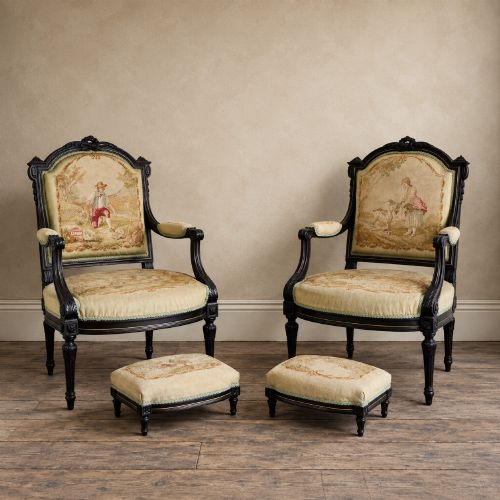
You will find pairs of open armchairs alongside sets of dining and salon chairs. The upholstery ranges from wool work seats to full back and arm coverings executed in patterned textiles.
How they were made
Carpenters shaped timber frames from walnut, mahogany, beech, and rosewood, sometimes applying gold leaf or parcel gilt highlights to carved details. Turned and carved woodwork provides the sturdy skeleton for each seat.
Textile panels, including wool work and hand-stitched tapestries, were secured over traditional stuffing and webbing. These covers bring substantial surface texture to the polished wooden frames.
Retail Price Guide 2026
Typical UK retail prices for tapestry upholstered chairs, calculated from the Sellingantiques database of over a million retail prices indexed since 2003. This retail price guide relies exclusively on Sellingantiques data; no external sources or auction records are used, so the figures do not describe the wider market.
Wool work seats carry the quiet patience of nineteenth-century needlework directly into modern sitting rooms.
What varies in quality
The sophistication of the timber carving and the precision of the frame joinery distinguish finer seating from standard production. Crisp detailing on walnut or mahogany frames indicates careful workshop execution.
The intricacy and execution of the tapestry work dictate the visual weight of the piece. Finer needlework or woven panels with detailed colour palettes elevate the overall presence of the chair.
White, Allom & Co.
The Tapestry Upholstered Chairs Glossary
- Parcel Gilt
- Partially gilded woodwork where gold leaf is applied selectively to highlight carved ornaments or mouldings. It contrasts with the polished wood surface underneath.
- Wool Work
- Needlework executed using wool yarns on a canvas ground, frequently employed for nineteenth-century chair seats. It provides a durable and textured surface for frequent use.
Frequently Asked Questions
How do I clean tapestry upholstery?
Surface dust can be removed gently with a soft brush or low-suction vacuum attachment. Avoid liquid cleaners that might disturb historic fibres and stuffing materials.
Professional textile conservation is recommended for deeper cleaning needs. Testing any method on a hidden area prevents unintended damage.
Are these chairs suitable for daily use?
Sturdy nineteenth and early twentieth-century frames handle regular sitting well if the internal webbing and joints remain sound. Dining and side chairs function effectively around a table when properly maintained.
Delicate antique frames or fragile textile covers benefit from lighter use. Assessing the structural stability of each piece guides its placement in a modern home.
How do I date a chair?
Timber choice, construction methods, and stylistic revival cues offer primary clues to the decade of manufacture. Nineteenth-century pieces often display hand-carved details and traditional joinery.
Twentieth-century Edwardian examples tend to show lighter framing and machine-finished elements. Comparing the carved motifs against known revival periods helps narrow the timeframe.
Can I mix different chair styles?
Pairing armchairs with matching side chairs creates a cohesive seating arrangement within a drawing room or hall. Combining pieces from similar nineteenth-century revival periods maintains visual harmony.
Contrasting wood tones and upholstery patterns can also add depth to a room when balanced carefully. The shared textile element helps tie disparate forms together.