
French Revival Chairs
French revival chairs bring the opulent historic seating designs of past centuries into domestic interiors with carved woodwork and plush upholstery.
French Revival Chairs
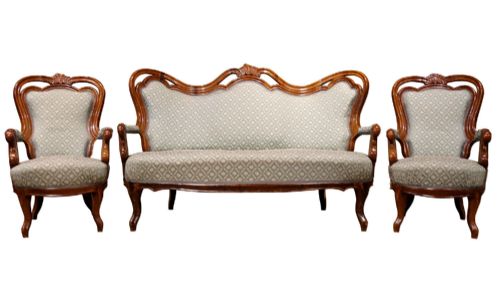
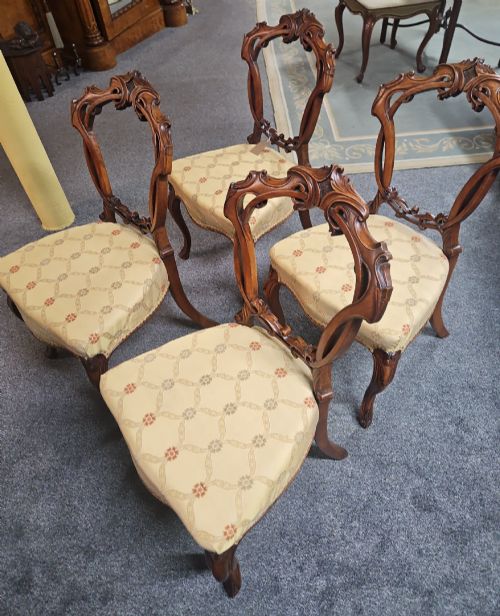
French revival chairs represent historic design movements from earlier centuries, reinterpreted largely during the nineteenth and early twentieth centuries. These seats span formats such as open armchairs, side chairs, salon suites, and large throne chairs designed for reception rooms.
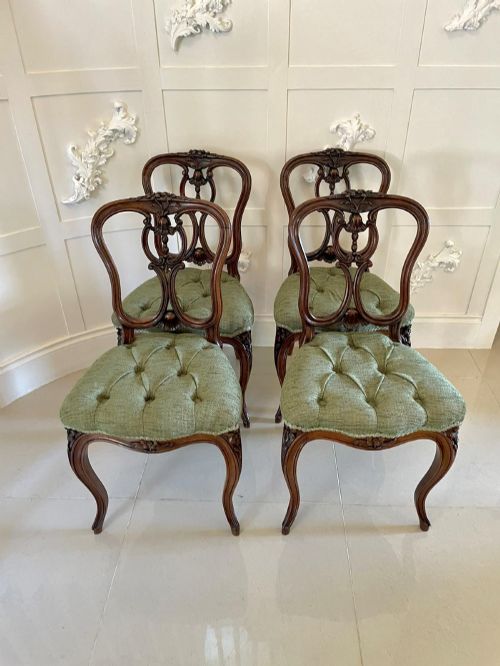
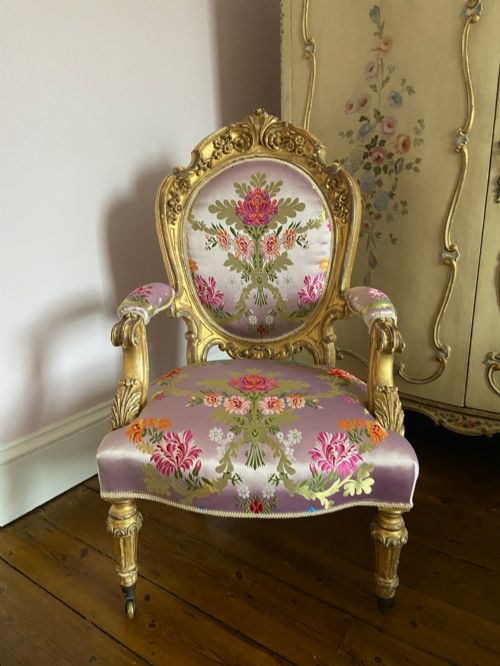
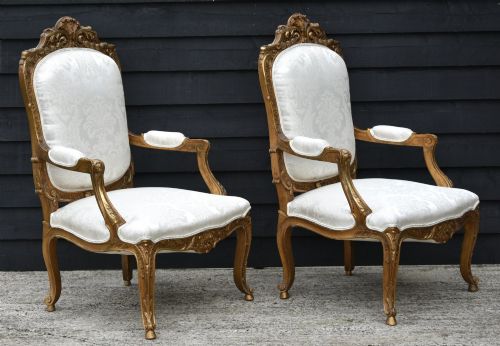
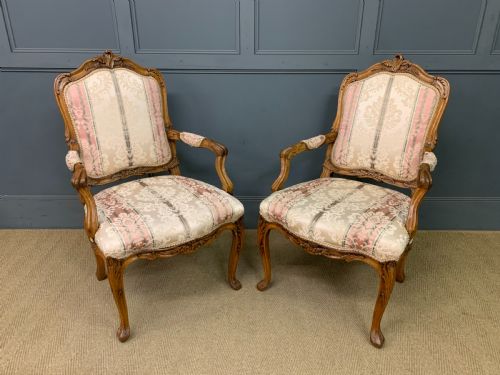
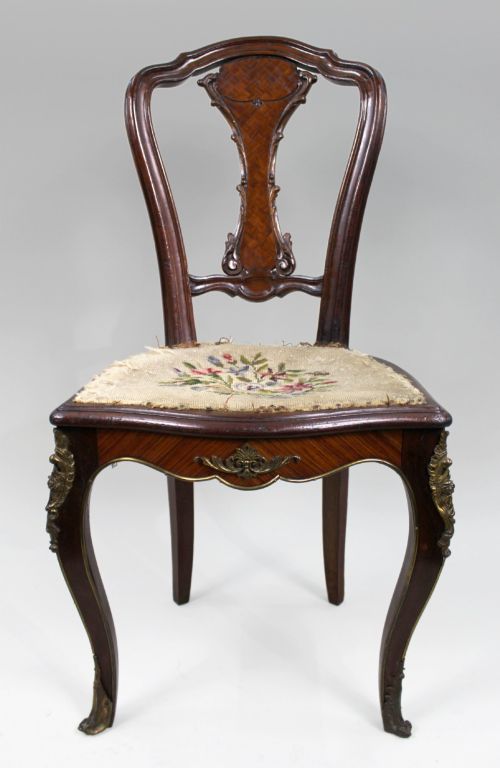
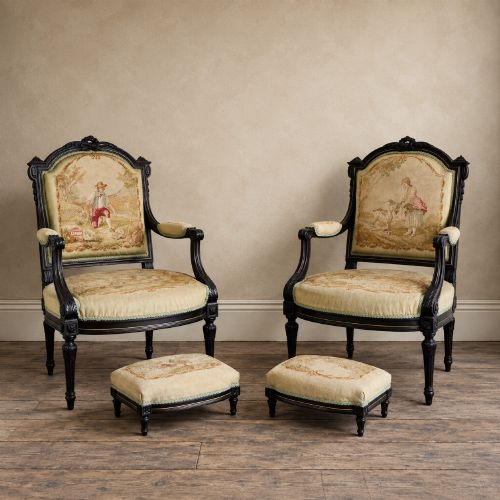
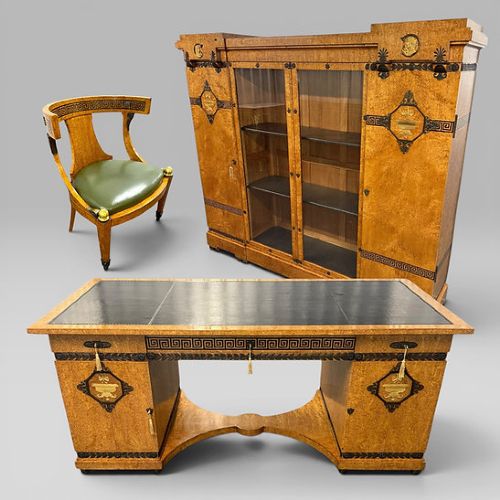
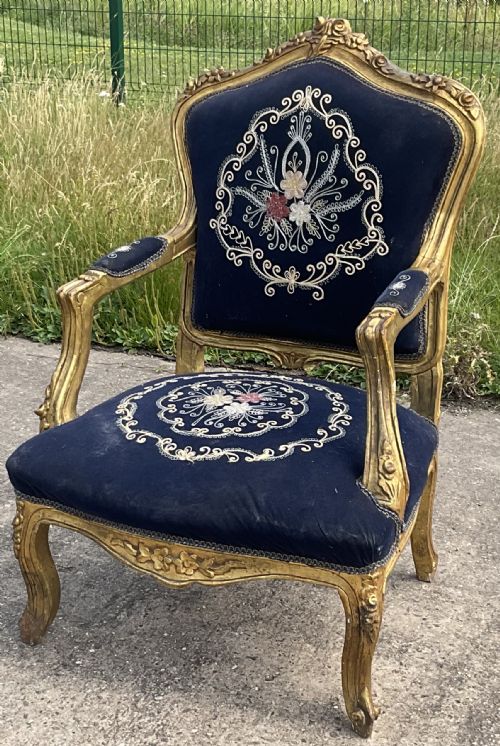
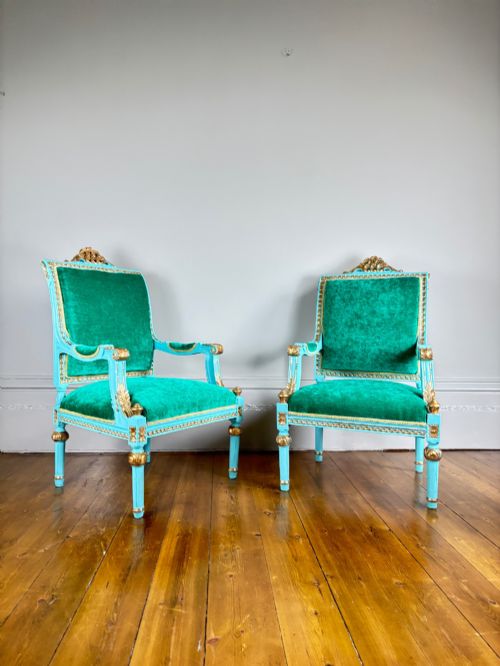
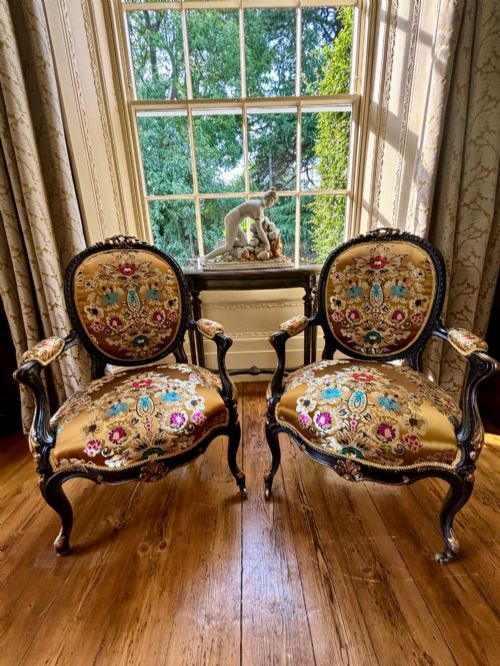
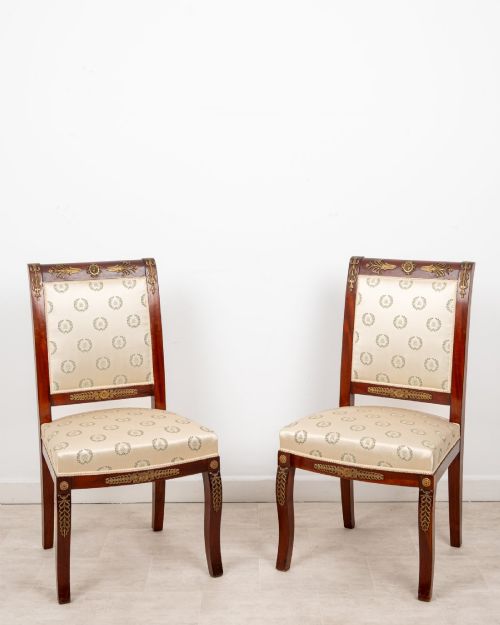
The versions most commonly met on this page include walnut and giltwood armchairs referencing the Louis XV and Louis XVI periods, alongside Empire revival pieces in mahogany with metal mounts. Makers drew inspiration from baroque, rococo, and neoclassical aesthetics to satisfy demand for historicist interior decoration.
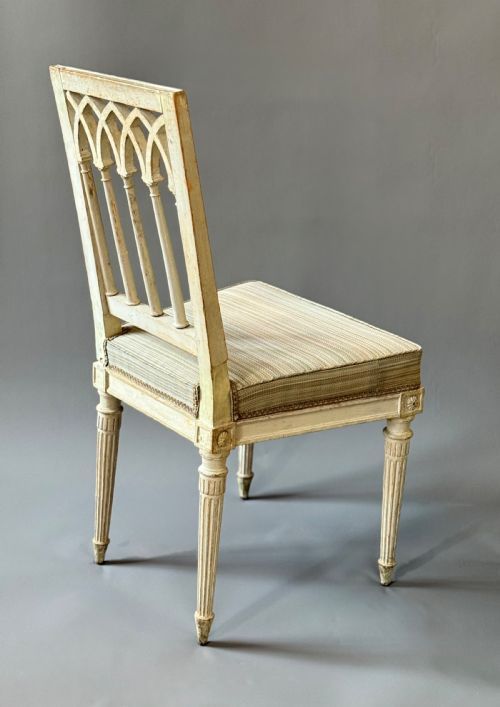
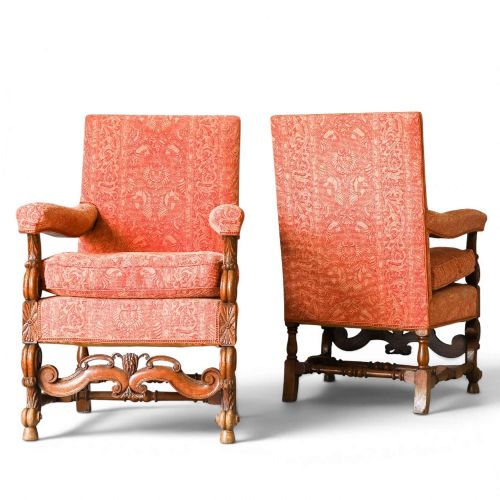
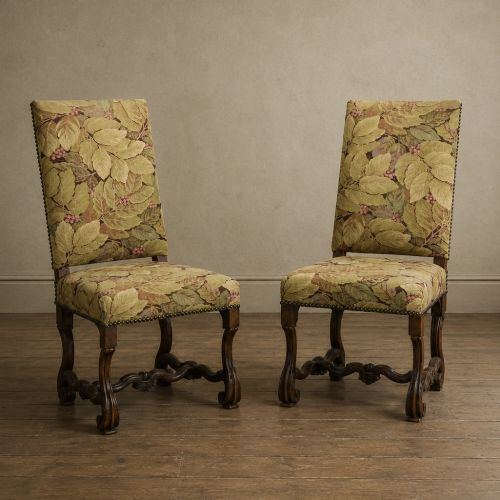
Makers also produced dining chairs, stools, and settees in oak, beech, and various hardwoods, often following specific regional revivals like the Gothick taste or French Renaissance styles. These seating options reflect the Victorian and Edwardian appetite for period furnishings adapted to contemporary comfort.
Factors of quality and execution
The distinction between standard examples and superior pieces rests on the depth and crispness of the hand-carved woodwork. Finely executed chairs display sharply defined acanthus leaves, scrollwork, and moulded contours rather than soft, cast, or shallow detailing.
Material selection and surface finish determine the visual weight of the furniture, with fire-gilded ormolu mounts and genuine gold leaf outlasting painted or lesser metallic alternatives. Dense hardwoods like walnut and mahogany provide structural integrity that supports complex open-arm designs over generations.
Upholstery execution and frame rigidity differentiate workshop standards, where tight joinery prevents movement in cabriole legs and stressed joints. Complete salon suites and matched pairs demonstrate greater uniformity in timber grain and decorative application than assembled groupings.
Available chair forms include armchairs, side chairs, dining sets, stools, and complete salon suites.
Mercier Frères
The French Revival Chairs Glossary
- Fauteuil
- An open-armed upholstered armchair with an exposed wooden frame, typically featuring padded armrests and a carved back.
- Ormolu
- Gilt bronze ornamentation applied to furniture frames, common in Empire and neoclassical revival pieces.
- Cabriole leg
- A furniture leg that curves outward in a convex arc and tapers inward to a scroll or pad foot, characteristic of rococo designs.
- Caning
- Woven rattan material used to form light, porous panels for chair backs and seats.
- Parquetry
- Geometric patterns of inlaid wood veneers applied to surface areas like chair backs and rails.
French Revival Chairs: Frequently Asked Questions
What defines a French revival chair?
These pieces are nineteenth or early twentieth-century interpretations of historical seating styles from earlier French royal periods. They replicate forms like the rococo and neoclassical eras using period woodworking and upholstery techniques.
Craftsmen adapted older aesthetic movements for contemporary homes, producing everything from giltwood salon chairs to mahogany dining sets.
How do I identify Louis XV and Louis XVI styles?
Louis XV revival chairs feature flowing curved lines, cabriole legs, and asymmetrical rococo carving without straight structural members. The upholstered components follow organic contours designed for relaxed nineteenth-century drawing rooms.
Louis XVI revival seating shifts toward strict symmetry, straight fluted legs, and neoclassical rectangular or oval backs decorated with ribbons and bead reels.
Where were these chairs used historically?
Owners placed these seats in formal reception rooms, parlours, and drawing rooms to display taste and accommodate guests during social gatherings. Salon suites and matching armchairs furnished central domestic spaces designated for entertainment.
Individual side chairs and occasional chairs also served in bedrooms, studies, and intimate reading corners alongside larger partner desks.
How should I care for antique wood and gilding?
Maintain wooden frames and giltwood surfaces by dusting gently with a dry, soft cloth to prevent abrasive particles from scratching the finish. Avoid placing antique seating near direct heat sources or strong sunlight, which causes timber to split and gilding to fade.
Treat upholstered elements according to the specific fabric type, utilising professional cleaning methods for delicate textiles like silk damask and velvet.