

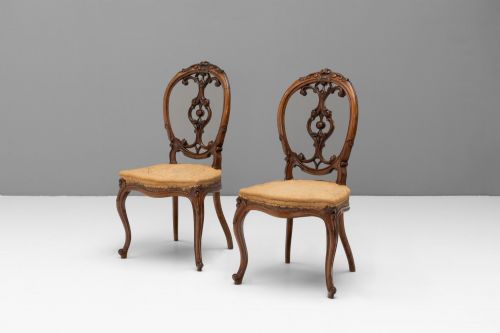


Rococo Dining Chairs
These rococo dining chairs bring scrolling timber frames and upholstered comfort to the table, offering a seat in history.
Rococo Dining Chairs
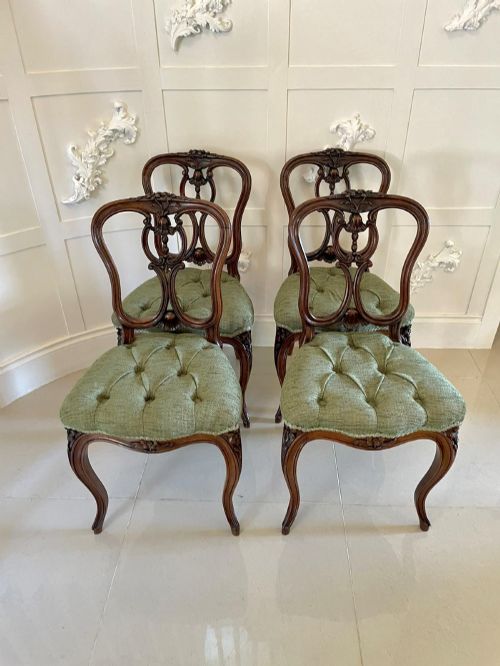
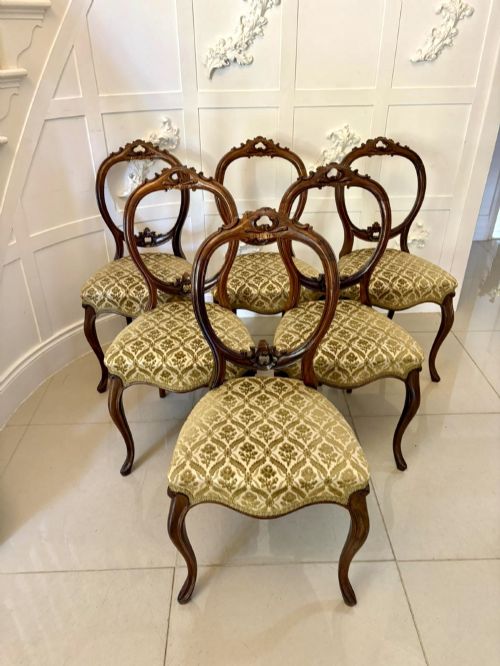
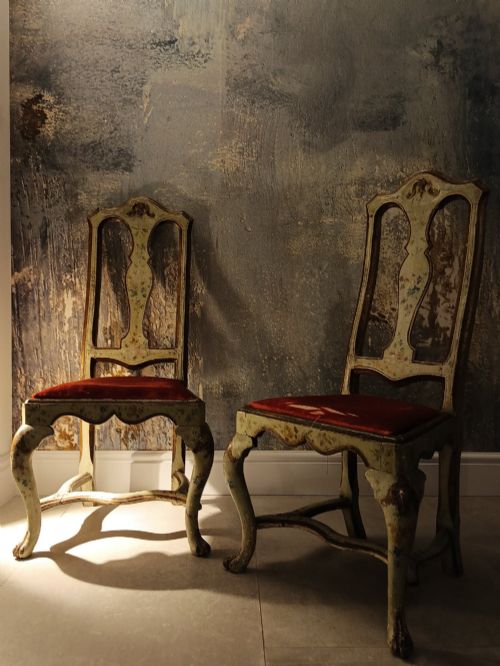
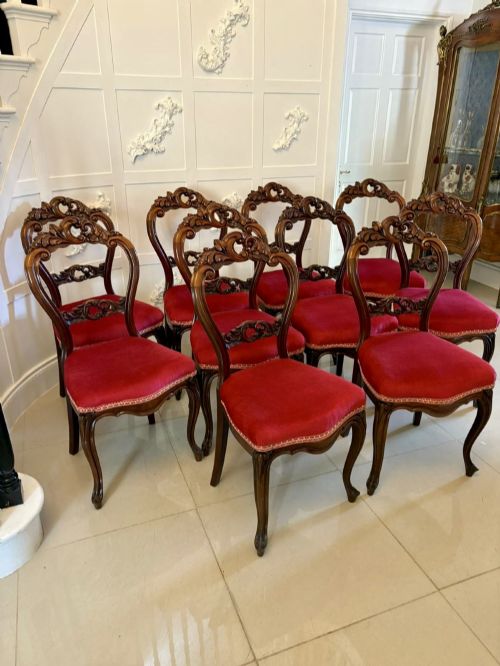
Rococo dining chairs encompass seating designed with curving lines and ornamental flourishes across the backrest and frame. When searching for rococo dining chairs, buyers encounter pieces ranging from mid-eighteenth-century Italian and Dutch examples to Victorian revival sets.
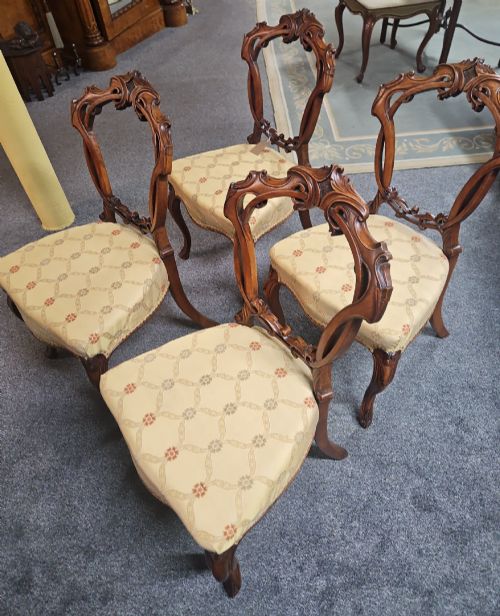
The selections span dining chairs, side chairs, and armchairs fashioned from solid timbers like walnut, mahogany, and rosewood. Victorian walnut and rosewood sets appear frequently alongside continental pieces featuring pierced splat backs or painted surfaces.
How they were made
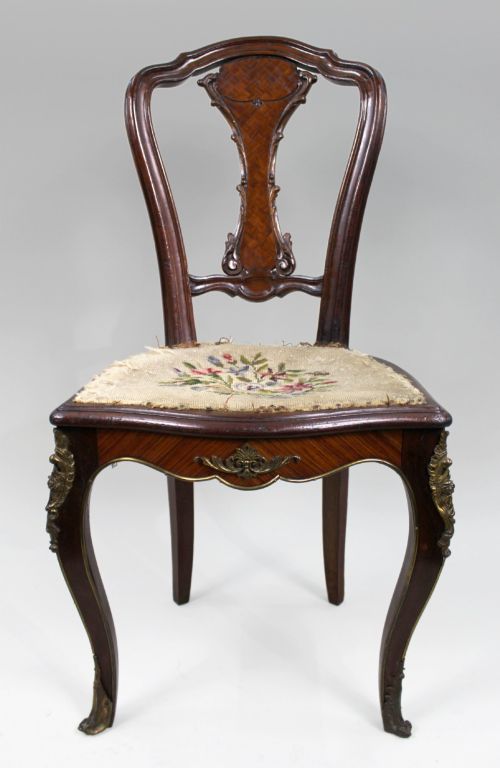
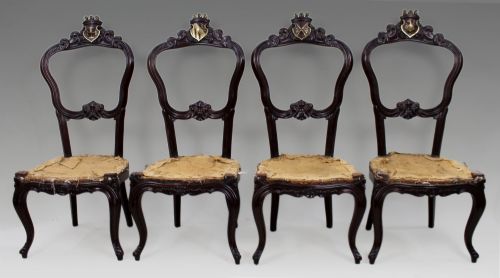
Cabinetmakers shaped dense woods such as walnut, mahogany, and rosewood into flowing, asymmetrical silhouettes using hand-carving techniques. Frames incorporate intricate details like pierced splats, heraldic crests, and ormolu mounts.
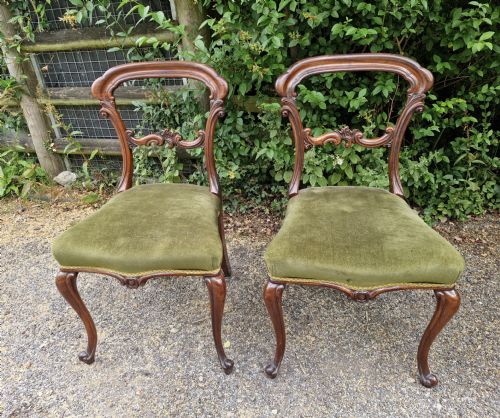
Upholstery forms an integral part of the construction, utilising contemporary fabrics, velvet, and textile coverings secured over padded seats. Finishing touches range from gilded surfaces to delicate parquetry work.
Several chairs arrive ready for conversation wearing their heraldic crests.
What varies in quality
The standard of carving defines the distinction between ordinary production and superior craftsmanship, visible in the depth and crispness of the scrollwork. Timber selection also matters, with finely grained Cuban mahogany, figured walnut, and rich rosewood commanding greater visual weight.
Uniformity across a suite elevates the desirability, particularly in matched sets of six or ten chairs retaining their original proportions and structural integrity. The integration of decorative elements like ormolu mounts or marquetry further separates standard seating from exceptional examples.
Morison & Co of Edinburgh
The Rococo Dining Chairs Glossary
- Rococo Revival
- A mid-nineteenth-century design movement that reinterpreted the curving, ornate forms of the eighteenth century. This style dominates many Victorian-era seating options found today.
- Pierced Splat
- The central vertical strip of a chair back that has been carved or cut through to create an openwork pattern. It lightens the visual mass of wooden dining chairs.
- Ormolu
- Cast and gilt bronze mounts applied to furniture for decorative effect. They appear on French pieces to highlight the contours of the frame.
- Parquetry
- Geometric patterns of inlaid wood veneer arranged on the surface of the chair. It adds texture and visual contrast to the timber base.
- Cabriole Leg
- A furniture leg that curves outward at the knee and tapers inward toward the foot, mimicking animal limbs. This form underpins the silhouette of many eighteenth-century seats.
Rococo Dining Chairs: Frequently Asked Questions
How do I spot a revival piece?
Revival chairs from the Victorian period often employ denser walnut or rosewood and machine-assisted joinery alongside hand carving. Examining the interior construction and timber ageing helps clarify the date.
Eighteenth-century originals display hand-cut joinery methods and patination unique to earlier workshop practices. Comparing the sharpness of the carved details provides further clues to the manufacturing era.
Can I mix these with modern tables?
These seating options pair effectively with contemporary dining tables by creating a deliberate contrast between eras. The organic curves soften straight-edged modern architecture.
Ensure the seat height matches the underside clearance of the table for comfortable dining. Armchairs require extra width consideration around the table perimeter.
How should I care for the upholstery?
Regular gentle vacuuming with a soft brush attachment removes surface dust from fabric, velvet, or textile coverings. Professional cleaning preserves delicate antique textiles without damaging the underlying padding.
Keep upholstered pieces away from direct sunlight to prevent fading of the fabric colours. Avoid placing them near heat sources that might dry out the internal stuffing.
Are walnut frames fragile?
Walnut is a durable hardwood that provides strong structural support for carved dining chairs when maintained properly. Periodic checking of the joints prevents looseness caused by regular use.
Avoid dragging the chairs by their top rails or arms when moving them around the room. Lifting from the seat frame protects the delicate carved splats and legs from undue stress.