



Floral Velvet Chairs
Floral velvet chairs bring rich texture and period character into a room, offering a tactile seat that grounds traditional and eclectic spaces alike.
Floral Velvet Chairs
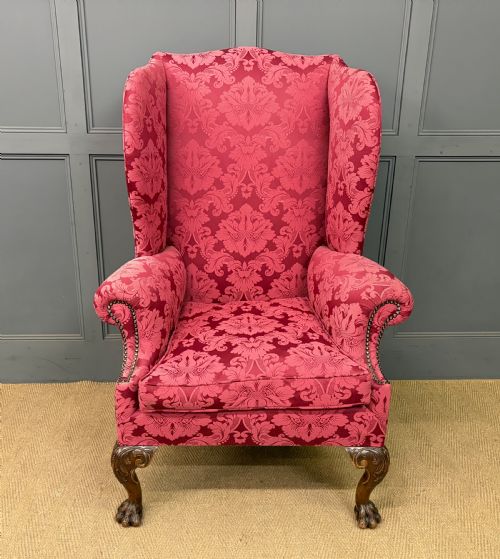
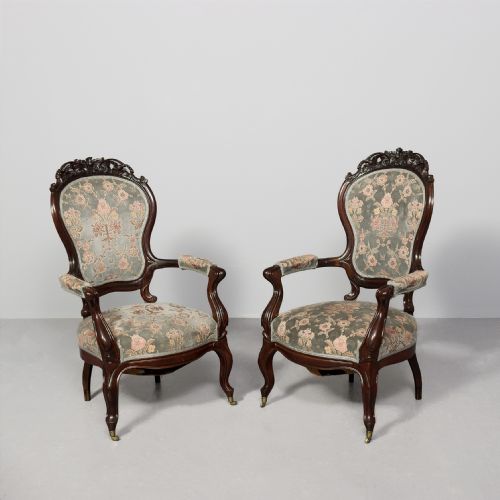
Floral velvet chairs encompass a diverse selection of seating, ranging from substantial wing armchairs and boudoir seats to dining chairs and chaise longues. When searching for floral velvet chairs, buyers encounter forms that span several centuries, including Regency models, Victorian designs, and early twentieth-century creations.
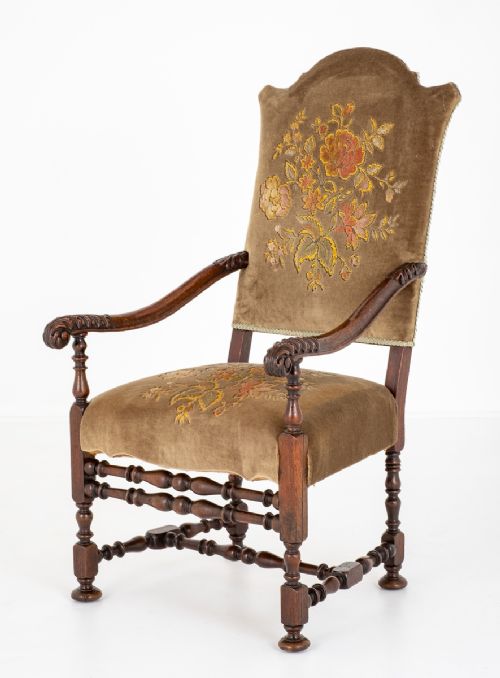
Revivalist aesthetics frequently appear across the selection, with Jacobean style, Queen Anne style, Dutch Baroque, and Rococo Revival influences shaping the wooden frames. These seating options serve practical functions in studies, halls, and drawing rooms while displaying distinct historical design idioms.
How they were made
The construction of these seats relies on traditional cabinet-making timbers such as mahogany, walnut, oak, and rosewood, often shaped with carved details and cabriole legs. Wood frames provide the structural foundation, while textiles supply the surface finish and comfort.
Upholstery techniques involve securing velvet fabrics, damask, and tapestry over padded frames, occasionally utilising specific patterned textiles like William Morris velvet. Joinery methods and hand-carving define the creation of the wooden elements before the final fabric is applied.
Hall porters chairs offered drafty Victorian hallways a velvet-lined refuge.
What varies in quality
Quality differences emerge in the execution of the woodwork, visible in the depth and precision of carved details on frames made from walnut, mahogany, or oak. Finer pieces demonstrate superior joinery and more substantial timber selection.
The standard of the upholstery work and the character of the textile contribute to the overall execution. Chairs featuring sophisticated frames and well-preserved period velvet represent the higher end of the range.
William Morris
The Floral Velvet Chairs Glossary
- Cabriole leg
- A furniture leg that curves out and then tapers inward, mimicking an animal's limb. This form appears frequently on chairs from the eighteenth century and subsequent revival periods.
- Wingback armchair
- A high-backed seat featuring protective wings designed to shield the occupant from drafts. It provides an enclosed resting space.
- Nursing chair
- A low-seated chair traditionally designed to allow a person to sit comfortably while tending to infants. They typically feature padded upholstery and supportive backs.
- Damask
- A reversible figured fabric woven on a jacquard loom, utilised for upholstery and wall hangings. It displays patterns created through contrasting weaves.
Floral Velvet Chairs: Frequently Asked Questions
What periods do these chairs come from?
The selection includes pieces spanning from the eighteenth century through the Regency and Victorian eras into the early twentieth century. Each period brings distinct structural forms and stylistic revivals.
Buyers find everything from eighteenth-century Dutch side chairs to Edwardian boudoir seating and Victorian chaise longues.
How do I care for velvet upholstery?
Velvet requires gentle handling to preserve its pile and texture over time. Regular light brushing helps maintain the nap of the fabric.
Keeping these chairs away from direct sunlight prevents the colours of the floral textiles from fading.
Are these chairs suitable for daily use?
Many of these pieces are built on sturdy hardwood frames made from walnut, mahogany, or oak. Their solid construction allows for regular seating in living spaces and studies.
Heavier armchairs and dining sets function well as practical seating, while lighter boudoir chairs suit occasional use.
What is a boudoir chair?
A boudoir chair is a small, decorative seat traditionally kept in a private dressing room or bedroom. These chairs prioritize comfort and aesthetic appeal.
Edwardian and Victorian examples often feature upholstered frames and distinctive textile coverings.