






Baroque Side Chairs
Baroque side chairs bring seventeenth and eighteenth century grandeur to a room, offering robust frames and striking carving.
Baroque Side Chairs
Baroque side chairs encompass sturdy seating from the seventeenth and eighteenth centuries, alongside nineteenth century revivals. You are most likely to encounter eighteenth century walnut examples and nineteenth century revival pieces on this page.
Materials and Construction
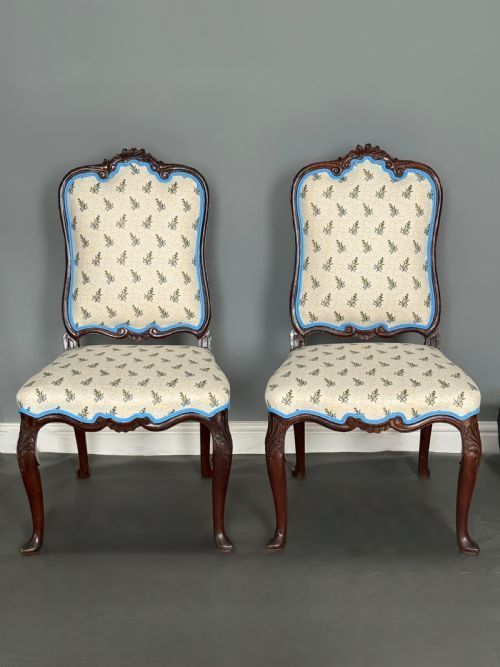
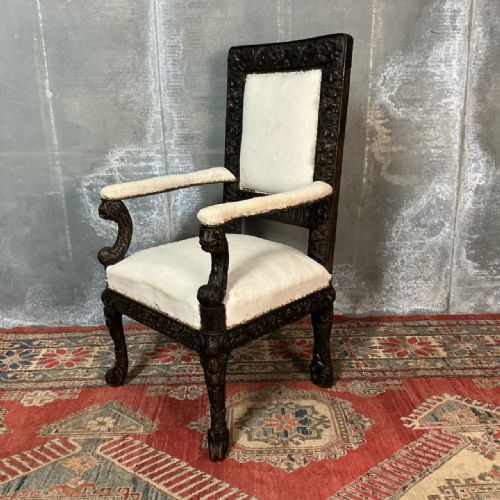
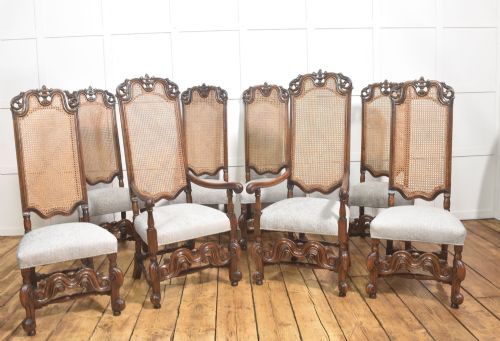
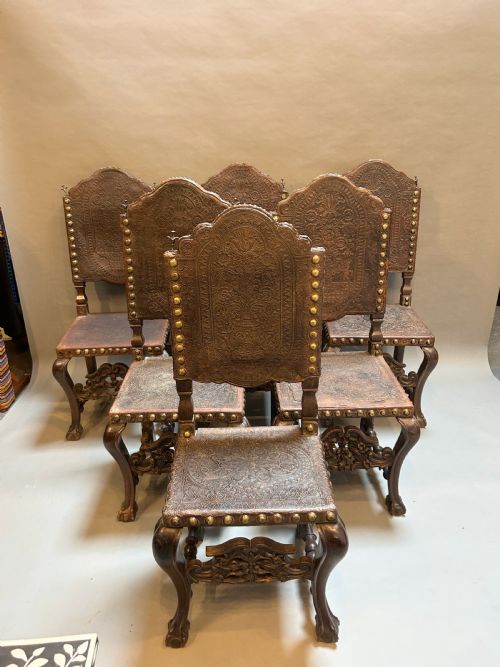
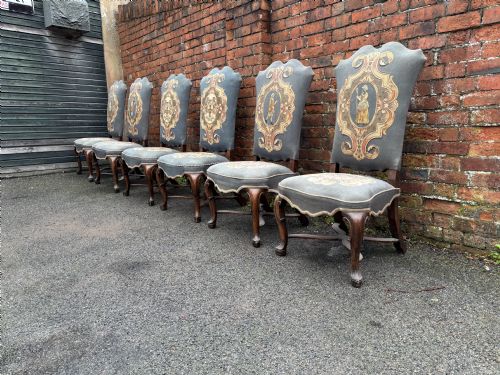
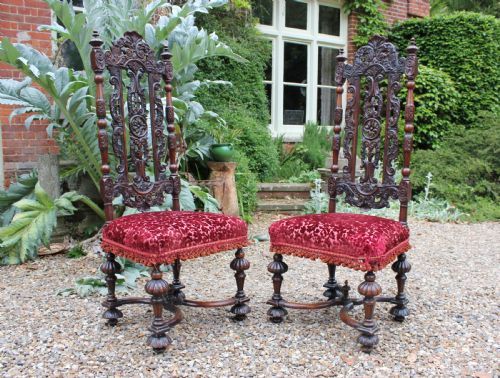
Craftsmen built these frames using dense timbers including walnut, oak, mahogany, and rosewood, often shaped with intricate carving. Selected pieces incorporate cane panels, bone inlay, or brass details to enhance the woodwork.
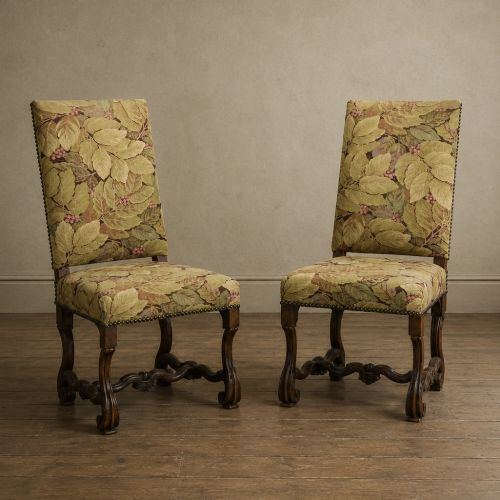
Upholstery relies on traditional textiles, comprising velvet, tapestry, leather, and woven fabric fastened directly to the structural framework. Joinery reflects the heavy-duty requirements of formal seating from the period.
Listings span walnut, oak, mahogany, and rosewood timbers paired with cane, leather, and tapestry textiles.
Distinguishing Quality
Quality rests upon the crispness of the carved detail and the integrity of the timber frame. Finer examples display deep, deliberate relief work and carefully matched wood grain across the structure.
The treatment of secondary materials dictates overall refinement, from tightly woven cane work to precise bone inlay and substantial upholstery textiles. Period authenticity in both construction methods and materials separates exceptional pieces from later revival items.
The Baroque Side Chairs Glossary
- Baroque
- A flamboyant artistic style originating in the seventeenth century characterised by exuberant curves and rich ornamentation.
- Cane
- Strips of rattan or bamboo woven into an open pattern to form seats and back panels.
- Bone inlay
- Fragments of carved bone set flush into wooden surfaces to create decorative geometric or figurative patterns.
- Hall chair
- A stiff wooden seat, often un-upholstered, designed for display in entrance halls rather than prolonged sitting.
- Revival
- A nineteenth century design movement that recreated earlier historical styles such as the seventeenth century Baroque.
Baroque Side Chairs: Frequently Asked Questions
Are baroque side chairs comfortable for dining?
These chairs were built for formal posture rather than lounging, featuring upright backs and firm seating surfaces.
Dining chairs from the set often provide adequate support for meals, though hall chairs and gondola chairs serve better as accent seating.
How do I distinguish eighteenth century from revival pieces?
Original pieces show the natural wear and wood patination accumulated over three centuries of use.
Revival furniture from the nineteenth century typically displays machine tooling marks and different timber seasoning methods upon close inspection.
Where should I place a pair of hall chairs?
Hall chairs look best against a plain wall in an entryway or landing where their carved backs can be fully appreciated.
Avoid placing them in high-moisture areas to protect the wooden frames and any upholstered textiles.
How do I care for cane seats?
Cane requires occasional light dampening to maintain its elasticity and prevent the natural fibres from becoming brittle.
Keep these chairs away from direct heat sources and strong sunlight to preserve the wood and woven panels.