

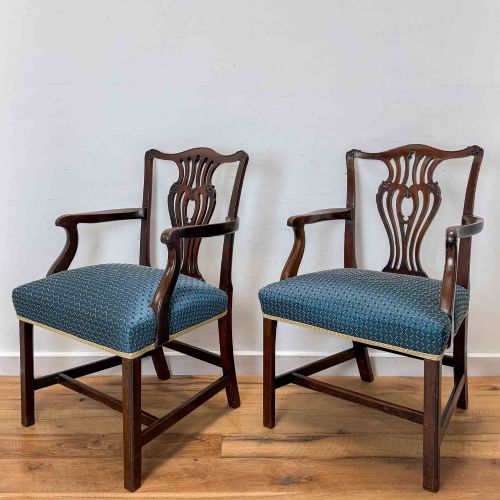
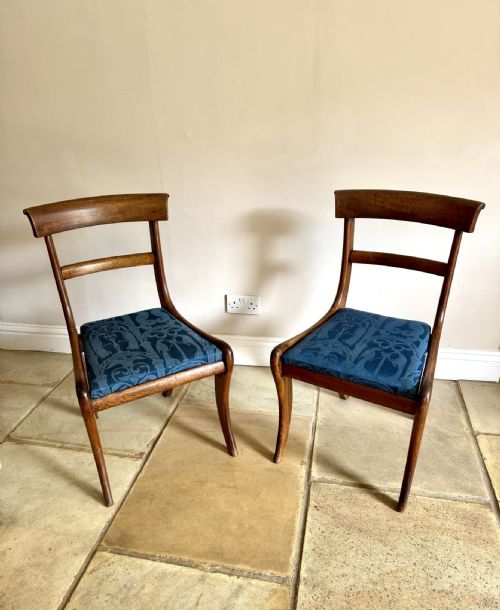
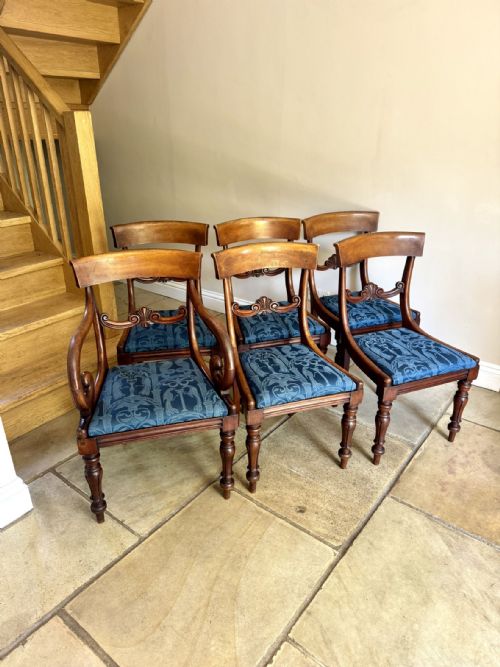
Blue Upholstered Dining Chairs
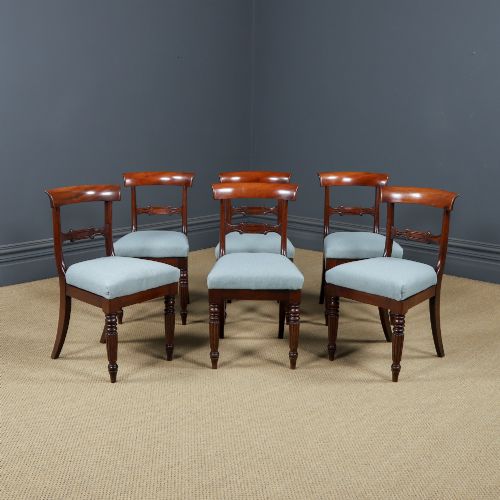
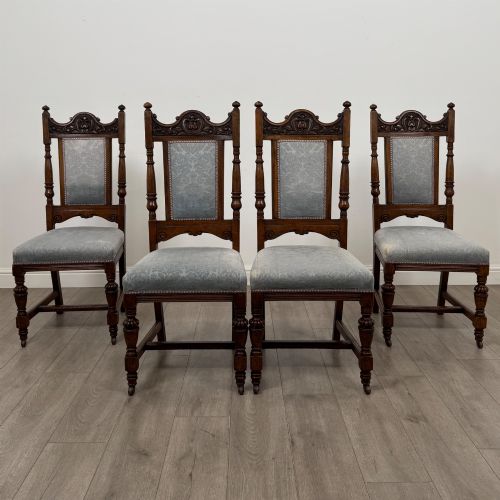
Blue upholstered dining chairs bring colour and period character to a room, offering seating built in mahogany, oak, walnut and rosewood across Georgian, Victorian and Edwardian periods.
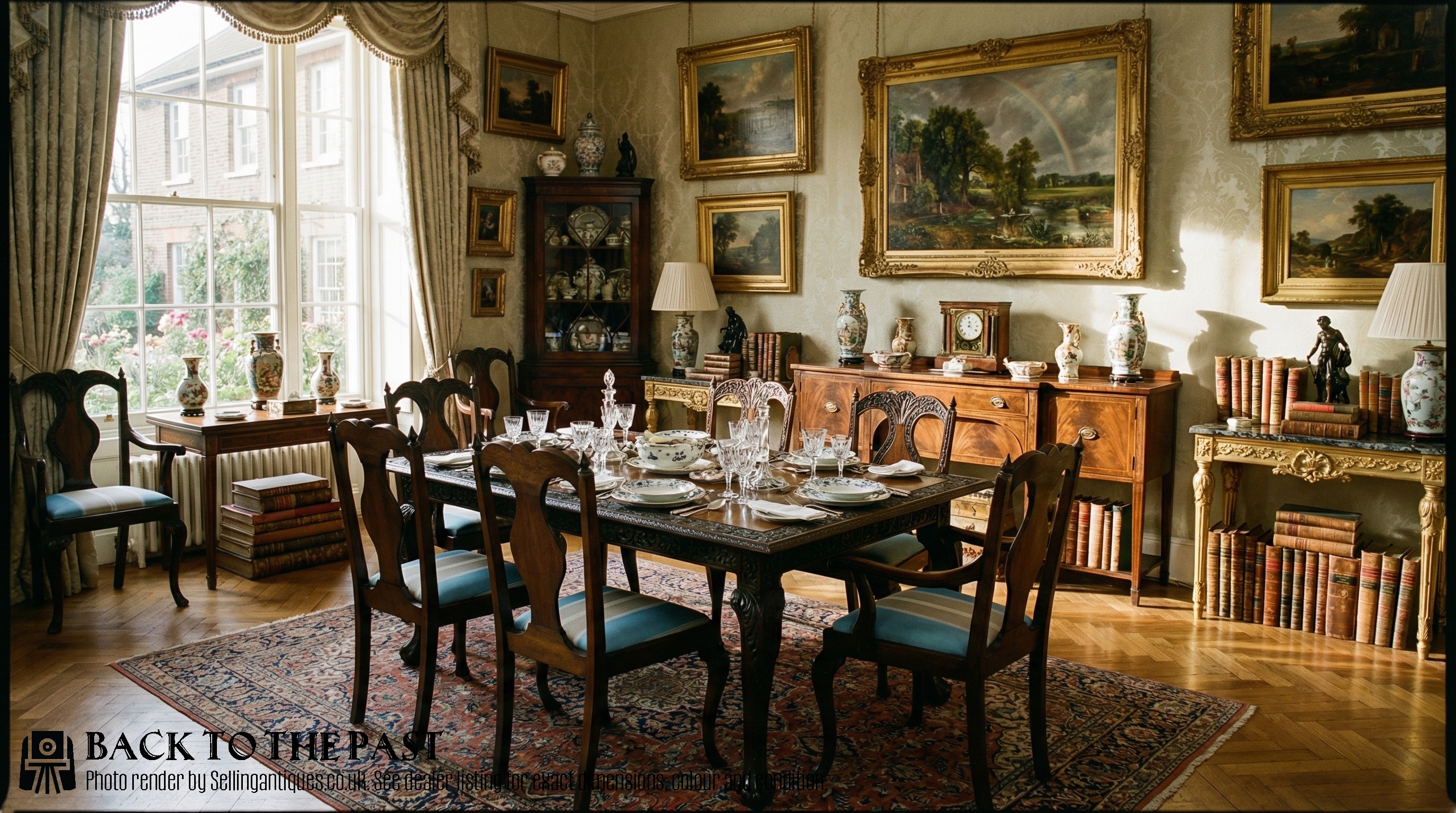
Blue Upholstered Dining Chairs
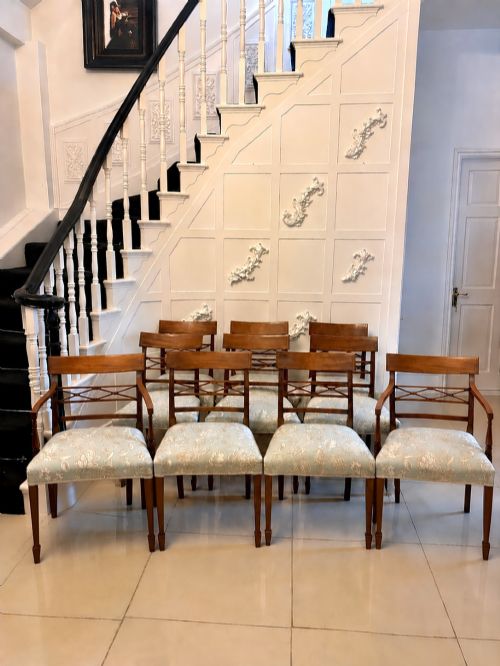
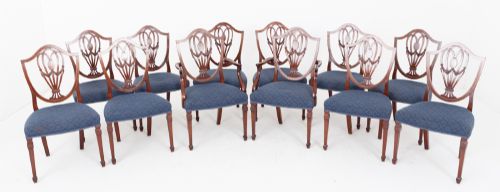
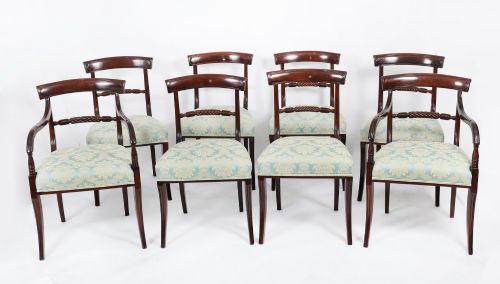
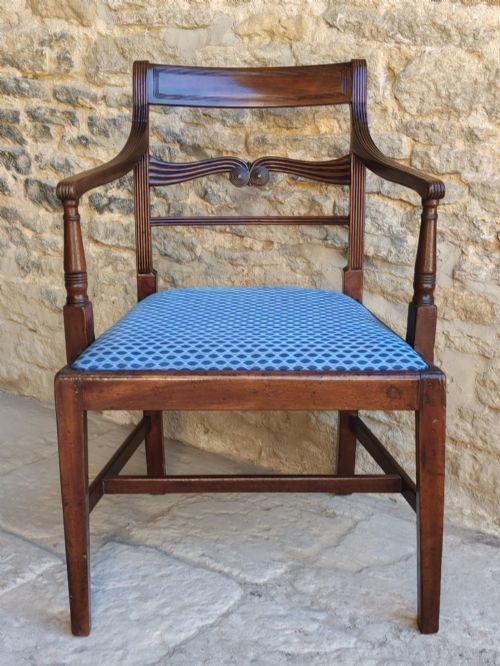
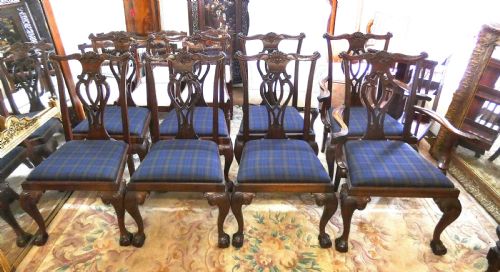
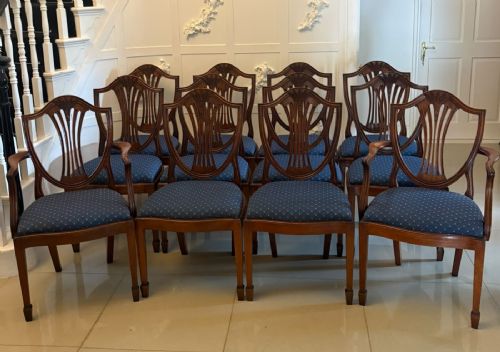
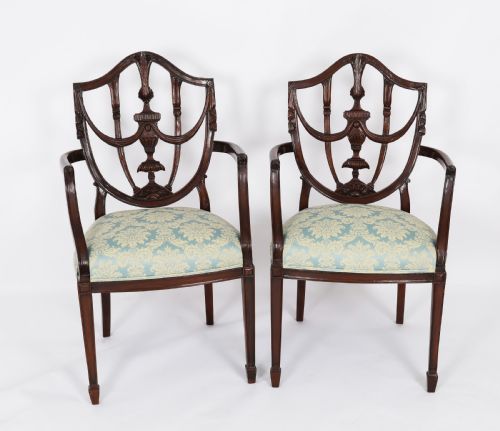
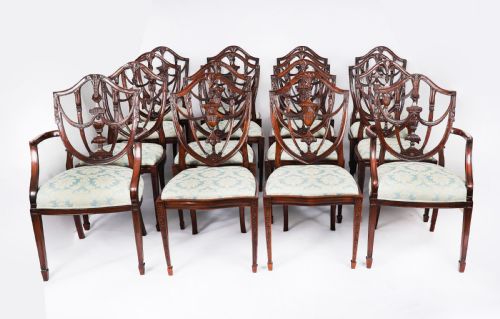
Blue upholstered dining chairs span several centuries of British and continental design, appearing as single side chairs, pairs of armchairs and substantial sets of ten or twelve. When searching for blue upholstered dining chairs, buyers encounter formal dining suites and carvers alongside lighter side chairs suited for occasional use.
The materials recorded in these seating forms include mahogany, oak, rosewood and walnut, paired with fabric, velvet, leather and needlepoint upholstery. Most examples emerge from the Georgian, Victorian, Edwardian and Art Deco periods, encompassing revival styles such as Chippendale, Hepplewhite and Regency.
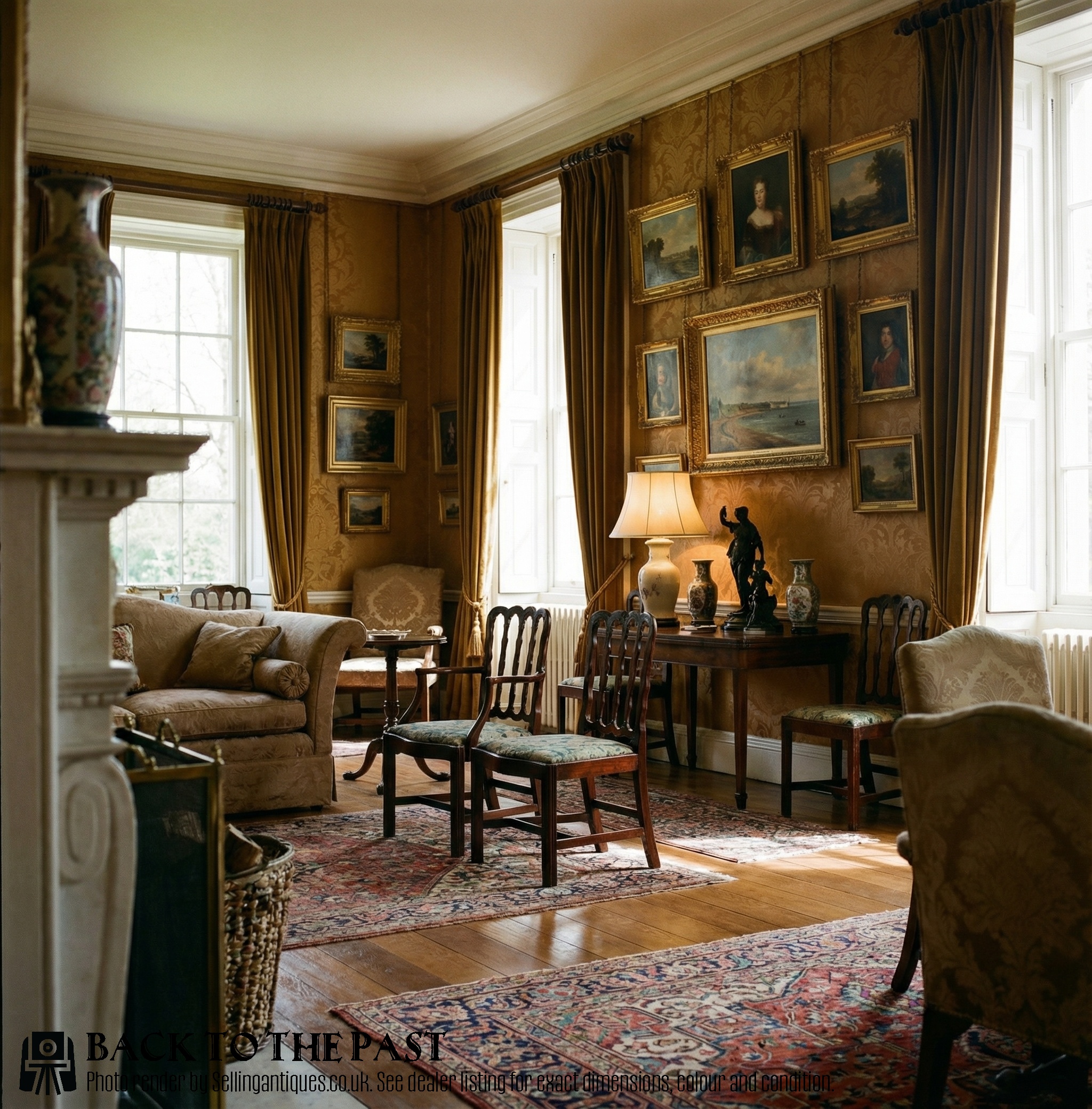
How they were made
Frames are constructed from dense timbers such as mahogany, oak and rosewood, shaped using traditional joinery and hand-carving techniques. Cabinetmakers turned legs and sculpted rails to support upholstered drop-in seats, stuffed backs and armrests.
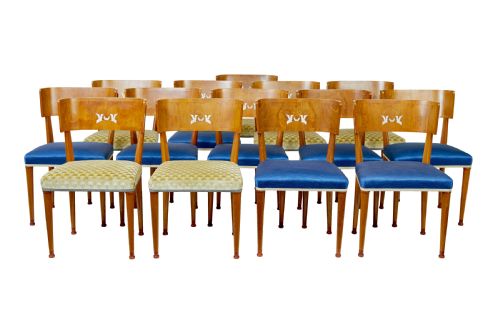
Upholstery relies on textiles, velvet, leather and needlepoint secured over padding. Workers fitted these coverings to match the specific proportions of balloon backs, shield backs, bar backs and klismos forms.
Blue Upholstered Dining Chairs Retail Price Guide 2026
Typical asking prices for blue upholstered dining chairs among the pieces listed under this phrase on Sellingantiques today, from the lower quarter to the upper quarter. They describe what is for sale here now, not the wider market.
Listings feature mahogany, oak, rosewood and walnut frames paired with velvet, leather and needlepoint upholstery across Victorian and Georgian periods.
What varies in quality
Quality rests in the crispness of the timber carving and the integrity of the frame construction. Better examples display carefully selected grain patterns, robust joints and balanced proportions across entire dining sets.
The execution of the upholstery and the choice of textile also distinguish finer pieces. Original or sympathetic recovering with quality fabric elevates the piece while preserving the underlying structure.
Gillows
The Blue Upholstered Dining Chairs Glossary
- Carver
- An armchair designed to sit at the head of a dining table. These feature supportive arms matching the side chairs in a set.
- Side chair
- A chair built without arms for dining around a table. These form the majority of standard dining sets.
- Balloon back
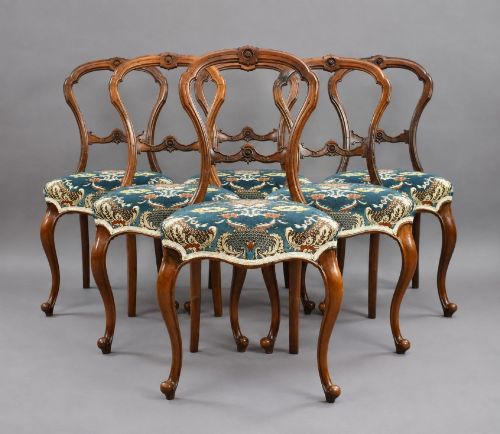
- A rounded, oval-shaped chair back popular during the Victorian era. The curved woodwork resembles the profile of a balloon.
- Shield back
- A chair back shaped in the outline of a heraldic shield. This design frequently appears on Hepplewhite and Georgian revival seating.
- Needlepoint
- Canvas worked with wool or silk threads in counted stitches. This textile technique often covers Victorian dining seats.
Blue Upholstered Dining Chairs: Frequently Asked Questions
How do I clean the blue upholstery?
Maintenance depends upon the specific textile used on the seat or back. Velvet and fabric require gentle brushing or specialist cleaning to preserve the pile and colour.
Leather surfaces respond to mild soap solutions and conditioning creams. Avoid harsh chemical treatments that damage historic fibres.
Are these chairs suitable for daily use?
Most antique dining chairs are structurally sound for regular sitting. Solid timber frames and tight joinery support daily dining when properly maintained.
Heavier sets accommodate everyday meals while retaining their decorative period appeal. Check that joints remain firm before heavy use.
How do I mix different chair styles?
Pairing carvers at the head of a table with simpler side chairs creates a traditional arrangement. Matching timber tones helps unify diverse seating.
Consistency in period or silhouette bridges minor variations in design. Placing contrasting chairs requires careful balance in scale and height.
What periods do these chairs represent?
The selection spans from Georgian and Regency eras through the Victorian and Edwardian periods. Twentieth-century Art Deco and revival styles also appear.
Each era brings distinct timber choices and carved details. Understanding these periods helps date individual chairs and matched sets.