
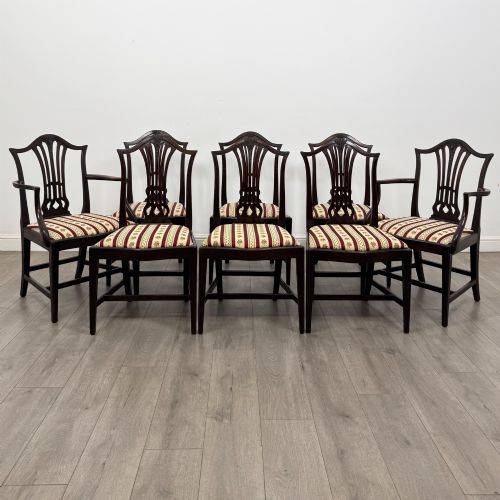
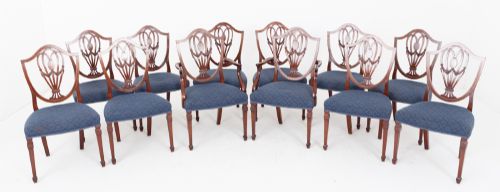
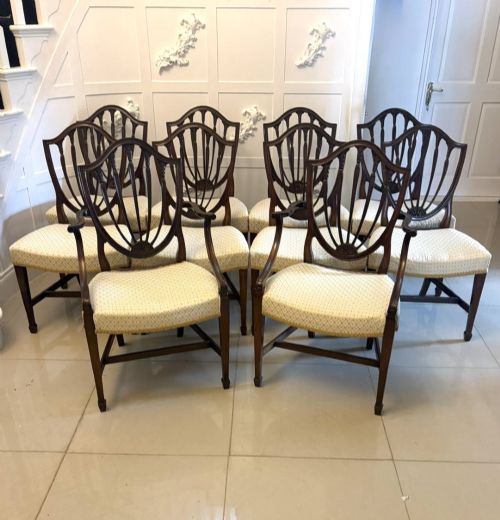
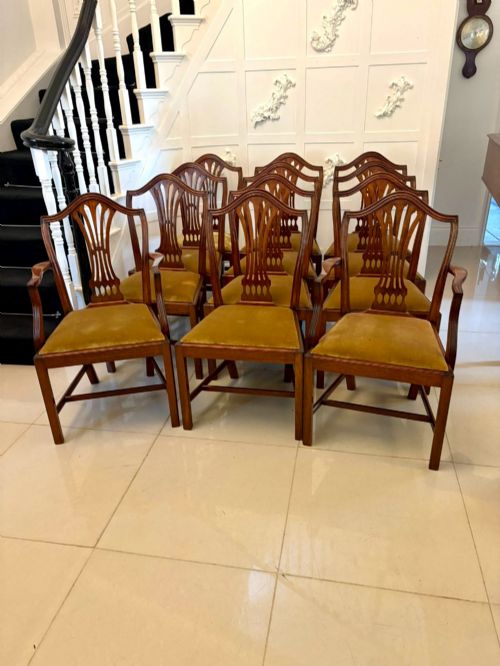
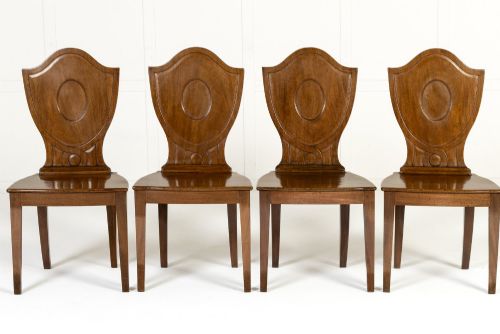
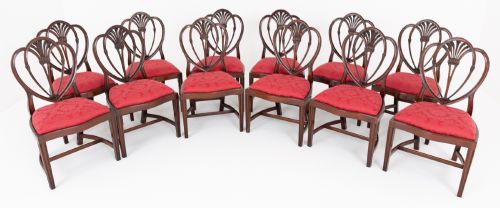
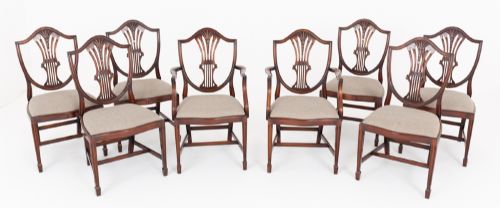
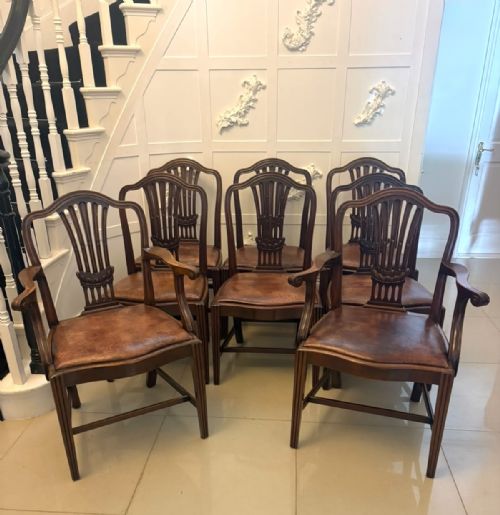
Mahogany Shield Back Chairs
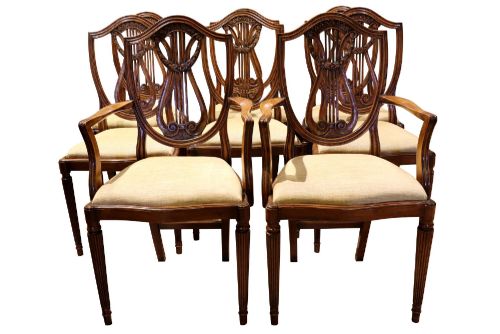
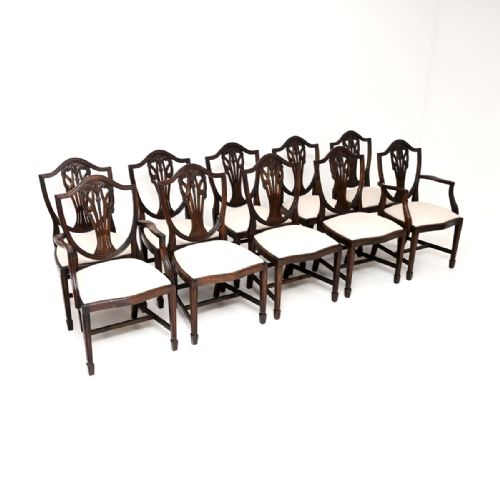
Mahogany shield back chairs bring unmistakable Georgian grace to a dining room, offering slender pierced splats and rich timber grain.
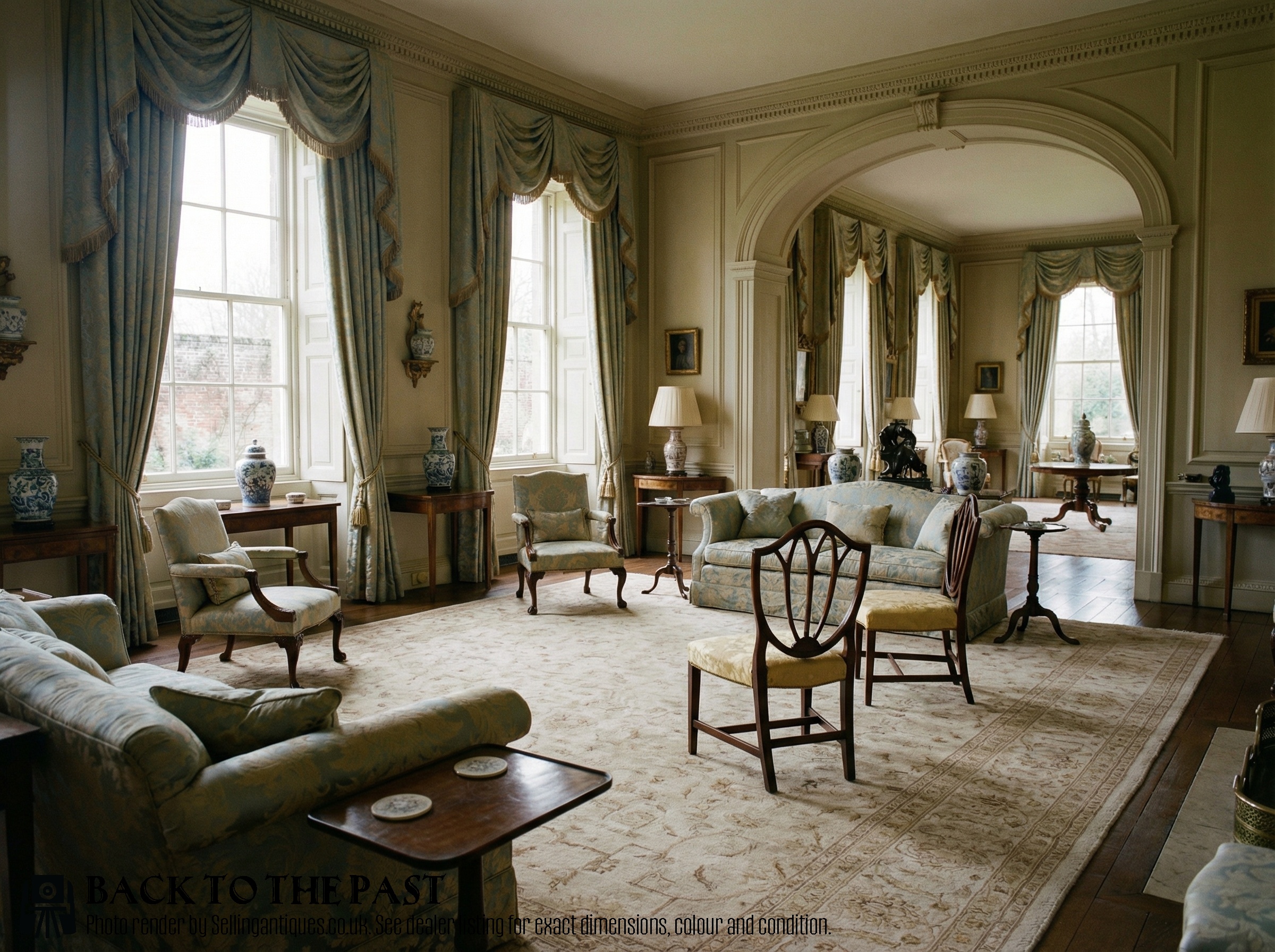
Understanding mahogany shield back chairs
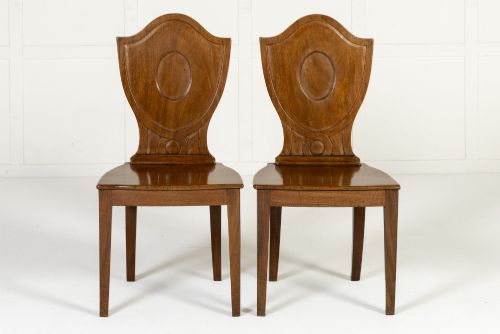
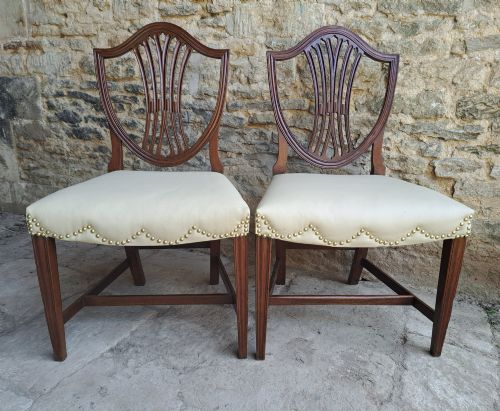
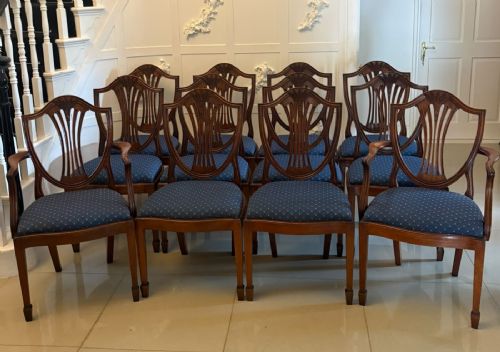
When you search for mahogany shield back chairs, you look at dining and hall seating defined by a distinctive curved backrest resembling an upturned shield. These pieces range from authentic 18th-century Georgian originals down to later revival pieces from the Edwardian era and the 1920s.
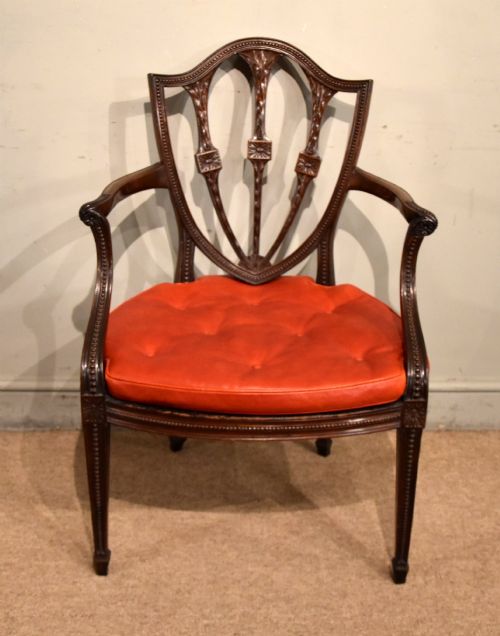
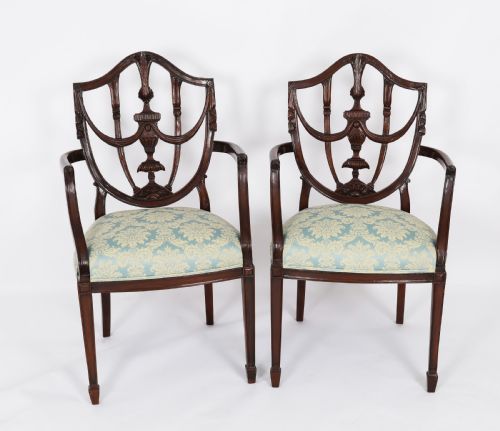
You are most likely to encounter sets of dining chairs or matching pairs of carvers and armchairs on this page. The forms frequently incorporate pierced vertical splats, often carved with wheat sheaf or feather motifs.
Originating during the height of late 18th-century cabinet making, the style reappeared strongly in revival periods around 1900, 1910, and 1920. Both original Georgian examples and later Edwardian interpretations populate the market today.
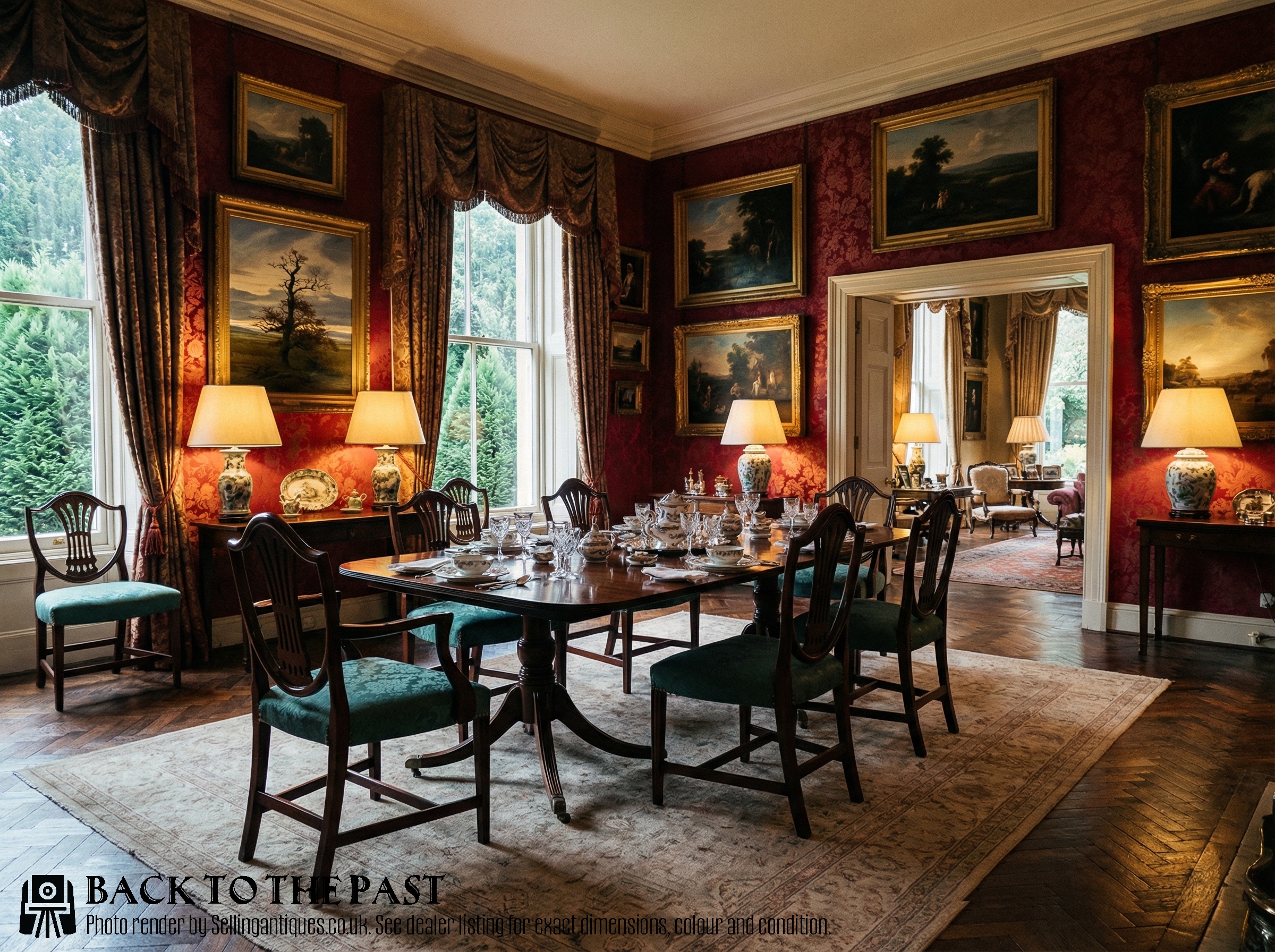
Materials and construction methods
Makers built these chairs primarily using solid mahogany, selected for its strength and deep reddish-brown grain. Selected examples feature delicate inlay work or polychrome painted details across the frame.
The distinctive shield shaped back relies on precise joinery to curve the timber without snapping, often housing an intricately pierced central splat. Seats were traditionally drop-in frames constructed to hold fabric upholstery.
Upholstery materials seen across the pieces include velvet, damask, brass tacks, and standard fabric coverings. These were fixed over padded frames fitted snugly into the wooden seat rails.
Retail Price Guide 2026
Typical UK retail prices for mahogany shield back chairs, calculated from the Sellingantiques database of over a million retail prices indexed since 2003. This retail price guide relies exclusively on Sellingantiques data; no external sources or auction records are used, so the figures do not describe the wider market.
Listings feature dining chairs spanning the Georgian period, the 18th century, the Edwardian era, and the 1920s revival.
Judging the quality of craftsmanship
The distinction between ordinary and superior pieces rests on the crispness of the wood carving and the depth of the timber's natural figure. Finely rendered pierced splats with sharp undercutting separate master cabinet work from simpler production.
Structural integrity depends on the tightness of the joints where the shield back meets the rear stiles and seat rails. Heavier, more substantial timber scantlings and minimal secondary woods indicate higher grade workshop output.
Proportion and scale dictate the visual balance of the chair, particularly the sweep of the curved top rail and the taper of the legs. Superior sets maintain absolute uniformity across large numbers of chairs, whether numbering six, eight, ten, or twelve.
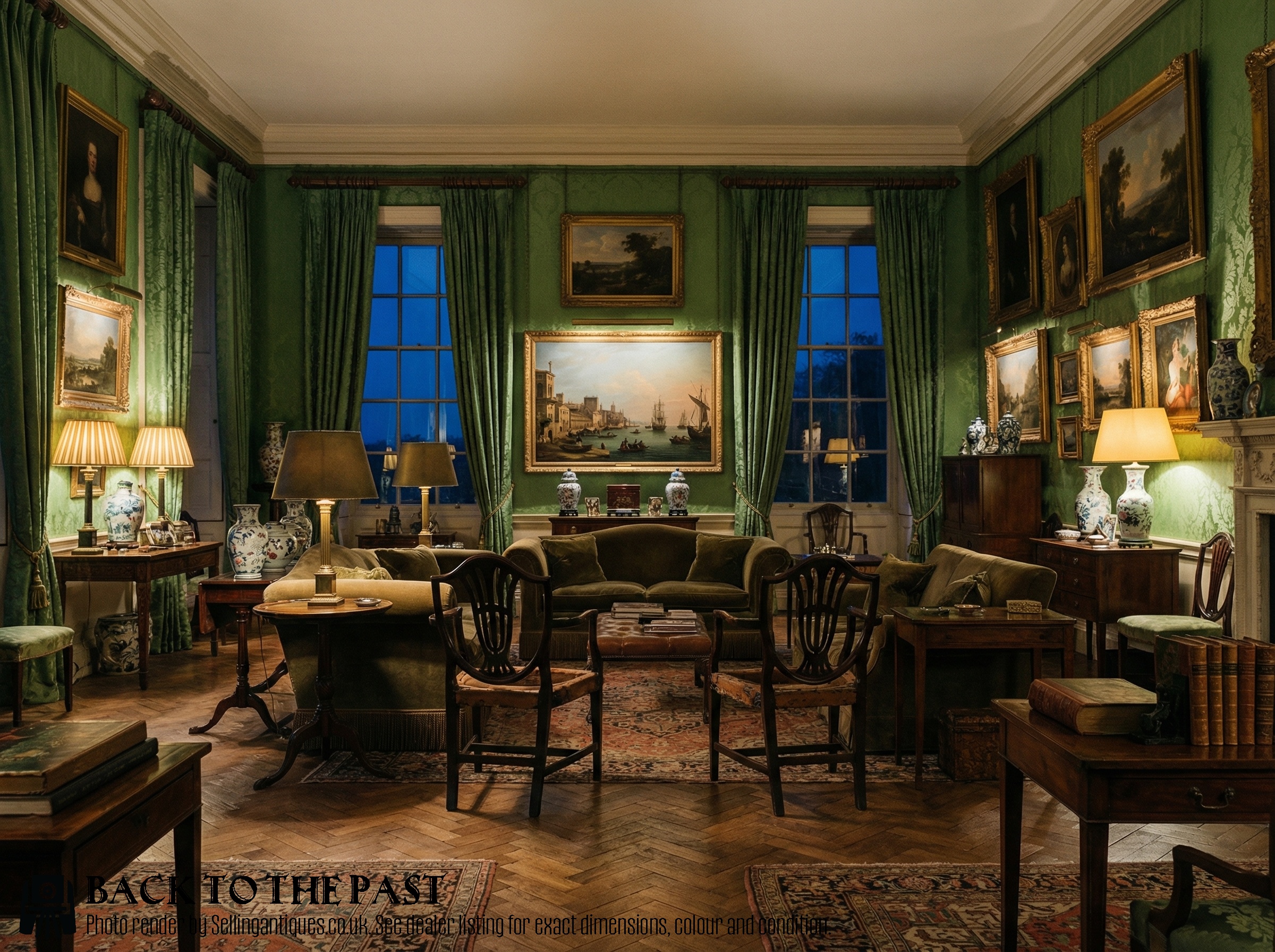
Edwards & Roberts·Maple & Co
The Mahogany Shield Back Chairs Glossary
- Shield back
- A chair back shaped like a heraldic shield, tapering towards the seat with a curved top rail.
- Splats
- The vertical wooden member positioned centrally within the backrest, often pierced or carved.
- Carver
- An armchair, traditionally placed at the head of a dining table, featuring supportive armrests.
- Hepplewhite style
- A design idiom associated with the late 18th century, characterised by elegance, light proportions, and shield or oval chair backs.
- Drop-in seat
- A removable wooden frame padded and upholstered separately before dropping into the rebated seat rails of the chair.
Frequently Asked Questions
How do I date mahogany shield back chairs?
Dating relies on examining the construction methods, timber patination, and design cues of the frame. Georgian originals show period hand-tool marks and dry timber shrinkage, whereas Edwardian and 1920s revivals display uniform machine-cut elements.
Style revivals often copy 18th-century patterns closely, making secondary wood analysis and screw types reliable indicators of age.
Were these chairs originally used for dining?
Yes, large sets were commissioned specifically for formal dining rooms in grand houses and town residences. They were built to be pulled up to mahogany dining tables during long evening meals.
Smaller pairs often served as hall chairs or side seating in parlours rather than primary dining furniture.
How should I care for the mahogany finish?
Maintain the timber by applying traditional beeswax sparingly and buffing with a soft, clean cloth. Avoid silicone sprays and keep the chairs away from direct sunlight and strong heat sources.
Checking the seat frame fixings periodically ensures the structural stability remains sound during daily use.
What is the difference between carvers and side chairs?
Carver chairs feature wooden armrests integrated into the design, intended for the host and hostess at the table ends. Side chairs lack arms, allowing them to sit flush and neatly beneath the dining table sides.
Dining sets commonly combine a majority of side chairs with a matching pair of carvers.