

Georgian Revival Dining Chairs
Georgian revival dining chairs bring classic eighteenth-century elegance to modern dining rooms with durable timber frames and upholstered seats.
Form and Period
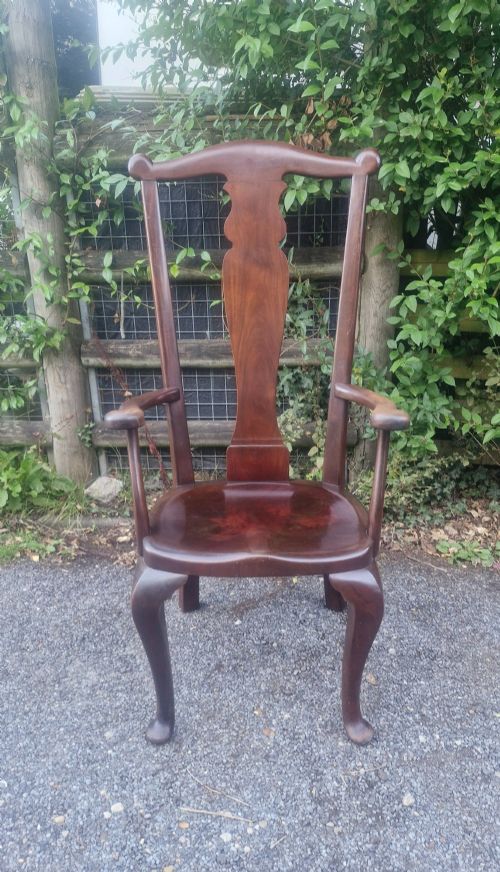
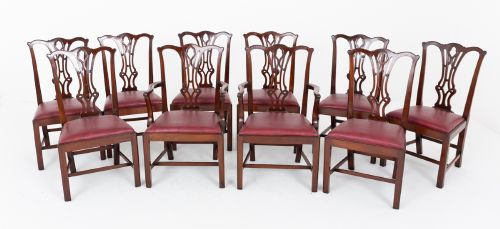
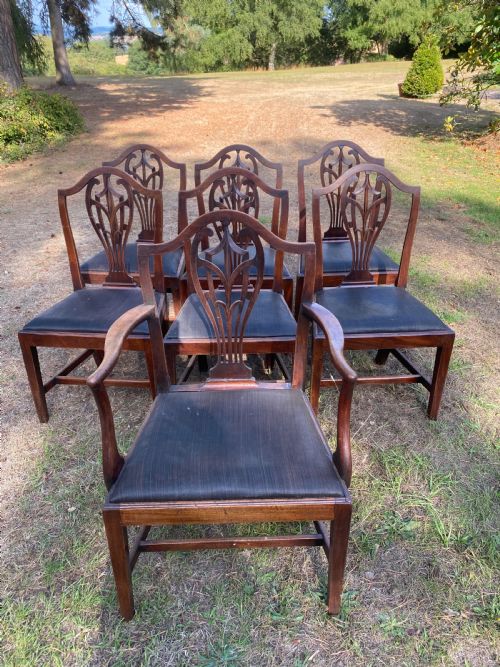
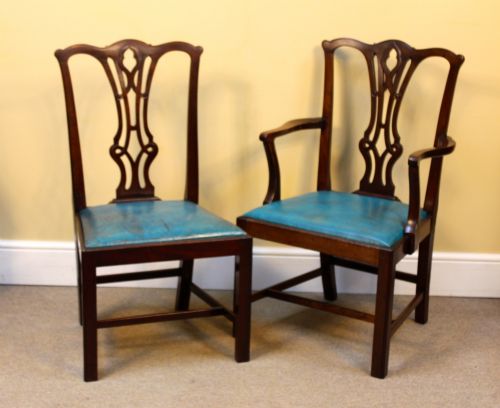
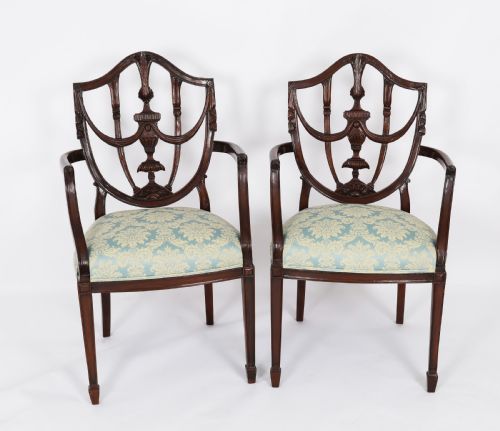
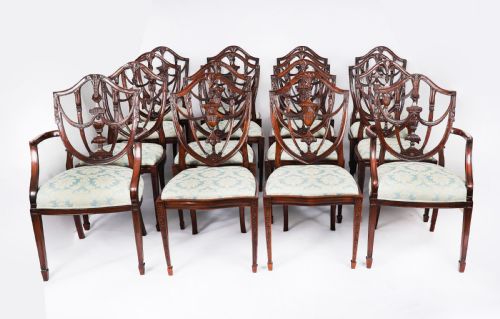
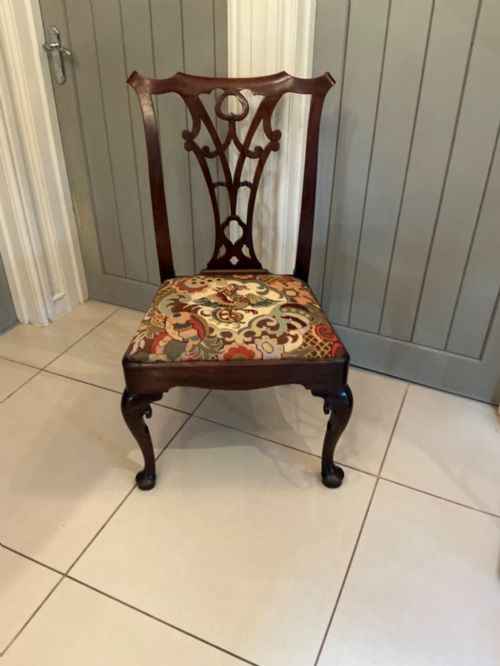
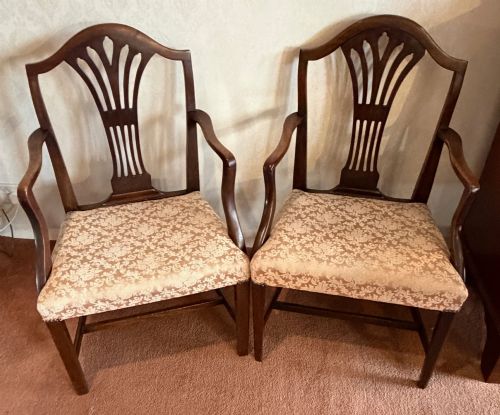
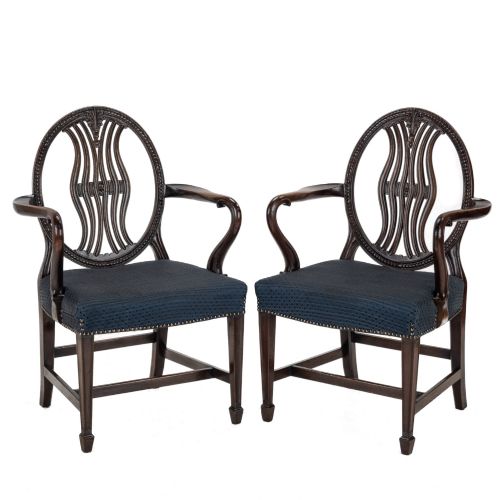
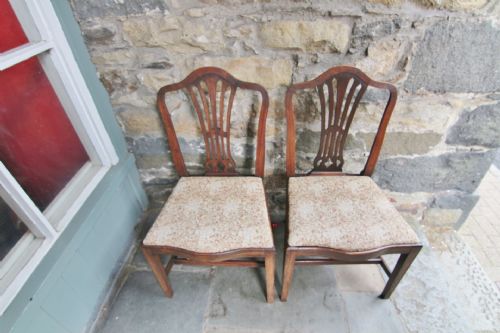
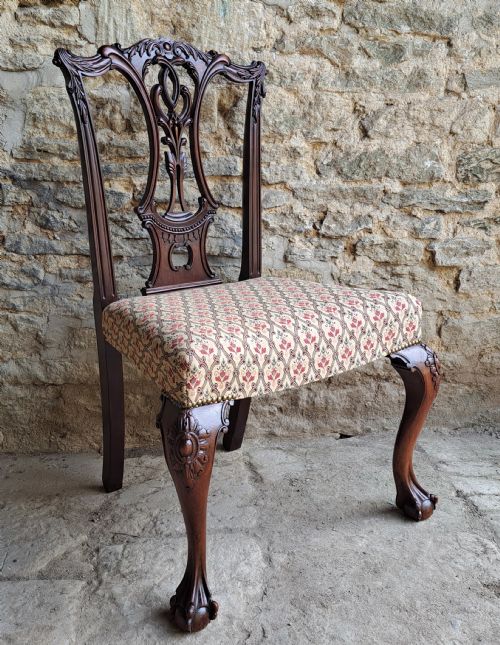
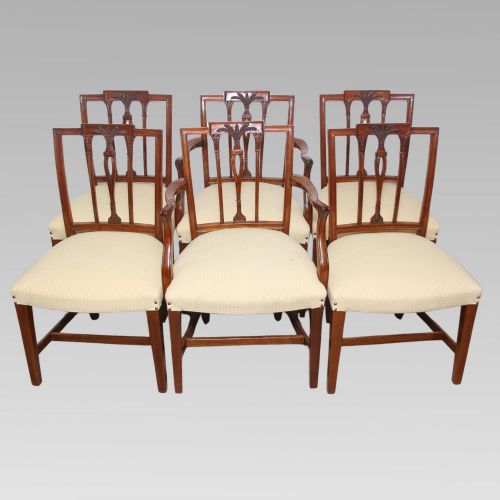
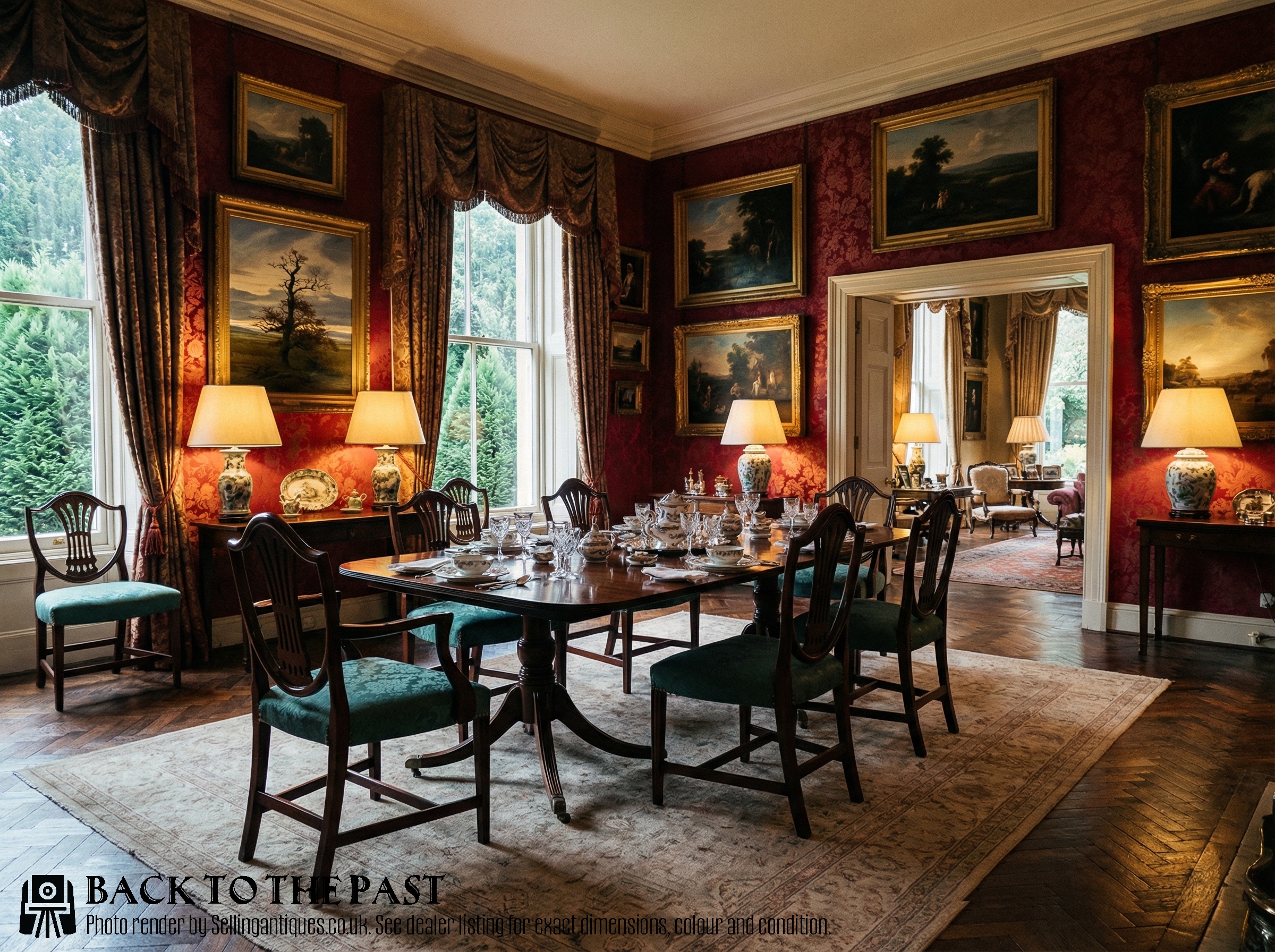
Makers drew heavily upon Chippendale and Hepplewhite aesthetics, producing shield-back designs and carved mahogany frames that echo the proportions of the Georgian era. Variants also encompass simpler ash and elm Windsor kitchen forms alongside leather-upholstered seating options.
Distinguishing Quality
The refinement of the carving dictates the distinction between standard and superior pieces, particularly along shield backs and top rails where hand-chiselling defines the silhouette. Crisp lines in the mahogany grain and solid timber thickness without excessive secondary wood usage signal higher manufacturing standards.
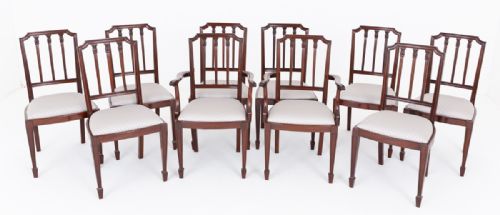
The integrity of the frame assembly and the density of the upholstery padding dictate longevity and daily comfort. Matching sets that retain their original configurations across larger numbers of chairs command greater cohesion in a dining setting.
Retail Price Guide 2026
Typical UK retail prices for georgian revival dining chairs, calculated from the Sellingantiques database of over a million retail prices indexed since 2003. This retail price guide relies exclusively on Sellingantiques data; no external sources or auction records are used, so the figures do not describe the wider market.
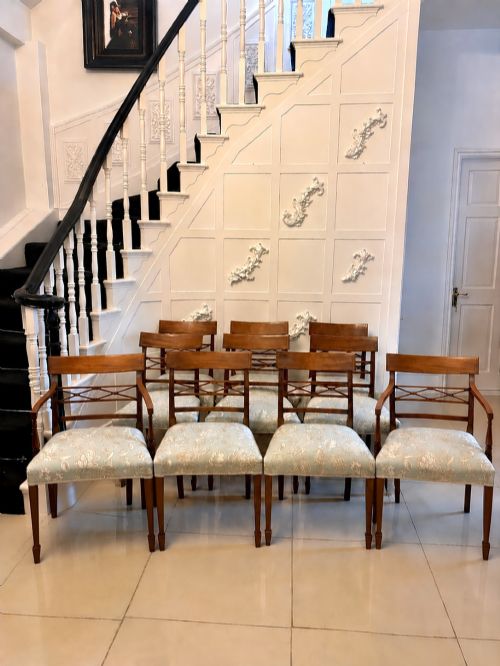
Listings span the nineteenth century through to nineteen twenty, predominantly featuring mahogany frames paired with fabric upholstery in large matched sets.
The Georgian Revival Dining Chairs Glossary
- Shield back
- A chair back shaped like a heraldic shield, commonly found in Hepplewhite designs. This silhouette provides both structural rigidity and a decorative canvas for intricate splat carving.
- Elbow carver
- An armchair featuring supportive armrests designed for the heads of a dining table. These pieces typically match the narrower side chairs in a larger set.
- Splat
- The vertical wooden strip down the centre of a chair back connecting the top rail to the seat. It often displays pierced or carved ornamentation characteristic of the revival period.
- Mahogany
- A durable tropical hardwood prized for its rich reddish-brown tone and resistance to warping. It serves as the primary structural material for formal revival dining seating.
Frequently Asked Questions
How do I spot a Georgian revival chair?
Examine the timber quality, construction methods, and stylistic motifs to distinguish revival pieces from eighteenth-century originals. Revival chairs typically date from the late nineteenth or early twentieth centuries while faithfully copying earlier Hepplewhite and Chippendale forms.
The secondary woods and machine-assisted joinery often visible upon close inspection point toward the revival era rather than the primary Georgian period.
Are these chairs suitable for daily use?
These sturdy mahogany and hardwood frames easily withstand regular daily dining use when structurally sound. Proper maintenance of the joints ensures they remain stable over decades of service.
Updating the upholstery fabric allows them to blend seamlessly into contemporary dining rooms without sacrificing historical character.
What is the difference between Chippendale and Hepplewhite styles?
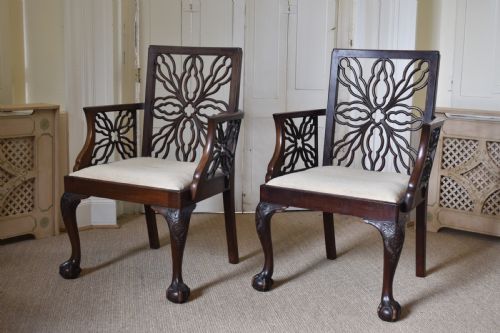
Chippendale styles typically feature elaborate pierced splats, cabriole legs, and ball-and-claw feet derived from mid-eighteenth-century English furniture designs. They offer a robust and ornate appearance.
Hepplewhite styles favour lighter proportions, elegant shield backs, and straight tapering legs, presenting a more refined and graceful aesthetic.
How do I care for mahogany dining chairs?
Maintain the timber by dusting regularly with a soft cloth and applying a quality beeswax periodically to nourish the mahogany grain. Avoid placing chairs in direct sunlight or near heat sources to prevent the wood from drying out.
Protect the upholstery fabric with appropriate treatments and check the leg joints annually for any signs of loosening.