

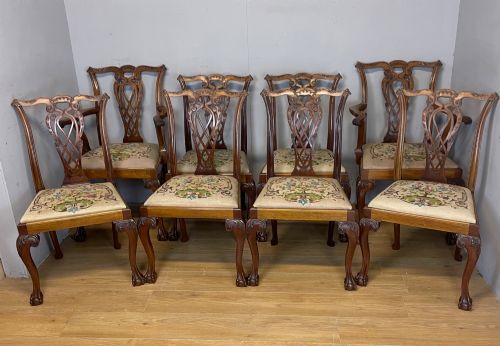
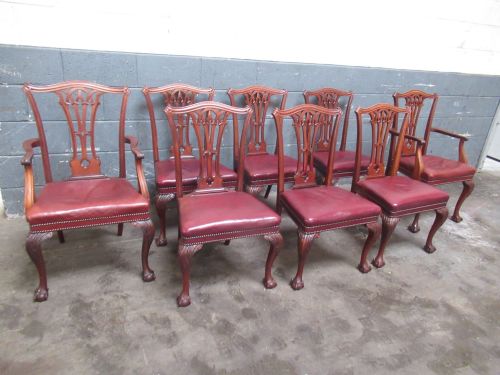
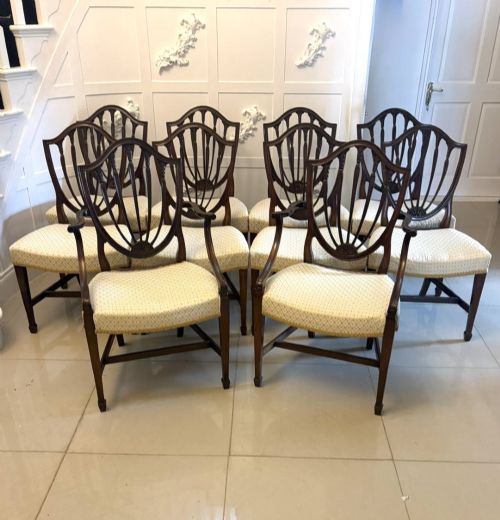
Carved Mahogany Carver Chairs
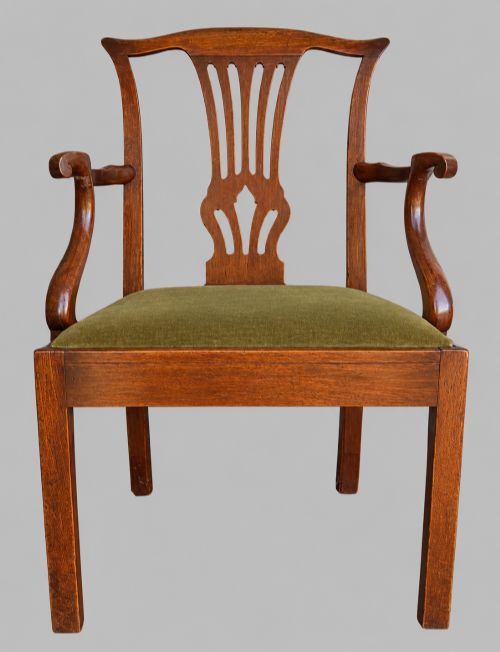
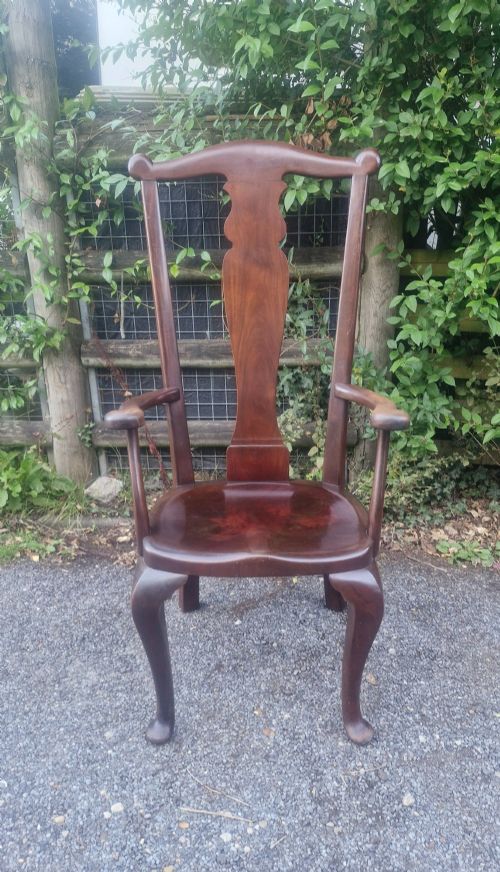
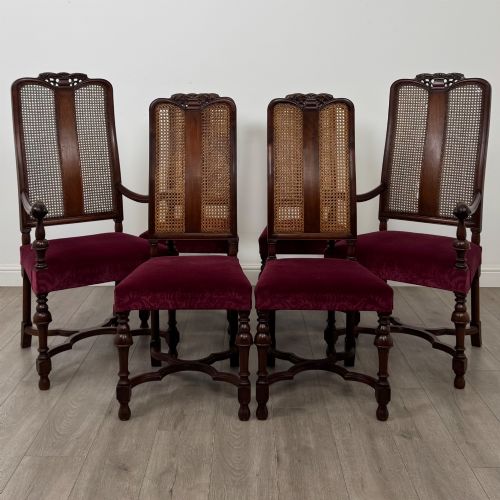
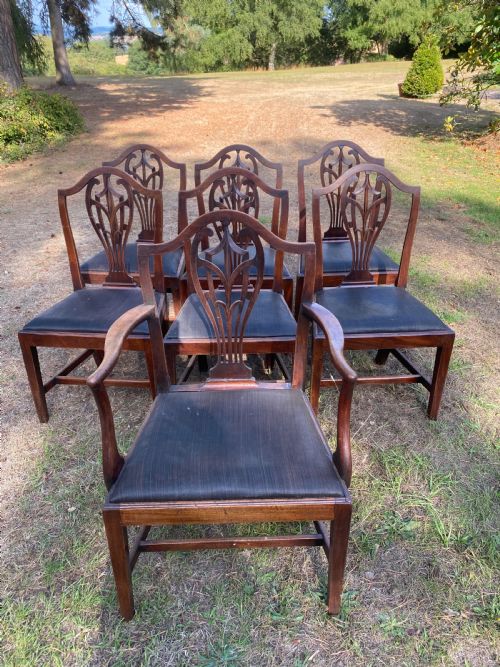
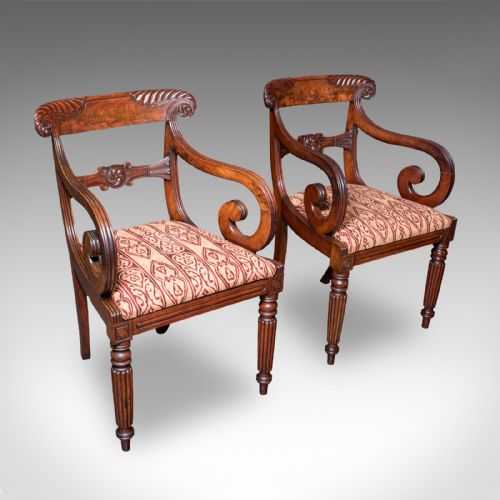
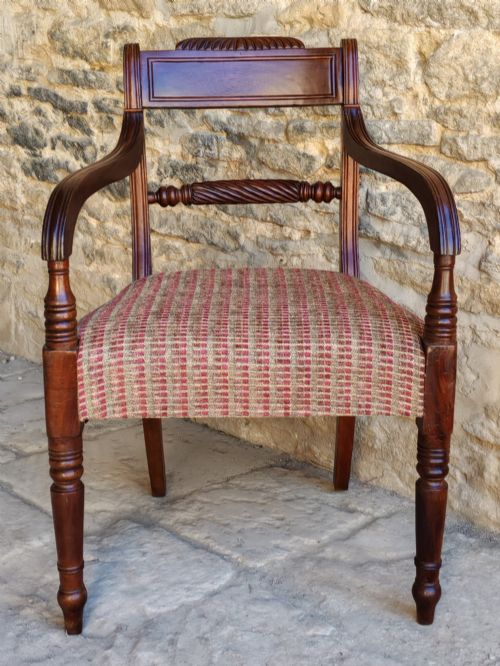
Carved mahogany carver chairs are sturdy armchairs designed for dining tables, offering substantial timber frames and decorative relief work that anchors a traditional room.
What carved mahogany carver chairs are
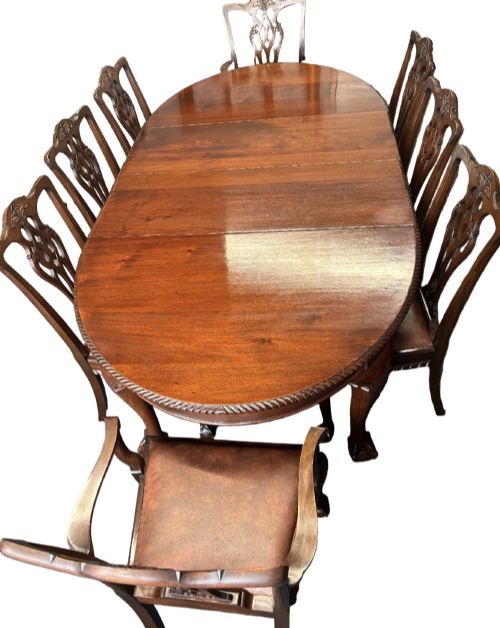
When buyers search for carved mahogany carver chairs, they seek formal seating distinguished by open arms and robust timber construction. These armchairs typically accompany dining table sets or stand alone as accent pieces in reception rooms.
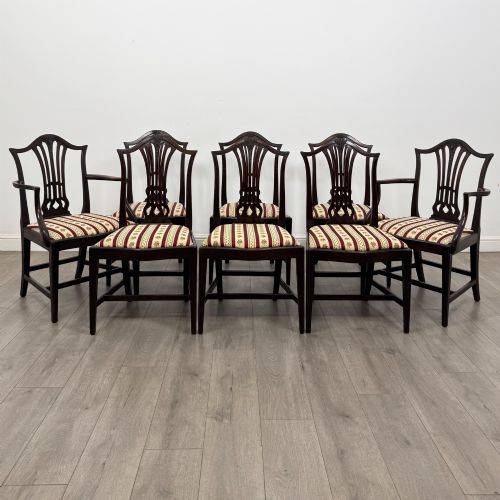
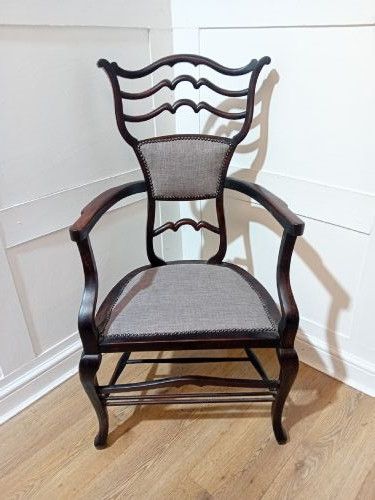
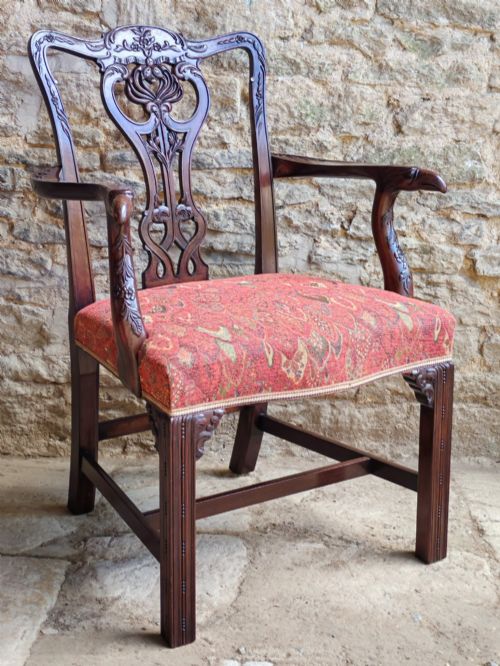
The pieces appearing in this category span several periods, including Victorian, Edwardian, and the early twentieth century. Styles often reference earlier eighteenth-century aesthetics, encompassing Georgian Revival, Hepplewhite Revival, and George III style interpretations.
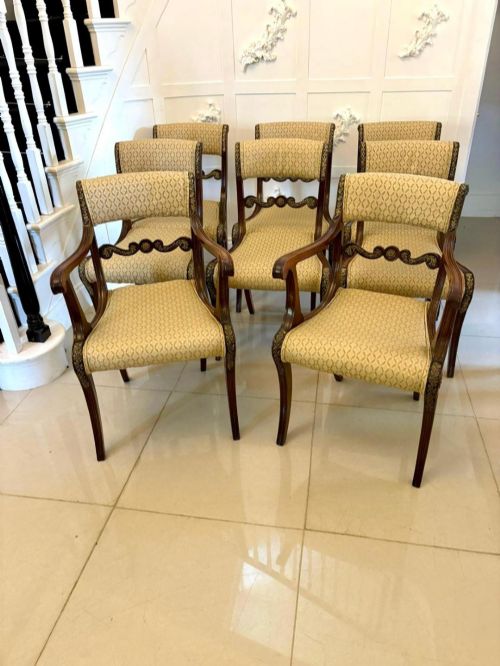
Forms include sets of dining chairs featuring matching carvers, pairs of armchairs, and balloon back configurations. Upholstered elements frequently incorporate velvet, wool needlework, and textile coverings secured with metal tacks.
How they were made
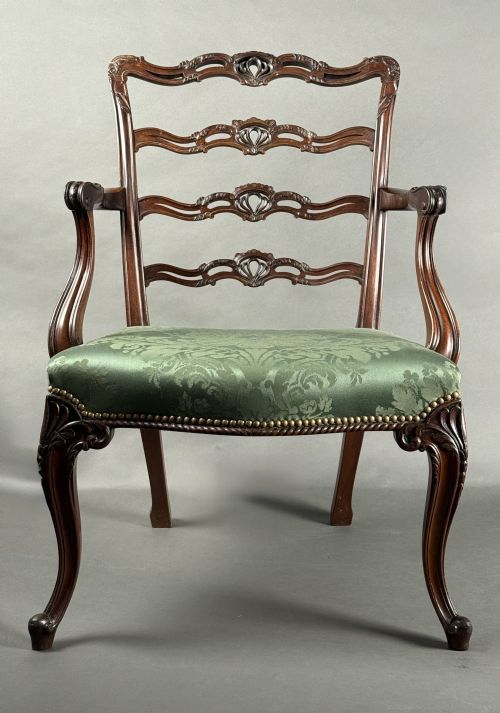
Construction relies on solid mahogany timbers shaped through traditional joinery techniques to support the structural demands of an armchair. Carvers feature sculpted wooden armrests and shaped supports integrated into the main frame.
Surface decoration relies on manual carving directly into the dense mahogany substrate to render classical motifs and revival details. Upholstered components utilise drop-in seats or pad seats built from fabrics, wool needlework, and velvet fastened with metal tacks.
Retail Price Guide 2026
Typical UK retail prices for carved mahogany carver chairs, calculated from the Sellingantiques database of over a million retail prices indexed since 2003. This retail price guide relies exclusively on Sellingantiques data; no external sources or auction records are used, so the figures do not describe the wider market.
Metal tacks keep the velvet in place while secretly holding decades of dinner table gossip within the stuffing.
What varies in quality
The definition of quality rests upon the crispness of the timber carving and the density of the mahogany selected by the maker. Superior examples exhibit deep, sharply defined relief work rather than shallow or mechanical milling.
Proportion and structural integrity distinguish finer iterations, particularly where arm supports meet the seat rail and legs. The choice of upholstery materials, from plain textiles to intricate wool needlework, further separates standard production from high-end revival work.
Waring and Gillow
The Carved Mahogany Carver Chairs Glossary
- Carver
- An armchair, traditionally placed at the head of a dining table, featuring integral armrests that match the surrounding side chairs.
- Hepplewhite Style
- A design movement inspired by George Hepplewhite, characterised by elegant proportions, shield or oval backs, and delicate carved details.
- Drop-In Seat
- A removable upholstered seat frame that fits precisely into the wooden rebated rails of the chair base.
- Balloon Back
- A rounded, continuous backrest frame shaped like a balloon, popular during the Victorian period.
- Wool Needlework
- Stitched textile work using wool yarn, frequently applied to chair seats in traditional domestic settings.
Frequently Asked Questions
How do I date these chairs?
Dating relies on examining the secondary woods, construction methods, and stylistic revival markers present in the frame. Periods represented in these pieces range from the Victorian era through Edwardian times and the 1920s and 1930s.
Revival styles often borrow motifs from eighteenth-century makers, so timber age and joinery wear provide the most reliable chronological clues.
Where should I place carvers?
Carvers suit placement at either end of a large dining table to anchor the seating arrangement. They also function well as standalone reading or desk chairs in studies and bedrooms.
The substantial mahogany frames and carved details ensure they draw the eye when positioned against a wall or in a corner.
What are drop-in seats?
Drop-in seats are independent wooden frames upholstered with fabric, velvet, or needlework that rest inside the chair seat rails without permanent fixings. This construction allows the upholstery to be easily removed for cleaning or recovering.
Many Edwardian and revival dining sets utilise this practical method to secure textiles like wool needlework.