

Pair of Victorian Armchairs
These pair of victorian armchairs bring period comfort and presence into a room, offering matched seating crafted during the nineteenth century.
Identifying pair of victorian armchairs
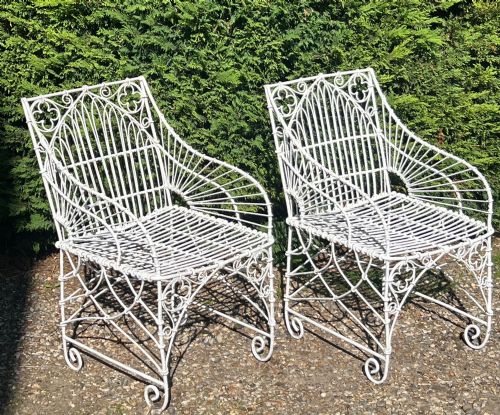
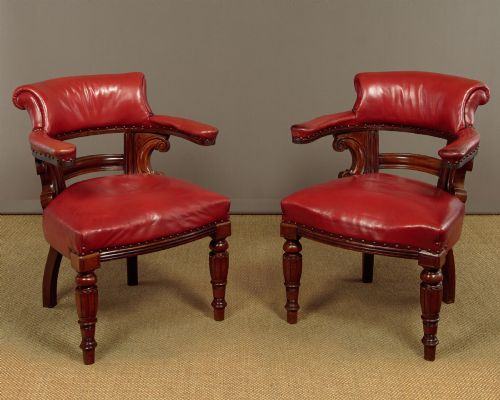
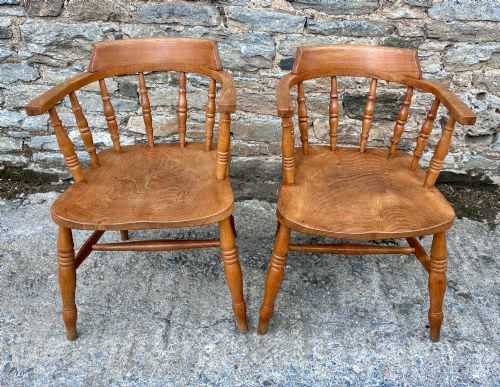
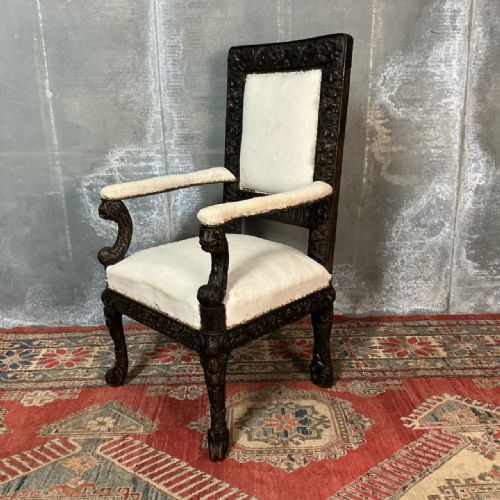
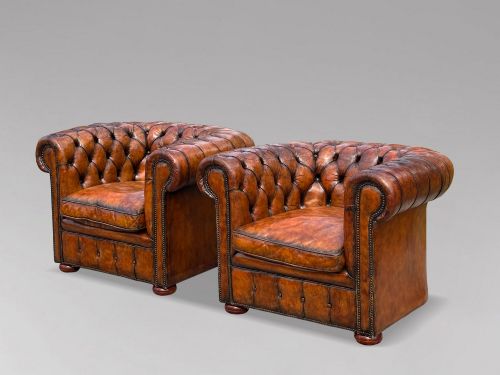
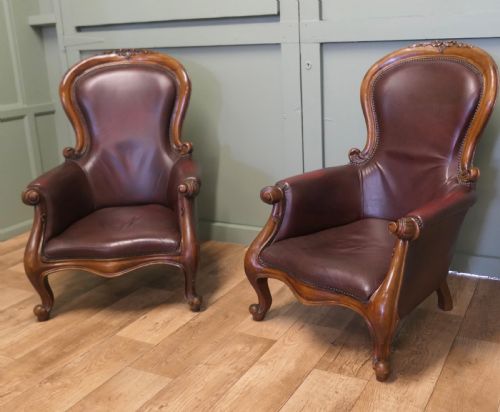
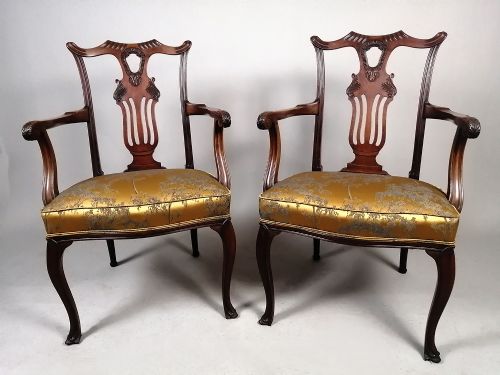
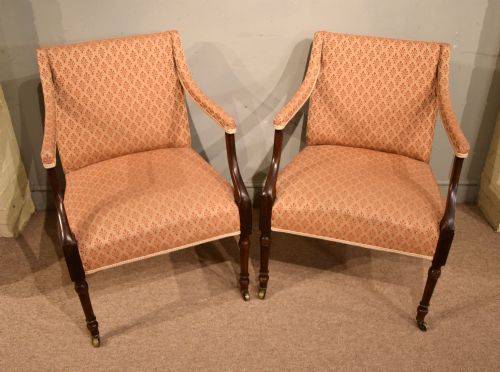
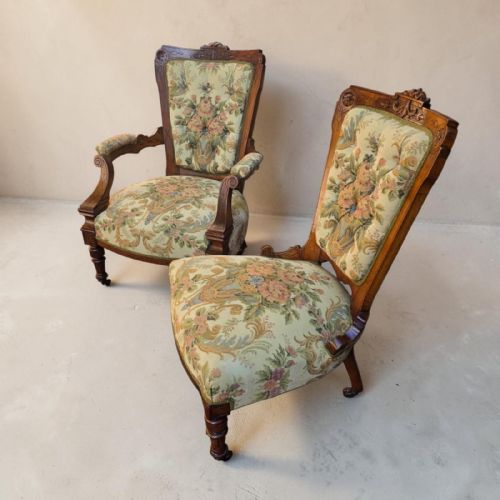
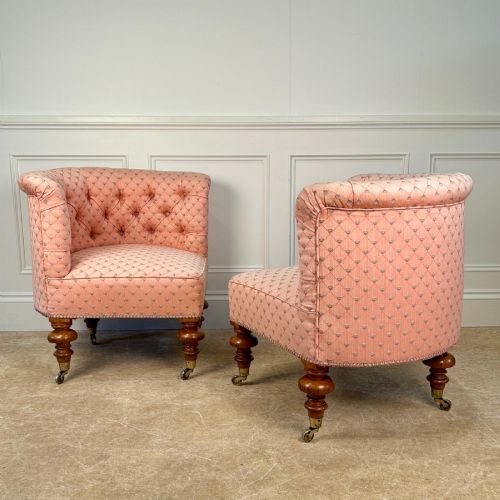
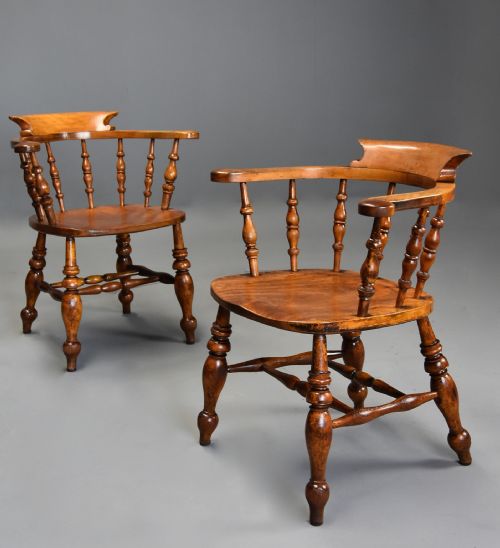
A pair of victorian armchairs comprises two matching seats produced during the nineteenth century, spanning various decades from the eighteen-sixties to the late eighteen-nineties. Buyers find forms ranging from button-back parlor seats and low open armchairs to sturdy smokers bows and library chairs. These items provide symmetrical seating arrangements for drawing rooms, libraries, and studies.
The pieces appearing in these listings frequently originate from the Victorian and Edwardian eras, encompassing specific dates such as eighteen-sixty, eighteen-seventy, eighteen-eighty, and eighteen-ninety. Regional styles and revival influences shape the silhouettes, showing everything from restrained mahogany frames to elaborate carved walnut constructions. Finding a matched pair allows a buyer to create a balanced focal point within a traditional interior scheme.
Construction and Materials
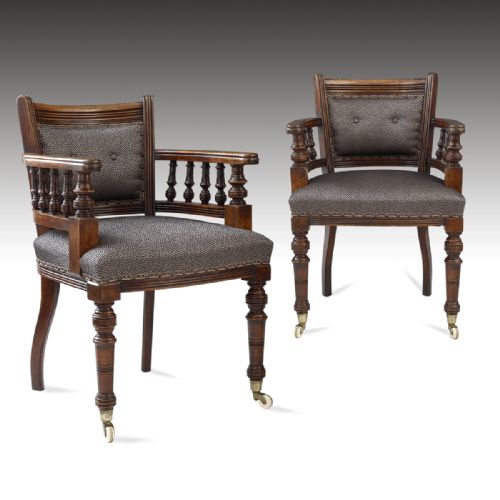
Cabinetmakers built these frames using dense hardwoods such as mahogany, rosewood, walnut, and oak, often shaping the timber with hand-carved details, cabriole legs, or barley twist turnings. Workshops utilised brass castors and structural joinery to ensure stability, while marquetry inlay and satinwood banding added decorative contrast to the show wood. Wood selection dictated the weight and visual tone of each seat.
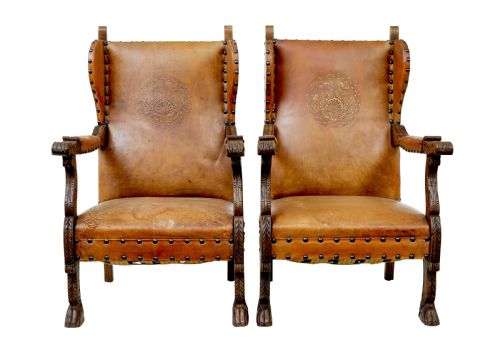
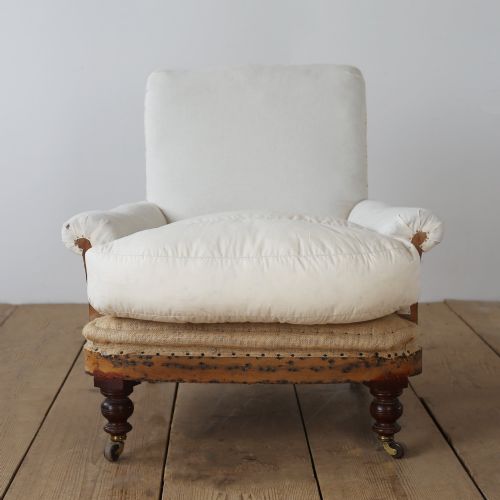
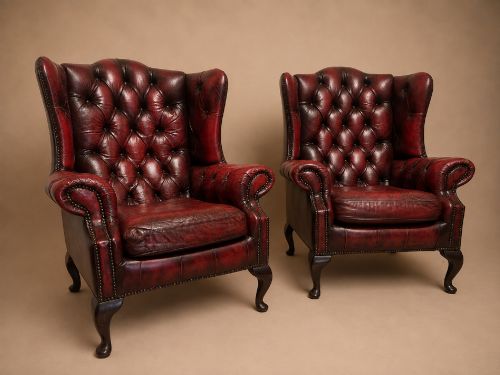
Upholstery techniques involved traditional stuffing methods beneath coverings of leather, velvet, woven fabric, and rattan. Button-back padding and sprung seats required precise hand-tacking and webbing to achieve lasting support and contour. Frame carvers worked alongside upholsterers to complete each armchair.
Retail Price Guide 2026
Typical UK retail prices for pair of victorian armchairs, calculated from the Sellingantiques database of over a million retail prices indexed since 2003. This retail price guide relies exclusively on Sellingantiques data; no external sources or auction records are used, so the figures do not describe the wider market.
Listings for this phrase feature frames constructed from walnut, mahogany, rosewood, and oak, paired with coverings of leather, velvet, and woven fabric across the Victorian era.
Distinction in Craftsmanship
Quality rests in the crispness of the timber carving, the selection of figured wood veneers, and the structural integrity of the frame joints. Superior examples display deeply moulded scrollwork, precise inlay, and robust underframes that remain steady under daily use. Lesser items rely on plain, unadorned timbers and simpler joinery.
The refinement of the silhouette distinguishes finer pieces, such as those referencing Gillows or Howard and Sons designs, from standard commercial production. Proportion, balance, and the harmonious pairing of the two chairs determine their standing within nineteenth-century seating.
Gillows·Howard and Sons
The Pair of Victorian Armchairs Glossary
- Cabriole leg
- A furniture leg that curves outward at the knee and tapers inward to an ankle, frequently seen on mid-nineteenth-century seating. This shape references eighteenth-century furniture design.
- Button back
- An upholstery style where depressions are formed in the padding by pulling buttons deep into the stuffing in a diamond pattern. This technique secures the internal filling and creates a textured surface.
- Smokers bow
- A sturdy, low wooden armchair with a rounded spindle back, often utilised in studies and smoking rooms. These chairs typically feature a solid timber saddle seat.
- Marquetry
- Decorative patterns formed by fitting together thin veneers of various woods into wooden surfaces. Craftspeople used this method to create floral or geometric motifs on chair rails and backs.
Frequently Asked Questions
What defines a pair of victorian armchairs?
A pair of victorian armchairs consists of two matching seats produced during the reign of Queen Victoria, sharing identical timber, upholstery, and stylistic traits. They offer symmetrical seating for nineteenth-century interiors.
These pieces reflect diverse influences, from Gothic Revival to Louis XV styles, utilising materials like walnut, mahogany, and leather.
How do I care for antique upholstery?
Preserving antique upholstery involves gentle vacuuming with a soft brush attachment to remove dust without damaging fragile textiles or leather surfaces. Direct sunlight should be avoided to prevent fading.
Leather benefits from occasional feeding with appropriate conservation waxes, while delicate fabrics require professional cleaning when necessary.
Were these chairs used in pairs originally?
Drawing rooms and formal parlours of the nineteenth century frequently required balanced furniture arrangements, making matched seating commonplace for fireside placement. Pairs provided symmetry within the room.
Some examples served functional roles in libraries and studies where matching armchairs offered equal comfort for readers.
How can I tell the date of an armchair?
Dating relies on observing structural characteristics, timber choices, and stylistic cues associated with specific decades of the nineteenth century. Lighter woods and specific revival motifs often point towards particular periods.
Construction methods, such as the type of screw heads and joinery hidden beneath the upholstery, also assist in establishing chronology.