


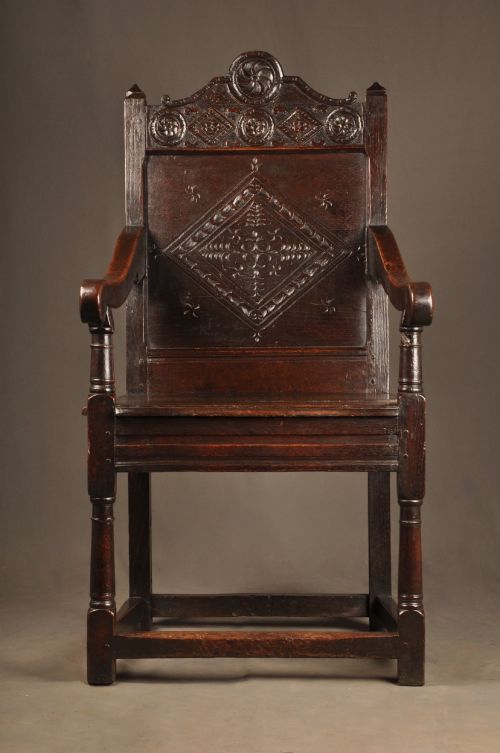

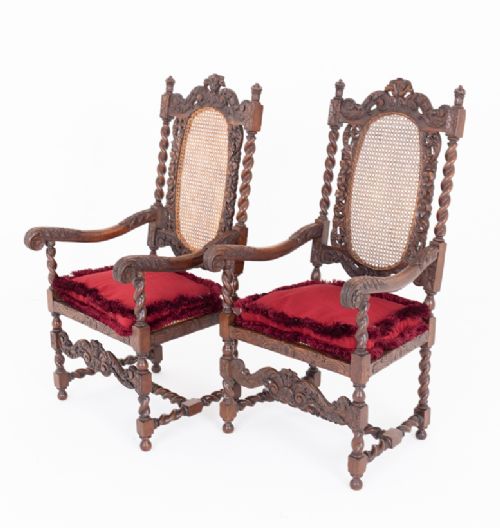
Dark Oak Throne Chair
A dark oak throne chair is a commanding seat built to project authority, rooted in centuries of heavy timber design.
Dark Oak Throne Chair
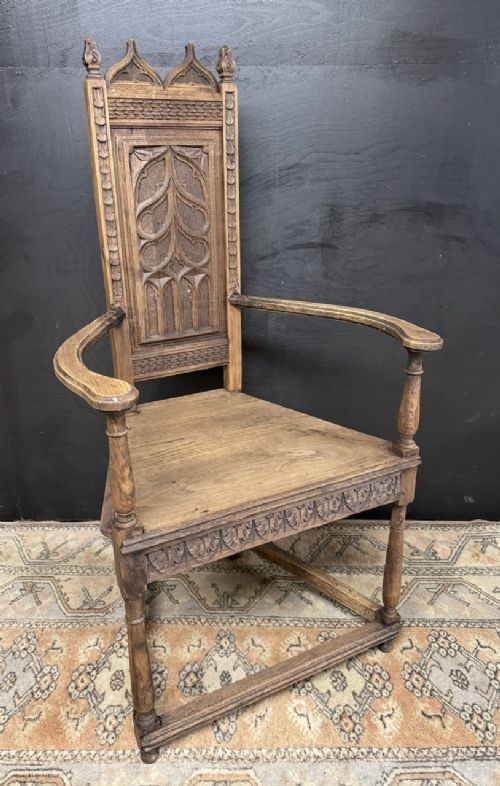
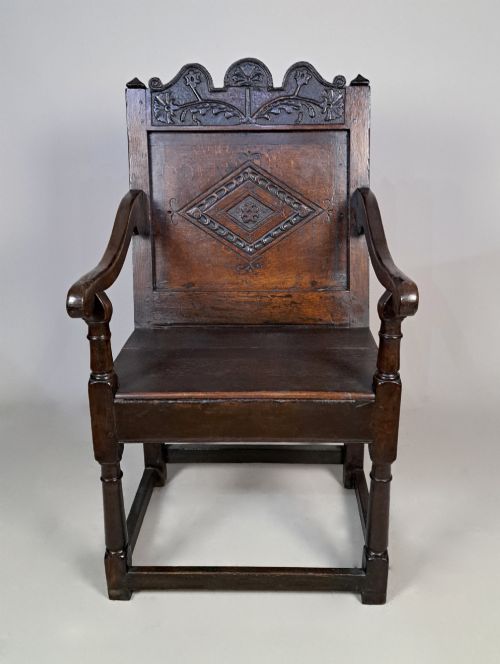
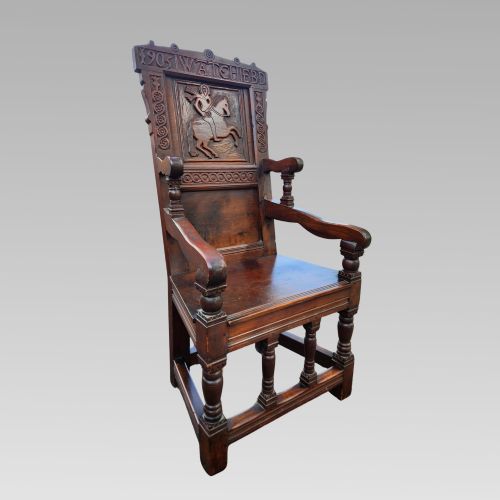
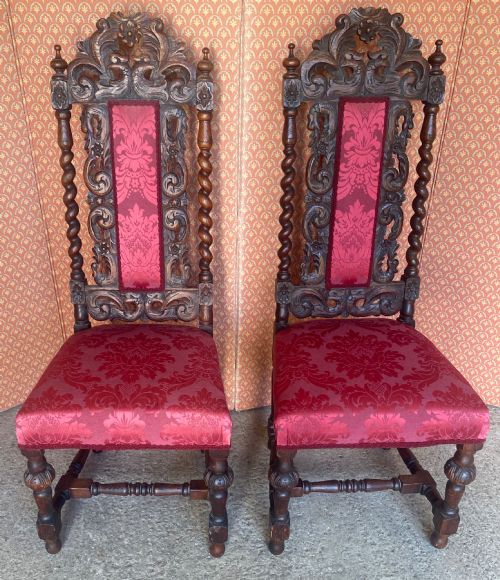
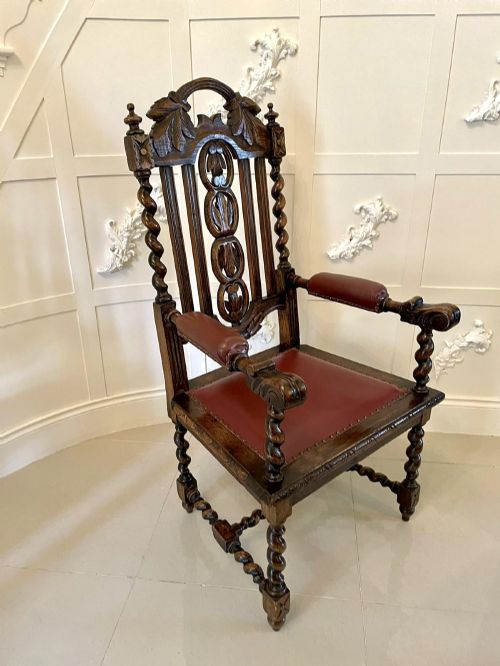
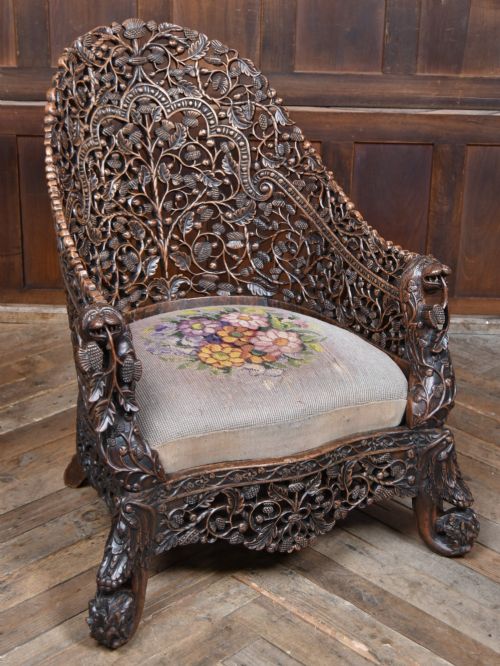
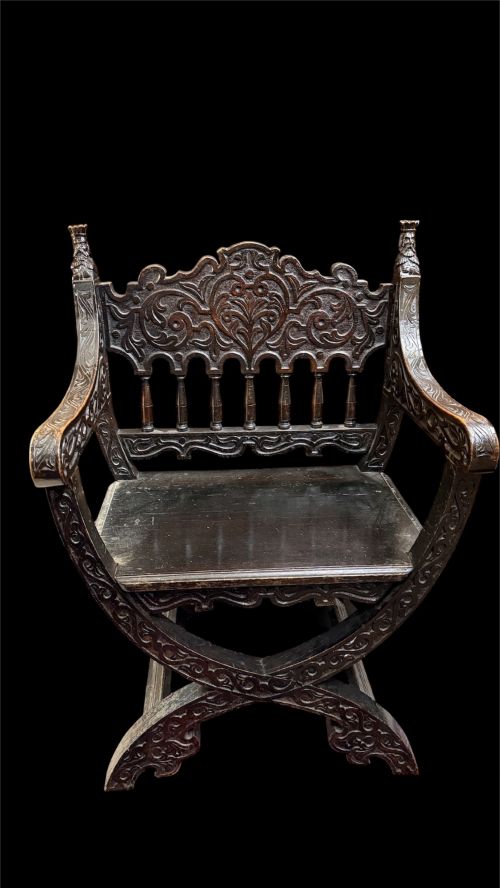
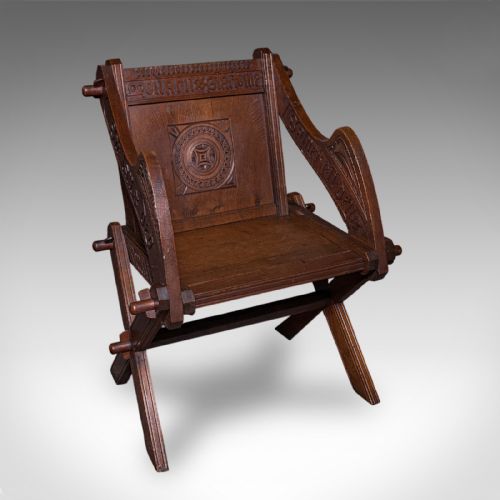
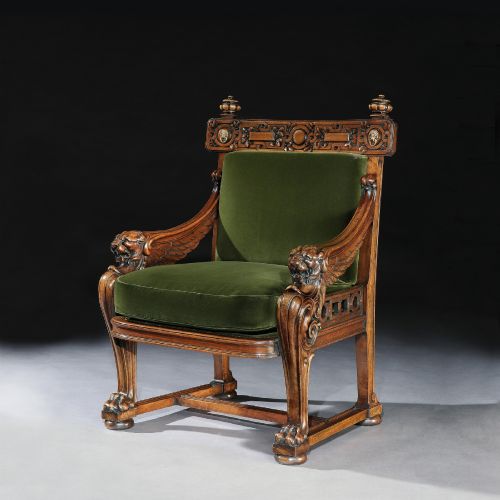
When you search for a dark oak throne chair, you encounter substantial seating designed to anchor a room with architectural weight and historical presence. These pieces draw on centuries-old forms, including high-backed wainscot chairs and revival arm thrones.
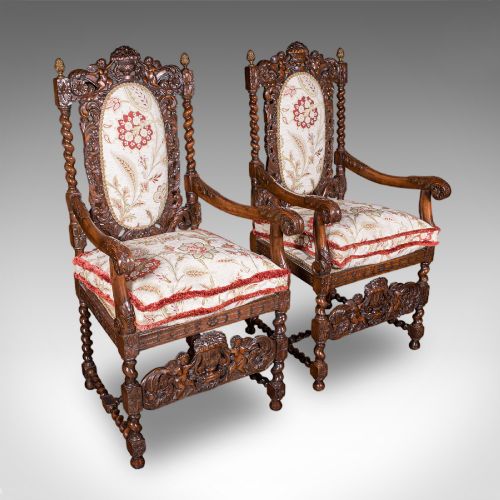
The versions most commonly met on this page span the seventeenth century through the nineteenth century, including revival pieces that copy earlier Jacobean and Gothic styles. They frequently appear as armchairs, elbow seats, and hall chairs built from heavy timber.
Regional variations emerge across the selection, featuring English, Welsh, Scottish, and Continental examples. Makers often utilised traditional joinery to construct these imposing seats, incorporating panelled backs and substantial armrests.
How they were made
The construction relies primarily on solid oak, shaped with mortise and tenon joints to bear the heavy weight of the tall panelled backs and thick armrests. Secondary woods such as fruitwood and walnut occasionally appear alongside the dominant oak.
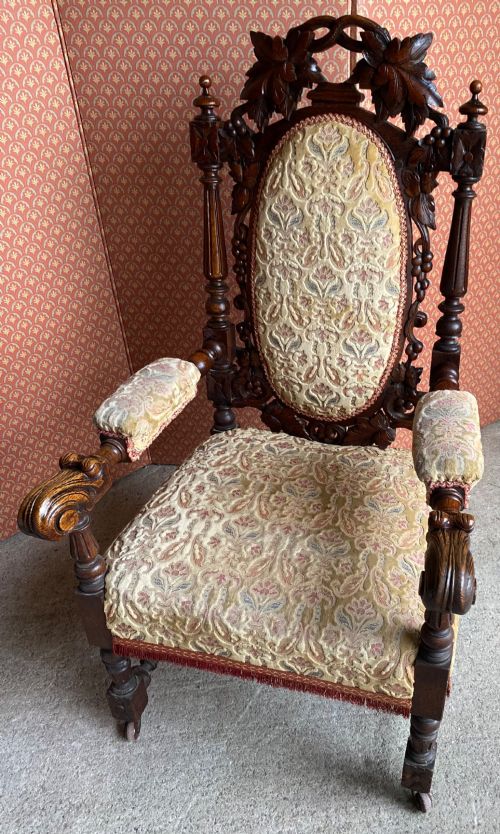
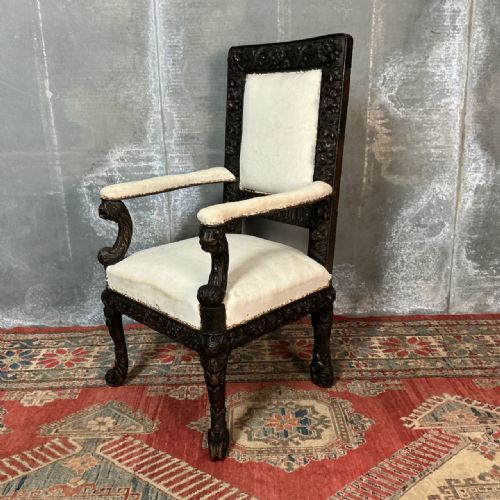
Carving defines the decoration, with artisans applying chip-carving, relief work, and geometric patterns directly into the timber. Upholstery elements like leather, velvet, fabric, and tapestry are integrated into later or revival iterations using brass tacks.
Surface finishing relies on wax and oil polish applied over decades to build a deep, dark patina across the grain. Painted details occasionally highlight the carved motifs on continental or revival examples.
Dark Oak Throne Chair Retail Price Guide 2026
Typical asking prices for dark oak throne chair among the pieces listed under this phrase on Sellingantiques today, from the lower quarter to the upper quarter. They describe what is for sale here now, not the wider market.
A child's lambing chair c. 1680 sits among the heavy adult thrones, proving that miniature authorities required high-backed oak protection from draughts too.
What varies in quality
The depth and crispness of the hand-carving separate standard vernacular pieces from masterworks of the craft. Sharp, well-defined relief work on the crest rail and back panels indicates a higher grade of workshop execution.
The integrity of the original timber frame dictates structural longevity, particularly where joints meet under stress at the arms and legs. Replacements of major structural components or extensive timber grafting reduce the integrity of the piece.
The quality of the timber itself, shown in the tightness of the oak medullary rays and the richness of the natural colour, influences the overall character. Untouched surfaces that have darkened naturally over centuries hold greater appeal than stripped or heavily refinished timber.
The Dark Oak Throne Chair Glossary
- Wainscot chair
- A heavy wooden armchair of sixteenth or seventeenth-century origin, characterised by a panelled wooden back and solid seat. This form evolved from chests and box pews.
- Jacobean
- A style of design dating from the reign of James I, marked by solid proportions, rectilinear forms, and strapwork carving. It heavily influences later nineteenth-century revival pieces.
- Caquetoire
- A light, high-backed armchair originating in sixteenth-century France, designed with a trapezoidal seat to accommodate voluminous garments. It translates literally as a gossiping chair.
- Monopodia
- A furniture support formed of a single lion's leg and paw, popularised during the neoclassical and revival periods. It grants a classical architectural weight to the base of the seat.
- Medullary rays
- The ribbon-like flakes visible across quarter-sawn oak surfaces that create a distinctive silver grain pattern. Their density indicates stable, high-quality timber selection.
Dark Oak Throne Chair: Frequently Asked Questions
How do I date a dark oak throne chair?
Dating relies on examining the construction methods, tool marks left on the timber, and the style of the carved ornamentation. Seventeenth-century examples typically display hand-riven wood and pegged mortise joints, whereas nineteenth-century revivals often show machine-sawn components and later fastener types.
Secondary indicators include the wear patterns on the seat and the depth of the patina built up over generations of use. Comparing the regional style, such as Welsh or Scottish vernacular traits, helps narrow down the period of manufacture.
Were these chairs meant for daily use?
Historical throne chairs and wainscot seats were primarily built for heads of households, masters of guilds, or figures of authority within a hall. They functioned as symbols of status rather than casual lounging furniture.
In modern interiors, they serve well as occasional reading seats or focal points in hallways and studies. Their rigid wooden backs encourage upright posture rather than relaxed reclining.
How should I care for dark oak timber?
Maintain the wood by applying a quality beeswax polish sparingly and buffing it with a soft cloth to preserve the dark finish. Avoid placing the chair near direct heat sources or in fluctuating humidity, which causes the dense oak to split.
Keep upholstered elements like velvet or tapestry clean using gentle brushing suited to historic textiles. Protect leather sections from drying out by applying appropriate leather dressings.
What is the difference between a wainscot chair and a hall chair?
A wainscot chair is a heavy, enclosed armchair featuring a solid panelled back and arms, designed for domestic authority. A hall chair is typically a lighter, narrower seat intended for an entrance hall, often lacking arms in earlier eras.
While both utilise oak and share revival styles, the throne and wainscot varieties offer a much larger, more commanding footprint. Hall chairs focus more on decorative backs suited to standing against a wall.