


Carved Lion Head Chair
A carved lion head chair brings sculptural presence to a room, drawing the eye with bold woodworking and authoritative posture.

Carved Lion Head Chair
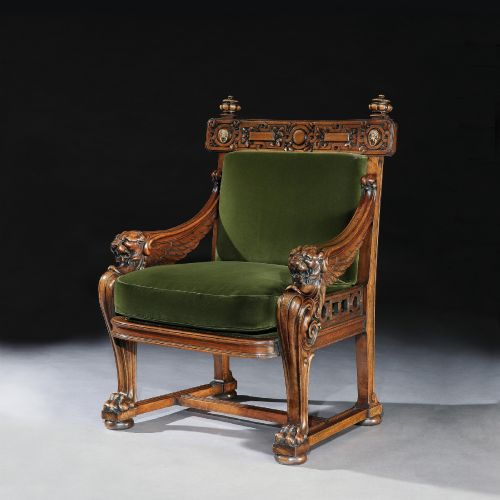
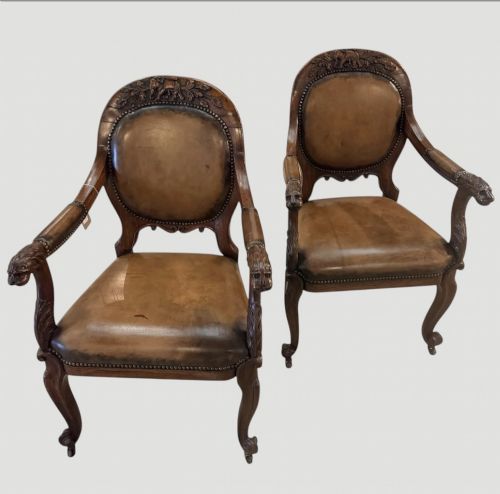
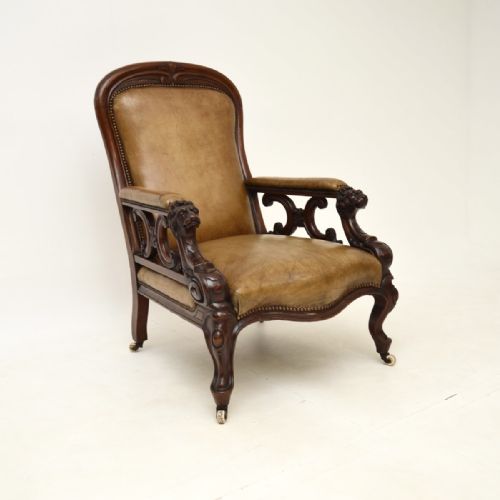
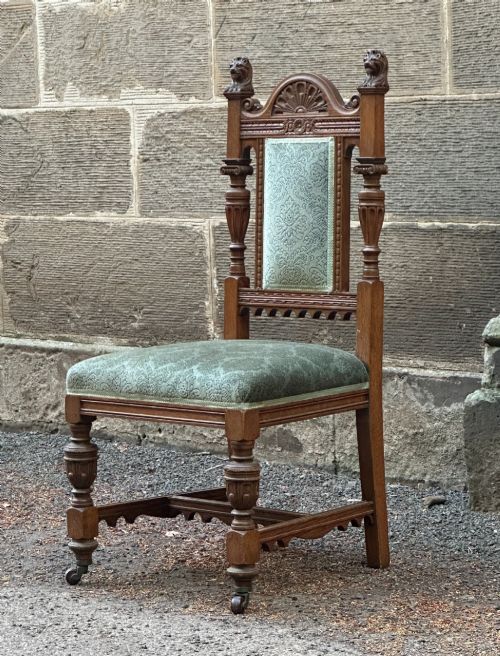
A carved lion head chair stands as a heavy seating form defined by distinct leonine details carved into the arms or frame. The examples you encounter on this page span the nineteenth century and the Georgian era, taking shapes such as library armchairs, hall chairs, and rocking chairs.
Makers drew from historical revivals, producing pieces that reflect Renaissance, Gothic, and Regency influences in oak, mahogany, walnut, and rosewood. The seating often incorporates leather, velvet, or fabric upholstery alongside structural elements like monopodia supports and X-frames.
Most entries belong to the Victorian period, manifesting in robust library suites and throne chairs with dark woods and deep cushion pads. Alongside these sit occasional stools, dining chairs, and fauteuils that integrate carved animal motifs into domestic spaces.
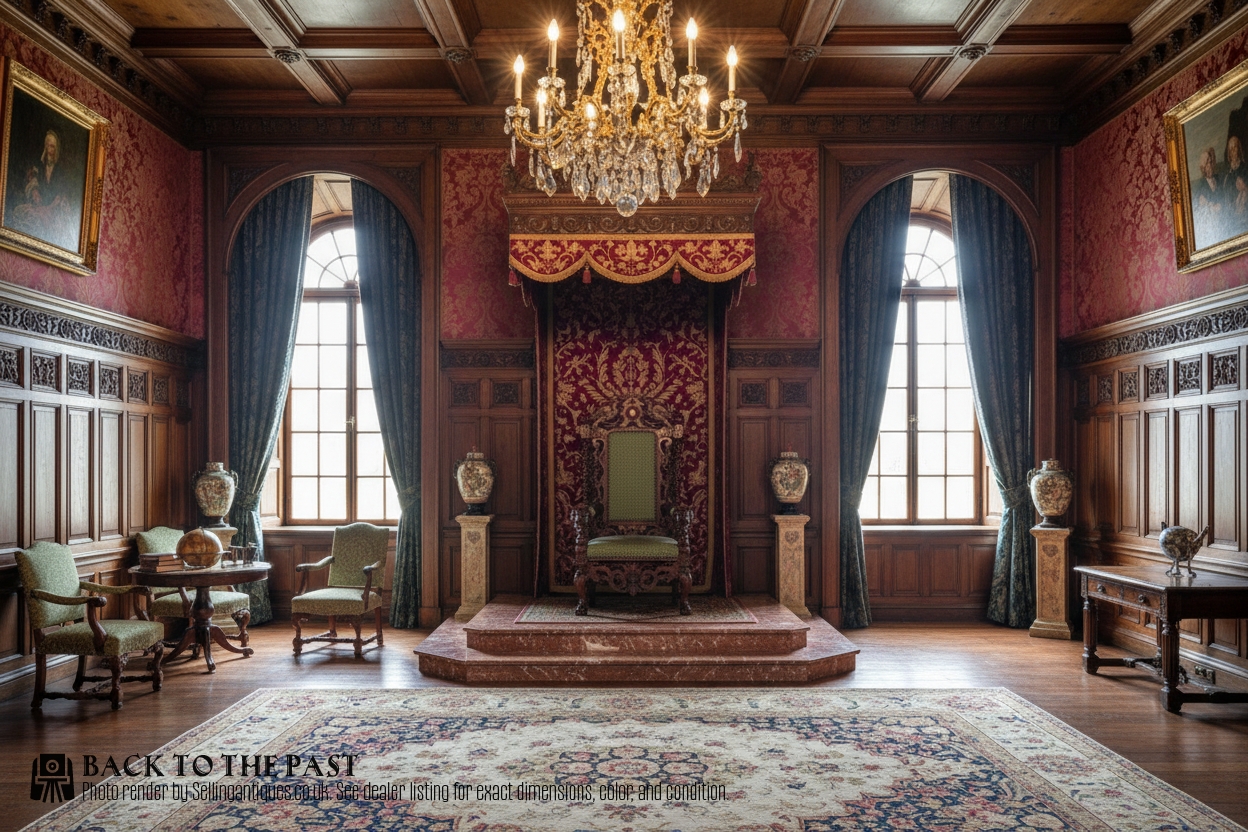
How they were made
Upholstered versions integrate leather, velvet, or woven fabric fixed with tacks over padded seats and backs, while wood-framed variants feature exposed grain and polished finishes. Giltwood and brass additions occasionally accent the primary timber structure.
Carved Lion Head Chair Retail Price Guide 2026
Typical asking prices for carved lion head chair among the pieces listed under this phrase on Sellingantiques today, from the lower quarter to the upper quarter. They describe what is for sale here now, not the wider market.
Materials documented across the pieces include brass, giltwood, leather, velvet, and fabric paired with structural hardwoods.
What varies in quality
The definition and depth of the hand-carving dictate the visual success of the piece, separating crisp anatomical work from softer, more generalized shaping. Stronger examples display deliberate attention to the expression and musculature of the lion forms.
The selection of timber grain and the integrity of the joinery determine the structural longevity of the frame. Pieces that retain their original leather or upholstery integrity alongside well-matched timber components occupy the upper tier of the range.
Thomas Hope·Bruce Talbert·Gillows·George Smith
The Carved Lion Head Chair Glossary
- Monopodia
- A support or furniture leg shaped to resemble a single animal limb, often terminating in a paw.
- Fauteuil
- An open-framed armchair with upholstered back and seat and exposed wooden arms, originating in France.
- Curule
- A form of stool or chair with an X-shaped frame, derived from ancient Roman magistrate seats.
- Gothic Revival
- A nineteenth-century design movement that reinterpreted medieval architectural motifs and structural heaviness.
- Library armchair
- A sturdy, padded seating form designed for reading rooms, typically finished in leather or heavy fabric.
Carved Lion Head Chair: Frequently Asked Questions
Where did people place these chairs?
These chairs typically stood in libraries, morning rooms, and hallways as statement furniture intended to project authority and comfort.
Their substantial timber frames and carved details suited formal reception spaces rather than casual seating areas.
How do I spot Victorian examples?
Victorian versions often feature dark oak or mahogany with heavy carving, deep leather upholstery, and revivalist motifs drawn from Gothic or Renaissance styles.
Examining the construction methods and the depth of the woodwork helps distinguish them from later reproductions.
What woods were used most often?
Cabinetmakers relied heavily on oak, mahogany, and walnut for their strength and ability to hold crisp carved details.
Rosewood and beech also appear in specific regional or continental designs recorded across the listings.
Are these chairs comfortable for daily use?
Library and club armchairs offer deep padding and upholstered backrests designed for extended periods of reading or conversation.
Stiff hall chairs and open arm models prioritize formal posture over relaxed lounging.