




Carved Paw Foot Chair
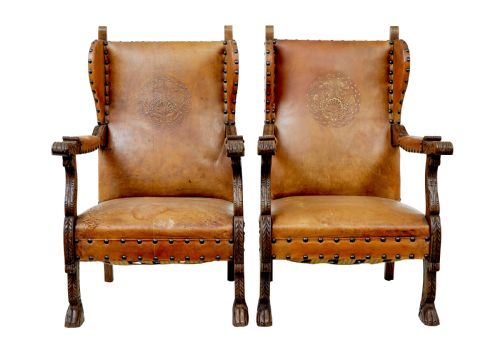
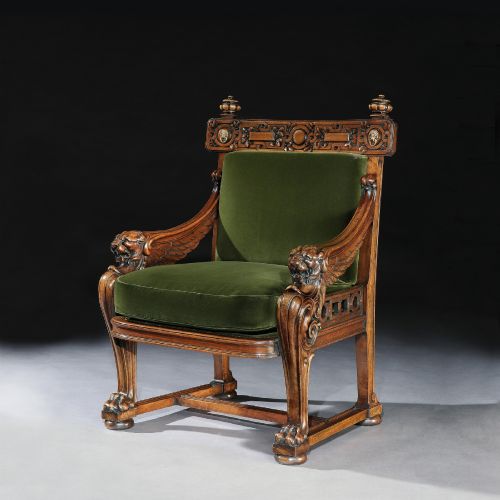
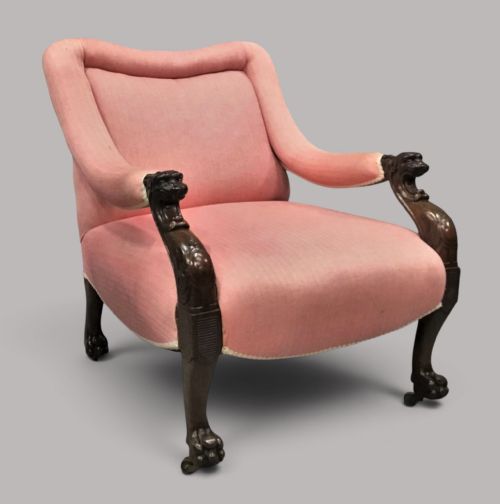
These carved paw foot chair examples bring sculptural animal forms straight into the room, offering heavy timber construction and distinct terminal feet.
Carved Paw Foot Chair
A carved paw foot chair brings together seating forms like armchairs, stools, and accent chairs featuring distinctive animalistic foot details. When browsing for a carved paw foot chair on this page, buyers encounter pieces spanning the 19th Century, 1800, 1920, Victorian, and Regency periods.
The selections range from robust oak and walnut armchairs to giltwood stools and X-framed seating. Styles run across Anglo-Indian, Victorian Gothic Revival, Regency Revival, 19th Century Irish, French Empire, Gothic Revival, Victorian, and French 19th Century aesthetics.
Armchairs dominate the available forms, accompanied by window stools and accent chairs. Each piece reflects specific regional and period interpretations of classical or Gothic animal foot motifs.
Materials and construction methods
Carvers shaped these frames from dense hardwoods including oak, walnut, mahogany, and ebony, alongside gilded wood finishes. Artisans applied detailed hand-carving to create the lion monopodia, hunting dog heads, and botanical motifs that define the legs and arm supports.
Upholstery elements incorporate embossed leather, cane panels, and various upholstery fabrics secured to sturdy timber armchairs and stools. Brass accents and mounts appear across specific Regency and Victorian examples to highlight structural joints and decorative terminals.
Carved Paw Foot Chair Retail Price Guide 2026
Typical asking prices for carved paw foot chair among the pieces listed under this phrase on Sellingantiques today, from the lower quarter to the upper quarter. They describe what is for sale here now, not the wider market.
Hunting dog heads peer out from Victorian window stool frames, watching the room intently from beneath the seat.
Evaluating craftsmanship and design
The sharpness and anatomical precision of the carved paw feet separate standard production from superior examples. Deeply articulated claws and muscular forms demonstrate a higher level of sculptural skill from the maker.
The choice of primary timber influences the overall character, with dense ebony, figured mahogany, and richly grained walnut elevating the visual weight of the frame. Unified stylistic execution across the arms, legs, and stretchers indicates a cohesive design intent.
Thomas Hope·George Smith
The Carved Paw Foot Chair Glossary
- Monopodia
- A carved furniture support taking the form of a single animal leg and foot, often winged or terminating in a lion paw. This classical motif appears frequently on Regency and nineteenth-century seating.
- Curule stool
- An ancient Roman stool form featuring crossed concave legs shaped like an X. These pieces often incorporate rich carving and upholstery.
- Bergere
- A closed upholstered armchair with an enclosed wooden frame, popular in French-influenced nineteenth and early twentieth-century design. The sides frequently feature cane work or padded upholstery.
- Giltwood
- Timber coated with a thin layer of gold leaf or gilt gesso. This finish creates a bright decorative surface on nineteenth-century stools and chairs.
- X-frame
- A structural furniture base formed by intersecting diagonal timbers that create an X shape from the side profile. This configuration provides sturdy support for heavy stools and armchairs.
Carved Paw Foot Chair: Frequently Asked Questions
What periods do these carved paw foot chair items span?
The listings encompass pieces from the nineteenth century, specifically featuring items from 1800, the Regency era, the Victorian period, and 1920.
Each period brings distinct stylistic interpretations to the basic animal foot furniture form.
Which wood types are used in these chair frames?
Maker workshops utilised heavy hardwoods including oak, walnut, mahogany, and ebony, along with giltwood finishes.
These durable timbers provided the dense material necessary for intricate leg carving and structural framing.
How do X-framed stools differ from standard armchairs?
X-framed stools use intersecting diagonal supports without backrests, functioning as movable seats or window benches. Armchairs provide enclosed back support and armrests for primary seating use.
Both forms incorporate carved paw or monopodia feet to anchor their designs.
What upholstery materials appear on these seats?
Surviving examples feature embossed leather panels, woven cane inserts, and various traditional upholstery fabrics.
These materials complement the carved wooden frames of the armchairs and stools.