

19th Century Library Seat
A 19th century library seat provides sturdy, purposeful comfort for study and reading rooms through enduring traditional craftsmanship.
19th Century Library Seat
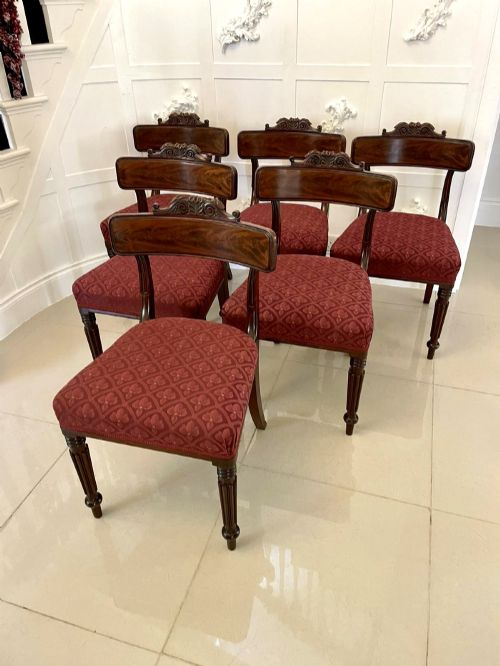
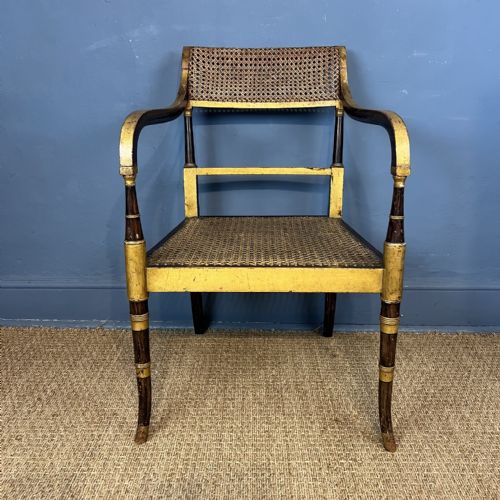
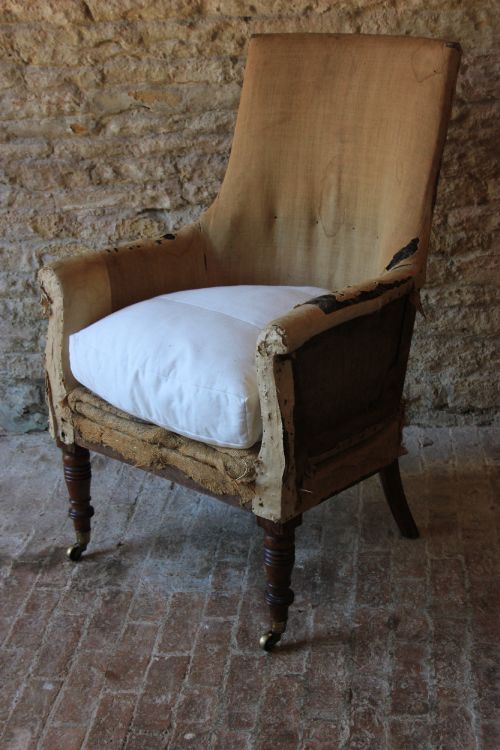
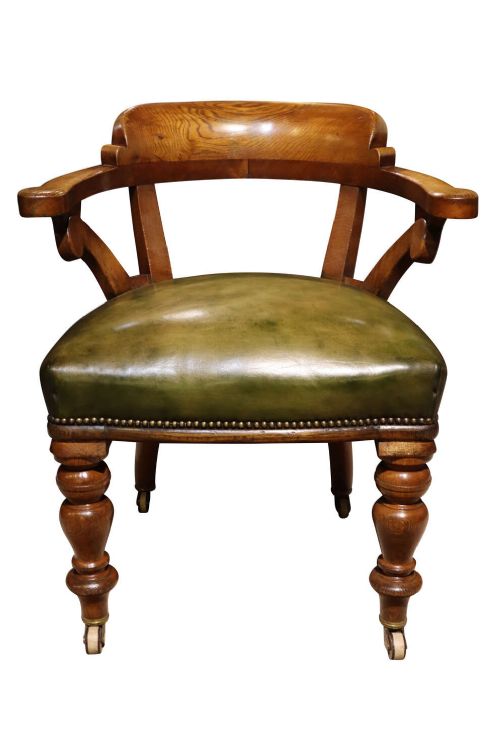
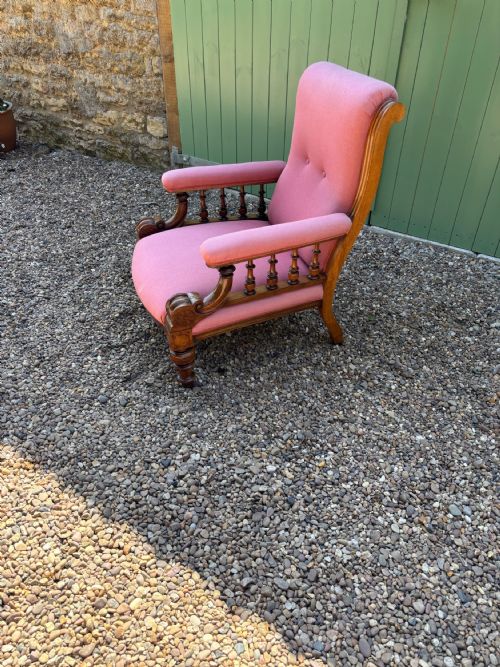
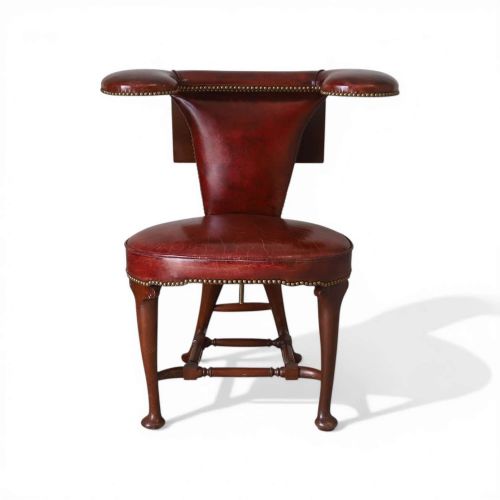
A 19th century library seat encompasses armchairs, desk chairs, reading chairs, and stools designed for scholarly and domestic rooms. The selections on this page span the 19th century, Regency, William IV, and Victorian periods, often taking the form of robust mahogany or oak armchairs.
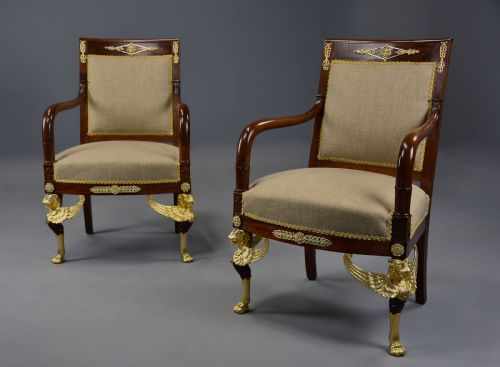
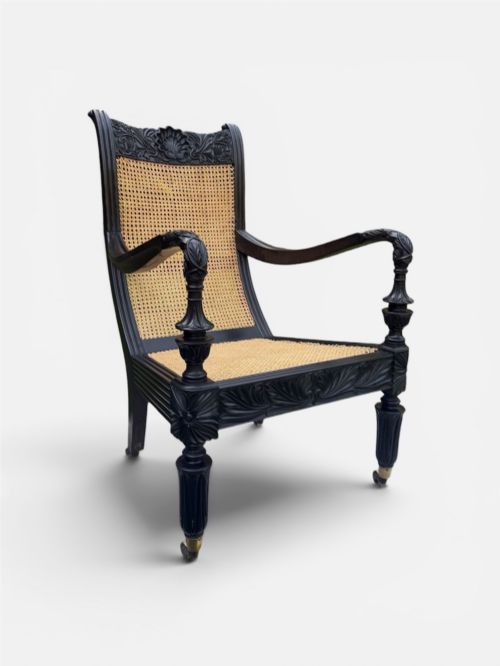
Makers and workshops of the era produced these seats in various regional interpretations, including English country house models, French Empire style fauteuils, and Anglo-Indian rosewood pieces. Buyers encounter both utilitarian desk chairs and deep-seated reading chairs intended for long hours of study.
Materials and construction methods
Cabinet makers utilised dense hardwoods such as mahogany, walnut, oak, rosewood, and burr elm to build durable frames capable of supporting constant daily use. Brass inlays, parcel gilding, and carved mahogany details frequently enhance the primary timber structures.
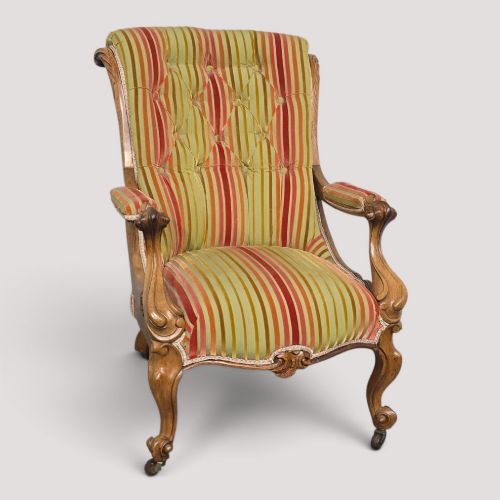
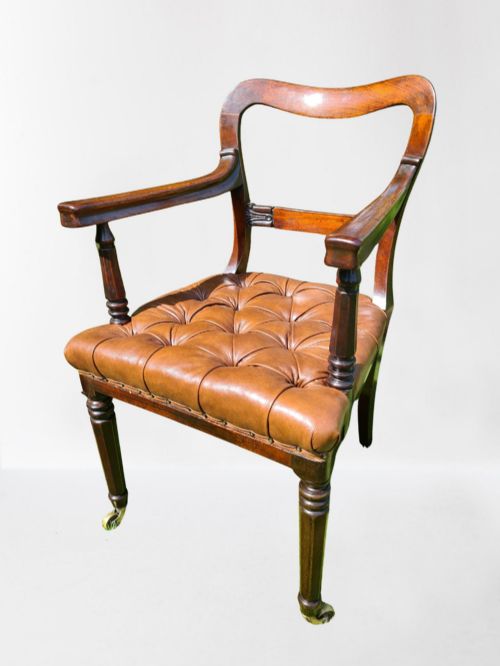
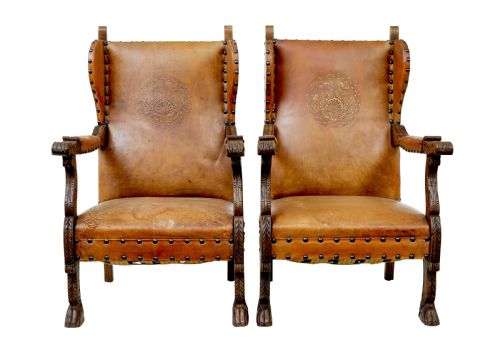
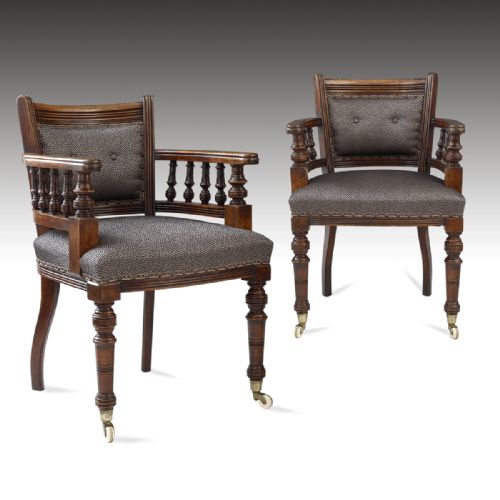
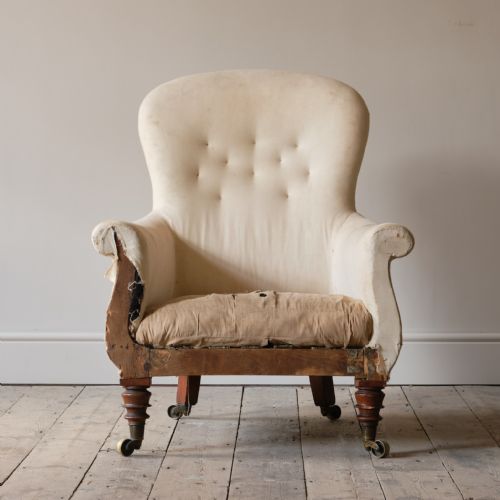
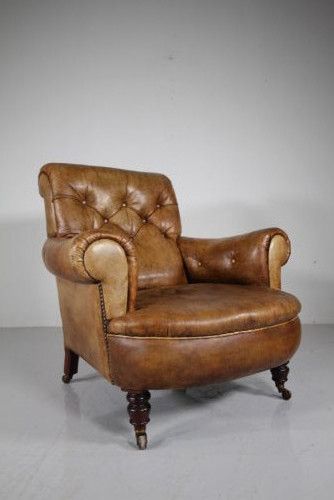
Upholstery techniques combined traditional stuffing with leather, embossed leather, woven leather, velvet, calico, and various durable fabrics. Frames incorporated reeded supports, turned legs, and occasionally adjustable campaign mechanisms to suit specific functional demands.
The listings span several distinct periods including Regency, William IV, Victorian, and late 19th century.
Evaluating the standard of execution
The selection of timber grain and the precision of joinery determine the integrity of the framework. Dense, well-figured mahogany or quarter-sawn oak indicates superior initial material selection.
The refinement of carved ornament, the tightness of brass inlay work, and the quality of traditional leather or fabric upholstery separate standard utility pieces from workshop productions attributed to makers like Gillows.
Gillows
The 19th Century Library Seat Glossary
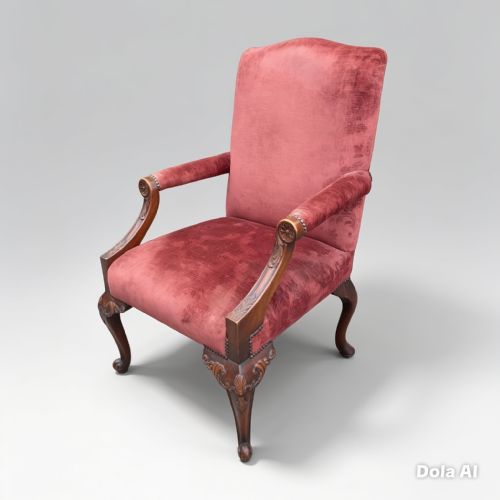
- Gainsborough chair
- A wide, open-armed armchair with a padded seat and back, standing on short legs. This form dates back to the 18th century but heavily influenced later Victorian reproductions.
- Fauteuil
- An open-armed upholstered armchair originating in France. These seats feature exposed wooden frames and padded armrests.
- Reeded
- A decorative moulding consisting of parallel convex strips resembling bundled reeds. Cabinet makers turned these profiles directly into chair legs and supports.
- Campaign chair
- A portable seating form designed for easy dismantling and transport during travel. Examples from the mid 19th century often include clever folding or adjustable mechanisms.
- Parcel gilt
- Partially gilded with thin gold leaf or powder applied to specific carved details. This treatment highlights particular mouldings against a dark wood background.
19th Century Library Seat: Frequently Asked Questions
What defines a 19th century library seat?
These pieces comprise sturdy wooden chairs and stools built for studies, libraries, and country houses during the 1800s. They prioritise functional support and durable construction using hardwoods.
Makers incorporated materials like mahogany, oak, and leather to withstand daily scholarly use. The category includes armchairs, desk chairs, and reading seats tailored to specific domestic tasks.
How do I identify a Regency period piece?
Regency seats often display neoclassical influences, featuring brass inlay, parcel gilt accents, and dark woods like rosewood or mahogany. Proportions remain clean and classical.
Design elements include reeded woodwork and saber legs that reflect the early decades of the 19th century. Many such pieces connect to prominent workshops of the era.
What woods were used for these chairs?
Cabinet makers relied primarily on dense domestic and imported hardwoods. Mahogany and oak appear frequently across standard and high-end examples alike.
Walnut, rosewood, burr elm, and solid ebony also feature in specific regional designs or decorative styles. These timbers ensured the structural longevity of heavy library seating.
Where should I place a reading chair?
A traditional library seat fits naturally beside bookshelves, desks, or firesides where comfortable, upright posture is required. Generous proportions suit spacious studies or living rooms.
Pairing these chairs with appropriate desks or side tables maintains historical context. Their solid frames also serve well in commercial office settings.
How do Victorian designs differ from earlier styles?
Victorian library seats tend to feature heavier proportions, deeper padding, and more elaborate carved ornamentation. Gothic Revival influences also emerge during this period.
Earlier Regency and William IV pieces lean towards linear restraint and classical detailing. Victorian examples embrace comfort through deep-seated buttoning and rich upholstery.