
Georgian Mahogany Library Chair
A georgian mahogany library chair combines solid timber framing with deep, comfortable upholstery designed for long hours of reading.
Georgian Mahogany Library Chair
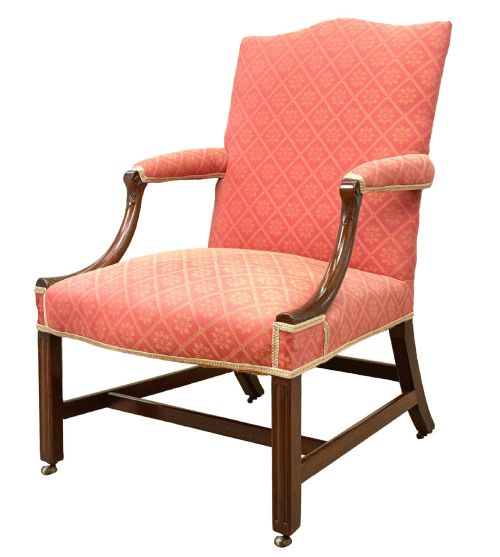
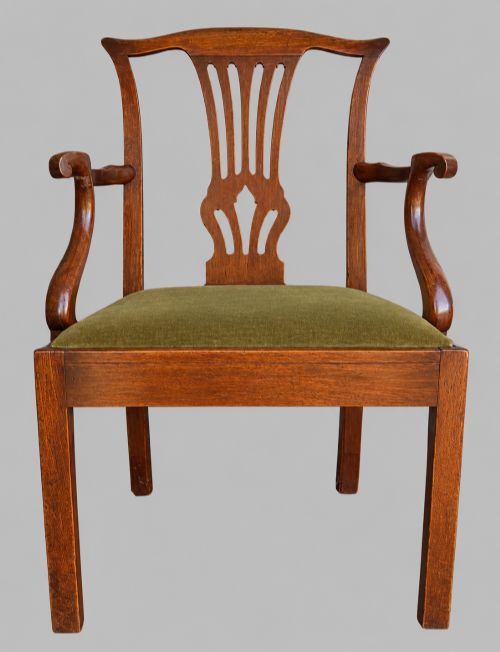
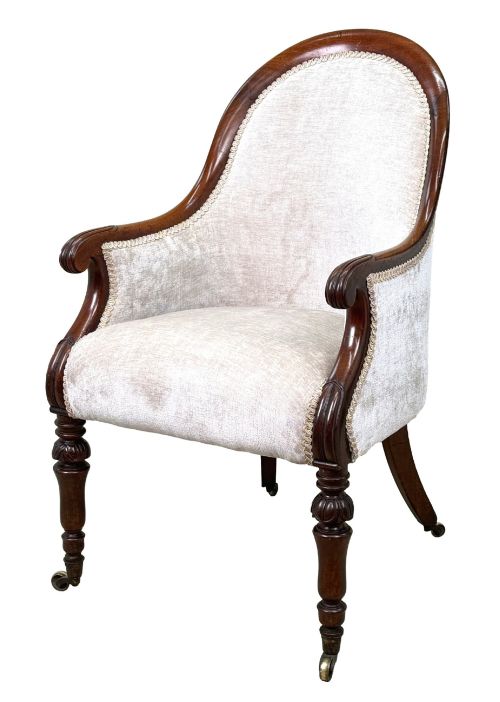
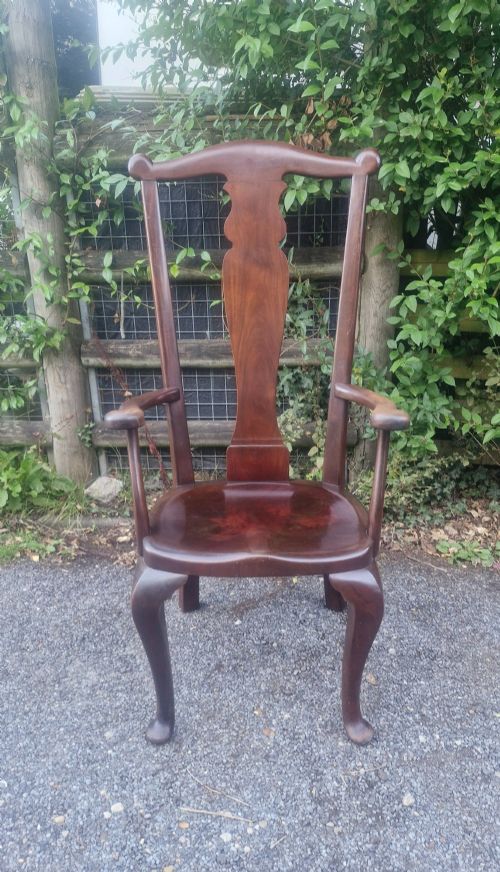
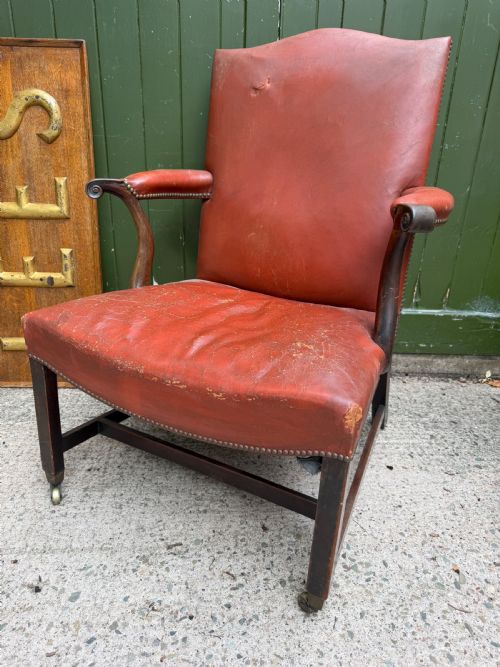
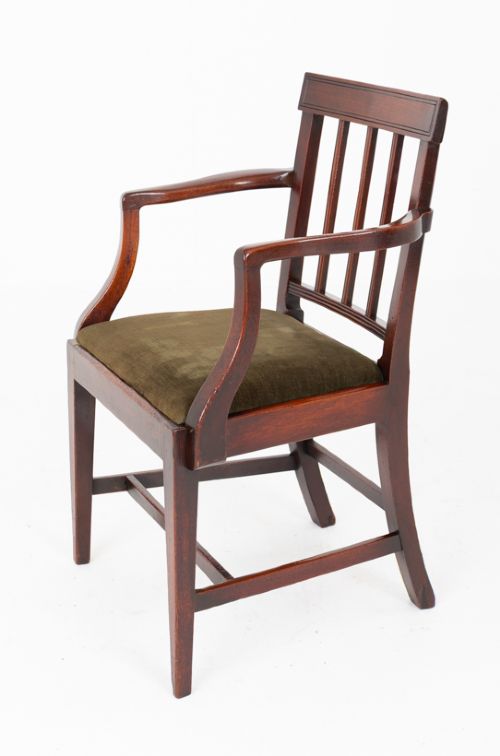
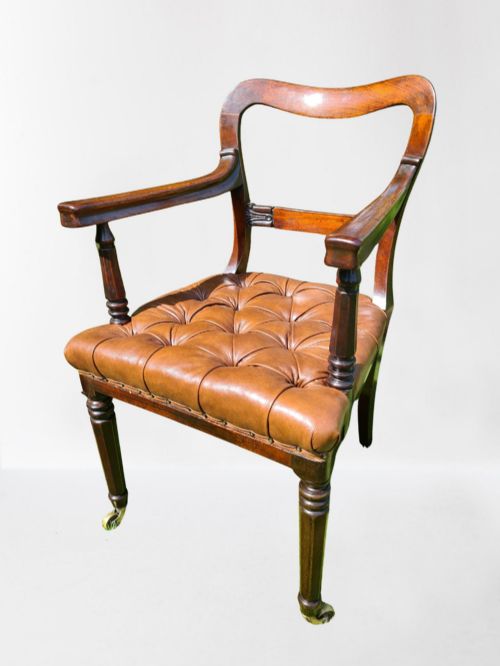
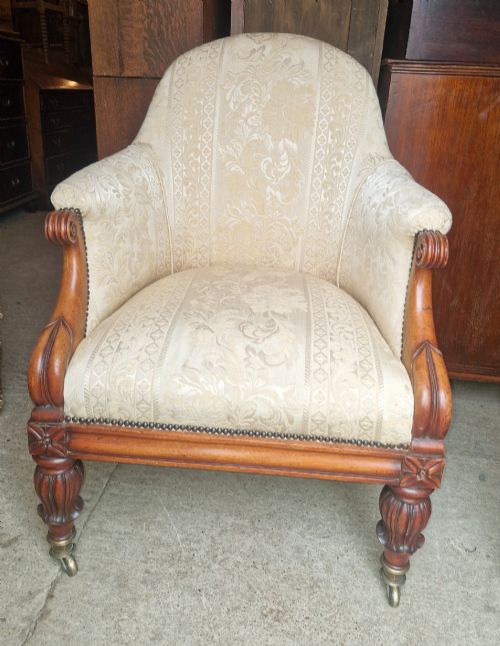
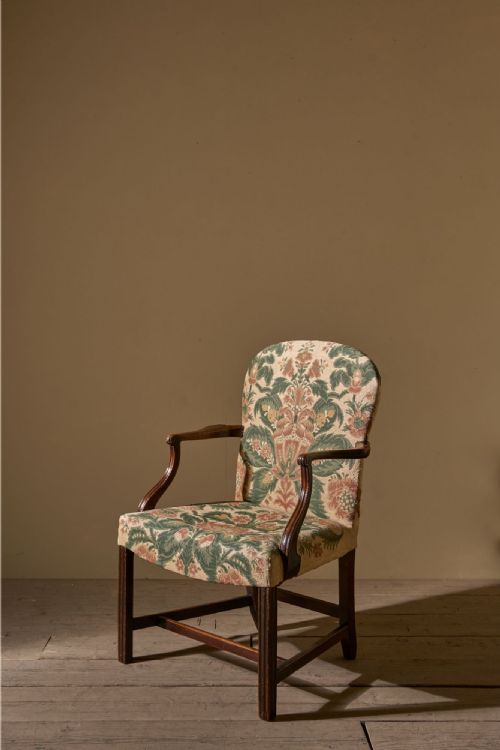
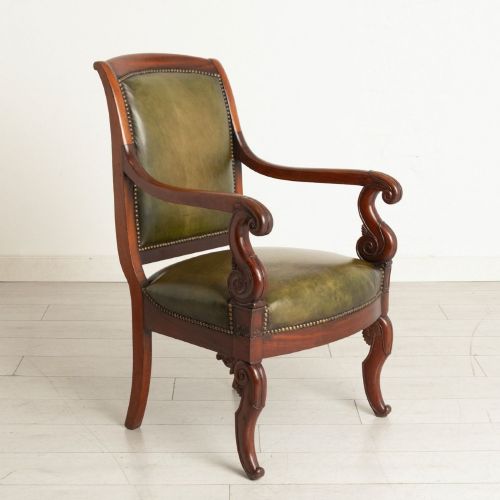
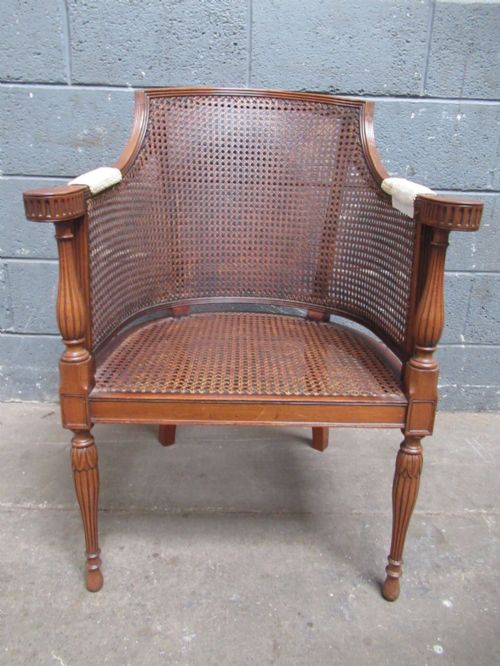
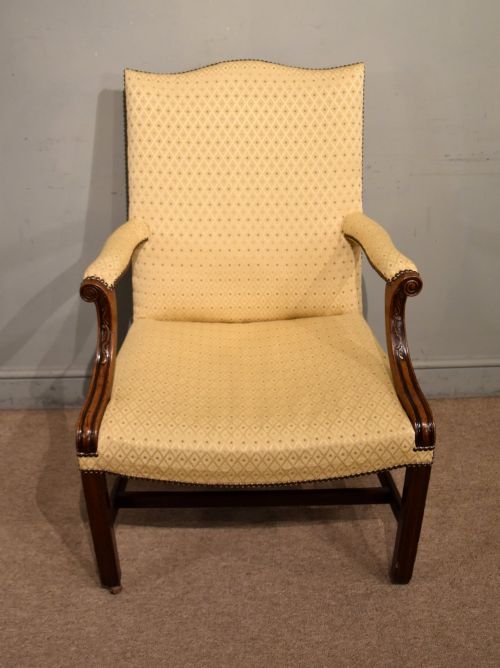
A georgian mahogany library chair is typically encountered as a heavy armchair, desk chair, or open armchair dating from the eighteenth century through to later revival periods. These seats were built for private studies and libraries, taking forms such as the boxy Gainsborough armchair, the rounded tub shape, or the lower-slung drunkard's chair.
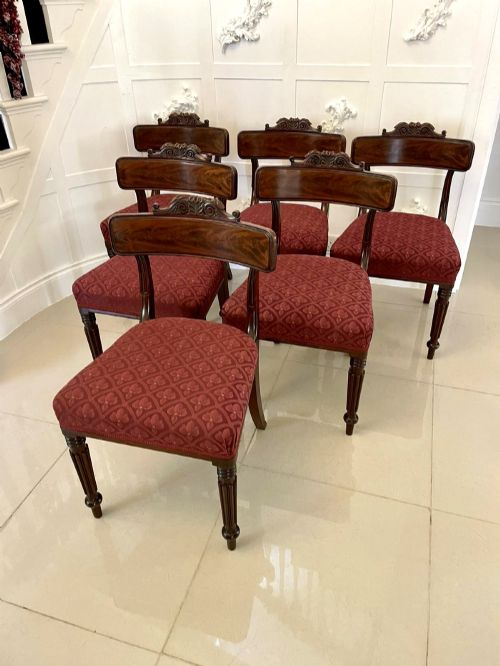
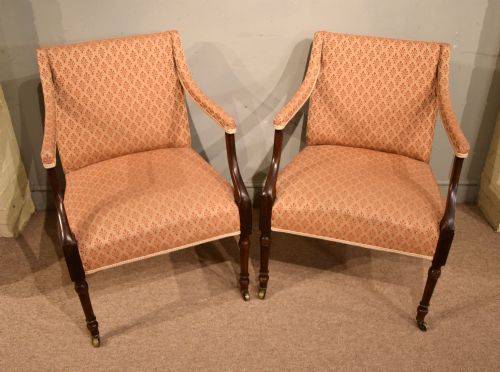
The selection ranges from authentic eighteenth-century examples originating in the Georgian and Regency eras to later nineteenth-century interpretations and twentieth-century revivals. Buyers frequently find pieces featuring open arms, high backs, and sturdy frames designed to support everyday use.
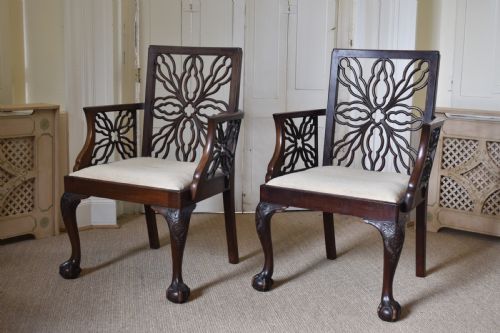
Many variants integrate cane panels or leather upholstery, while others present carved mahogany woodwork following Chippendale or Sheraton design traditions. The assortment balances formal desk chairs with deep-seated reading armchairs meant for comfortable repose.
Materials and Construction
Makers relied on dense mahogany for the primary structural framework, utilising its strength to support wide seats and carved arm supports. This timber was often left with a rich natural finish or polished to highlight the grain across legs, rails, and backframes.
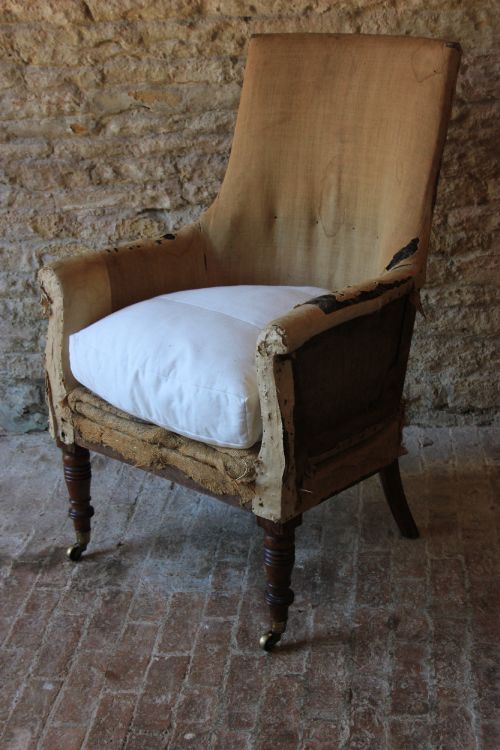
Upholstered versions combined webbing and horsehair stuffing beneath outer coverings of leather, velvet, or woven fabric, secured with brass tacks. Caned variants incorporated tightly woven cane panels into the backrests and seats for lighter, flexible support.
Georgian Mahogany Library Chair Retail Price Guide 2026
Typical asking prices for georgian mahogany library chair among the pieces listed under this phrase on Sellingantiques today, from the lower quarter to the upper quarter. They describe what is for sale here now, not the wider market.
Current listings span the eighteenth, nineteenth, and early twentieth centuries, featuring mahogany frames paired with leather, cane, and fabric upholstery.
Factors of Distinction
Quality rests in the crispness of the timber carving and the structural integrity of the frame joints. Superior examples display deeply moulded armrests, well-proportioned cabriole or straight legs, and substantial weight without looseness in the joints.
The choice of covering also shifts the character of the piece, with hand-dyed leather and traditional woven textiles offering a different tactile permanence compared to replacement modern fabrics. Original timber patination and minimal structural alteration elevate the standing of any given seat.
Gillows
The Georgian Mahogany Library Chair Glossary
- Gainsborough chair
- A wide-seated, upholstered armchair with open padded arms and square legs, common in eighteenth-century libraries. This form provided comfort for reading while accommodating the voluminous fashions of the period.
- Bergère
- An enclosed upholstered armchair with a wooden frame where the sides are frequently filled with cane work. It offers a lighter aesthetic than solid wood-backed reading chairs.
- Carver
- A term used for an armchair, often designed en suite with a set of dining or desk side chairs. These pieces feature elbow rests for the head of the table or desk.
- Blind fretwork
- Low-relief geometric carving applied to the surface of table legs and chair rails, popular in mid-eighteenth-century Chinese Chippendale furniture. This ornamental technique mimics true pierced fretwork without weakening the structural timber.
Georgian Mahogany Library Chair: Frequently Asked Questions
How do I care for leather upholstery?
Leather upholstery requires regular dusting and occasional treatment with appropriate conditioning balms to prevent the hide from drying out. Keeping these surfaces away from direct heat sources preserves the suppleness of the material.
Avoid using harsh chemical cleaners, as traditional hand-dyed finishes can be sensitive to modern detergents and abrasive cloths.
Can I use these chairs at a modern desk?
Many examples function well at contemporary desks, provided the seat height aligns comfortably with the desktop clearance. Desk chair variants and open armchairs from the Regency period offer suitable ergonomics for workspace use.
Buyers should verify the exact seat height and arm clearance dimensions before pairing an antique chair with a modern table.
How do I distinguish an 18th-century piece from a revival?
Distinguishing period pieces involves examining the construction methods, timber patination, and tool marks visible on hidden interior surfaces. Eighteenth-century frames show hand-cut joinery and signs of age-related wear that differ from twentieth-century machinery marks.
Revival pieces from the Victorian and Edwardian eras often employ different secondary woods and heavier framing techniques typical of later manufacturing.