


Pink Mahogany Armchair
A pink mahogany armchair brings together solid timber frames and soft textile upholstery across Victorian, Edwardian, and Georgian periods.
Pink Mahogany Armchair
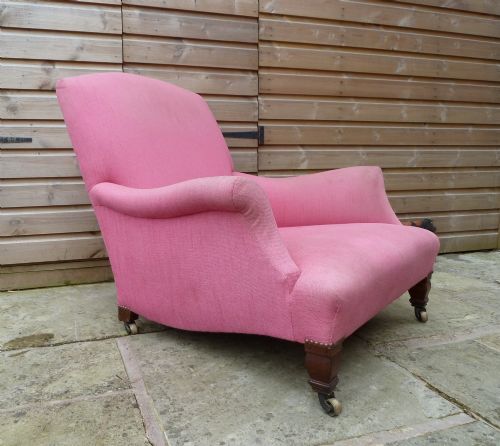
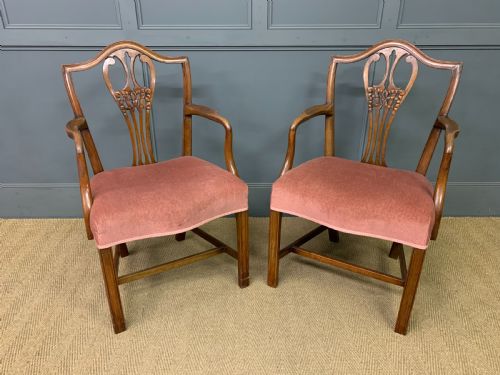
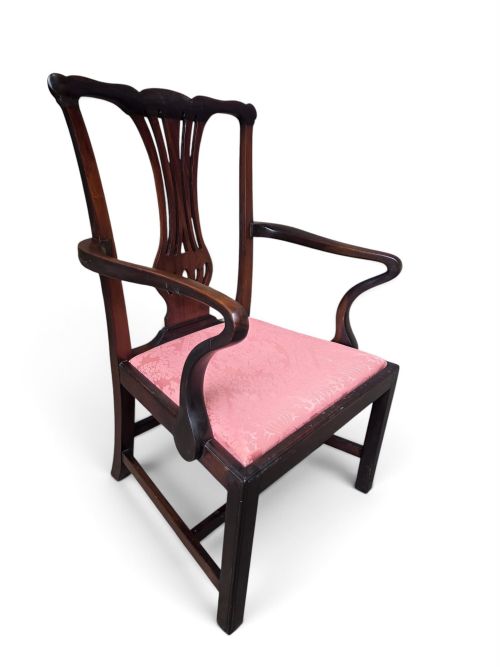
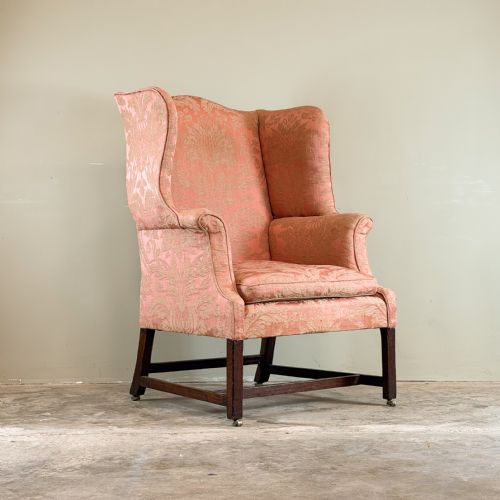
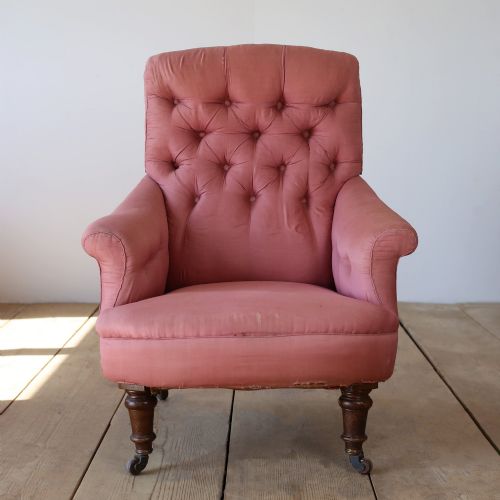
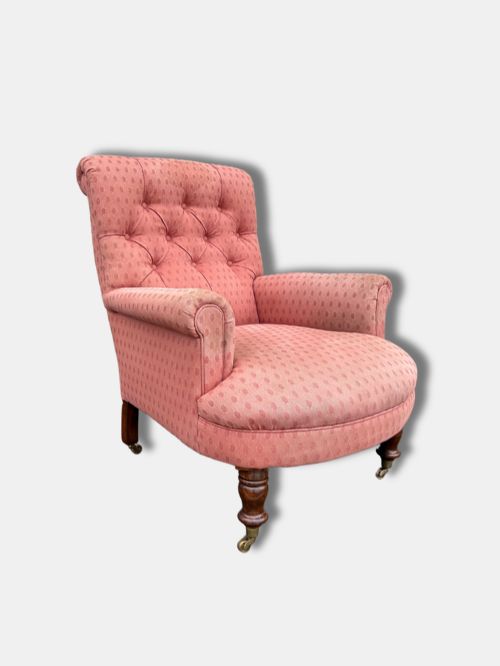
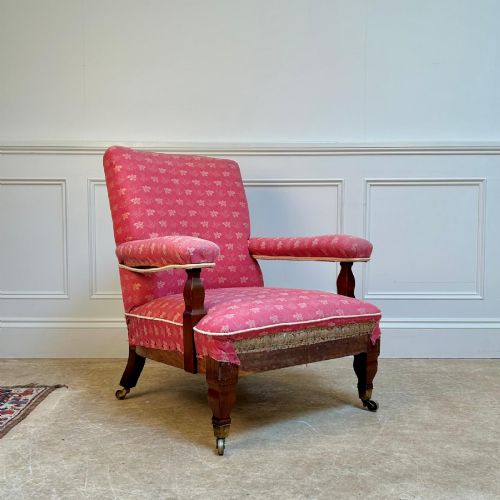
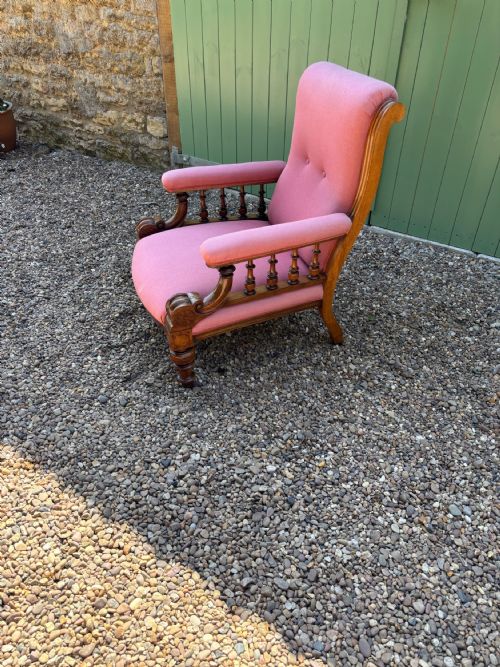
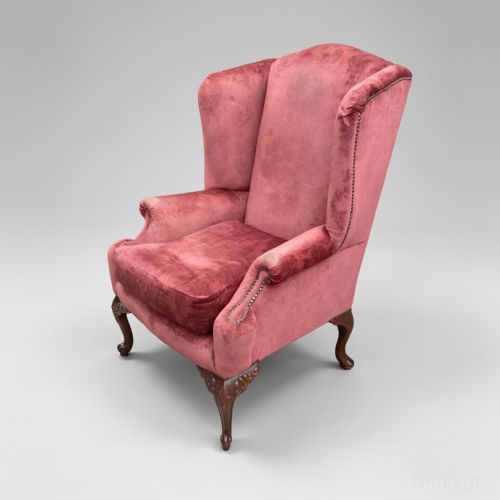
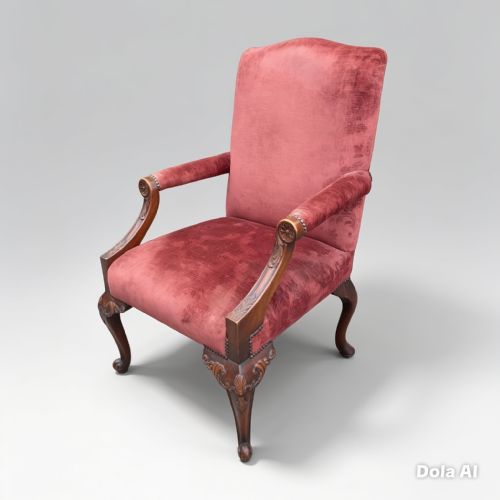
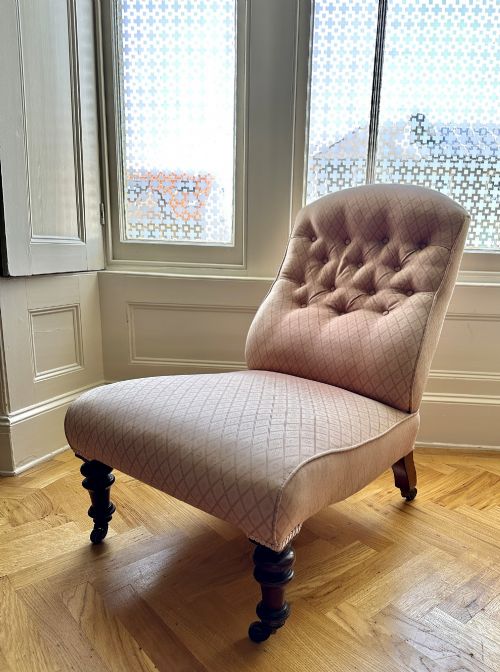
A pink mahogany armchair unites sturdy wood frames with textile upholstery in shades ranging from deep rose to soft blush. Buyers seeking a pink mahogany armchair will encounter various forms, including open armchairs, library chairs, nursing chairs, and slipper chairs from the Victorian, Edwardian, and Georgian eras.
Most examples hail from the nineteenth and early twentieth centuries, constructed with exposed wooden rails, scroll arms, or carved supports. The integration of pink upholstery fabrics like velvet, damask, and patterned textiles provides both colour and comfortable seating.
Construction and materials
Frames are built primarily from mahogany, occasionally supplemented by walnut or other hardwoods, joined with sturdy mortise and tenon techniques. Timber components often feature turned legs, brass castors, or intricately carved details along the arms and rails.
Upholstery methods rely on traditional stuffing materials secured over coil springs or webbing, finished with velvet, damask, or woven fabric covers. Button-tufting and decorative nailing frequently secure the pink textiles tightly to the internal frame.
Several armchairs stand ready on ball and claw feet, giving heavy Victorian upholstery a surprisingly bird-like stance.
Judging the work
Quality rests in the precision of the timber carving and the structural integrity of the mahogany frame under daily use. Superior pieces display crisp joinery, well-balanced proportions, and substantial weight in the hardwood frame.
The standard of upholstery work and textile selection dictates the finish, with tighter springs and durable fabrics separating finer examples from simpler seaters. Maker attribution, particularly pieces linked to notable workshops, elevates the standing of an individual chair.
Howard and Sons·George Jack·Morris and Co·James Shoolbred
The Pink Mahogany Armchair Glossary
- Carver chair
- An armchair designed with wooden arms, traditionally placed at the head of a dining table or used as a desk chair. These pieces often match a set of smaller dining chairs.
- Spoonback
- A chair back shaped in the concave silhouette of a spoon, commonly found on Victorian upholstered seating. This design supports the sitter's spine with a curved wooden rim.
- Library chair
- A heavy, comfortable armchair intended for reading rooms, frequently upholstered in durable fabrics and built with robust wooden frames. Examples often feature padded armrests for extended sitting.
- Button back
- An upholstery style where depressions are formed in the padding by pulling thread or twine deep into the backing, secured with fabric-covered buttons. This creates a diamond pattern across the cushion.
- Damask
- A reversible figured fabric woven on a jacquard loom, traditionally utilising silk, wool, or cotton. The pattern contrasts flat and satin weaves to catch the light.
Pink Mahogany Armchair: Frequently Asked Questions
What periods do these armchairs come from?
The collection spans the Georgian, Victorian, and Edwardian eras, with many pieces originating in the nineteenth and early twentieth centuries.
Craftsmen during these periods utilised solid mahogany and applied diverse revival styles, from Chippendale to Arts and Crafts.
How do I identify a library chair?
Library chairs are generally heavier, wider armchairs built for comfortable reading with substantial padding and sturdy timber frames.
They frequently incorporate mahogany woodwork, brass castors, and upholstered seats designed for long periods of use.
What fabrics are used for the upholstery?
Upholstery materials recorded on these pieces include traditional velvet, damask, and woven textiles in various shades of pink.
These fabrics are often secured with button-tufting or decorative nailing over sprung interiors.
Are these chairs suitable for daily seating?
Many of these pieces function well as everyday seating, particularly library chairs, easy chairs, and deep-seated armchairs.
Buyers should consider the internal webbing, spring condition, and frame stability when selecting a chair for regular use.