





Victorian Drawing Room Chair
A victorian drawing room chair offers formal elegance and comfortable seating, bringing nineteenth-century craftsmanship directly into a modern interior.
Victorian Drawing Room Chair
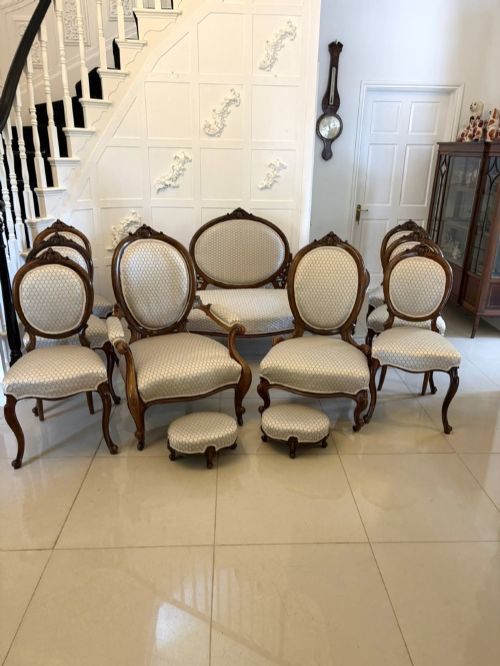
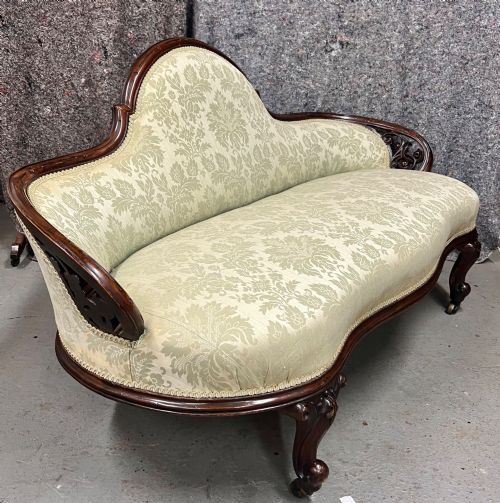
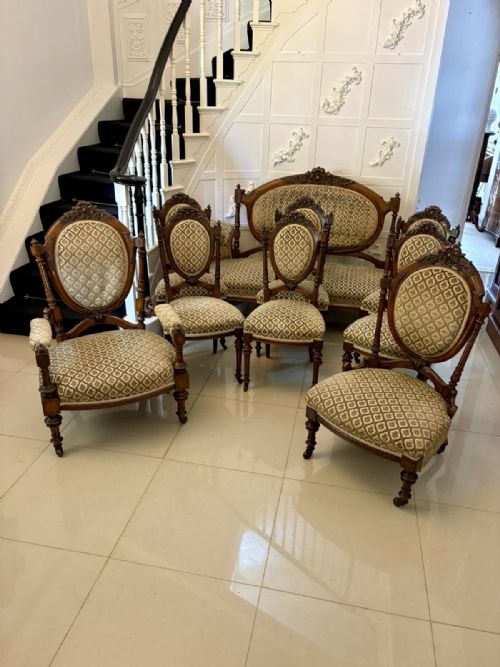
A victorian drawing room chair represents the refined seating developed for nineteenth-century reception rooms, encompassing various configurations from intimate side seats to generous gentleman's armchairs. These pieces often arrive as individual armchairs, matching pairs for ladies and gentlemen, or as part of larger salon suites that include sofas and footstools.
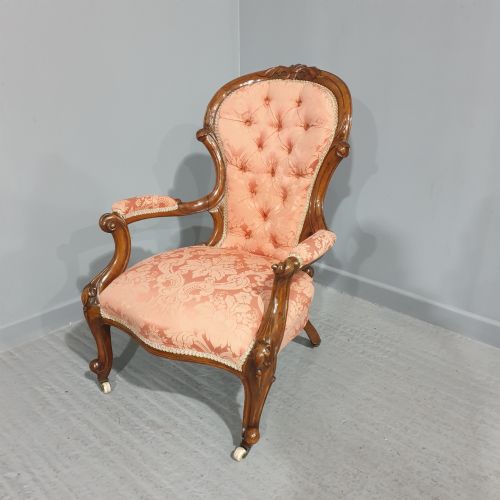
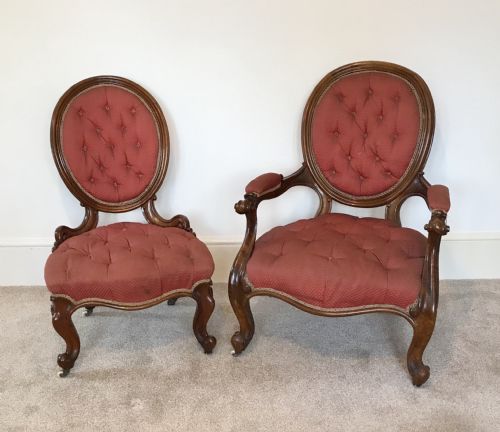
The prevailing examples on this page date predominantly from the Victorian period, spanning the mid to late nineteenth century alongside occasional Edwardian continuations. Forms include walnut cameo backs, spoonbacks, buckle backs, and open armchairs influenced by the Chippendale taste or constructed from mahogany and rosewood.
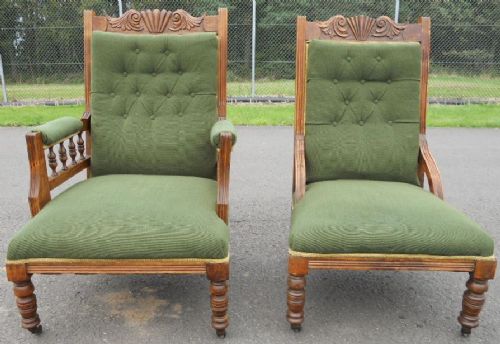
Buyers encounter smaller side seats designed for ladies alongside larger, deep-sprung armchairs built for comfort and display. The selection demonstrates how these seats served both decorative and functional roles in formal nineteenth-century interiors.
Materials and Construction
Makers utilised dense timbers such as walnut, mahogany, oak, and rosewood for the structural frames, often finishing them with detailed hand-carving. Brass components appear in castors and hardware, supporting the mobility of heavier armchairs and multi-piece suites.
Upholstery defines the character of these seats, utilising traditional textile coverings including fabric, velvet, damask, chenille, and ceramic elements. Button upholstery and button back techniques provide structural tension and distinct visual patterning across the padded surfaces.
Victorian Drawing Room Chair Retail Price Guide 2026
Typical asking prices for victorian drawing room chair among the pieces listed under this phrase on Sellingantiques today, from the lower quarter to the upper quarter. They describe what is for sale here now, not the wider market.
Listings demonstrate that walnut is the predominant timber for these seating pieces, frequently accompanied by mahogany and rosewood.
Judging Quality and Execution
The distinction between standard examples and exhibition quality pieces lies in the crispness of the timber carving and the architectural proportion of the frame. Superior walnut or mahogany frames display refined joinery and well-defined decorative motifs that retain their structural integrity over time.
The standard of upholstery work and the selection of textile coverings also differentiate the range. Original textiles in preserved condition or meticulous traditional reupholstery elevate a piece, alongside the presence of documented maker attributions on the frame.
Hindley & Sons
The Victorian Drawing Room Chair Glossary
- Spoonback
- A chair back curved in three dimensions to resemble the bowl of a spoon, designed to fit the human spine. This contouring is characteristic of mid-nineteenth-century seating.
- Button Upholstery
- A method of securing padding through deep tufting held with covered buttons, creating distinct diamond patterns across the backrest. It provides both firm support and decorative texture.
- Cameo Back
- An oval-shaped upholstered backrest framed by carved wood, resembling a portrait cameo. It appears frequently on nineteenth-century salon and drawing room chairs.
- Salon Suite
- A matched set of seating furniture comprising a sofa, armchairs, and side chairs intended for a formal reception room. These suites share uniform timber, carving, and textile choices.
- Chippendale Revival
- A nineteenth-century style drawing inspiration from eighteenth-century designs, often incorporating cabriole legs and carved detail. Pieces in this taste adapt earlier aesthetics for Victorian interiors.
Victorian Drawing Room Chair: Frequently Asked Questions
How do I identify a Victorian drawing room chair?
Look for characteristic nineteenth-century timber choices such as walnut, mahogany, or rosewood paired with traditional upholstery techniques like button tufting. Frame styles often include spoonbacks, cameo backs, or open arms reflecting mid-Victorian design preferences.
Examination of the joinery and underneath construction will typically reveal period manufacturing methods, distinguishing nineteenth-century examples from later revival pieces.
Were these chairs used for daily sitting?
Drawing room chairs served primarily in formal reception spaces for entertaining guests, conversation, and light reading rather than heavy everyday lounging. Gentlemen's and ladies' armchairs offered supportive upright seating suited to nineteenth-century social customs.
Their sturdy timber frames and sprung upholstery ensure they remain durable for contemporary use when placed in suitable living spaces.
What is the difference between side chairs and armchairs?
Side chairs are smaller, lighter seats without arms designed to be placed around the perimeter of a drawing room and moved easily when needed. Armchairs feature structural side supports and deeper proportions intended for sustained sitting.
Matching suites often paired an armchair with several side chairs to maintain a unified aesthetic across the room.
How should I care for antique upholstery?
Protect delicate textiles such as velvet, damask, or chenille from direct sunlight to prevent fading and preserve the integrity of the fabric fibres. Regular gentle vacuuming with a soft brush attachment removes dust without straining the button tufting.
Professional cleaning is recommended for antique fabrics to maintain the original materials without causing shrinkage or damage to the underlying padding.