
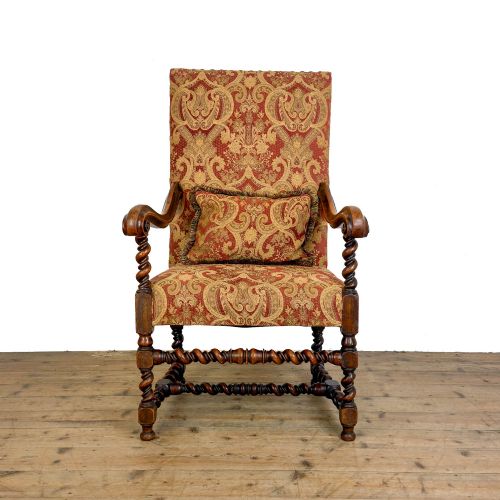
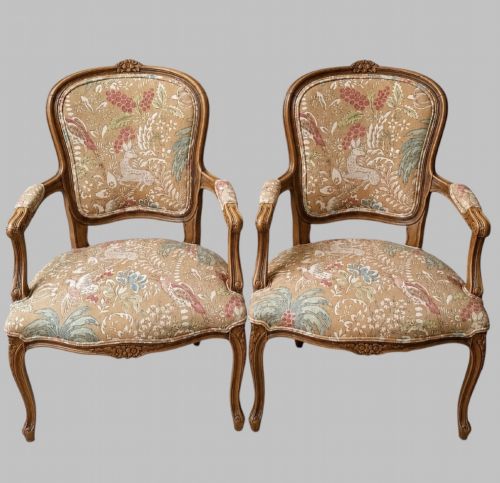

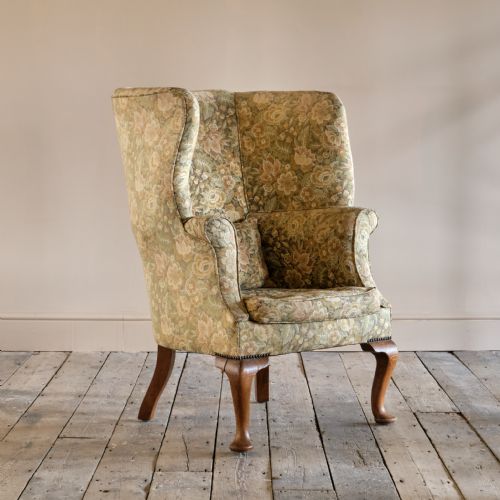


Patterned Tapestry Armchair
These patterned tapestry armchairs bring warmth and rich texture to a room, offering deep comfort alongside period character.
Patterned Tapestry Armchair
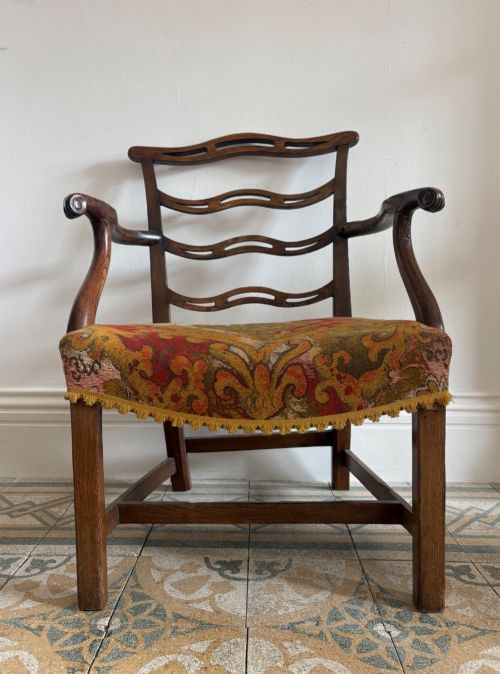
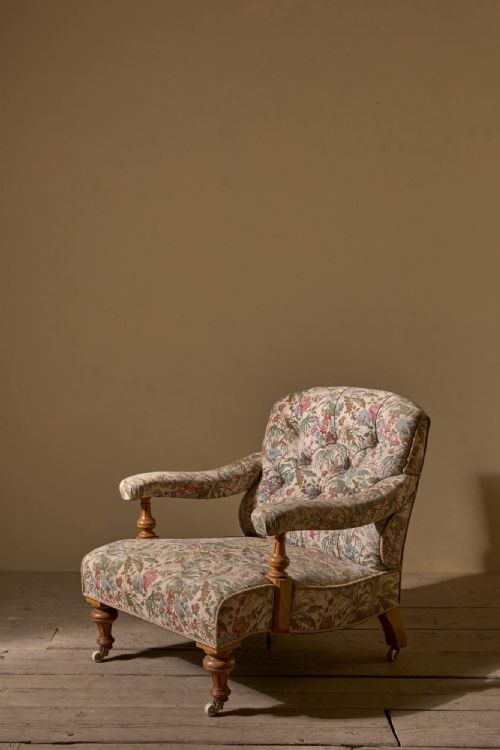
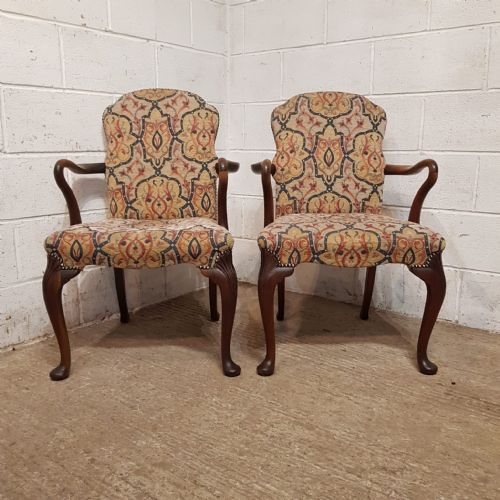
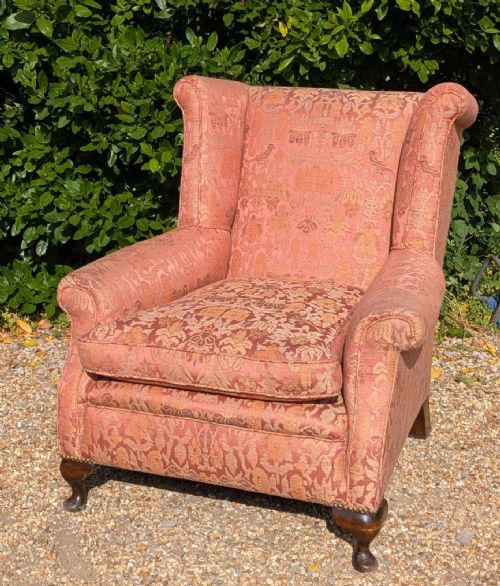
A patterned tapestry armchair combines supportive wooden framing with heavily worked textile upholstery, spanning from mid-nineteenth century designs up to the 1930s. Buyers searching for a patterned tapestry armchair will encounter various iterations featuring floral needlework, kilim covers, and traditional tapestry fabric across diverse historical revivals.
The selections range from robust Victorian walnut frames and Edwardian wingbacks to lighter early twentieth-century interpretations. Open armchairs, library chairs, and deep-seated fireside forms dominate the selection, each carrying distinct regional and stylistic traits.
Materials and construction
Frames rely on durable hardwoods such as walnut, rosewood, elm, and ebonised timber, often shaped with hand-carved details or bentwood techniques. Joinery methods draw upon traditional cabinet-making practices to ensure structural integrity beneath the upholstery.
Upholstery involves woven tapestry fabrics, needlework textiles, and specialised fillings including feather stuffing to create resilient seating. Brass hardware and turned wooden feet frequently accent the lower portions of the frames.
Patterned Tapestry Armchair Retail Price Guide 2026
Typical asking prices for patterned tapestry armchair among the pieces listed under this phrase on Sellingantiques today, from the lower quarter to the upper quarter. They describe what is for sale here now, not the wider market.
Expect forest claw and ball feet to occasionally make a grand, talon-gripping entrance beneath your upholstery.
Distinctions in quality
Superior examples demonstrate meticulous hand-carving on the wooden frame and precise joinery that remains rigid over generations. The density of the internal padding and the quality of the upholstery textile separate standard commercial output from finer workshop productions.
Proportion and stylistic coherence dictate the standing of a piece, where revival elements closely follow historical precedents without looking heavy or disproportionate. Maker attribution and the preservation of original or sympathetic textile coverings further elevate the stature of an armchair.
Heals·Howard & Sons·William Morris
The Patterned Tapestry Armchair Glossary
- Tapestry upholstery
- A heavy woven fabric or needlework textile applied to furniture for decorative surface pattern and texture. This material provides both visual depth and durable service.
- Wingback
- An armchair featuring protective side panels designed to shield the sitter from draughts. These high-backed forms emerged prominently in earlier centuries and saw revivals throughout the Victorian and Edwardian eras.
- Open armchair
- A seat design featuring un-upholstered wooden armrests that expose the grain and carving of the frame. Such chairs offer a lighter visual profile within a room.
- Bentwood
- A technique of steaming wood to bend it into curved structural shapes without joints. This method characterises later pieces from the twentieth century.
- Revival style
- A design movement that reinterprets historical periods such as Queen Anne or Jacobean aesthetics. These pieces adapt earlier forms for contemporary nineteenth and twentieth-century interiors.
Patterned Tapestry Armchair: Frequently Asked Questions
How do I identify a Victorian armchair?
Victorian armchairs often feature dark walnut or rosewood frames with carved details, button-backed upholstery, or spoonback profiles.
Looking closer at the joinery and the weight of the timber helps confirm the mid-nineteenth century origins of the piece.
Where should I place a library chair?
Library chairs suit studies, drawing rooms, or reading corners where supportive seating and substantial wooden frames make an impact.
Their robust construction handles regular daily use while adding period character to the space.
Are tapestry armchairs comfortable?
Tapestry armchairs frequently incorporate deep padding, feather fillings, or sprung seats designed for extended relaxation.
The supportive wooden frames work alongside soft textile upholstery to balance structure with comfort.