

Victorian Parlor Chairs
These Victorian parlor chairs bring 19th-century elegance to a room through carved timber frames and period upholstery.
Victorian Parlor Chairs
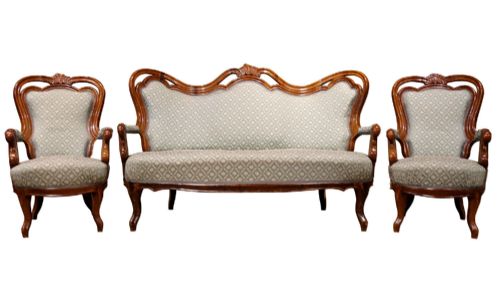
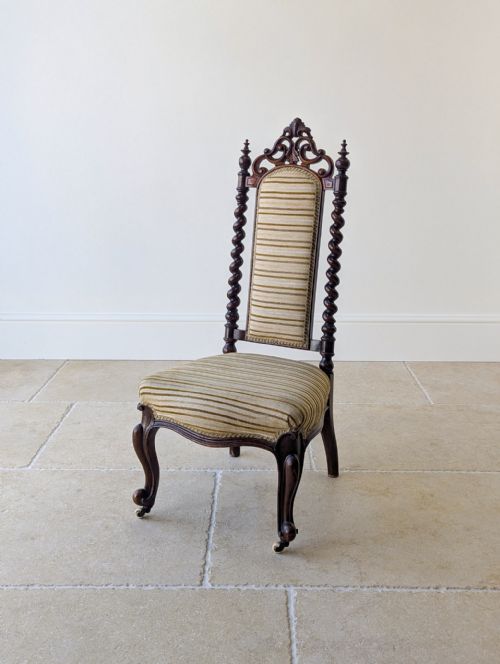
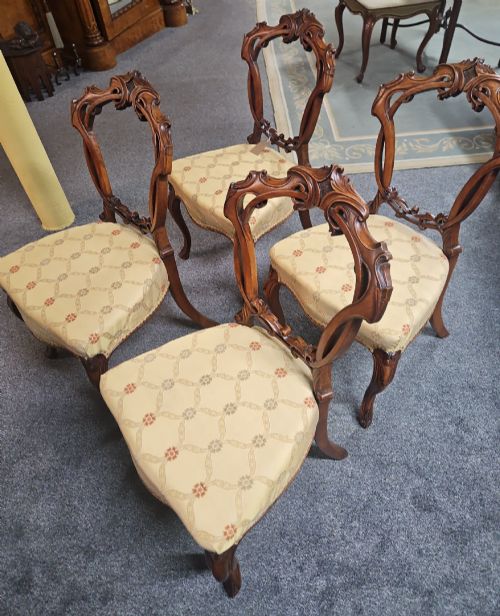
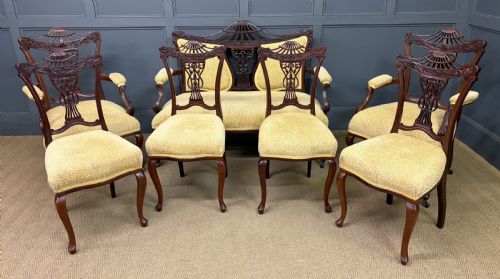
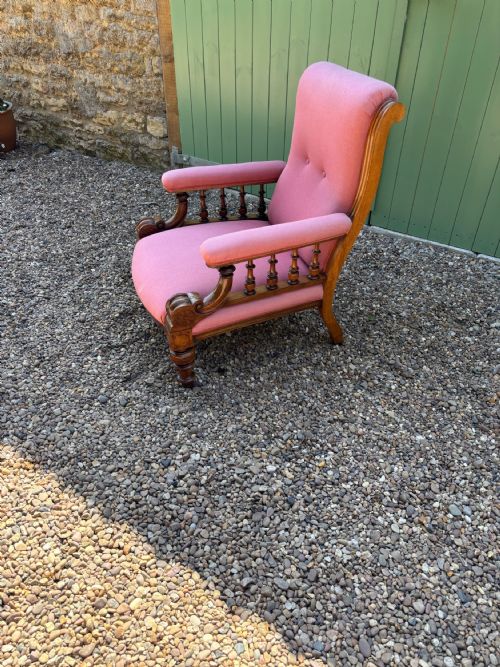
When you search for victorian parlor chairs, you encounter seating designed for formal reception rooms during the 19th century. The selection spans single side chairs, library chairs, nursing chairs, and complete salon suites.
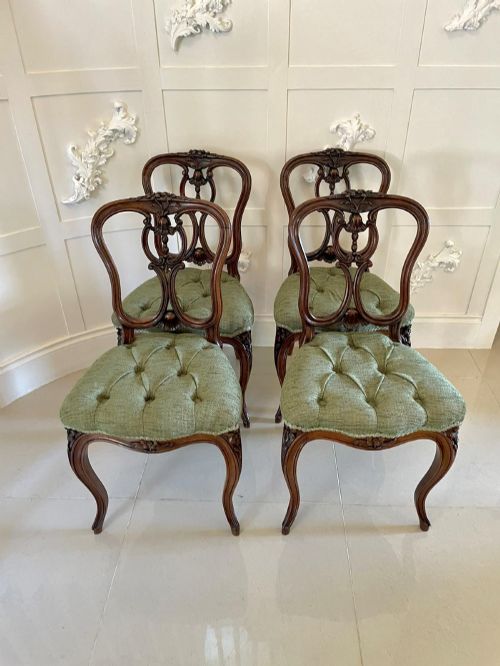
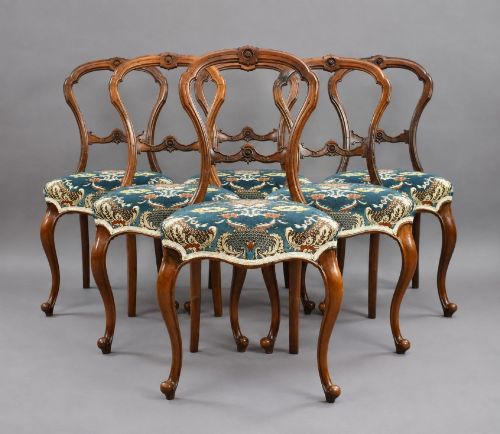
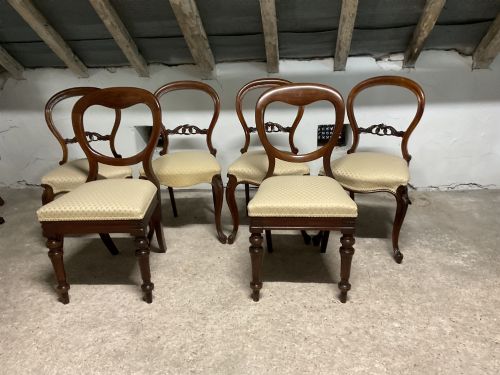
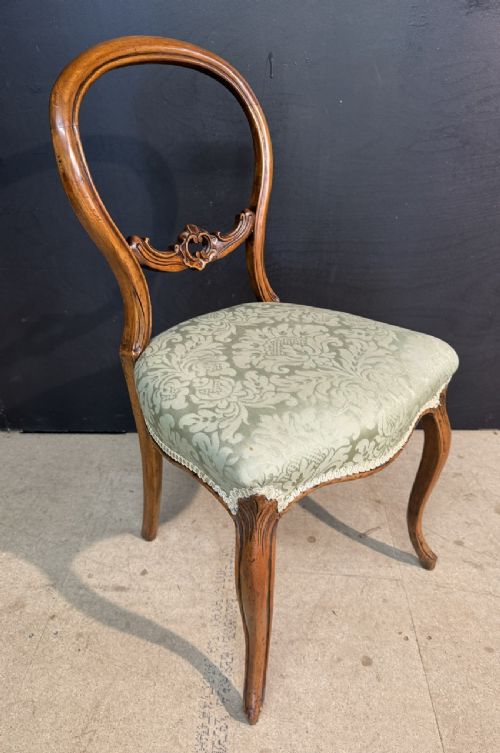
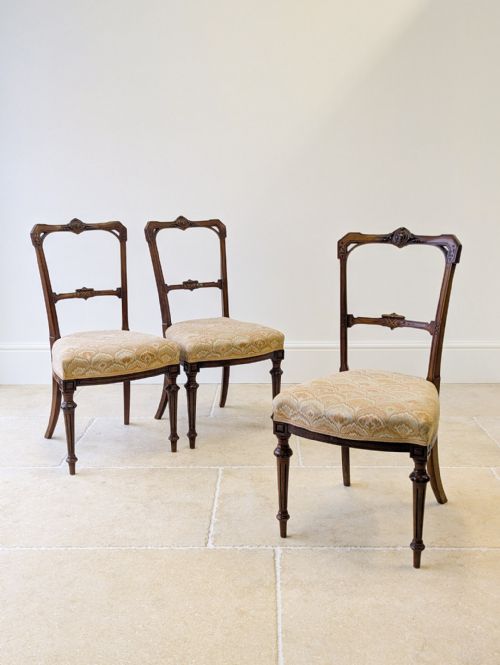
The most common forms on this page include walnut and mahogany balloon back dining chairs, alongside carved rosewood armchairs and upholstered parlor seats. Pieces date from the early Victorian decades through to the end of the century and into the Edwardian transition.
Materials and construction
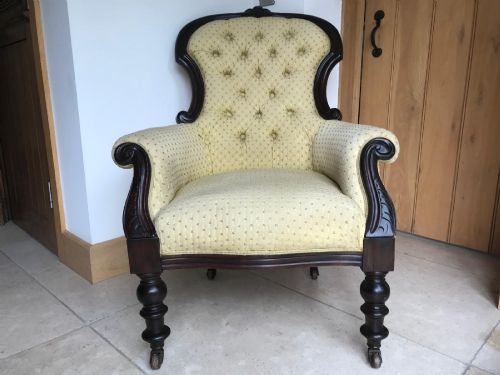
Frames are constructed predominantly from solid hardwoods including mahogany, walnut, and rosewood, occasionally featuring marquetry inlay or brass details. Carved showwood sections display intricate floral and scroll motifs executed by hand.
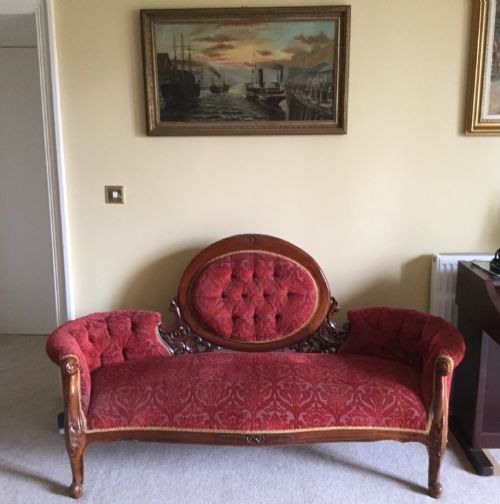
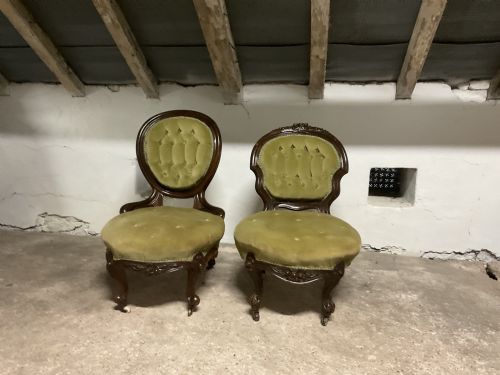
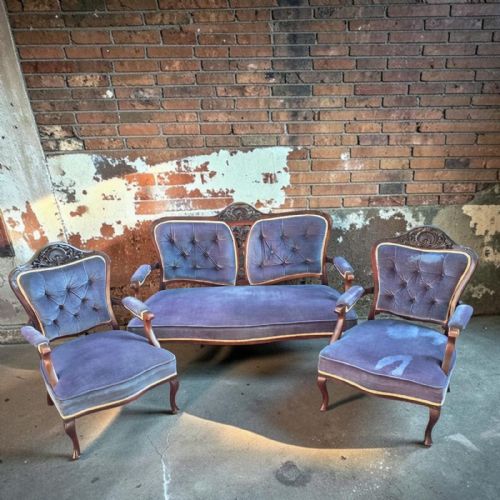
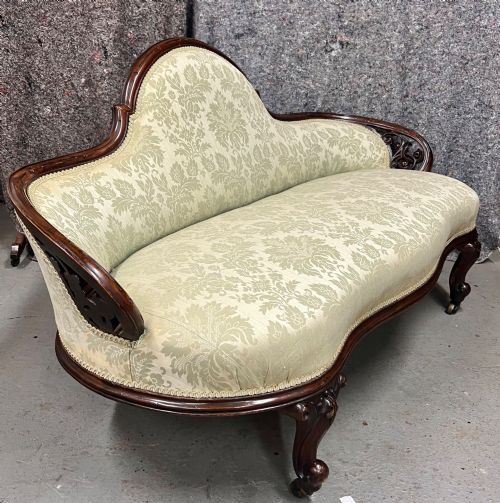
Upholstery incorporates textile fabrics, deep pile brocade, velvet, and needlepoint seats fitted over sprung settee bases. Deep buttoned upholstery appears frequently on larger parlor suites and armchairs.
Footstools occasionally sneak into large salon suites, giving tired Victorian feet a matching place to rest.
Differentiating quality
The degree of hand carving and the crispness of detail on the wooden frames separate standard seating from exhibition quality pieces. Timber selection also matters, with richly grained rosewood and figured walnut marking out the finer examples.
The integrity of the original frame construction and the quality of re-upholstery dictate the durability of the seating. Matching sets demonstrate greater consistency in design than assembled groups of chairs.
The Victorian Parlor Chairs Glossary
- Balloon back
- A chair back shaped in an open oval resembling a balloon, characteristic of mid-19th century seating. This design provides ergonomic support while maintaining a light visual profile.
- Cabriole leg
- A furniture leg that curves outward at the knee and tapers inward to a foot, typical of revival styles. The silhouette draws inspiration from animal limbs.
- Showwood
- The exposed polished wooden framework of an upholstered chair or sofa. It frames the fabric sections and displays the carved decoration.
- Salon suite
- A matching set of seating furniture, often comprising a sofa, armchairs, and side chairs. These suites furnished formal entertaining rooms.
- Marquetry
- Decorative inlay work using various woods fitted into a veneer to form geometric or floral patterns. It enhances the visual interest of flat wooden surfaces.
Victorian Parlor Chairs: Frequently Asked Questions
What is a parlor chair?
A parlor chair is a decorative seat designed for the formal reception rooms of 19th-century homes. These chairs prioritized aesthetic appeal for guests over everyday utility.
They appear in forms ranging from single side chairs to matching salon suites upholstered in velvet, brocade, or needlepoint.
How do I date a Victorian chair?
Dating relies on stylistic shifts from early Victorian heavy mahogany forms to Rococo Revival walnut and later 19th-century Neoclassical designs. Timber choices and carved motifs shift across the decades.
Makers adopted different revival styles between 1850 and 1900, moving from ornate rosewood to lighter Edwardian influences by the century's end.
Are these chairs comfortable for daily use?
Many parlor chairs feature sprung bases and padded upholstery intended for seated entertaining. Nursing chairs and library chairs offer lower seating positions and supportive backs.
Modern comfort often depends on whether the piece has received professional re-upholstery with traditional springs and webbing.
What woods were used for Victorian seating?
Cabinet makers predominantly utilised mahogany, walnut, and rosewood for high-quality Victorian chairs. These dense timbers supported intricate hand carving on the exposed showwood frames.
Some regional or Alpine pieces incorporate alternative woods like oak, paired with specialised folk art carving.