


Button Back Salon Chairs
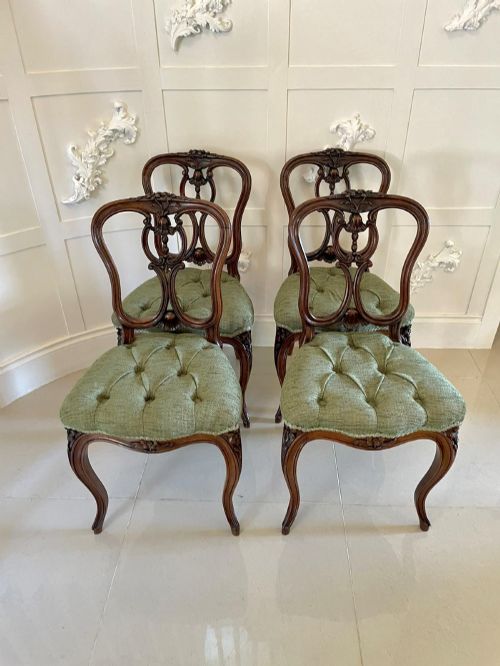
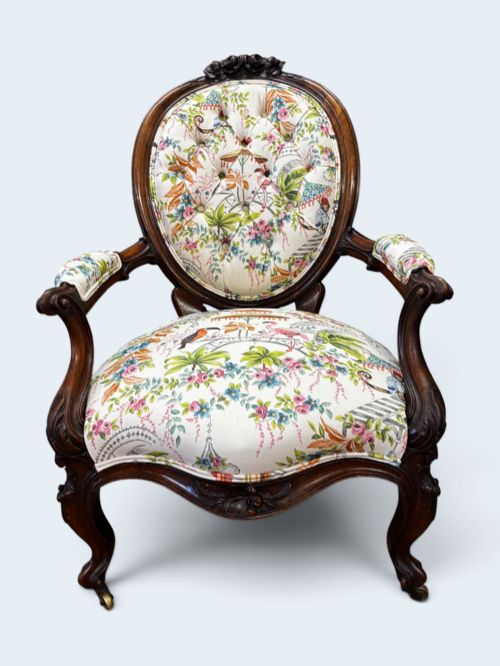
Button back salon chairs are nineteenth-century seats defined by deep buttoned upholstery, appearing here in walnut, mahogany, and rosewood.
Button Back Salon Chairs
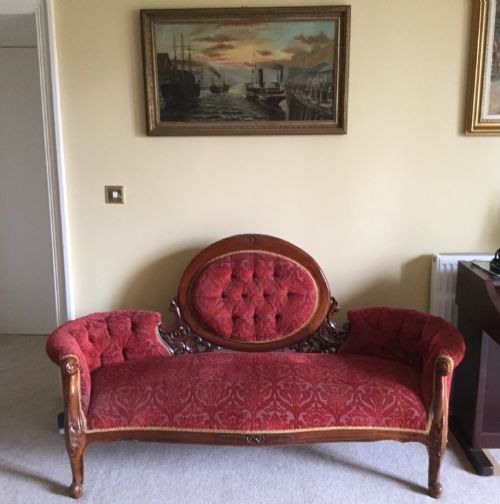
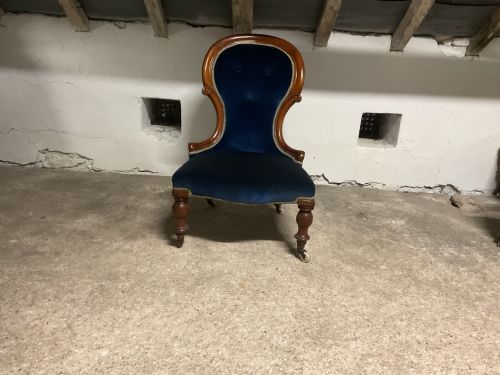
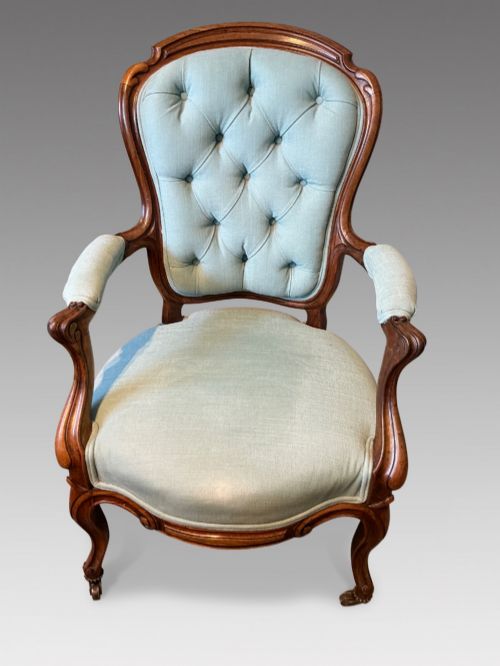
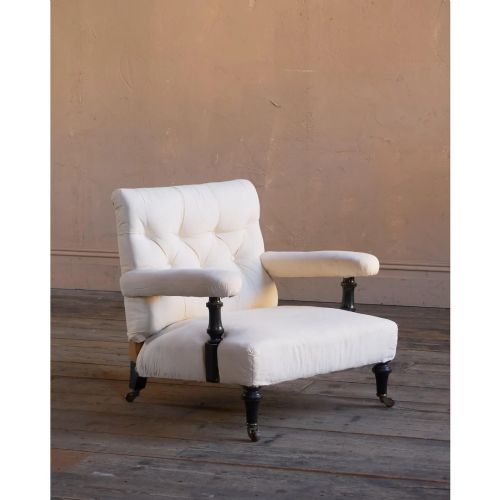
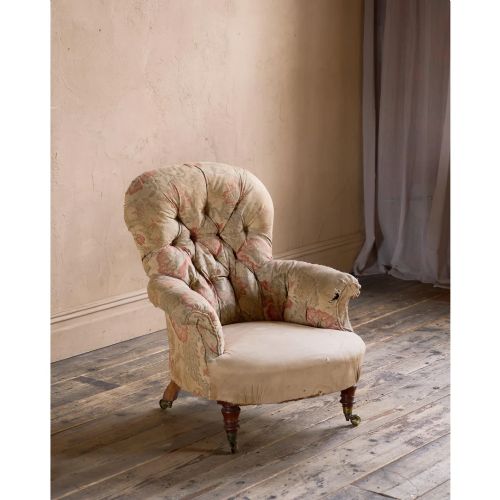
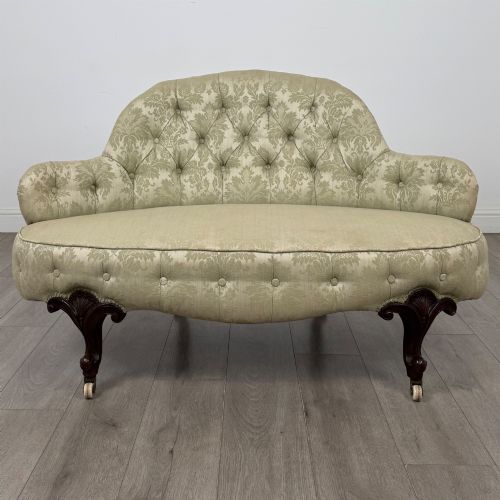
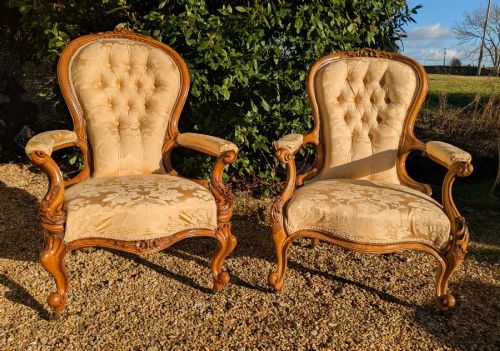
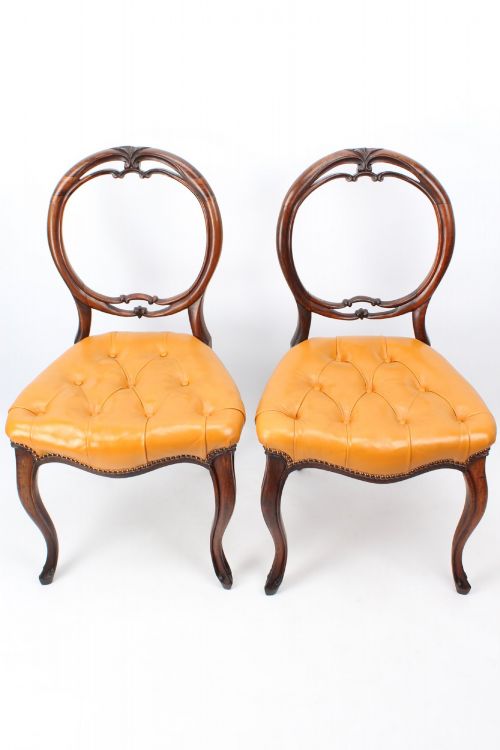
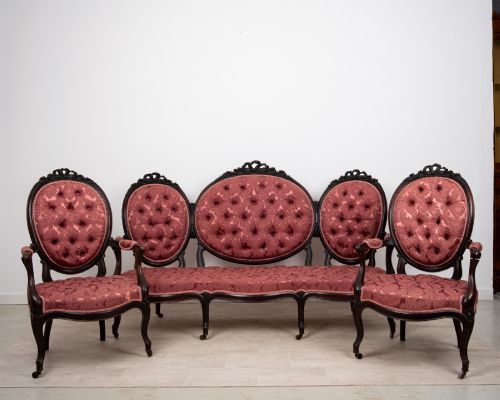
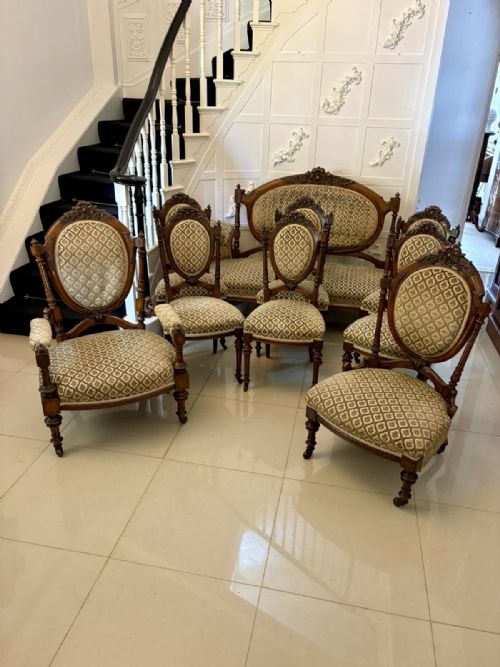
Button back salon chairs are formal seating pieces originating primarily in the Victorian era and the nineteenth century. When searching for button back salon chairs, buyers encounter open armchairs, nursing chairs, balloon back chairs, and complete salon suites.
What varies in quality
Carved wooden details separate standard production frames from exhibition pieces with intricate floral and scroll work. Walnut and rosewood frames often display finer carving than simpler mahogany versions.
The depth and uniformity of the buttoning, alongside the choice of covering material such as leather, velvet, or deep pile brocade, dictate the finish of the upholstery.
Listings feature walnut, mahogany, and rosewood frames alongside brass and iron structural elements.
Mellier & Co·Holland & Sons·C. Hindley & Sons·Blyth & Sons
The Button Back Salon Chairs Glossary
- Spoonback
- A chair back shaped like the bowl of a spoon, curving inward to fit the sitter's spine. This form is common in Victorian walnut armchairs.
- Cabriole leg
- A furniture leg that curves outward and then tapers inward with a pad or scroll foot. This shape appears frequently on mid-nineteenth-century chairs.
- Salon suite
- A matched set of seating furniture, including armchairs, side chairs, and settees, designed for formal reception rooms. These suites often share carved walnut or mahogany frames.
- Barley twist
- A turning technique resembling a twisted rope, used to shape wooden chair legs and supports. This detail frequently appears on Victorian upholstered armchairs.
Button Back Salon Chairs: Frequently Asked Questions
How do I identify a Victorian salon chair?
Victorian salon chairs appear in walnut, mahogany, or rosewood, often featuring buttoned upholstery and curved wooden frames.
Look for style indicators such as balloon backs, spoon backs, and cabriole legs dating from the mid-nineteenth century onward.
What is a button back chair used for?
Button back salon chairs served as formal seating in nineteenth-century drawing rooms and reception spaces. Lower nursing chairs were designed for domestic comfort near firesides.
Larger armchairs and settees accommodated guests during social gatherings in parlours.
How do I care for antique leather upholstery?
Antique leather requires gentle cleaning to maintain its flexibility and colour without damaging the original finish. Avoid harsh modern chemical cleaners.
Apply specialist leather balms sparingly to preserve the texture of deep buttoned surfaces.
Are these chairs suitable for daily seating?
Most nineteenth-century salon chairs are structurally robust, though older frames and traditional sprung bases benefit from careful daily use.
Consider the seat height and arm placement to ensure the chair suits your modern living space.