





Late Victorian Seating Set
A late victorian seating set brings together the robust craftsmanship and varied revival styles of the late nineteenth century to anchor a room.
Late Victorian Seating Set
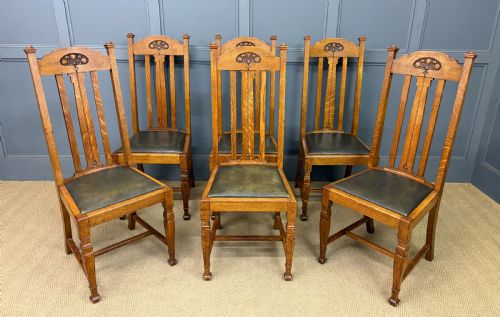
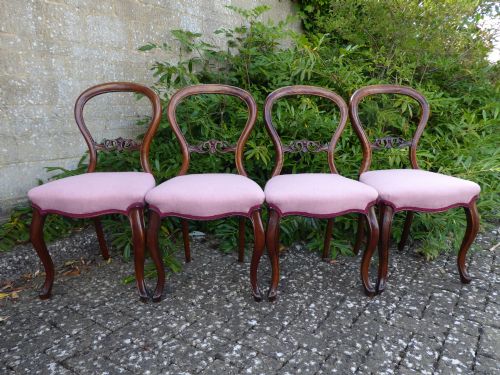
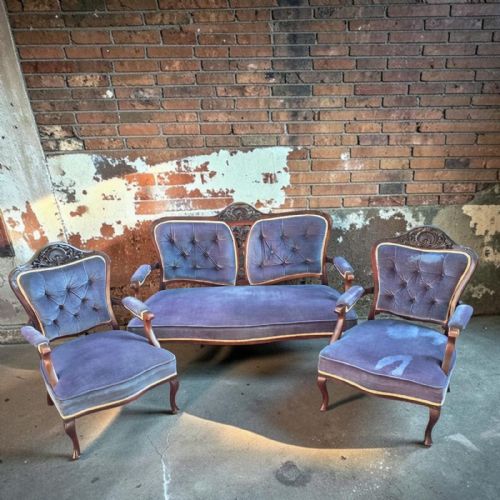
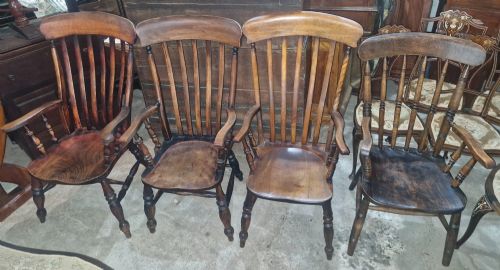
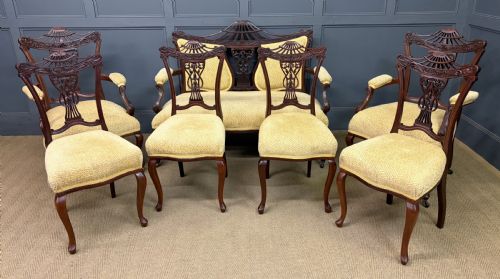
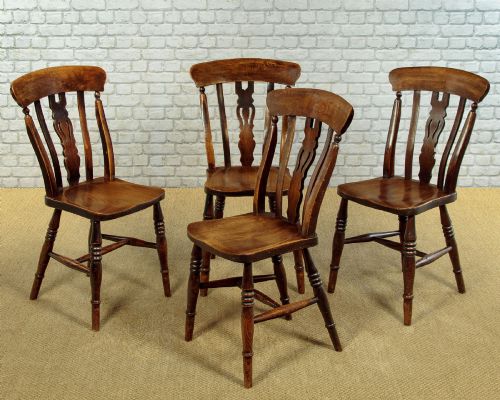
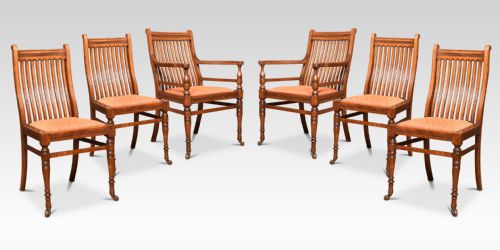
A late victorian seating set comprises coordinated chairs or complete suites designed for dining rooms, salons, libraries, and halls. These groupings range from modest farmhouse Windsor kitchen armchairs to expansive sets of twelve dining chairs and elaborate three-piece salon suites.
The objects span the Victorian era into the Edwardian transition, encompassing specific movements like the Aesthetic style and revival idioms such as Chippendale. Buyers encounter matching dining sets in mahogany, walnut, and oak alongside specialised salon and library seating.
Most examples originate from the closing decades of the nineteenth century, reflecting the robust manufacturing capabilities and stylistic experimentation of the period. Sets vary from straightforward utilitarian kitchen and hall seating to highly decorative parlour suites.
How they were made
Makers utilised dense hardwoods such as mahogany, walnut, and oak for formal dining and library chairs, while employing elm and beech for vernacular farmhouse kitchen seating. Frames were joined using traditional mortise and tenon construction to ensure structural longevity.
Upholstered salon suites and armchairs frequently incorporated plush velvet or leather coverings, sometimes accented with brass detailing. Woodwork often featured period-specific carved motifs, ranging from Aesthetic movement linearity to Chippendale revival fretwork.
Late Victorian Seating Set Retail Price Guide 2026
Typical asking prices for late victorian seating set among the pieces listed under this phrase on Sellingantiques today, from the lower quarter to the upper quarter. They describe what is for sale here now, not the wider market.
Some dining sets include distinct gentleman's and lady's chairs, acknowledging that nineteenth-century comfort came in tailored widths.
What varies in quality
The grade of timber selection and the precision of the joinery set standard commercial production apart from bespoke or branded workshop output. Heavier gauge hardwoods and sophisticated carving distinguish finer dining and salon sets from plain utility seating.
The integrity of the original frame construction and the fidelity of revival styling influence the standing of any given suite. Sets retaining their original upholstery materials and coordinated frames hold greater documentary interest for collectors.
Blyth and Sons·James Shoolbread
The Late Victorian Seating Set Glossary
- Aesthetic Movement
- A late nineteenth-century design style emphasising visual beauty over narrative subject matter, often featuring ebonised wood and incised gilding. This idiom influenced both dining chairs and cabinet furniture.
- Chippendale Revival
- A late Victorian reinterpretation of mid-eighteenth-century furniture designs associated with Thomas Chippendale, typically characterised by carved splats and cabriole legs. It appears frequently in mahogany dining sets.
- Salon Suite
- A matching set of upholstered parlour seating, usually comprising a settee and matching armchairs or side chairs designed for receiving guests. These groupings highlight the decorative upholstery arts of the period.
- Windsor Armchair
- A wooden chair featuring a solid sculpted seat into which the legs and back spindles are wedged directly. Vernacular examples often utilise elm and beech.
Late Victorian Seating Set: Frequently Asked Questions
How do I care for antique upholstery?
Protect delicate textiles like velvet from direct sunlight to prevent fading and degradation of the pile over time. Vacuum gently with a soft brush attachment to remove dust without stressing fragile historic fibres.
Keep wooden frames nourished with appropriate furniture wax rather than modern silicone sprays. Maintain stable indoor humidity to prevent the underlying hardwood frames and joints from drying out and loosening.
Can I use these chairs daily?
Most nineteenth-century dining and library chairs are structurally robust enough for regular modern use. Hardwoods like mahogany and oak provide enduring strength for daily seating requirements.
Ensure that joints remain tight and stable before heavy use, consulting a professional conservator if movement is detected. Avoid placing delicate salon seating under excessive strain.
How do I date a seating set?
Examine the timber species, construction techniques, and stylistic markers such as Aesthetic movement incising or Chippendale revival motifs. Late nineteenth-century pieces often combine machine-assisted precision with hand-finishing details.
Look for maker stamps, retailer labels, or registration marks stamped onto the underside of the wooden frames. Comparing the suite's overall form to documented catalogue designs helps narrow the period of manufacture.