

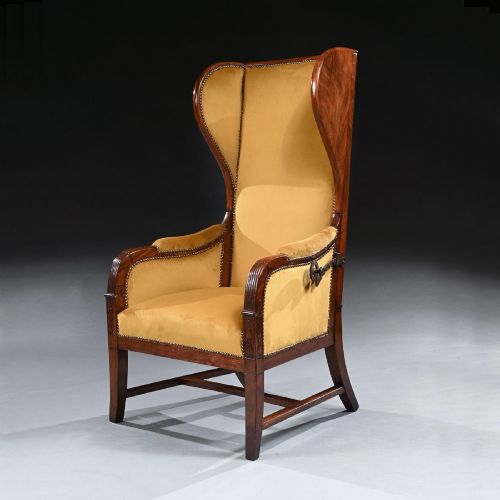
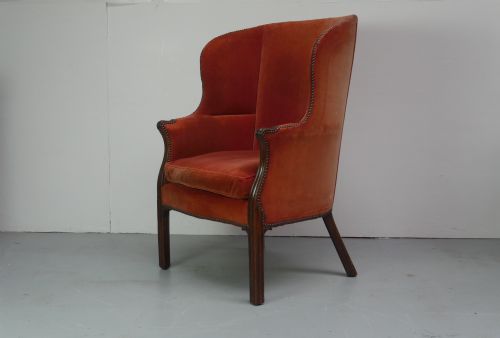


Brass Studded Upholstered Chairs
Brass studded upholstered chairs bring substance and history to a room, offering enduring comfort through traditional frames and heavy metal detailing.
Brass Studded Upholstered Chairs
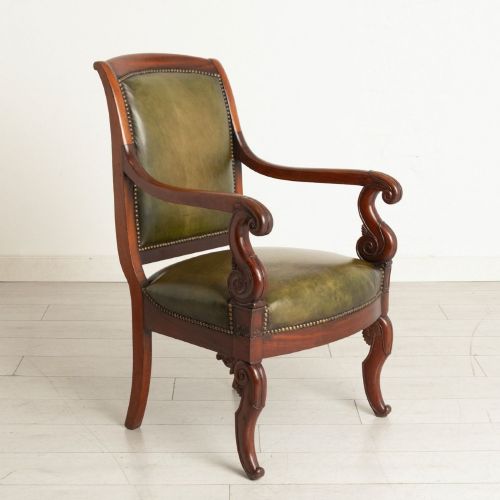
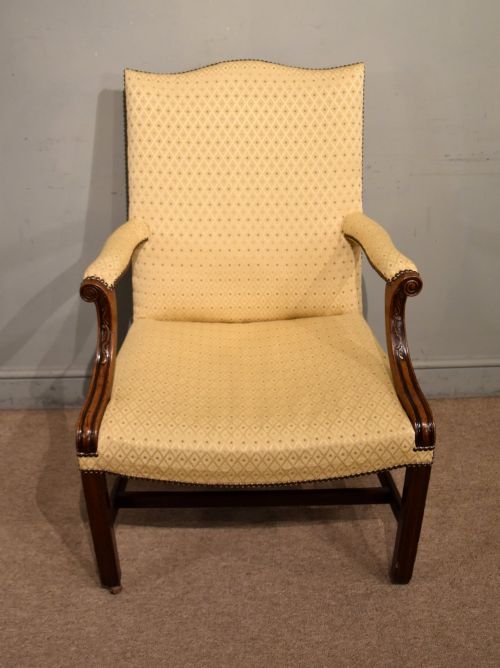
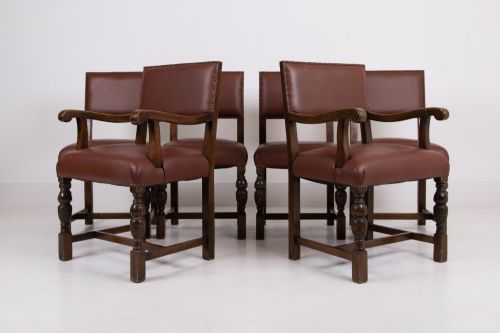
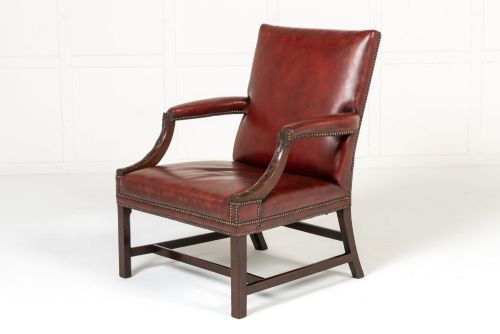
Brass studded upholstered chairs encompass seating built across the eighteenth, nineteenth, and early twentieth centuries, featuring distinct metal tacking along the fabric or leather borders. These pieces appear in forms ranging from compact prayer chairs and side chairs to generous library armchairs and sets of dining chairs.
The selection on this page relies heavily on nineteenth-century examples alongside Georgian, Edwardian, and nineteen-thirties pieces. Frames span simple oak and hardwood dining versions to substantial mahogany library chairs upholstered in leather or velvet.
Materials and construction
Makers built these frames using dense timbers such as mahogany, oak, walnut, and assorted hardwoods, often shaping them with carved decoration or turning the feet. Structural support relied on sturdy joinery appropriate to the period, from Georgian mahogany to Edwardian oak.
Upholstery materials include leather, velvet, fabric, needlepoint panels, and silk, secured to the frame using individual brass studs. These metal tacks functioned both as structural fasteners to hold the textiles firmly in place and as a decorative border.
Listings feature woods including oak, mahogany, walnut, and hardwood, alongside coverings of leather, velvet, fabric, and silk.
Assessing quality
Quality rests in the timber selection and the precision of the frame carving, where deeply figured mahogany or substantial oak indicates higher ambition. Frames with tight joints and well-proportioned silhouettes separate standard utility seating from finer library and Gainsborough armchairs.
The application of the brass studding and the choice of covering material also define the standard of the piece. Even spacing in the metal tacks and the use of quality leather or silk point to skilled workshop execution.
Howard and Co London
The Brass Studded Upholstered Chairs Glossary
- Gainsborough armchair
- A wide, upholstered armchair with open padded arms, short legs, and a high back, popular from the mid-eighteenth century onward. These chairs were designed specifically for writing desks and reading.
- Library chair
- A substantial upholstered armchair designed for comfort during long hours of reading or working. They frequently feature leather upholstery and robust mahogany or oak frames.
- Bergere
- A French-style enclosed armchair with an upholstered back and arms built over a wooden frame. They often incorporate exposed polished wood and detailed carving.
- Prayer chair
- A low, compact chair traditionally used for private devotion, featuring a low seat and often an upholstered kneeling board or padded backrest. They are frequently Victorian in origin.
- Carolean style
- A revival design echoing the decorative carved woodwork and high backs of the late seventeenth century. Pieces in this style often use oak or walnut.
Brass Studded Upholstered Chairs: Frequently Asked Questions
What is a Gainsborough chair?
A Gainsborough chair is a wide, open-armed armchair with a padded back and seat, standing on short legs. They were originally made in the eighteenth century for libraries and writing desks.
These pieces combine functional seating with decorative timber frames and brass studded leather or fabric upholstery.
Where were these chairs used?
These chairs served multiple domestic functions across different rooms, from dining spaces and studies to libraries and drawing rooms. Library armchairs furnished quiet reading spaces, while sets of dining chairs gathered around large tables.
Desk chairs and prayer chairs fulfilled specific daily tasks in private homes and offices.
Are brass studs original?
Brass studs served both a practical purpose in securing upholstery textiles to the wooden frame and a decorative role along the edges. Original studs show age-appropriate wear and patination matching the timber frame.
Replacement studs often appear brighter and cleaner than the surrounding antique materials.
How do I care for leather upholstery?
Leather upholstery benefits from regular dusting and occasional treatment with appropriate conditioners to prevent drying. Keeping the leather away from direct sunlight and heat sources preserves the material.
Gentle cleaning maintains the natural patina developed over the nineteenth and twentieth centuries.