
Brown Walnut Armchair
A brown walnut armchair brings substantial timber frames and deep seating into a room, spanning periods from seventeenth-century Baroque to nineteen-thirties modernism.
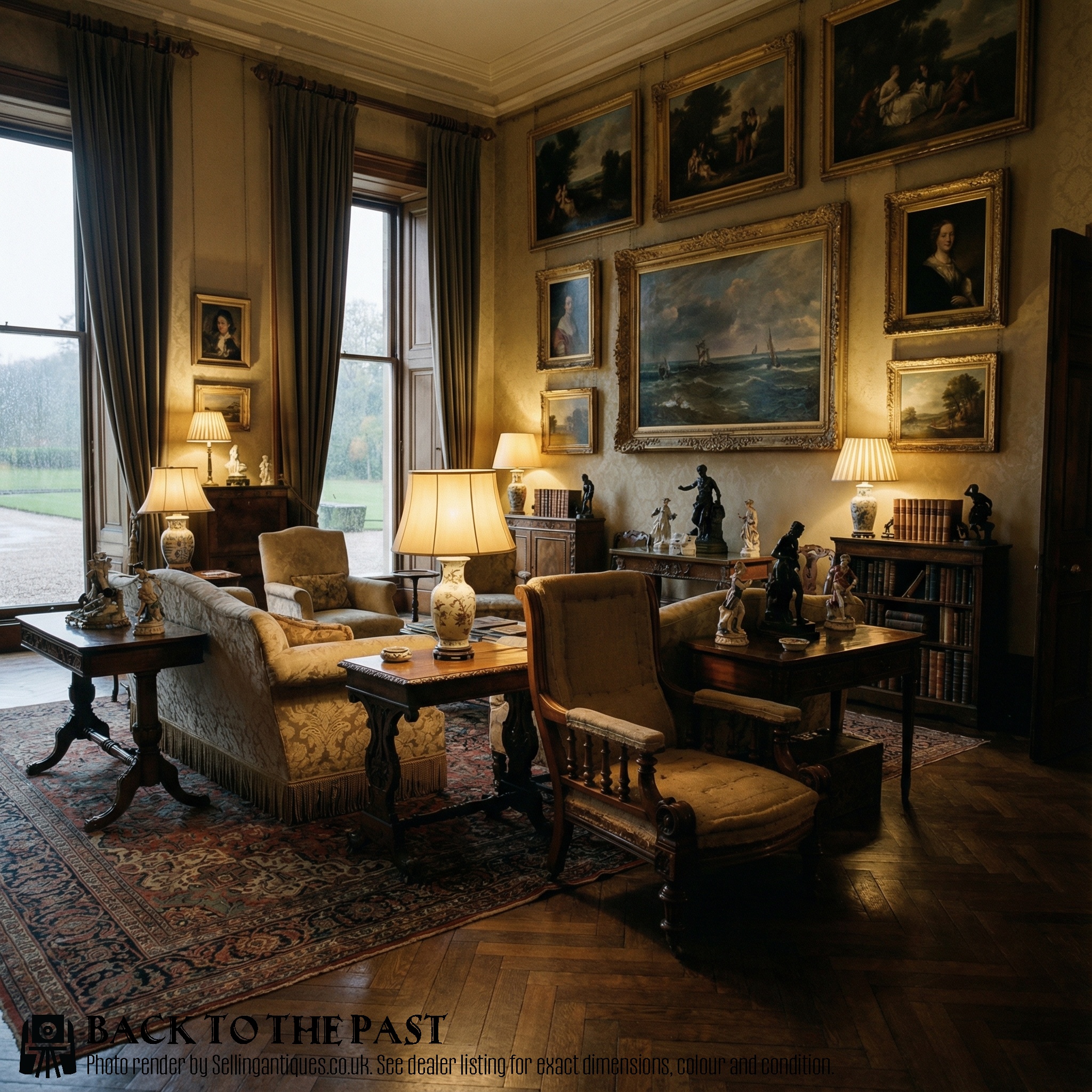
Brown Walnut Armchair
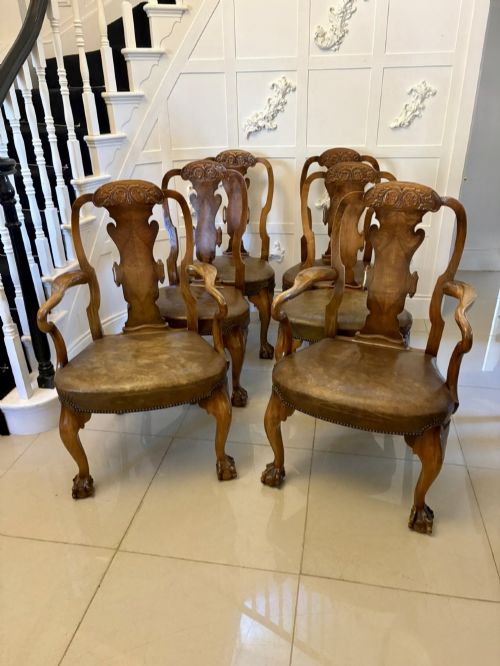
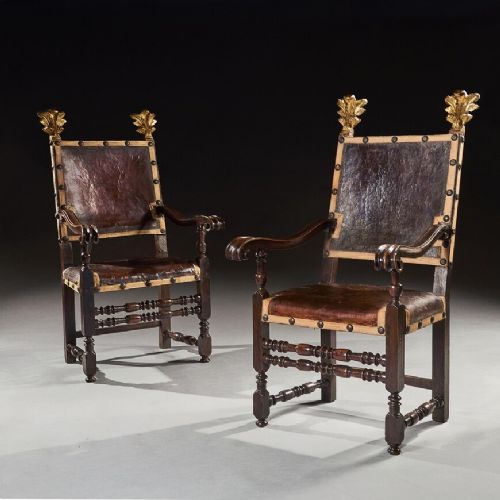
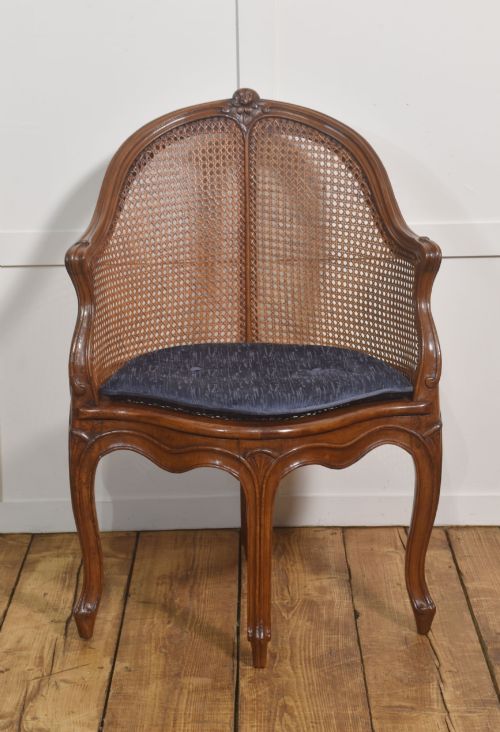
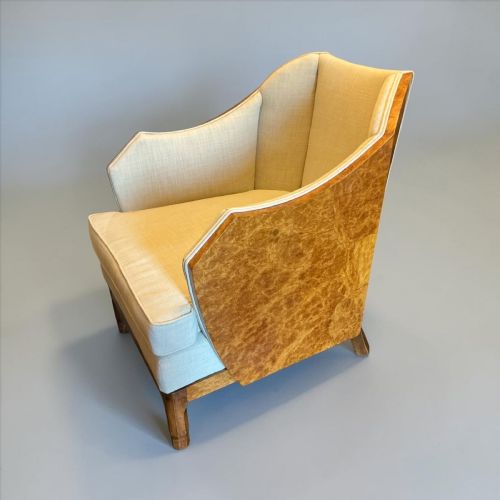
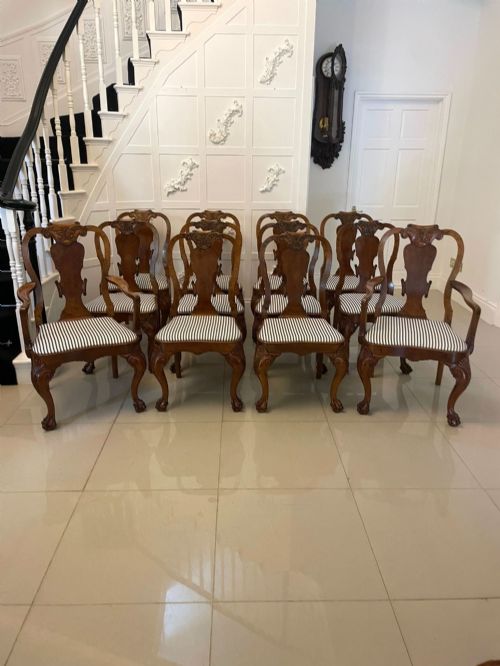
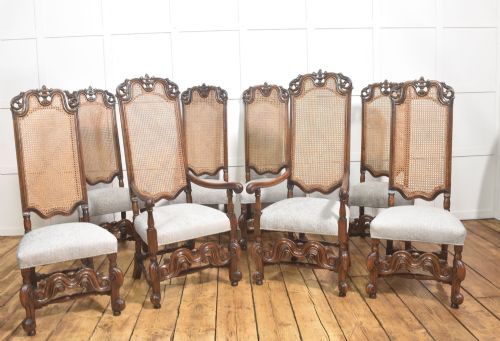
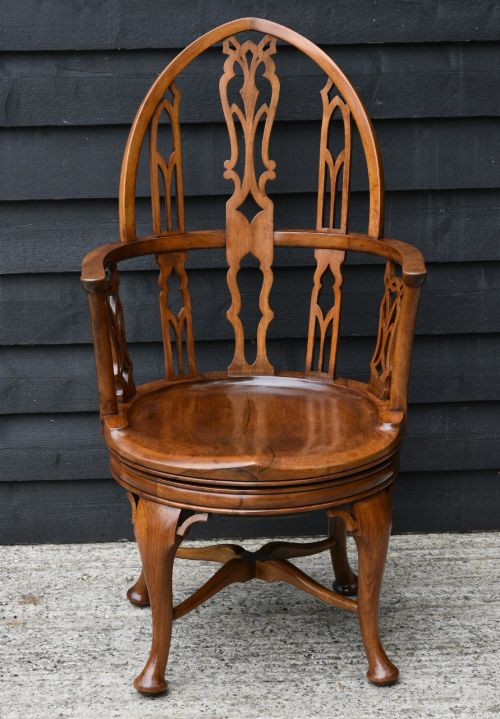
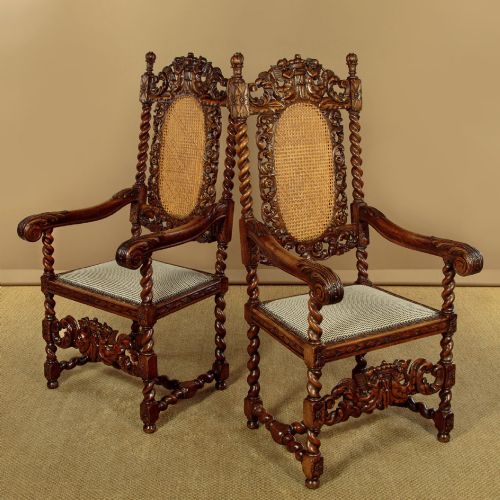
A brown walnut armchair encompasses seating forms built from hardwood frames, ranging from early dining chairs and high-back cane seats to library desk chairs and club styles. Buyers encounter pieces spanning the seventeenth century through to nineteen-thirty, with Victorian and twentieth-century revivals appearing frequently alongside earlier originals.
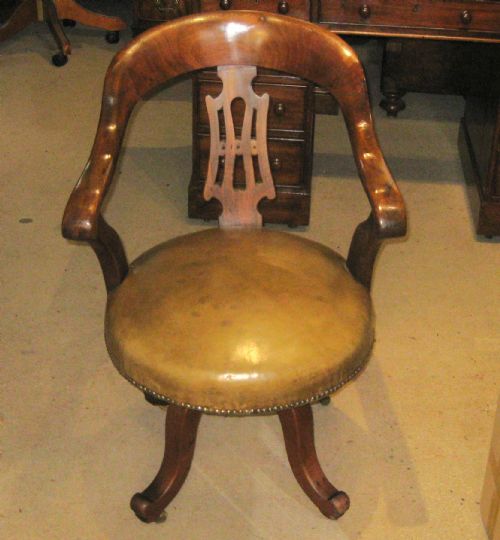
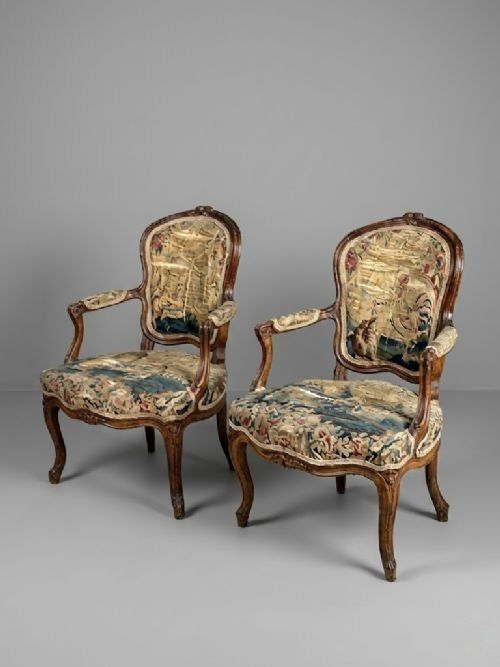
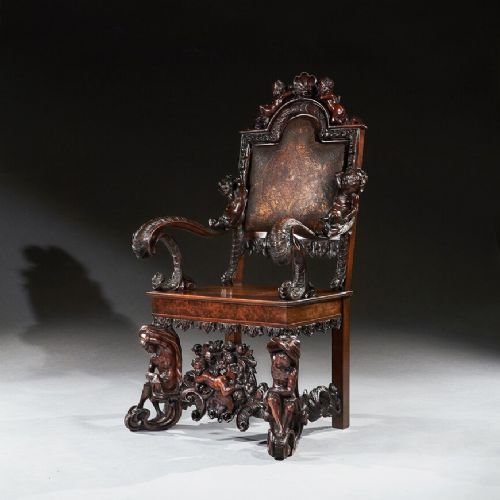
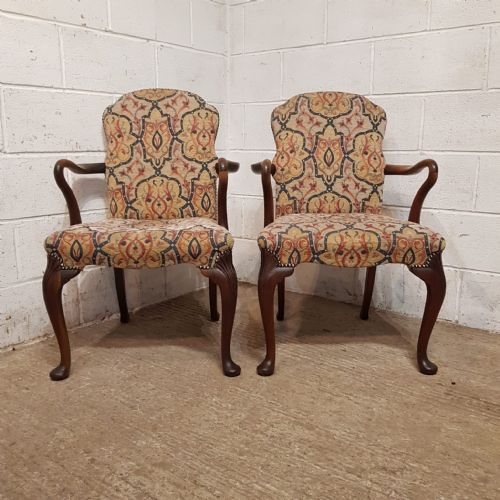
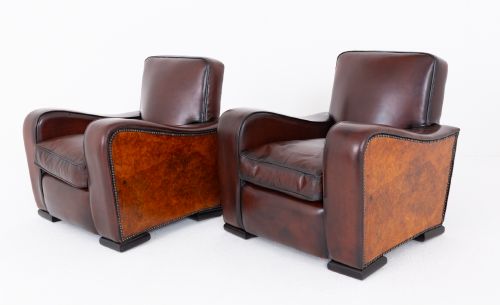
The selection includes desk chairs with revolving mechanisms, upholstered library chairs, and pairs covered in leather, fabric, or tapestry. Regional variations stretch from English Queen Anne styles to French Louis XV models and Italian Baroque carvings.
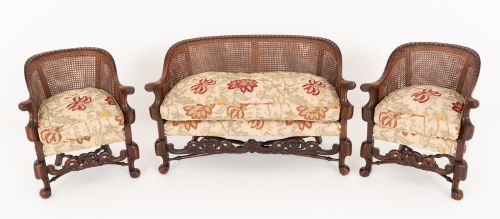
Formal dining sets and solitary elbow chairs dominate the assortment, often retaining original cane panels, brass mounts, or parcel-gilding. Each piece reflects the dominant woodworking traditions of its specific period, from carved cabriole legs to geometric frames.
Materials and construction
Makers utilised solid walnut and burr walnut veneers over secondary timbers, shaping heavy wooden frames through joinery and carving. Timber surfaces were polished or waxed to expose the natural grain variations of the brown wood.
Upholstery techniques combined horsehair stuffing, coil springs in later eras, and tensioned webbing beneath covers of leather, velvet, or embroidered tapestry. Cane panels were hand-woven into seat frames and backrests.
Structural reinforcement often included brass hardware, iron swivel mechanisms in desk chairs, and parcel-gilding applied directly to carved wooden scrollwork.
Brown Walnut Armchair Retail Price Guide 2026
Typical asking prices for brown walnut armchair among the pieces listed under this phrase on Sellingantiques today, from the lower quarter to the upper quarter. They describe what is for sale here now, not the wider market.
The listings on this site feature walnut armchairs spanning the seventeenth to the twentieth century, incorporating materials like brass, cane, and leather.
Factors of distinction
The precision of the woodcarving dictates much of the distinction, separating deep, crisp relief work on crest rails and cabriole legs from routine workshop production. Exhibition pieces show meticulous hand-tooling on every visible surface.
The integrity of the frame construction and the preservation of original materials govern overall excellence. Chairs retaining their initial leather, tapestry, or cane work alongside stable timber joints hold greater architectural weight than heavily restored examples.
Andrea Brustolon·Harry and Lou Epstein
The Brown Walnut Armchair Glossary
- Baroque
- An ornate design style popular in seventeenth-century Europe, characterised by dynamic curves, carved foliage, and gilded highlights. This aesthetic appears on Italian and French seating frames.
- Cane
- Woven rattan stripped from palm stems, utilised for light and flexible chair seats and backs. Eighteenth-century and revival pieces employ this technique extensively.
- Cabriole leg
- A furniture leg that bends outward in a convex curve and tapers inward to a foot, mirroring animal limbs. This form is central to Queen Anne and Louis XV styles.
- Parquetry
- Geometric wood inlay patterns assembled from small veneer pieces to form decorative surfaces. Levantine makers applied this technique to panelled frames.
- Bergere
- An enclosed upholstered armchair with wooden armrests and exposed frame members, originating in France. These chairs often feature loose seat cushions.
Brown Walnut Armchair: Frequently Asked Questions
How do I identify seventeenth-century chairs?
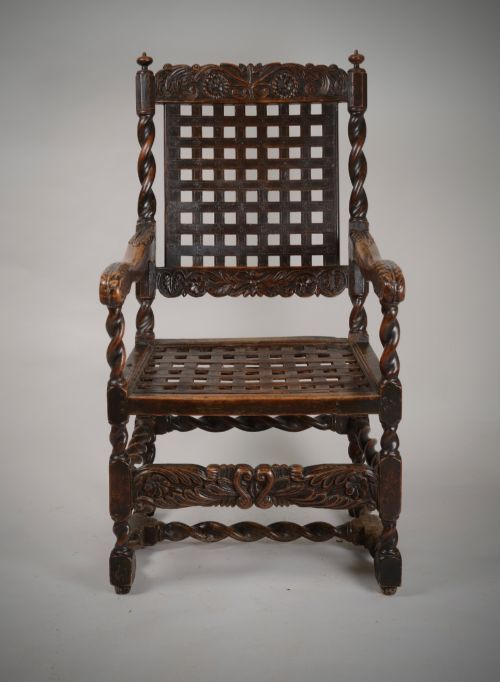
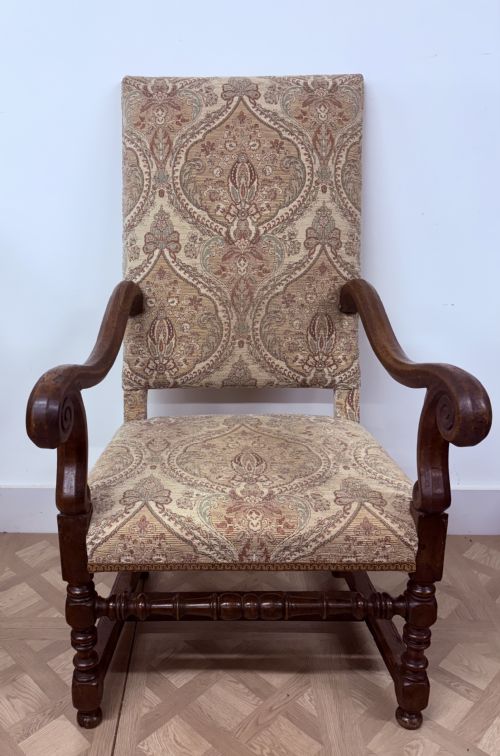
Seventeenth-century models display rigid geometric frames, heavy turnings, and high backs often utilising cane or embossed leather. Their joinery relies on pegged mortise and tenon construction.
Surface wear on the walnut timber should look natural and deep, matching centuries of handling rather than artificial distress.
Are revolving desk chairs sturdy?
Victorian and later desk chairs incorporate iron or wooden swivel mechanisms beneath walnut seats. These assemblies are engineered for heavy daily use.
Buyers should test the central spindle for lateral play while ensuring the revolving action moves without grinding.
What is the difference between revival and original periods?
Revival pieces, such as Queen Anne or Baroque copies from the late nineteenth century, replicate earlier stylistic motifs using contemporary Victorian workshop methods. Original antiques carry the tool marks, timber shrinkage, and wear specific to their actual century of manufacture.
Examining the underside timber and fastener types helps clarify the true age of the frame.
How should I maintain leather upholstery?
Leather covers require regular conditioning with appropriate balms to prevent the natural hide from drying and cracking over time. Keeping the chairs away from direct sunlight and heat sources preserves both the leather and the underlying walnut frame.
Avoid heavy liquid cleaners when removing surface dust from antique hides.