
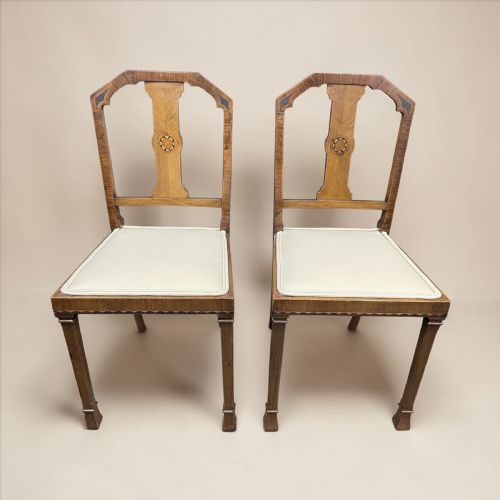
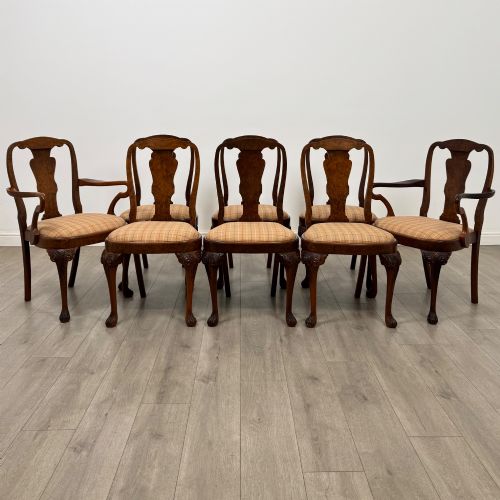

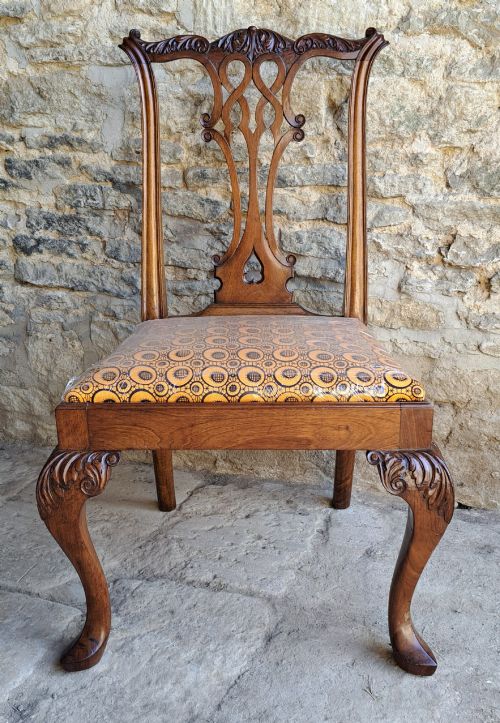

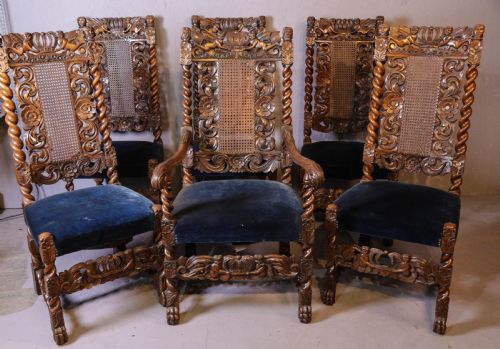
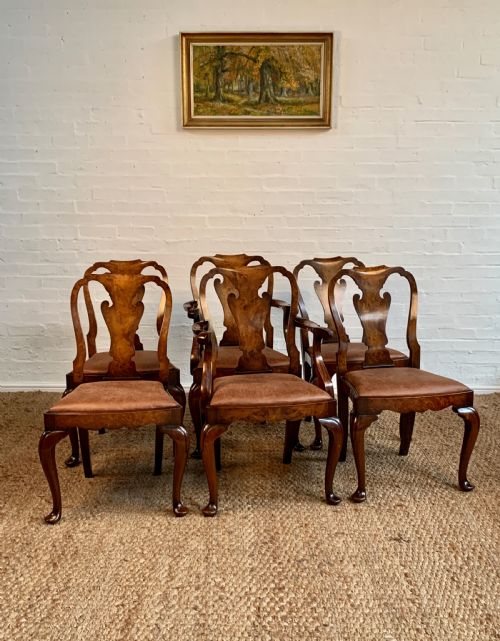

Vintage Walnut Dining Chairs
Vintage walnut dining chairs bring rich grain and deep colour to the table, and these pieces offer solid timber build and period character.
What vintage walnut dining chairs are
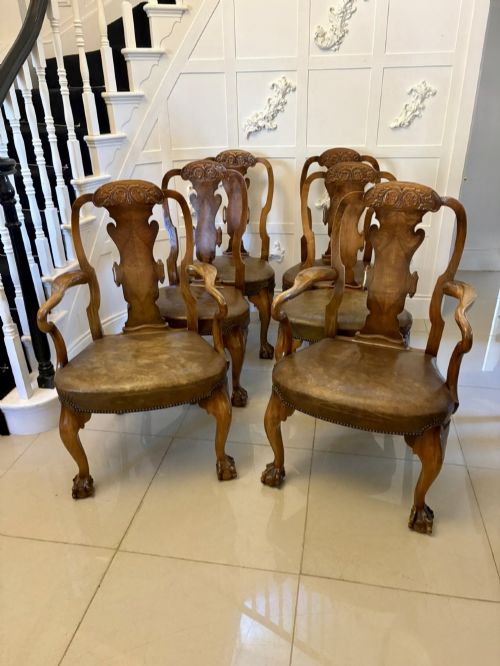
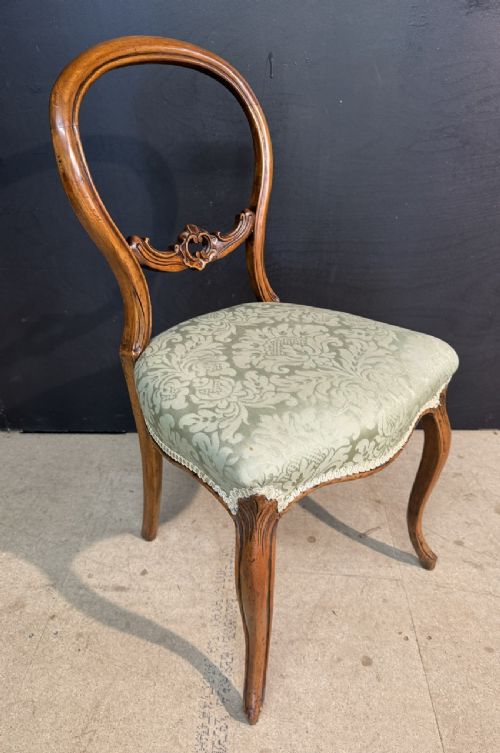
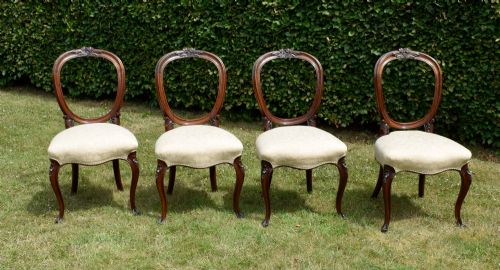
Vintage walnut dining chairs encompass seating built from rich timber across multiple centuries, ranging from formal eighteenth-century designs to twentieth-century sets. Buyers seeking vintage walnut dining chairs often encounter Edwardian and Victorian iterations, alongside nineteenth-century carved suites and early twentieth-century interpretations.
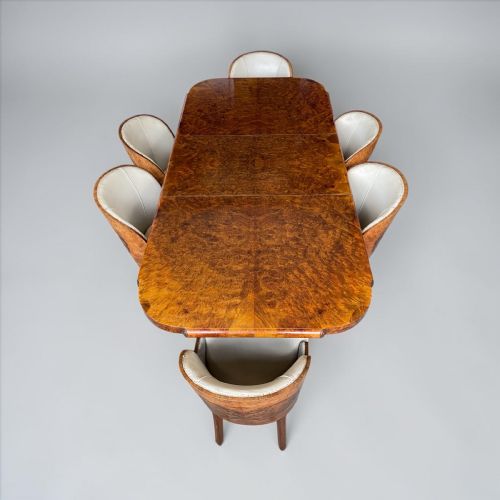
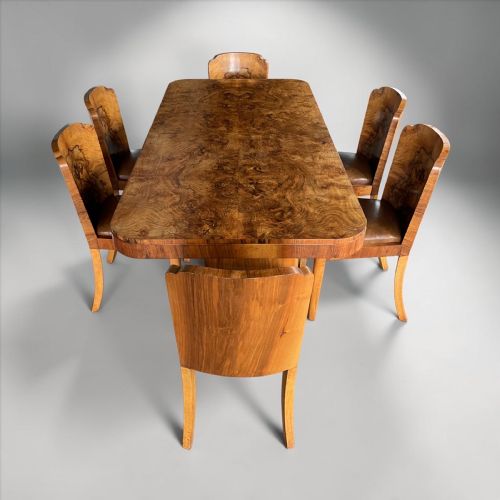
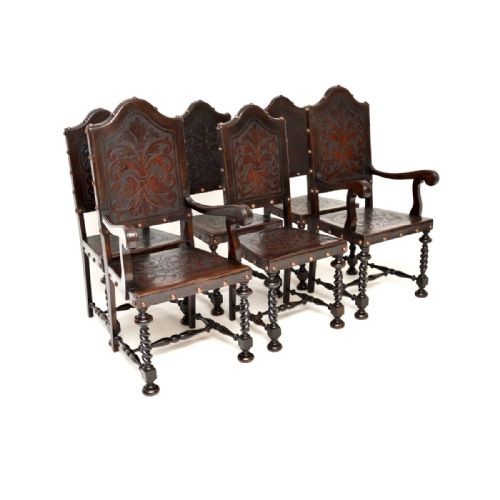
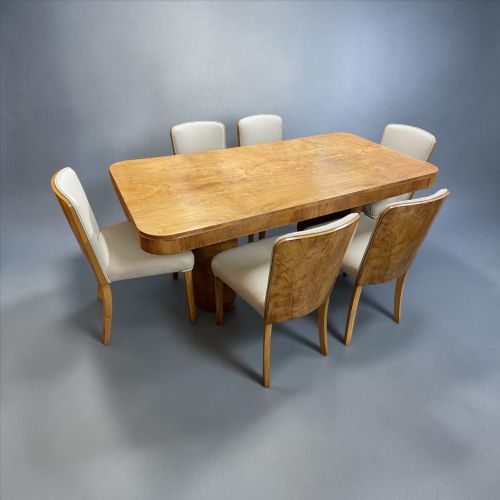
The selections span distinct stylistic traditions, including Chippendale style, Arts and Crafts, Queen Anne, and Art Deco. These forms appear as sets of four, six, or eight, alongside occasional pairs.
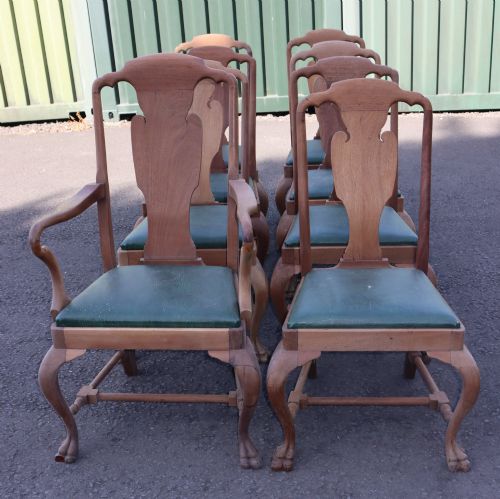
Makers utilised figured woods like burr walnut alongside plain walnut timber to construct splat back, carved, and cloud back forms. Upholstery varies across the pieces, featuring textile, fabric, velvet, and leather seats.
How they were made
Makers built these dining chairs from solid wood and burr walnut veneer, selecting timber for its rich grain patterns and deep natural colour. Artisans shaped frames through traditional joinery methods, incorporating carved details into the timber structure.
Upholstery techniques involved securing textile, fabric, velvet, or leather over padded seat foundations. Craftsmen finished the wooden surfaces to highlight the natural figure of the walnut.
Retail Price Guide 2026
Typical UK retail prices for vintage walnut dining chairs, calculated from the Sellingantiques database of over a million retail prices indexed since 2003. This retail price guide relies exclusively on Sellingantiques data; no external sources or auction records are used, so the figures do not describe the wider market.
Listings feature walnut dining chairs spanning the eighteenth, nineteenth, and twentieth centuries, including Edwardian and Victorian periods.
What varies in quality
Quality rests in the selection of the timber, where heavily figured burr walnut surfaces command greater visual presence than plain grain. The ambition of the carving and the crispness of the joinery set finer examples apart from simpler utilitarian seating.
The integrity of the frame construction and the fidelity of historical revival styles, such as Queen Anne or Chippendale, define the higher tier of these chairs. Original upholstery treatments and well-preserved textiles also influence the character of individual sets.
Epstein
The Vintage Walnut Dining Chairs Glossary
- Burr walnut
- A highly figured timber veneer taken from the growth excrescences of walnut trees. It yields swirling patterns prized for decorative furniture surfaces.
- Splat back
- A chair design featuring a vertical central strip of wood down the middle of the backrest. This component often takes carved or shaped silhouettes.
- Cloud back
- A rounded, upholstered chair back configuration associated with Art Deco design. The curved profile resembles the soft shape of a cloud.
- Queen Anne style
- An eighteenth-century furniture aesthetic defined by smooth lines, cabriole legs, and splat back chairs. It places emphasis on comfort and graceful proportions.
- Arts and Crafts style
- A design movement valuing honest construction, visible handcraft, and simple material qualities. It reacted against mass-produced industrial decoration.
Frequently Asked Questions
Are these chairs comfortable for daily use?
Most of these period dining chairs offer supportive wooden frames paired with padded upholstered seats. The ergonomics reflect the seating standards of their respective decades.
Buyers planning regular daily dinners often assess the seat height and depth against their own dining tables. Adding appropriate interior padding can also enhance comfort during long meals.
How do I care for walnut wood?
Walnut timber benefits from gentle dusting with a soft, dry cloth to protect the surface finish. Direct sunlight and sudden temperature shifts should be avoided to prevent timber movement.
Applying a suitable natural wax periodically helps nourish the grain and maintain the deep tone of the wood. Harsh chemical cleaners can strip the original polish and should be avoided.
How do I match different chair styles?
Mixing period chairs with contrasting tables creates an eclectic interior scheme that highlights individual furniture forms. Pairing Art Deco cloud back chairs with a simple wooden table draws attention to the distinct silhouette.
Consistency in wood tone often helps tie disparate seating styles together within the same room. Maintaining a similar timber hue bridges the gap between Victorian and Edwardian pieces.
Can I reupholster these vintage chairs?
Many vintage chairs accommodate new upholstery while retaining their original wooden frames and structural integrity. Selecting fabrics that suit the period helps preserve the historical character of the piece.
Traditional upholstery methods ensure the seat padding supports the frame correctly without placing undue strain on the wood joints. Consulting a professional craftsperson helps determine the best approach for delicate textiles.