


Floral Upholstered Dining Chairs
Floral upholstered dining chairs bring colour and softness to a room, offering period character alongside everyday comfort at the table.
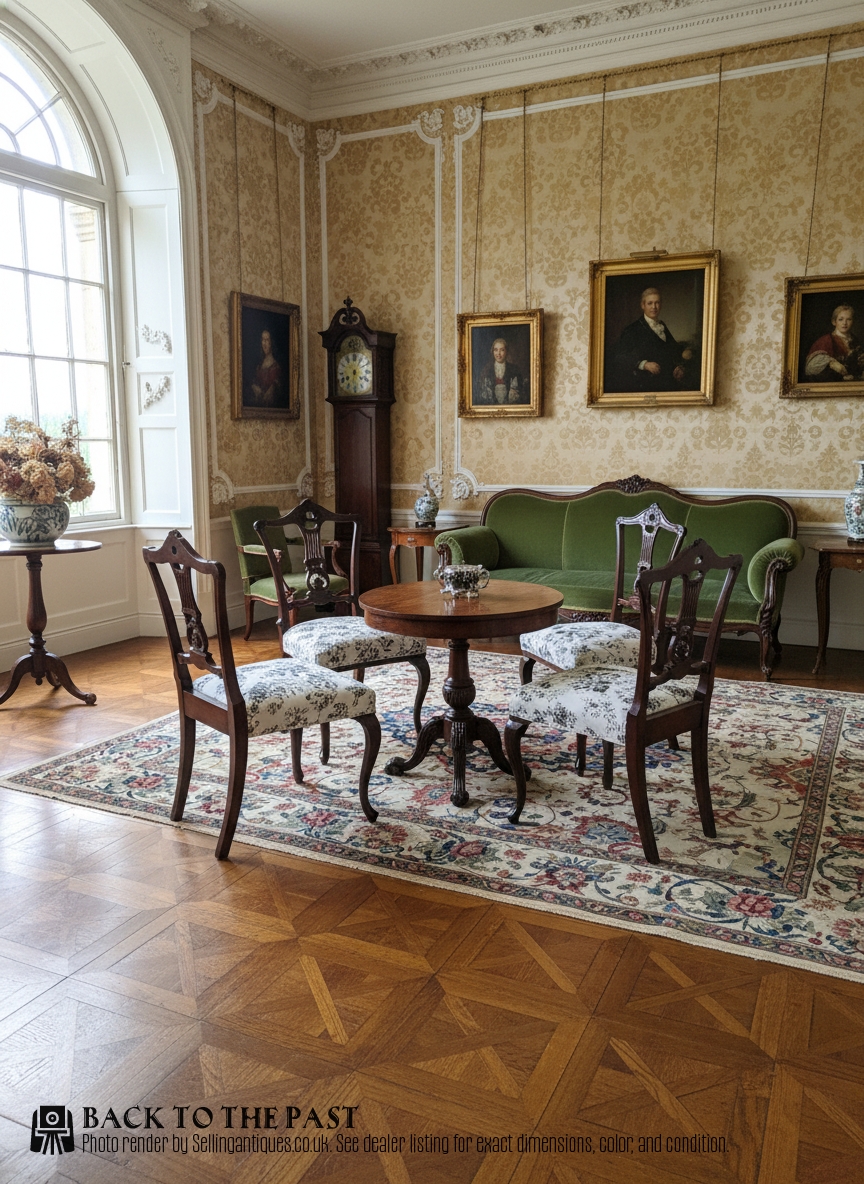
Identifying Floral Upholstered Dining Chairs
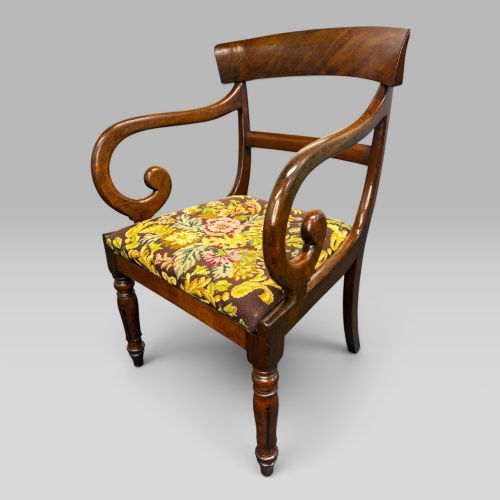
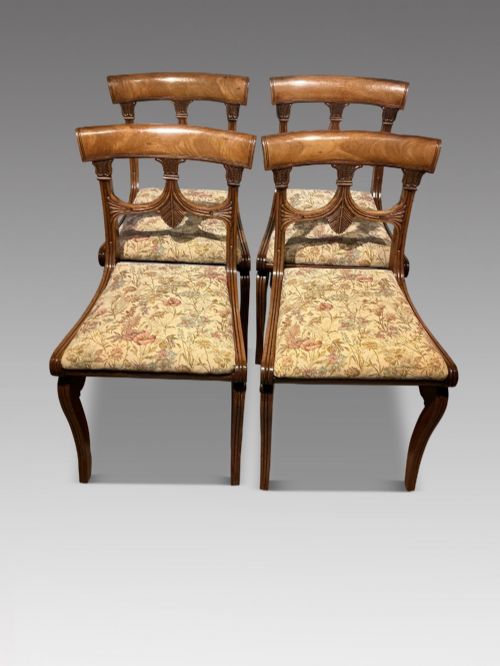
Floral upholstered dining chairs span several distinct periods, including 18th Century, Regency, Victorian, 1860, and 1920 examples. Buyers exploring these options encounter various structural forms designed for formal dining rooms.
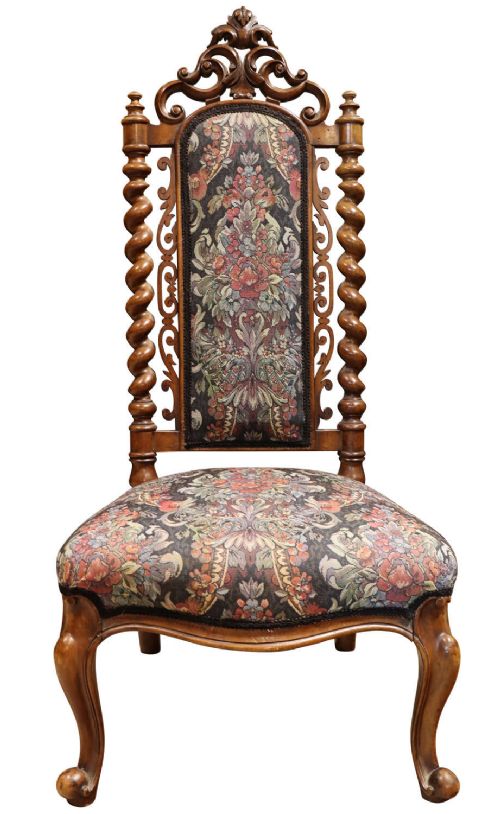
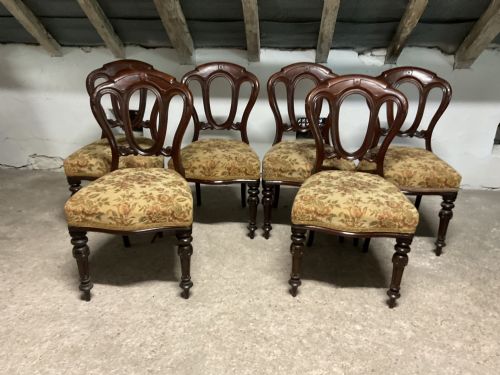
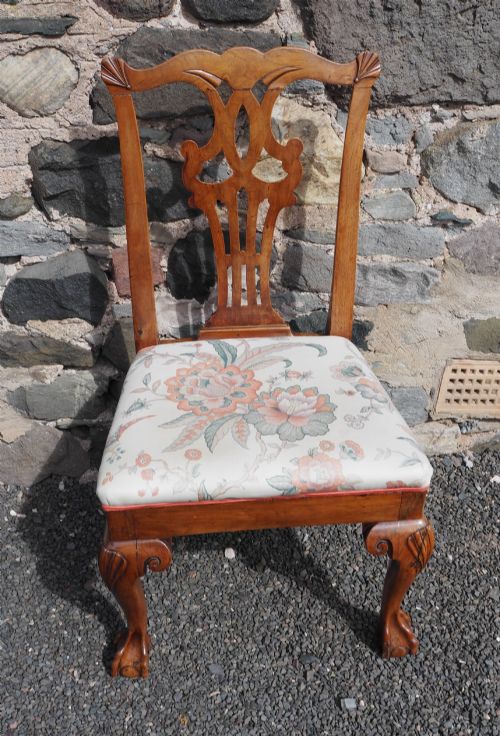
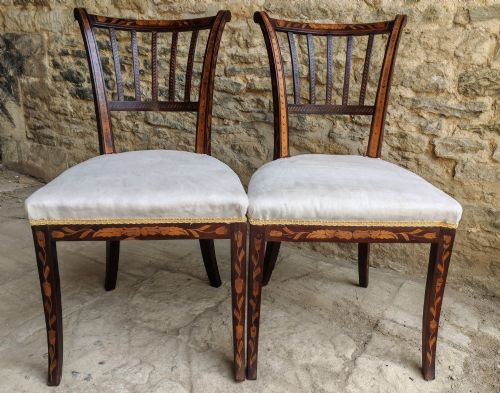
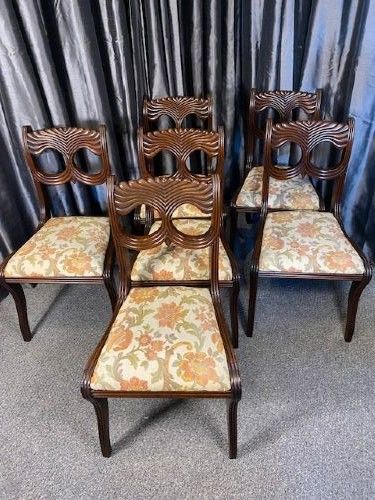
The selection ranges from sets of four and six pieces to pairs. Common configurations include balloon back, splat back, and highback designs shaped by the prevailing tastes of their respective eras.
Originating from diverse stylistic traditions such as Queen Anne, Regency, Victorian, and Arts & Crafts Revival, these seating pieces combine functional timber frames with textile seat coverings.
Construction and Materials
Makers utilised solid timbers such as mahogany, walnut, and oak to build the structural frames of these dining seats. Timber selection often dictates the weight and visual presence of each piece.
Upholstery incorporates various textiles, including standard fabric, upholstery fabric, and tapestry fabric. These materials are secured over the seat structures to provide both support and decorative pattern.
Retail Price Guide 2026
Typical UK retail prices for floral upholstered dining chairs, calculated from the Sellingantiques database of over a million retail prices indexed since 2003. This retail price guide relies exclusively on Sellingantiques data; no external sources or auction records are used, so the figures do not describe the wider market.
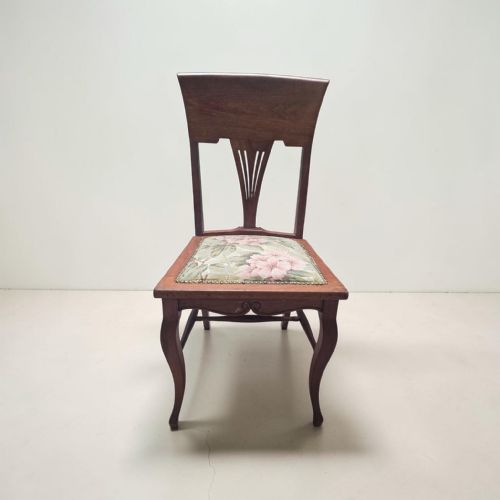
Highback oak chairs from the 1920s bring an unexpectedly dramatic silhouette to modern breakfast rooms.
Assessing Quality and Execution
Superior examples demonstrate refined cabinetmaking in the shaping of timber backs and legs, distinguishing themselves from simpler utilitarian builds. The integrity of the wooden frame remains central to the overall standard of the piece.
The choice and execution of the textile upholstery influence the visual appeal. Finer pieces integrate fabric that complements the proportion and age of the wooden framework.
The Floral Upholstered Dining Chairs Glossary
- Balloon back
- A rounded, curved wooden backrest shape popular during the Victorian period. This profile offers ergonomic support while providing a distinct decorative silhouette.
- Splat back
- A chair design featuring a central vertical strip of wood down the middle of the backrest. It connects the crest rail to the seat.
- Highback
- A tall chair back design that extends significantly above the seat level. This form often provides a commanding presence around a dining table.
- Tapestry fabric
- A heavy, woven textile often featuring pictorial or floral designs. It provides a durable and decorative surface for traditional seat upholstery.
Frequently Asked Questions
How do I date these chairs?
Dating relies on observing the timber species, structural joinery, and stylistic markers such as balloon backs or splat backs. Comparing these details against known period characteristics clarifies the likely era of manufacture.
Changes in furniture design from the 18th century through to the 1920s provide clear visual cues for attribution.
Are these chairs comfortable for daily use?
Most period dining chairs were designed for upright posture during formal meals rather than lounging. The integration of upholstered seats provides a cushioned surface for sitting.
Seat firmness and support depend on the condition of the internal padding and webbing beneath the fabric.
How should I clean the fabric?
Maintenance depends entirely on the specific textile used for the upholstery, whether standard fabric or tapestry. Gentle vacuuming with a soft attachment helps remove surface dust.
Professional cleaning is generally recommended for older or delicate textiles to avoid damaging the fibres.
Do matching sets exist?
Matching sets of four or six chairs appear frequently within mahogany and oak constructions from the Regency and Victorian eras. These groupings offer a uniform aesthetic around a dining table.
Pairs also occur, particularly among earlier 18th century walnut examples.