
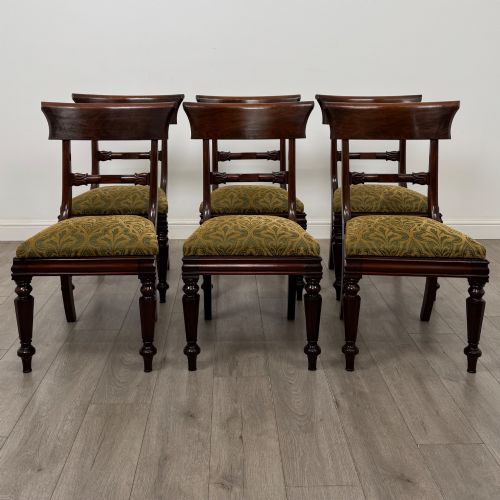
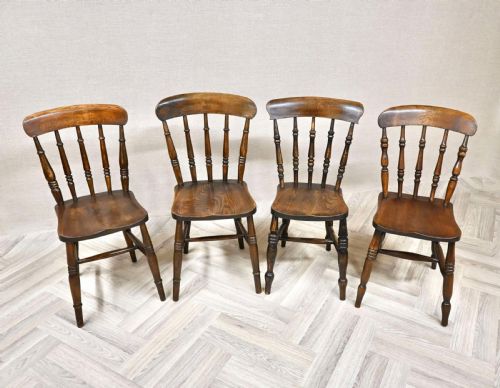
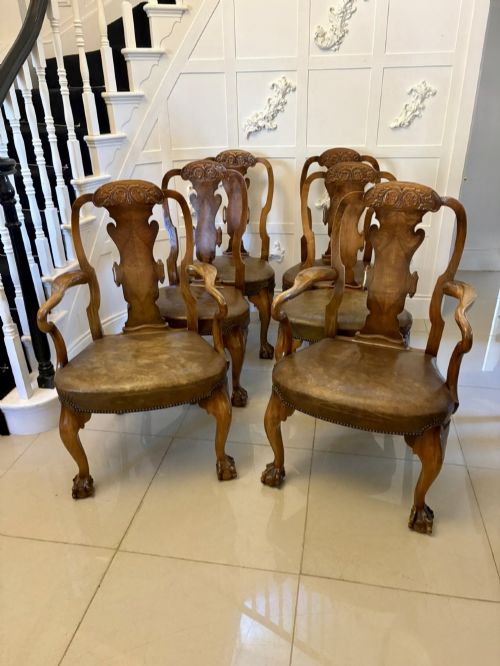
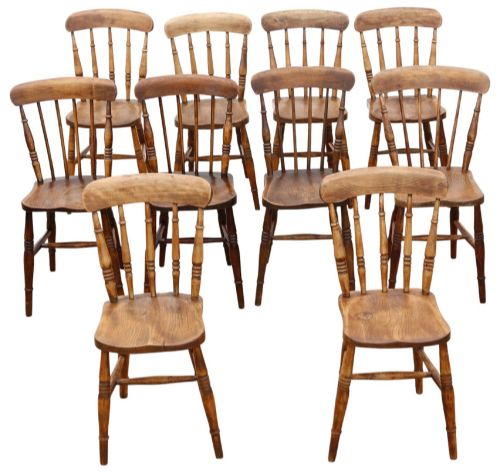
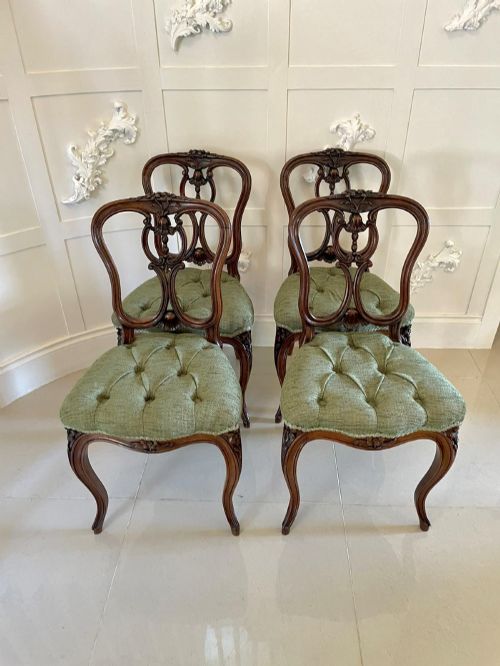

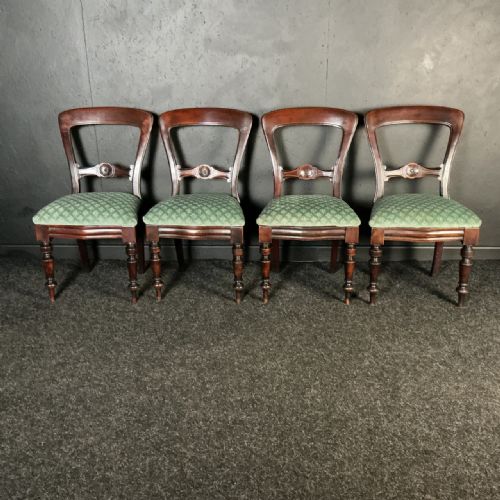
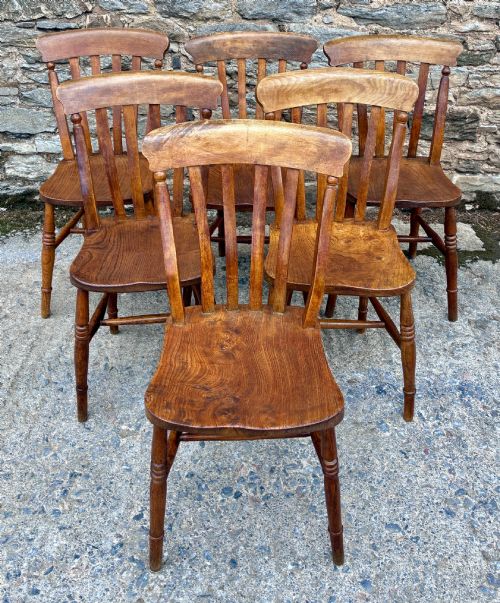
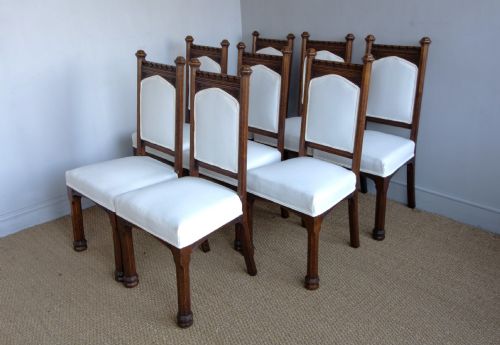
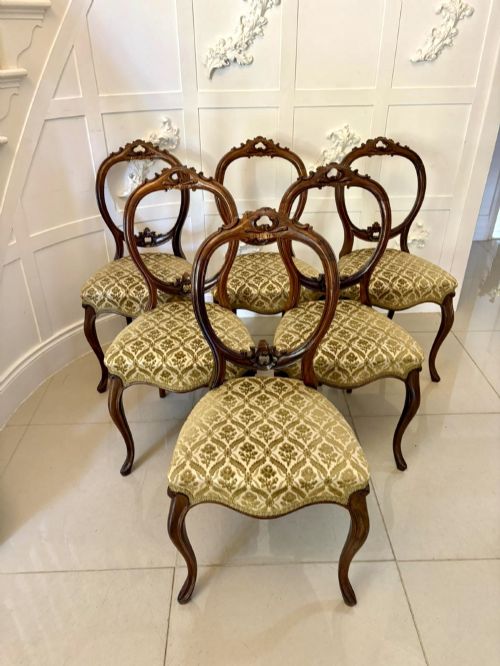
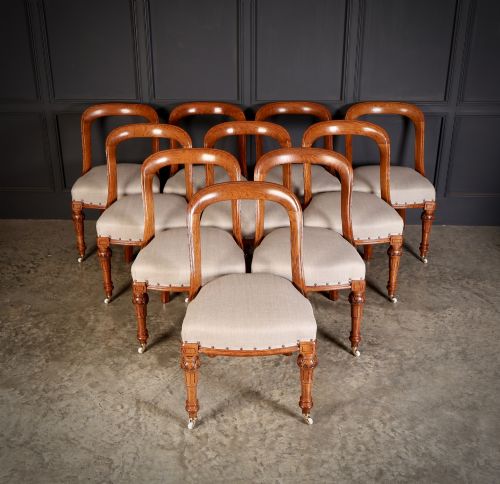
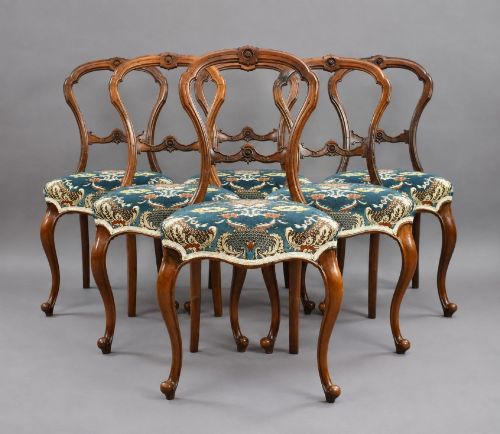
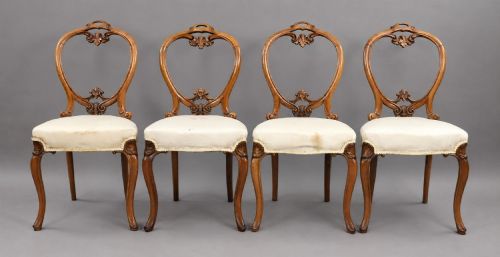
Victorian Side Chairs Set
These Victorian side chairs set pieces bring enduring 19th-century craftsmanship and period timber character to dining spaces.
Identifying victorian side chairs set examples
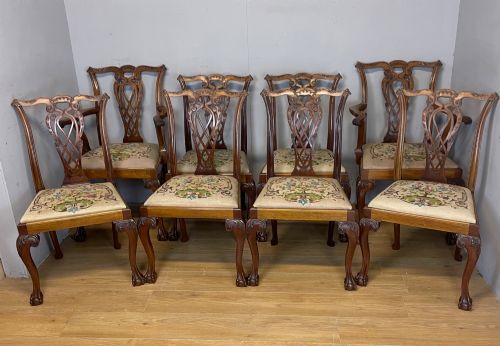
A victorian side chairs set comprises matching seating designed primarily for dining or hall use, appearing frequently in sets of three, four, or six. The selections span the Victorian era, alongside related 19th-century and Regency styles.
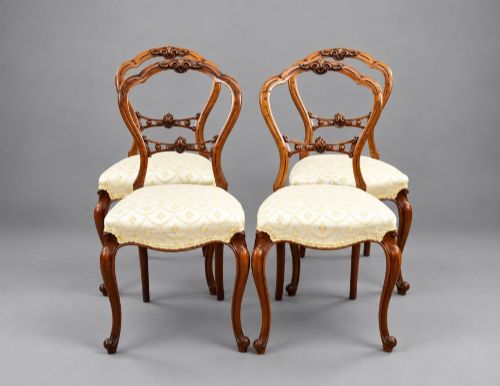
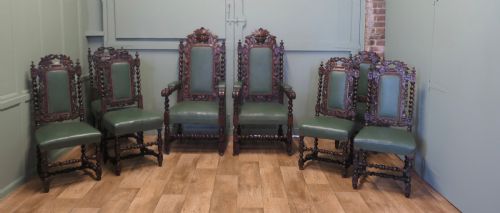
Most examples emerge in rich timbers including mahogany, walnut, rosewood, and oak. Formations encompass classic balloon backs and carved side chairs, reflecting the domestic seating requirements of the period.
The inventory encompasses both dining chairs and hall chairs, offering buyers versatile configurations for traditional interiors. Each grouping demonstrates the characteristic proportions and timber selections of nineteenth-century British cabinet-making.
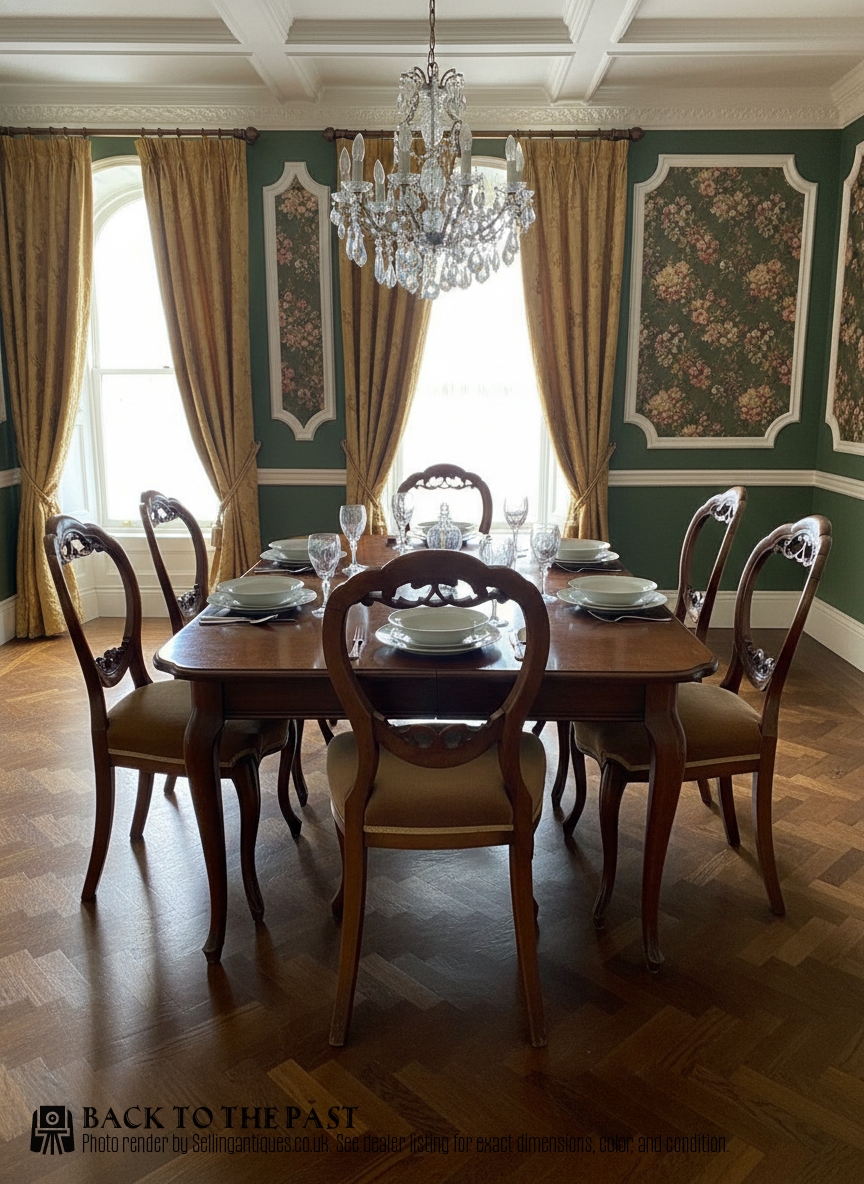
Materials and construction
Craftsmen utilised solid hardwoods such as mahogany, walnut, and rosewood, frequently enhanced with satinwood inlay or elaborate carved detailing. Timber selection dictated both the visual weight and the structural integrity of each frame.
Upholstered variants incorporate traditional fabric and velvet coverings over supportive springing and webbing. Carved walnut balloon-back forms demonstrate specialised shaping techniques applied to dense hardwoods.
Retail Price Guide 2026
Typical UK retail prices for victorian side chairs set, calculated from the Sellingantiques database of over a million retail prices indexed since 2003. This retail price guide relies exclusively on Sellingantiques data; no external sources or auction records are used, so the figures do not describe the wider market.
Nineteenth-century guests sat on balloon backs while pondering whether the soup was lukewarm.
Distinguishing quality across the range
Distinctions in quality rest upon the crispness of timber carving, the selection of figured veneers like satinwood, and the integrity of the underlying hardwood frame. Finer sets display harmonious grain matching and substantial timber scantlings.
Attribution to known workshops or superior joinery techniques elevates specific groupings above standard domestic seating. The cohesion of a matched set across multiple chairs remains a primary marker of original manufacture.
Holland & Sons·Hindley and Sons
The Victorian Side Chairs Set Glossary
- Balloon back
- A rounded, oval-shaped chair back resembling a balloon, popular during the mid-19th century. This ergonomic curved design provided comfortable lumbar support for diners.
- Side chair
- An upright chair without arms, traditionally used for dining or placed against a hall wall when not in use. These pieces form the core of any matched dining seating group.
- Satinwood
- A luminous, fine-grained yellowish timber often utilised for decorative inlay and banding on Victorian furniture. It creates striking contrast against darker woods like mahogany.
- Regency
- An early 19th-century design style bridging the Georgian and Victorian periods, characterised by classical restraint and elegant proportions. Pieces in this style sometimes appear alongside Victorian iterations.
Frequently Asked Questions
How many chairs came in a typical set?
Nineteenth-century dining sets frequently comprised four or six chairs to suit domestic dining tables of the period. Smaller groupings of three also appear for more intimate spaces.
Matching larger quantities required considerable skill from the cabinet-maker to ensure absolute uniformity across the entire suite.
Where were hall chairs placed?
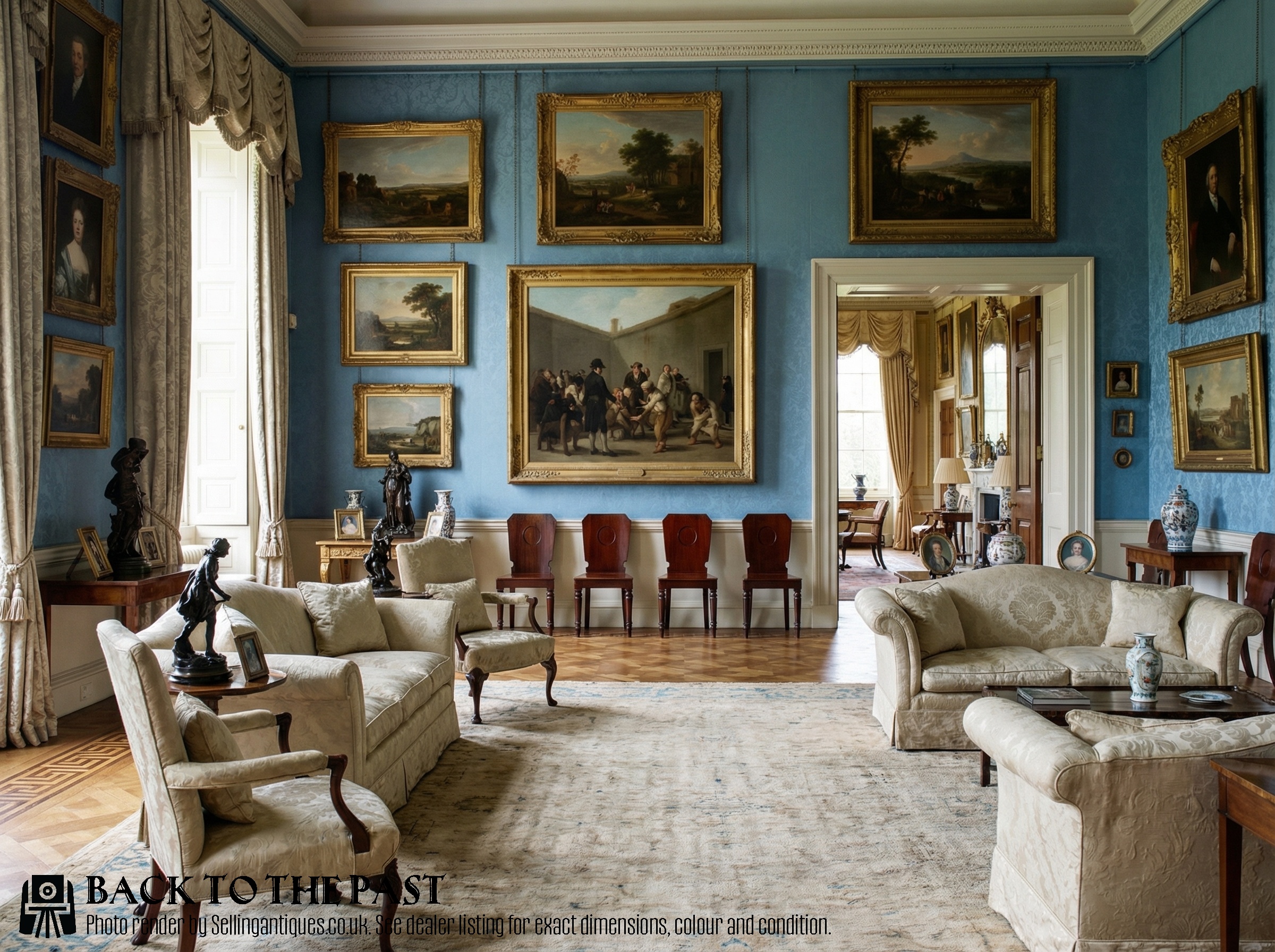
Hall chairs stood in entranceways and corridors, serving as functional seating for visitors or household staff. These pieces typically dispense with upholstery in favour of all-wood construction.
Their robust design allowed them to withstand heavy daily use in high-traffic areas of the home.
Which timbers were most common?
Mahogany and walnut dominated nineteenth-century seating production, offering stability and rich natural grain patterns. Rosewood and oak appear regularly in more select or specific regional commissions.
Satinwood was occasionally introduced as a contrasting inlay material to highlight specific decorative panels.