

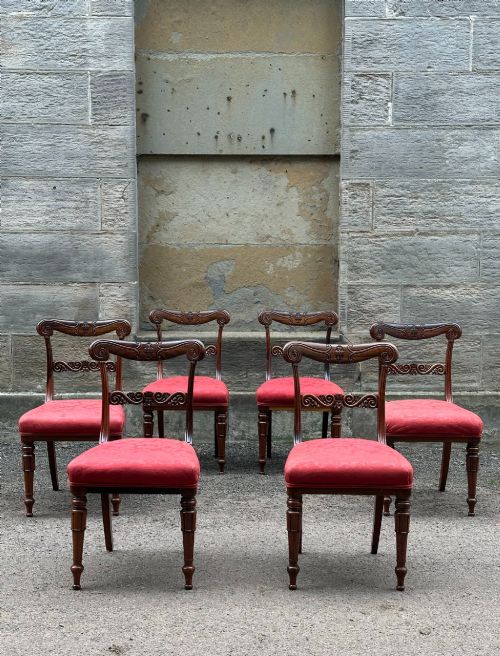
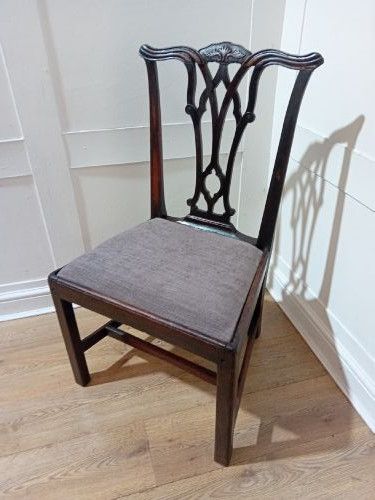
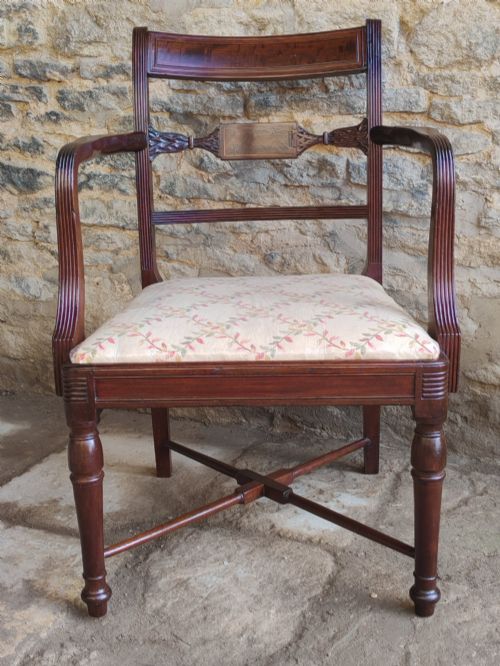


Antique Wood Dining Chairs
Antique wood dining chairs bring enduring craftsmanship to the table, offering solid timber frames and period forms that anchor a room.

Defining antique wood dining chairs
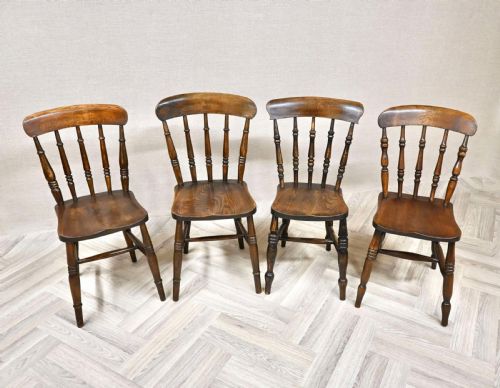
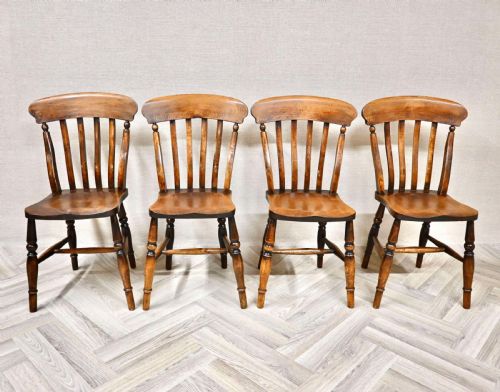
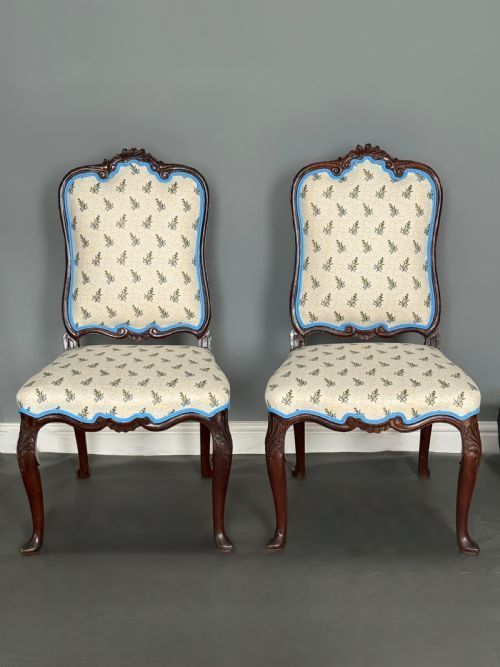
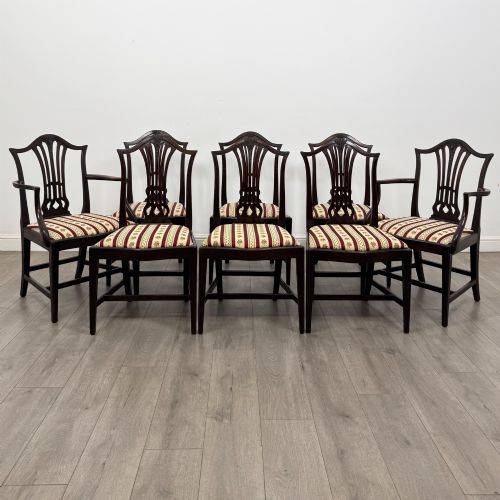
Antique wood dining chairs encompass seating designed for dining rooms across the eighteenth and nineteenth centuries, including the Victorian, Regency, William IV, and Georgian eras. These seating options appear most frequently as sets of four, six, eight, ten, or twelve pieces, alongside occasional pairs and single chairs.
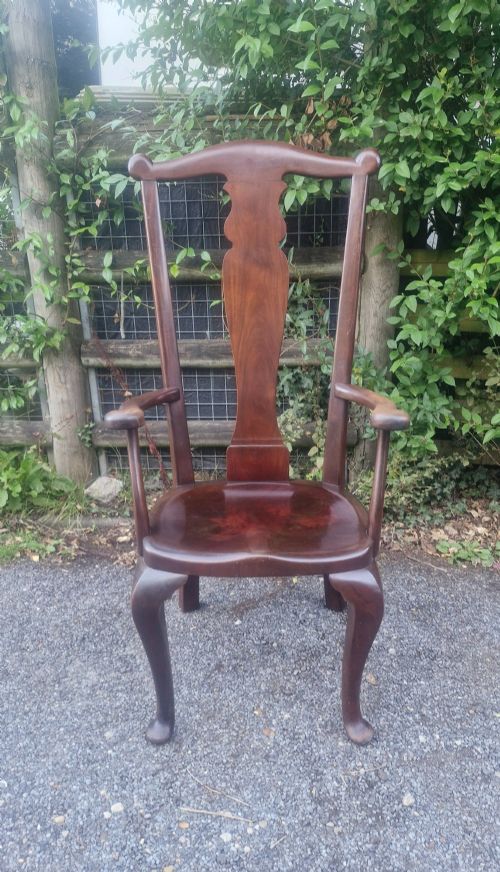
The styles range from shield back and vase splat back designs to balloon back and hoop back forms. Buyers frequently encounter sets constructed from dark hardwoods that suit traditional and contemporary dining spaces alike.
Origins span British workshops, with specific pieces displaying regional timber choices such as fruitwood and yew wood alongside the dominant mahogany and rosewood. Each set reflects the social dining habits of its period through seat height, frame sturdy build, and backrest shaping.
Construction and materials
Cabinet makers utilised dense timbers including mahogany, rosewood, fruitwood, and yew wood for the structural frames, legs, and back splats. These woods were selected for their grain pattern and tensile strength, allowing slender members to support seated weight safely.
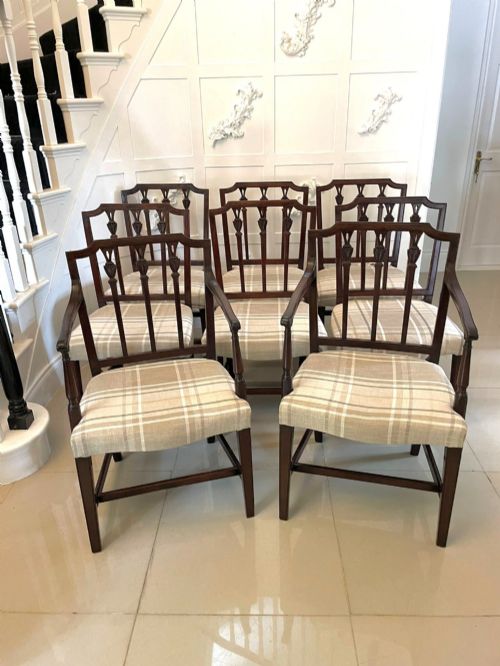
Joinery relied on traditional mortise and tenon joints to secure the seat rails and back assemblies. Selected examples incorporate brass inlay or carved decorative details into the wood grain, while seats feature drop-in pads upholstered in fabric or velvet.
Retail Price Guide 2026
Typical UK retail prices for wood dining chairs, calculated from the Sellingantiques database of over a million retail prices indexed since 2003. This retail price guide relies exclusively on Sellingantiques data; no external sources or auction records are used, so the figures do not describe the wider market.
The listings span the eighteenth century, nineteenth century, Georgian, Regency, William IV, and Victorian periods, constructed from mahogany, rosewood, fruitwood, and yew wood.
Judging the range
The distinction between standard examples and the finest sets rests upon the depth and crispness of the wood carving. Master cabinet makers achieved fluid lines in vase splats and shield backs that lesser workshops executed with stiff proportions.
Uniformity across a set dictates value, as matched timbers and consistent colouration across six or eight chairs show deliberate selection by the original maker. Altered legs or mismatched replacement chairs disrupt the visual harmony of a matched suite.
The Antique Wood Dining Chairs Glossary
- Vase splat
- A central vertical wooden strip in a chair back shaped like a classical vase. It provides structural support while offering space for decorative grain work.
- Balloon back
- An oval or rounded upholstered chair back introduced during the Victorian period. The sweeping curves mimic the silhouette of a hot air balloon.
- Hoop back
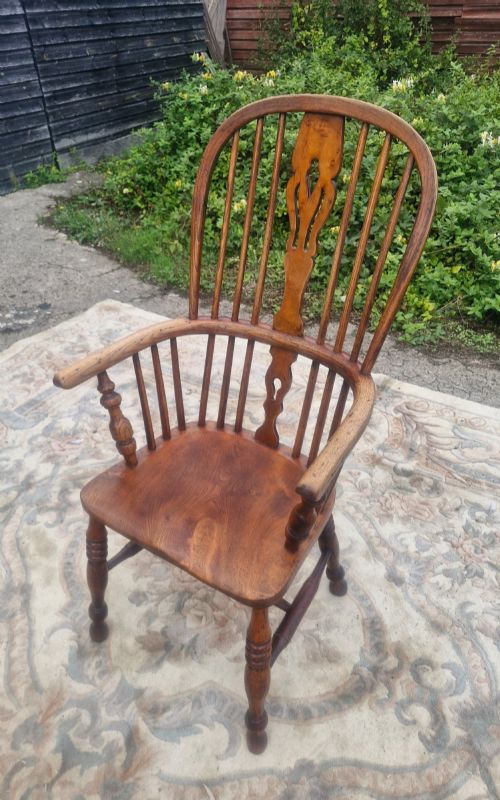
- A continuous curved wooden bow forming the backrest and arm supports of a chair. This vernacular form appears in sturdy provincial seating.
- Brass inlay
- Technique of embedding thin brass strips into recessed channels within rosewood or mahogany surfaces. It creates geometric or floral motifs across Regency furniture.
Frequently Asked Questions
How many chairs come in a set?
Sets typically range from pairs and quartets up to large groupings of ten or twelve dining chairs.
Larger matching sets are scarcer because individual chairs from a suite occasionally suffer damage or get separated over the centuries.
What woods were used for these chairs?
Mahogany and rosewood dominate the surviving inventory from the Georgian, Regency, and Victorian periods.
Provincial and earlier examples also utilise fruitwood, yew wood, and other native timbers for their chair frames.
How do I identify a Regency chair?
Regency dining chairs often feature classical revival motifs, sabre legs, and occasionally brass inlay across dark rosewood or mahogany surfaces.
These pieces date roughly from the early nineteenth century and reflect the influence of ancient Greek and Roman design.
Can antique dining chairs be used daily?
Solid hardwood construction and sturdy mortise and tenon joinery make these chairs suitable for regular seating at the dining table.
Routine care involves checking the frame stability and protecting the wood surfaces from excessive moisture and direct heat.