


Red Fabric Dining Chairs
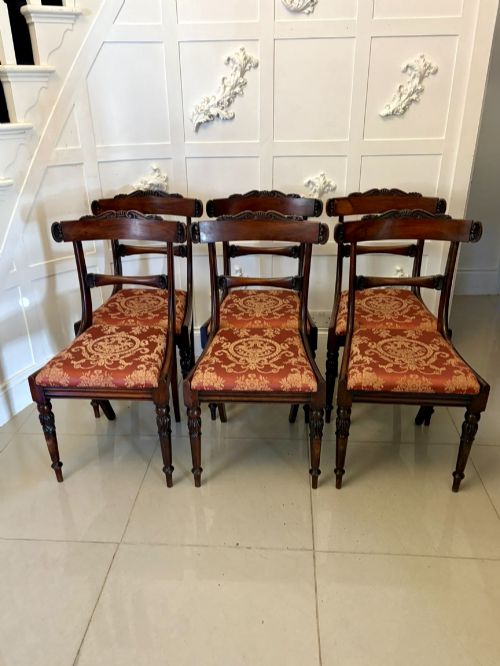
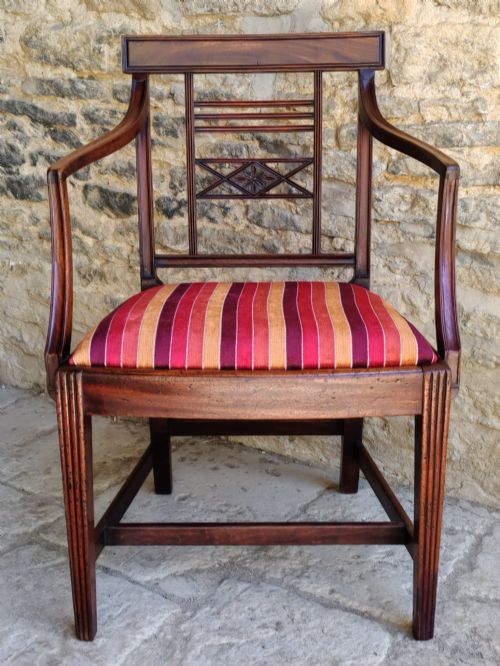
These red fabric dining chairs bring rich colour and texture to a room, offering period character and comfortable seating for the table.
Red Fabric Dining Chairs
When searching for red fabric dining chairs, buyers encounter diverse forms ranging from individual side chairs and carvers to full sets spanning the eighteenth and nineteenth centuries. The selection includes examples from the Regency, Edwardian, and Victorian eras alongside Georgian and Arts and Crafts styles.
The dominant forms on this page include mahogany dining chairs, walnut dining chairs, and rosewood chairs, often appearing as matched sets or pairs. Occasional variations feature oak construction, armchairs, and bedroom chairs with upholstered seats.
How they were made
Craftsmen built these chairs using dense hardwoods such as mahogany, walnut, rosewood, and oak, often shaping the timber into cabriole legs, scroll carvings, and balloon backs. Hand-carved details appear across backs and frames, reflecting the distinct aesthetics of periods from the eighteenth century onwards.
Upholstery involves traditional textile coverings set over padded seats, sometimes accented with brass elements. The combination of carved woodwork and fabric upholstery defines the construction of these period seating pieces.
Red Fabric Dining Chairs Retail Price Guide 2026
Typical asking prices for red fabric dining chairs among the pieces listed under this phrase on Sellingantiques today, from the lower quarter to the upper quarter. They describe what is for sale here now, not the wider market.
Several chairs feature shaped balloon backs and cabriole legs, bringing centuries of carved woodwork straight to the dining table.
What varies in quality
Quality shows in the crispness of the hand-carving on the wooden frames and the depth of the timber grain in woods like mahogany and walnut. Superior sets maintain uniformity across multiple chairs, whereas lesser examples display inconsistencies in timber selection or carving detail.
The integrity of the original wood structure and the execution of scrollwork or shaped balloon backs separate standard utility pieces from finer examples. Finer chairs demonstrate careful attention to proportion and joinery across the whole frame.
The Red Fabric Dining Chairs Glossary
- Carver
- An armchair designed for the head of a dining table, typically featuring armrests and a wider seat. These often match a set of smaller side chairs.
- Cabriole leg
- A furniture leg that curves outward and then tapers inward, finishing in a pad or foot. This form draws inspiration from animal legs and appears frequently on eighteenth and nineteenth-century seating.
- Balloon back
- A rounded, oval-shaped chair back resembling the profile of a hot-air balloon. This design gained widespread popularity during the Victorian period.
- Scroll carving
- Ornamental woodwork shaped into spiral or scroll motifs. Craftsmen applied these carvings to chair backs and legs for decorative effect.
Red Fabric Dining Chairs: Frequently Asked Questions
What periods do these chairs come from?
The pieces span the eighteenth and nineteenth centuries, including Regency, Victorian, and Edwardian eras. Georgian and Arts and Crafts styles also appear.
Specific dates range from the late eighteenth century through to the early twentieth century, showing diverse craftsmanship across different decades.
How do I choose the right set size?
Sets vary in number, ranging from pairs and small groups of four up to larger sets of six, seven, or eight chairs. Consider your table dimensions and seating requirements.
Matching sets suit formal dining spaces, while pairs of armchairs or side chairs work well as accent pieces in bedrooms or parlours.
What woods were used in these chairs?
Cabinetmakers utilised dense hardwoods such as mahogany, walnut, rosewood, and oak. Each timber offers distinct grain patterns and structural qualities.
Mahogany and walnut predominate, often polished to highlight the natural figure of the wood alongside decorative brass details.
How should I care for antique wood and fabric?
Keep wooden frames away from direct sunlight and heat sources to prevent the timber from drying out. Dust regularly with a soft, dry cloth.
Protect the upholstery fabric with appropriate cleaning methods suited to textiles, and avoid harsh chemical treatments on antique finishes.