
Vintage Dining Room Seating
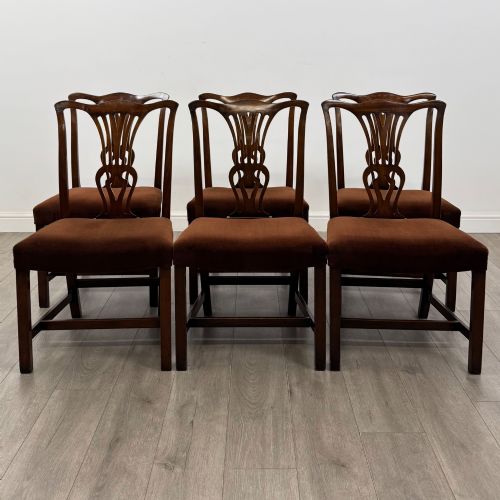
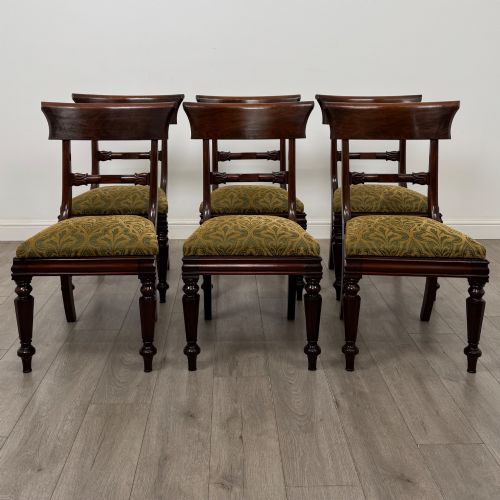
Vintage dining room seating brings together antique mahogany, oak, and walnut chairs designed for gathering, offering sturdy timber frames and period upholstery.
Vintage Dining Room Seating
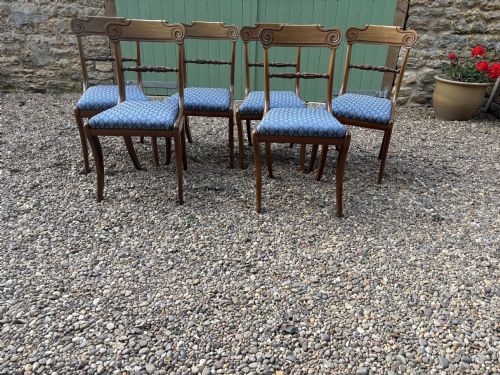
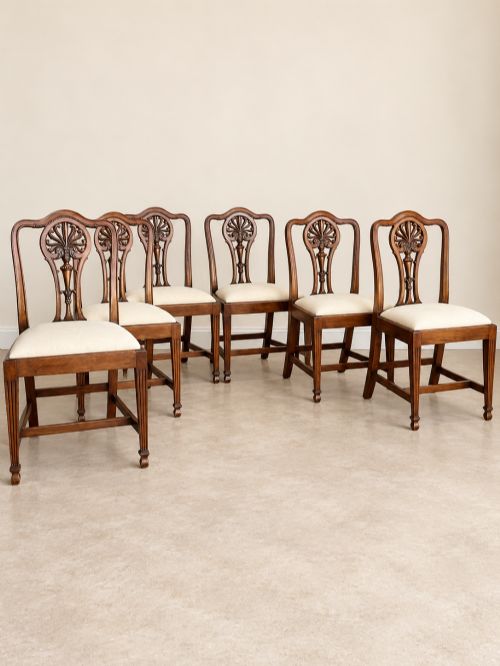
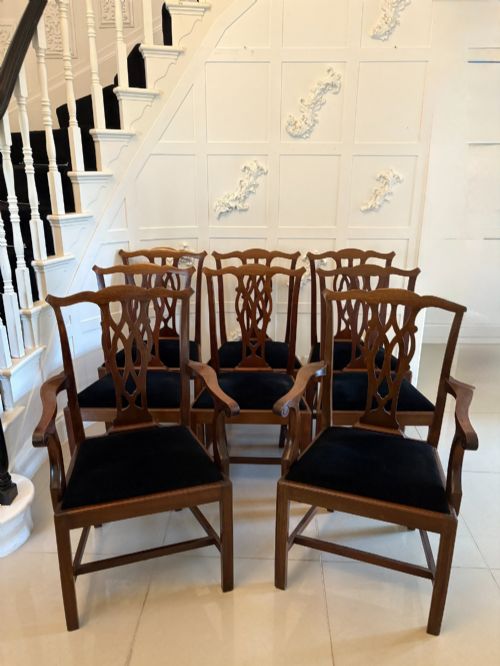
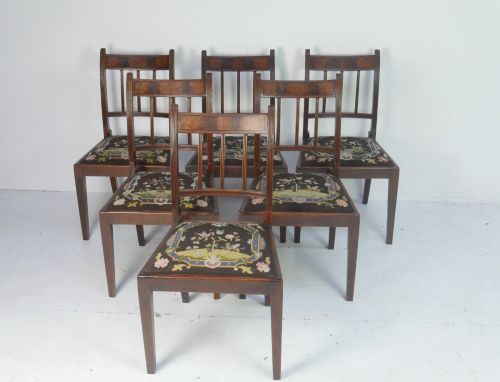
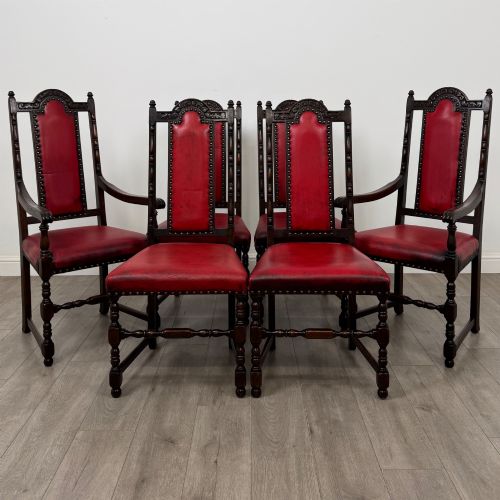
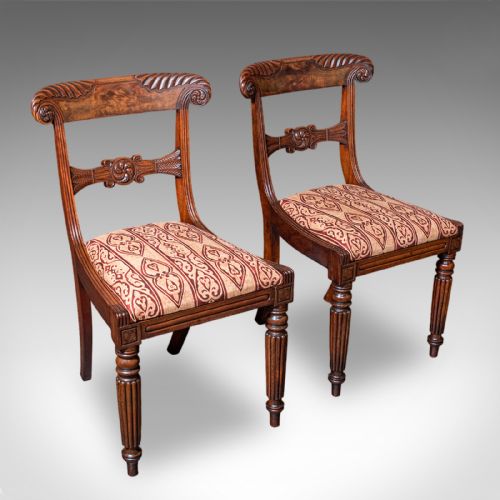
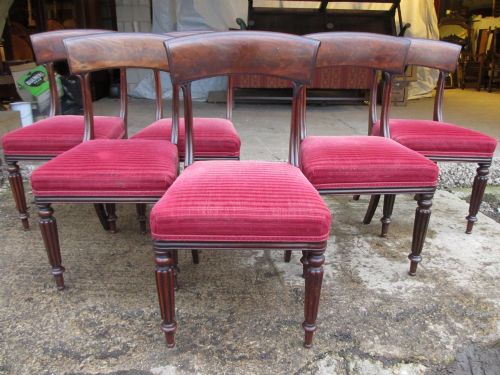
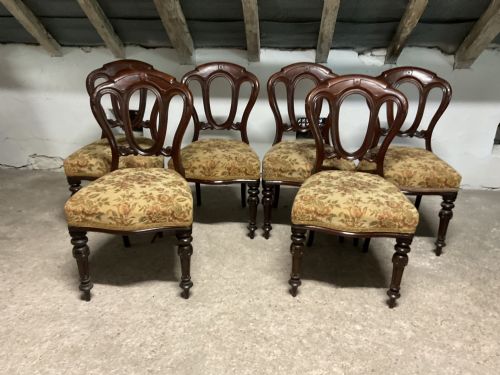
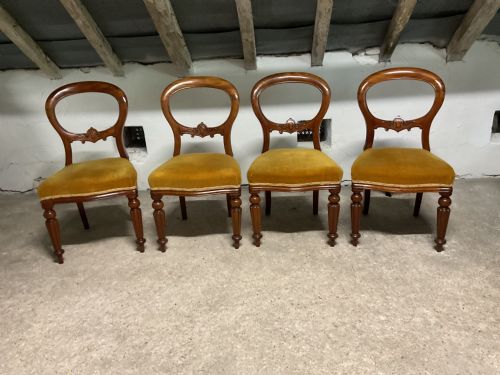
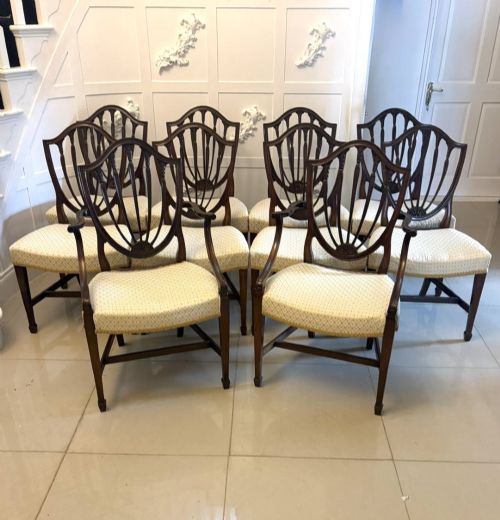
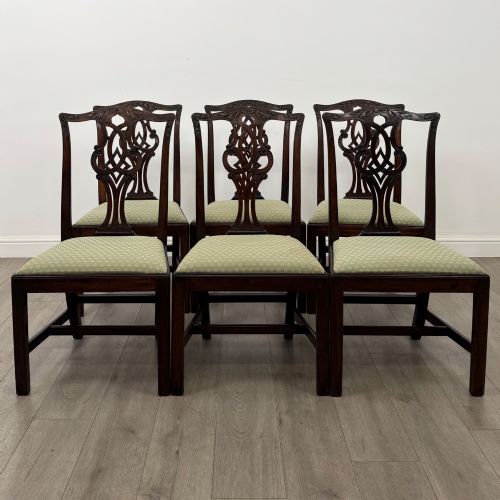
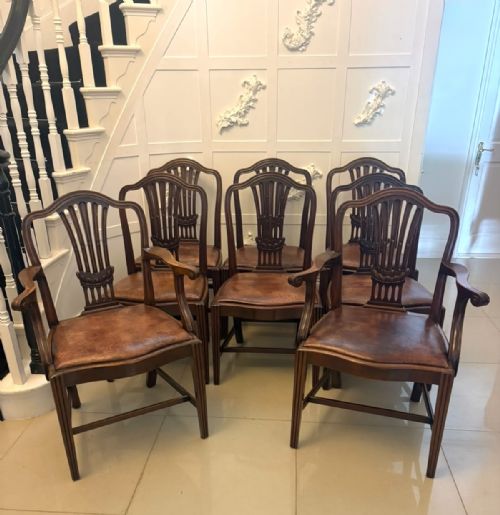
Vintage dining room seating encompasses wooden chairs and dining suites created across the Georgian, Victorian, Edwardian, and Regency periods, utilising traditional craftsmanship. Buyers exploring vintage dining room seating frequently encounter matching sets of chairs, ranging from four to ten pieces, often including a mix of single chairs and carver armchairs with upholstered seats.
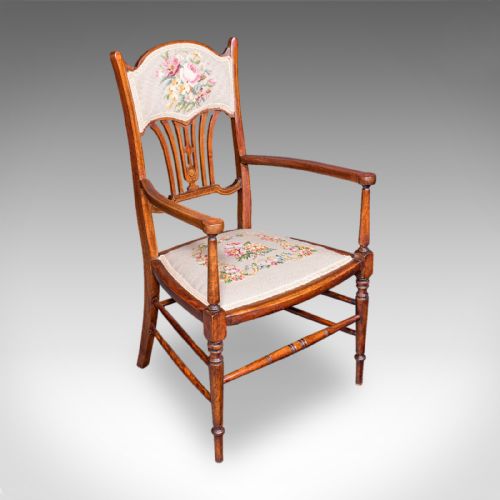
The materials span solid mahogany, oak, walnut, beech, and rosewood, paired with coverings such as leather, fabric, velvet, and textile upholstery. Styles draw heavily on historical revivals, featuring Chippendale, Hepplewhite, Queen Anne, Jacobean, and William IV designs alongside simpler country forms.
Materials and construction methods
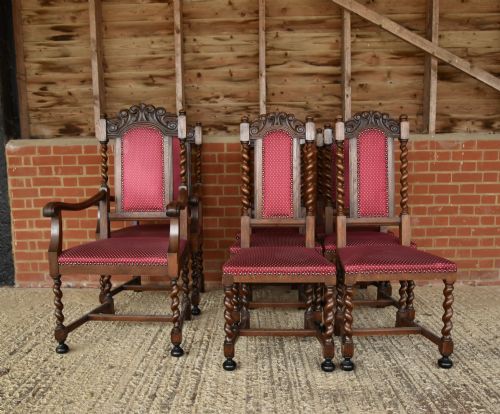
Cabinetmakers constructed these frames primarily from dense hardwoods like mahogany and oak, employing traditional joinery such as mortise and tenon to ensure long-term stability. Turned elements, including barley twist details, and carved backs reflect the specific stylistic preferences of periods ranging from the eighteenth century into the early twentieth century.
Upholstered seats integrate traditional webbing and stuffing beneath surfaces finished in leather, velvet, or woven fabric, sometimes accented with brass detailing. Beech and walnut also appear in specific chair forms, while applied finishes highlight the natural grain of the timber.
Listings feature mahogany, oak, walnut, beech, and rosewood across Georgian, Victorian, Edwardian, and Regency periods.
Distinctions in craftsmanship
The caliber of vintage dining room seating rests on the density and selection of the timber, where finely figured mahogany or mature oak provides greater structural integrity and visual depth. Superior examples display crisp, hand-carved details on shield backs, rails, and legs rather than soft or generalized moulding.
Consistency across a larger set distinguishes exceptional suites from assembled collections, as does the retention of original leather or period textile upholstery. The rigidity of the frame construction and the subtlety of the joinery mark the dividing line between standard utility seating and master-finished dining chairs.
Maple and Co·Harry and Lou Epstein
The Vintage Dining Room Seating Glossary
- Carver
- An armchair designed with armrests, traditionally placed at the head of a dining table or paired with matching single chairs.
- Shield back
- A chair back shaped like a heraldic shield, popularized by designers such as Hepplewhite during the Georgian era.
- Barley twist
- A carved wooden column resembling a spiralling rope, frequently found on the legs and stretchers of oak seating.
- Balloon back
- A rounded, continuous wooden backrest curve characteristic of Victorian dining chairs.
- Single chair
- A dining chair manufactured without arms, intended to fit compactly around the sides of a dining table.
Vintage Dining Room Seating: Frequently Asked Questions
How do I choose the right set size?
Consider the dimensions of your dining table and the typical number of guests you host, keeping in mind that many period sets include a combination of single chairs and larger carvers with arms.
Larger matching groups spanning eight to ten chairs often require substantial dining spaces to allow adequate clearance around the table perimeter.
Are carver chairs necessary?
Carver chairs feature armrests and traditionally sit at the head and foot of the dining table, offering a more commanding presence than armless side chairs.
While many sets include a designated pair of carvers alongside single chairs, some dining arrangements consist entirely of side chairs depending on personal preference and space.
How do I identify the period?
Examination of the timber, carving style, and structural silhouette helps determine the era, with heavy oak barley twists pointing towards early twentieth-century revival work and elegant mahogany shield backs often indicating Georgian or Regency origins.
Matching the construction techniques and decorative motifs against known historical styles provides a reliable guide to dating each piece.
Can I mix different wood tones?
Mahogany, oak, and walnut display distinct natural colours and grain patterns, allowing for varied textures within a dining space if the overall proportions complement one another.
Sticking to pieces from related stylistic revivals helps maintain visual harmony even when wood finishes vary slightly across individual chairs.