
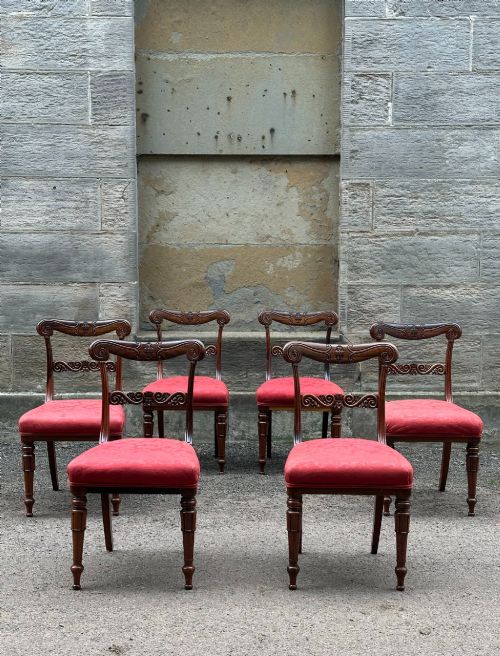


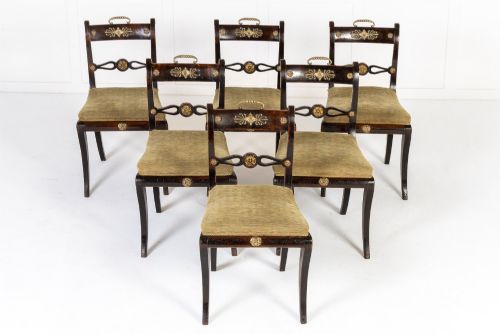
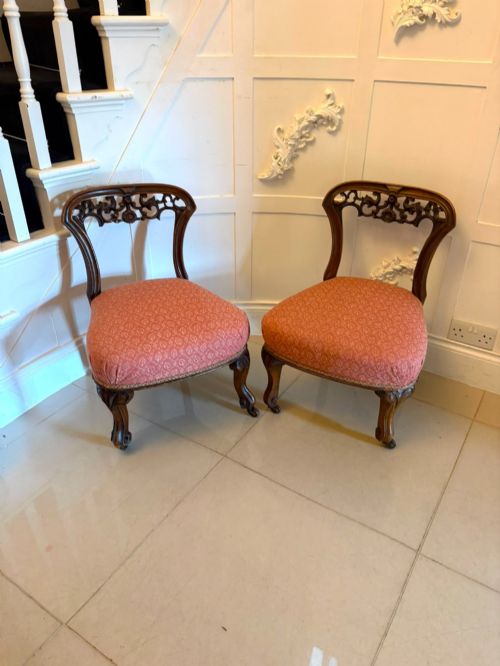
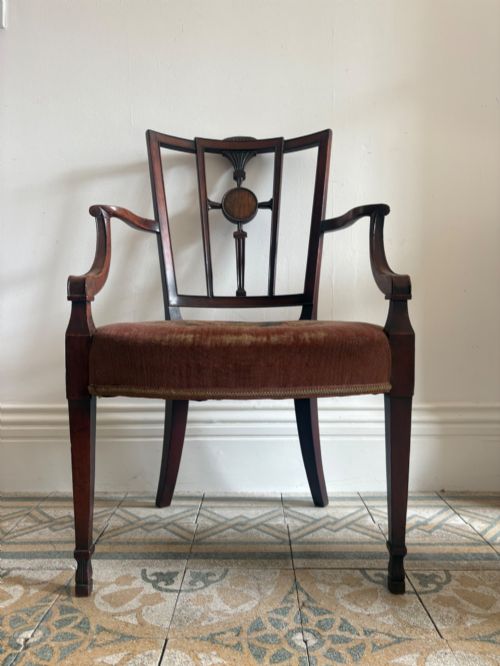
Antique Rosewood Dining Chairs
These antique rosewood dining chairs bring serious Regency and Victorian character to the table.
The Nature of Antique Rosewood Dining Chairs
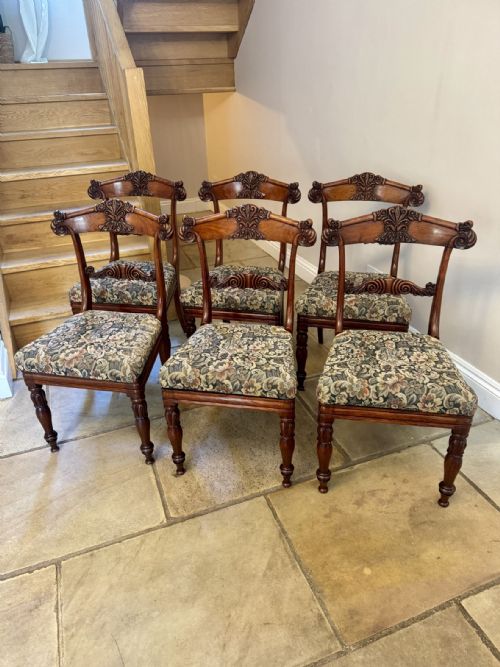
When searching for antique rosewood dining chairs, buyers encounter sturdy hardwood seating designed primarily for formal dining spaces. The pieces appearing here span the Regency, William IV, and Victorian periods, alongside specific dates such as 1850.
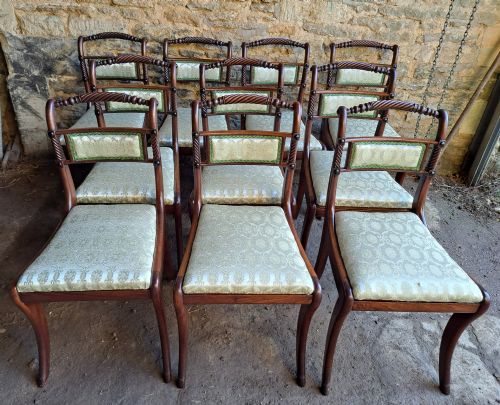
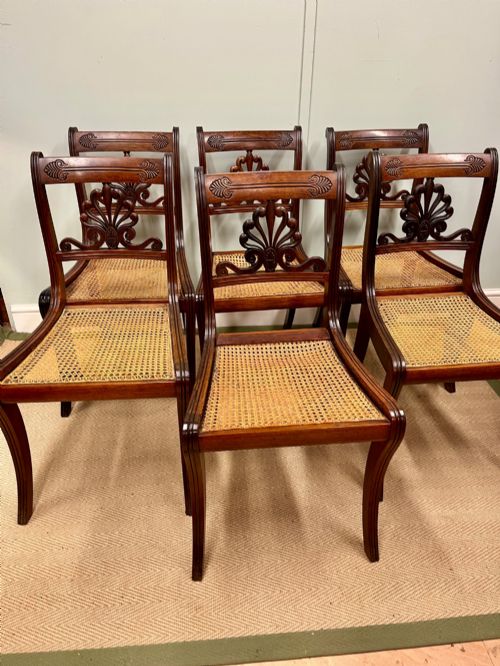
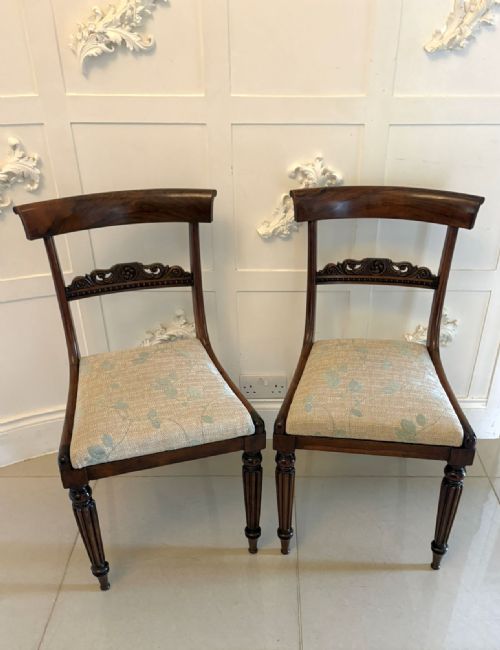
Most entries comprise sets of chairs, ranging from pairs and quartets up to larger groupings of six, eight, or ten. Alongside standard dining chairs, side chairs and occasional parlour hybrids appear frequently within the records.
Makers and workshops of the nineteenth century produced these forms in distinct regional styles. Grand Regency pieces sit alongside simulated or faux rosewood alternatives and brass inlaid variants.
Materials and Construction Techniques
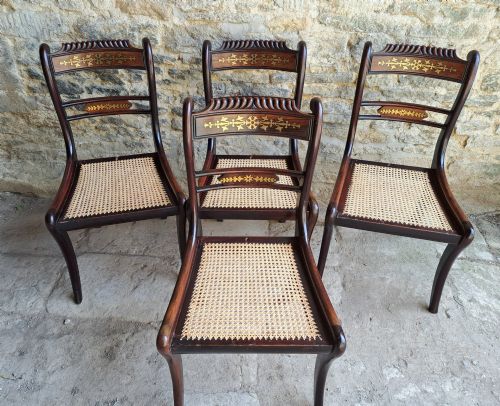
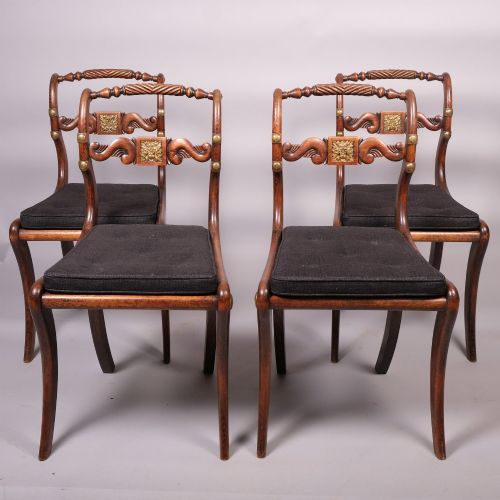
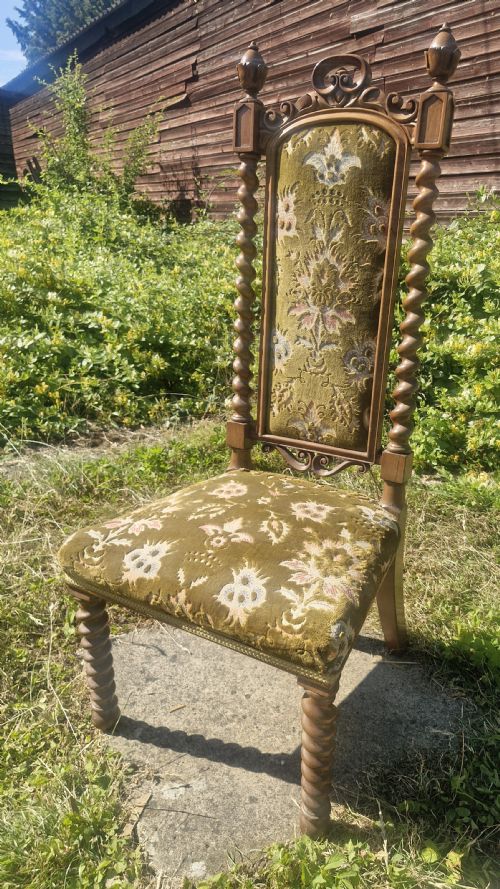
Makers utilised solid rosewood, alongside simulated and faux rosewood finishes on alternative woods. Craftspeople shaped the timber into structural frames, incorporating carved details and rope twist motifs.
Upholstery forms a vital component of these seats, utilising materials such as fabric and velvet over internal padding. Brass embellishments, including inlaid work, provide metallic contrast to the dark timber surfaces.
Retail Price Guide 2026
Typical UK retail prices for rosewood dining chairs, calculated from the Sellingantiques database of over a million retail prices indexed since 2003. This retail price guide relies exclusively on Sellingantiques data; no external sources or auction records are used, so the figures do not describe the wider market.
Nineteenth-century diners sat upright on rope twist rails while staring intensely at brass inlay.
Distinctions in Quality
The degree of hand carving separates standard seating from exceptional examples. Crisp execution of architectural motifs, floral details, and rope twist elements indicates superior workshop production.
Consistency across a complete set dictates overall desirability. Uniformity in timber grain, brass inlay precision, and the matching of upholstery materials distinguish larger sets assembled from multiple sources.
MUNRO
The Antique Rosewood Dining Chairs Glossary
- Rosewood
- A dense, richly grained tropical timber prized for its dark colour and polished finish. It served as the primary material for high-end nineteenth-century dining furniture.
- Faux Rosewood
- A painted or stained imitation of the tropical timber applied to a lesser wood base. This technique allowed makers to achieve an expensive look at a lower production cost.
- Rope Twist
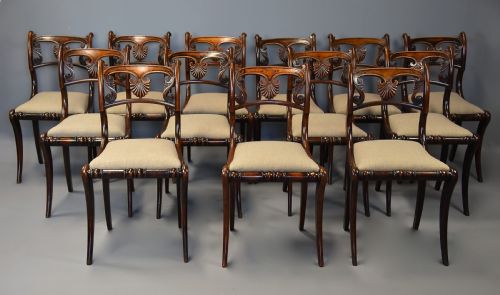
- A carved wooden decorative motif resembling twisted rope. This detail frequently appears along the top rails or crossbars of Regency period chairs.
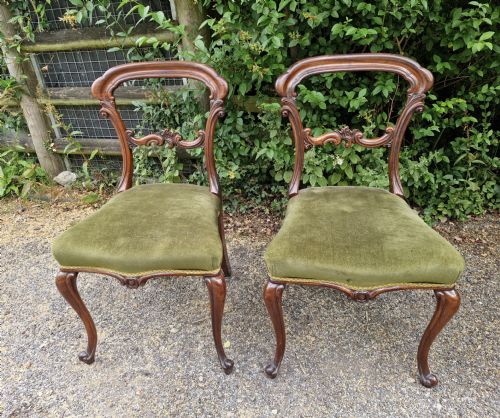
- Balloon Back
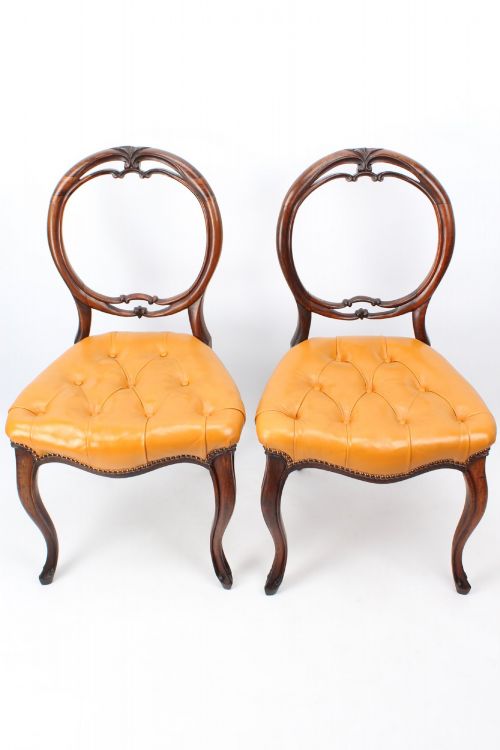
- A rounded, oval-shaped chair back resembling the profile of a hot air balloon. This silhouette became extremely popular during the Victorian era.
- Brass Inlaid
- The technique of embedding thin brass strips or decorative brass motifs directly into the wooden surface. Regency pieces often utilise this method for geometric or floral embellishment.
Frequently Asked Questions
How do I spot faux rosewood?
Faux rosewood involves painting or staining an alternative wood to mimic the distinctive grain and deep colour of genuine rosewood. Close inspection under good light reveals brush marks or printed grain patterns rather than natural timber growth.
Makers utilised this simulated finish during the Regency period to offer stylish seating without the high cost of imported tropical timber.
Are these chairs comfortable for daily use?
Most nineteenth-century dining chairs feature upholstered drop-in seats covered in fabric or velvet. While built for formal dining, their ergonomics reflect the upright posture preferred during the Regency and Victorian eras.
Modern buyers often use them around a dining table, though daily domestic wear requires careful handling of antique frames and periodic upholstery checks.
How do I tell Regency from Victorian chairs?
Regency chairs often feature cleaner classical lines, sabre legs, and occasional brass inlay or faux rosewood finishes. They reflect an aesthetic influenced by ancient Greek and Roman design.
Victorian pieces lean towards heavier proportions, elaborate hand carving, and balloon back profiles. The transition between these periods shows gradual shifts in upholstery styles and decorative motifs.
Do larger sets match perfectly?
Larger dining sets sometimes combine chairs assembled over time rather than produced as a single original commission. Subtle variations in timber grain, carving depth, or chair dimensions can indicate a matched grouping.
Examining the underside of the frames and the internal joinery helps confirm whether the entire set shares a single workshop origin.