


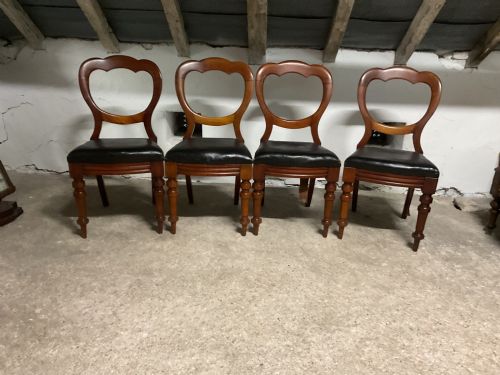
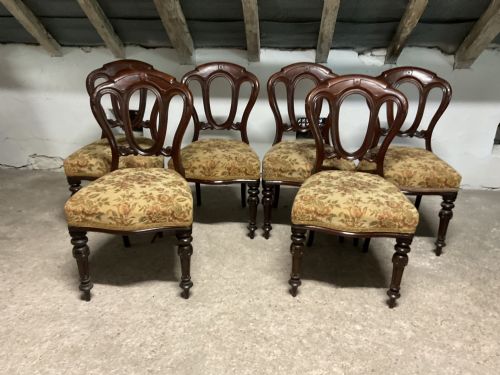
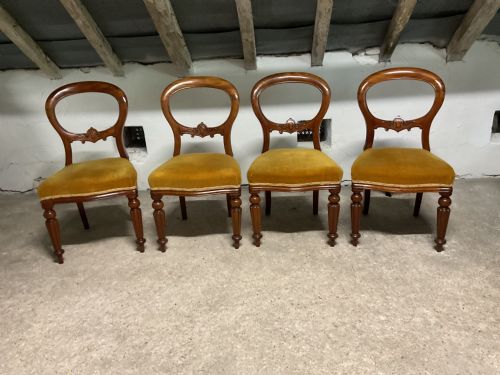
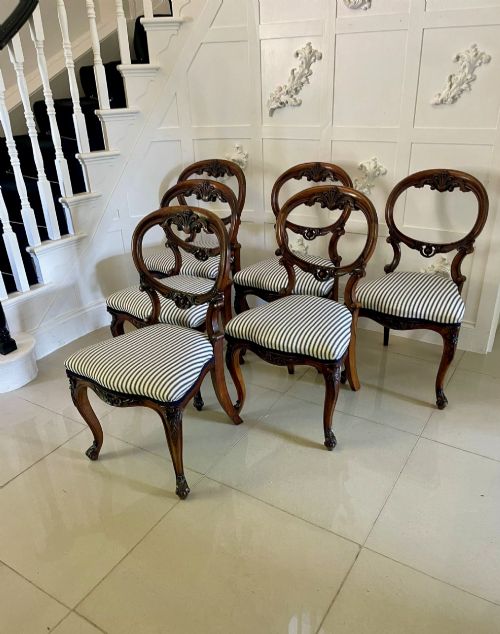
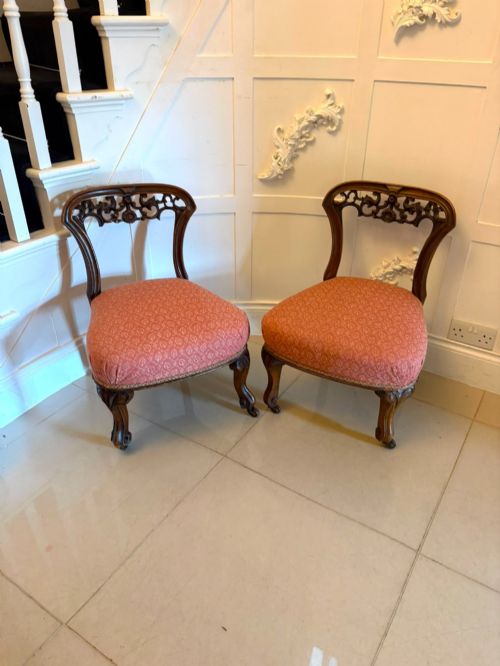
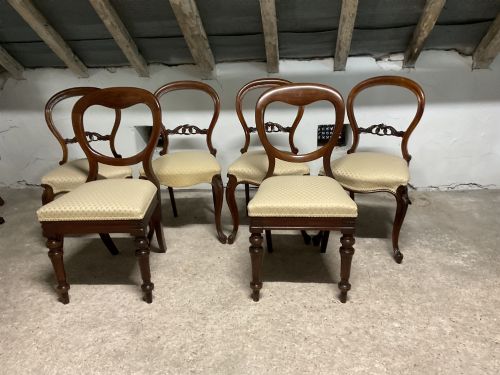
Balloon Back Side Chairs
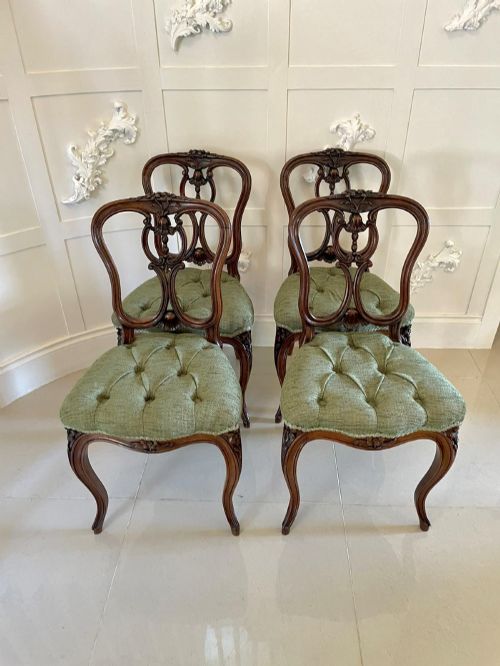
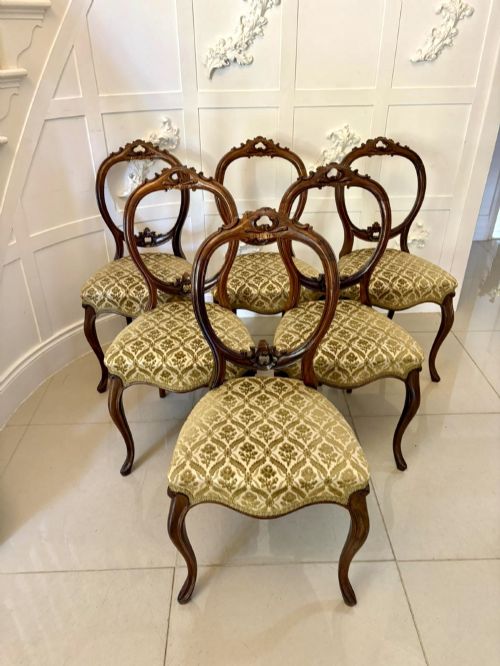
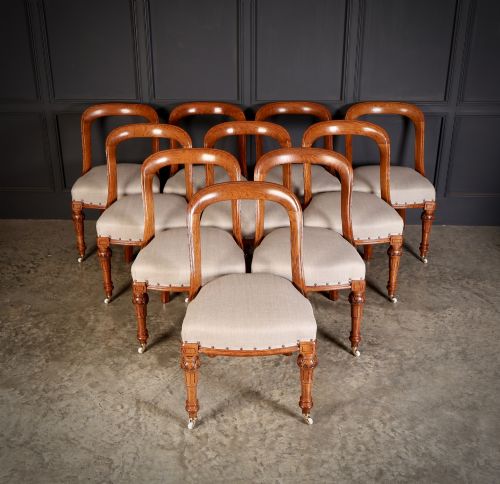
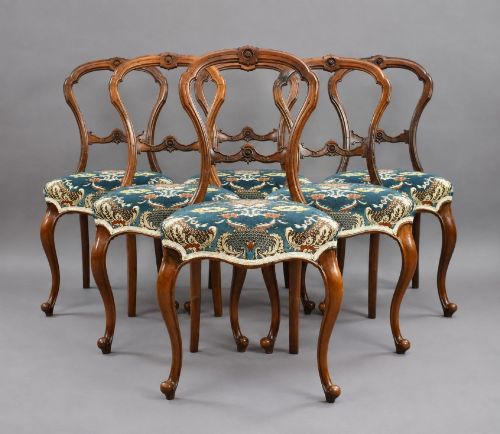
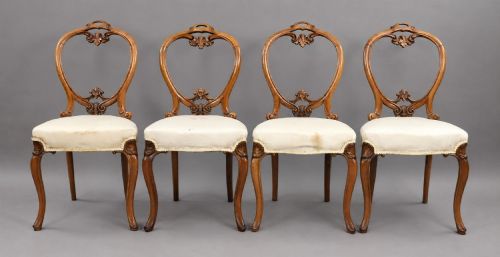
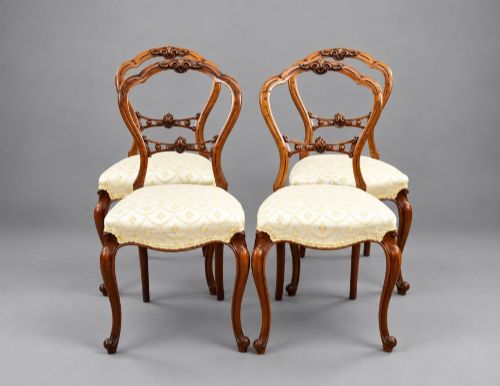
Balloon back side chairs are quintessential nineteenth-century seating, offering a graceful serpentine profile that elevates any period dining arrangement.
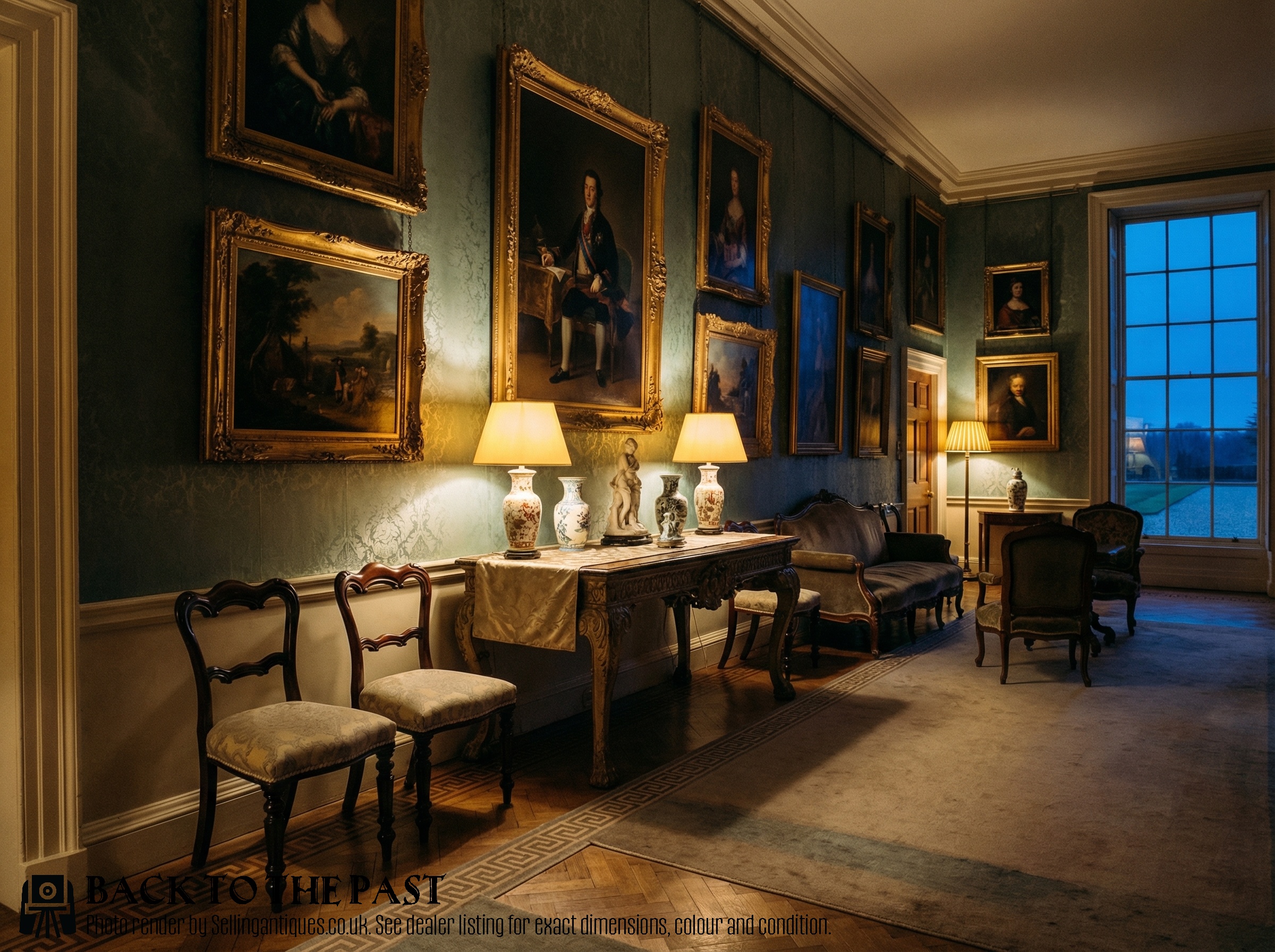
Balloon Back Side Chairs
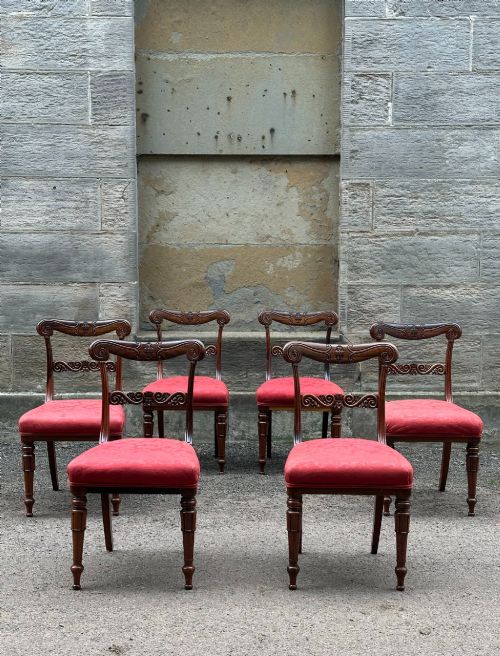
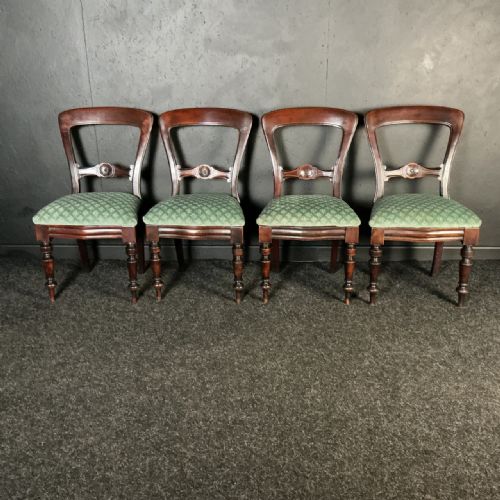
Balloon back side chairs appear frequently in nineteenth-century forms, emerging across Victorian and William IV iterations. These pieces function primarily as dining chairs or occasional side chairs around the home.
The inventory demonstrates sets ranging from pairs up to six pieces, alongside mixed groupings such as a set of three plus one. Buyers encounter these forms frequently in domestic configurations.
Origins span classic nineteenth-century British cabinet-making traditions, utilising robust hardwoods designed for daily utility and formal entertaining alike.
Materials and Construction
Cabinet-makers utilised dense timbers including mahogany, walnut, and rosewood to achieve the signature curved backrest profile without structural compromise. These fine woods provided both tensile strength and deep natural grain patterns.
Upholstery plays a central role in the construction, incorporating traditional fabrics and textured velvet surfaces across the seat pads. Skilled hands secured these textiles over supportive frames to ensure lasting comfort.
Retail Price Guide 2026
Typical UK retail prices for balloon back side chairs, calculated from the Sellingantiques database of over a million retail prices indexed since 2003. This retail price guide relies exclusively on Sellingantiques data; no external sources or auction records are used, so the figures do not describe the wider market.
Victorian diners must have possessed remarkably upright postures to endure long courses without the luxury of armrests.
Judging Quality
Quality rests upon the fluidity of the carved mahogany, walnut, or rosewood loop, where superior examples exhibit seamless joinery and refined proportions. Lesser pieces display heavier timber sections that lack the characteristic lightness of the form.
The standard of upholstery and the crispness of any secondary carving dictate the upper tier of the range. Finer suites maintain integrated timber integrity from the crest rail down to the turned or sabre supports.
The Balloon Back Side Chairs Glossary
- Balloon back
- A chair back shaped in a continuous oval loop resembling a blown balloon. This defining Victorian silhouette dominated dining seating.
- Side chair
- An upright chair without arms, designed primarily for dining tables or occasional placement against a wall. These form the bulk of surviving nineteenth-century sets.
- Bergere
- An enclosed upholstered armchair or side chair with cane or fabric-paneled sides. It denotes a more decorative seating variation.
- William IV
- A transitional design period spanning the early nineteenth century, bridging Regency elegance and heavier Victorian proportions. Pieces from this era display robust timberwork.
Frequently Asked Questions
How do I date these chairs?
Dating relies upon timber selection, secondary wood analysis, and the specific curvature of the carved backrail. William IV examples typically show heavier proportions, whereas later Victorian iterations lean towards slender profiles.
Cabinet-making techniques inside the seat frame further clarify the decade of manufacture. Examining screw types and joint construction provides additional chronological markers.
Can I mix different sets together?
Mixing sets requires matching timber species and matching the general height of the seat frame to ensure proper dining comfort. Subtle variations in walnut or mahogany grain can harmonize if the silhouettes share the same nineteenth-century vocabulary.
Matching the upholstery fabric across mismatched frames creates a unified appearance around the table. However, identical sets remain preferable for formal dining spaces.
Are these chairs suitable for daily use?
Nineteenth-century side chairs were engineered for robust daily dining and withstand normal domestic use when structurally sound. Modern sitters should verify that the internal glue joints and corner blocks remain firm.
Occasional professional re-gluing of the leg joints ensures longevity under daily loads. The underlying hardwood frames easily outlast modern reproductions.
What is the difference between dining and side chairs?
Dining chairs and side chairs share identical proportions and lack arms, allowing them to tuck neatly beneath a dining table. The terms are largely interchangeable in nineteenth-century inventories.
Side chairs also served as occasional seating in parlours and bedrooms when not required at the dining board. Their lightweight construction facilitated easy movement around the Victorian home.